By Hon. Odonga Otto
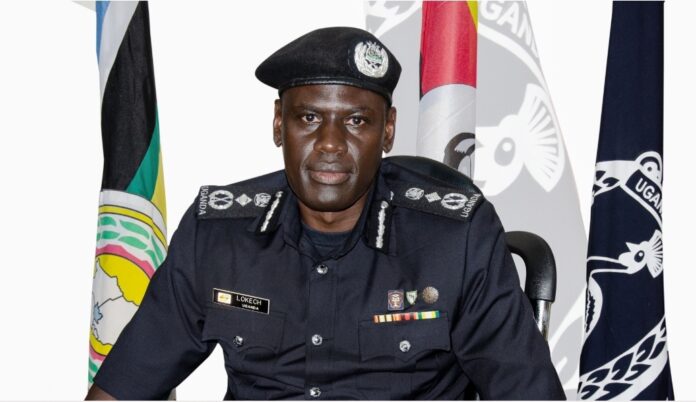
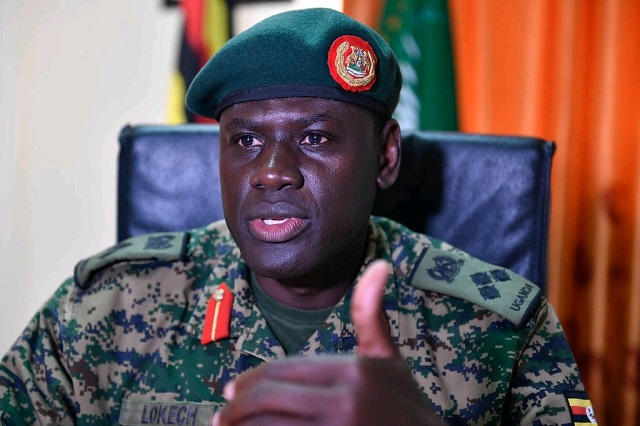
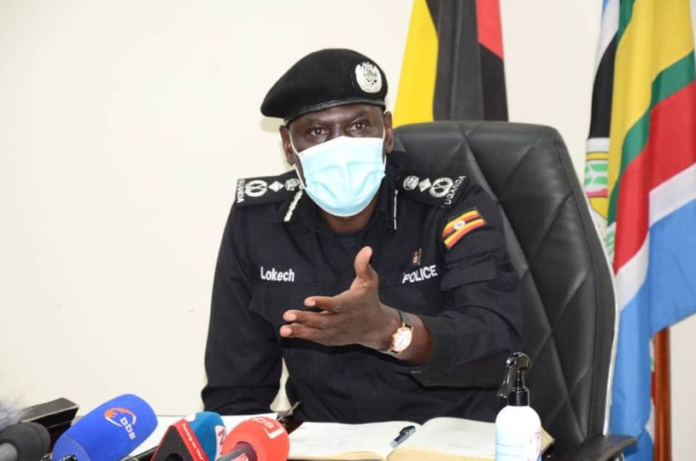
In the morning hours of Saturday 21st August 2021, a neighbour stood at my gate and told me, “Paul Lokech is dead”. I asked him, “which Lokech” and he replied, “your Paul Lokech you have been having battles with, the Deputy IGP”. I replied, “I have enough of my own problems, keep me out of that kind of news”. This was before the news broke on social media. About 10 minutes later, the news broke all over social media (Note: This is a long article and would advise that one reads it upto the end. It has life lessons and calls for forgiveness for one to heal).
I have known Paul Lokech fairly well, for over 30 years. A bold, brave fighter who helped pacify Acholi land. I have had a lot of interpersonal contacts with him and good memories firstly I am grateful that he saved my life at one point.
Secondly When I was arrested in amuru of Madhvani sugar land takeover he called and said “Acholi land shouldn’t be taken forcefully, leaders should be talked to, I will raise the matter in the Army High Command stay strong”
Thirdly he called then deputy speaker Oulanyah Jacob and muted a plan that he and the DS should talk to the President and I got some work “I cannot be wasted in defeat” he said, an offer I remain eternally grateful though reluctant to take. Albeit all the above the last elections of 2021 had this extracts penned down for a future book “otto my life story”
Episode One
Around 2019/20, I met Maj. Gen. Paul Lokech at a fundraising event at Archbishop Flyn S.S in Pader. He had just been appointed to the air force. He gave lots of money at the fundraising, more than me, the area MP at that time. And that was good for the school, God bless him. I later walked to him and asked, “I hear you are not supporting me.” Then he replied, “This time alteast you are working”.
Later on, in mid-2020, Paul Lokech openly fronted one Nurse called Christopher Komakech, his biological son, though passing off as his “adopted” son, to stand against me in the 2021 elections for MP Aruu County. Chris was lucky to even land for campaigns in a helicopter as campaigns went on. Lokech openly deployed both the army and police at will to aid his son’s campaign bid and had guns at his disposal. During campaigns, the former DPC and former OC station of Pader were both replaced by Lokech who brought his right handed men Ramathan Tai as DPC and Enock Musiime as OC station respectively. Lokech was splashing out money in the name of presidential campaigns but used it for his son as well. Two weeks to the polls, while I was at a rally in Awere, I was rounded up by police headed by Lokech’s blue eyed boys, DPC Ramathan Tai and Enock Musiime OC station.
It was that evening, on Awere road, that DPC Ramathan Tai drew a pistol at me and said, “If you move, I will shoot. Why are you driving past Covid-19 time?” I replied, “Hey, your gun is cocked and besides, I have ended my rallies, I am going home.” “You are under arrest,” said Ramathan Tai just like that. Paul Lokech, who knew I was going to win the race, opted for plan B. Arrest Hon. Otto, humiliate him and break down his support. The DPC and OC Station were ordered accordingly. The OC station Enock Musiime, a very nice and composed guy, got into my car as we drove in a convoy towards Pader town.
I told Enock, Chris is having a disco dance at his campaign ground (we could hear the music) why not go and arrest them as well? Enock said, “It was an order from above”. The “above” was Paul Lokech obviously.
As we approached Rackoko trading center, running battles began with youth protesting my arrest by police. Gunshots were fired. Since it was dark and in fear for my life, I took off to the nearest bush abandoning my car at the roadside.
In less than 3 minutes after the scuffle, the police in Kampala issued a statement that I was under arrest. I read the statement from my phone while in the bush. Paul Lokech was at work. I then tweeted, “unless you arrested a ghost of Hon. Otto.” I walked for almost 10 kms in the bush in the dark as though I was fleeing from Kony rebels. I was later ridden on a boda for over 50kms upto Gulu town, arriving at 5 am in the morning. I had become a fugitive in my own Country (since police were hunting for me) yet I was a candidate on a campaign trail. I fled to Bungatira in Aswa and stayed indoors with a friend for 3 days. My phones were off since I knew I was being tracked. I would send my friend to Gulu town to gauge the mood. No information was flowing. Lokech and team had partially achieved their objective by driving me off the campaign trail. Then I decided to shift from Aswa in Gulu to Kitgum after a week of hiding. I used a hired car since my car was towed to Pader police station. Meanwhile, all my campaign meetings were cancelled. My opponents’ camp orchestrated a story that I was shot by UPDF in the chest as I fled to South Sudan. And that, voting for me would be voting for a dead man since I was ailing and bleeding and the EC had declared any vote for me as invalid. Remember this is an illiterate populace who believe any lie. I then called a meeting of my agents at a secret location in Kitgum. We had to discuss and find a way forward. I was already questioning myself; did I make a mistake to escape?YES and NO. Should I turn myself in? What if I was shot on the night of the botched arrest? Did I do a good thing to flee? The answers were battling in my head in equal proportion.
Eventually, we agreed with my agents after a vote, that I return to the campaign trail. It was 5 days to the end of the campaign. I had been off campaigns for a whole week. I then told my Agents to mobilize my supporters in my home area called Ogom on the day I was to come out of hiding to escort me to the meeting venue. I took a boda from Kitgum to Pader to go join my people. I stayed in the bush in Pader, 1 km away from where my people had gathered. I then joined them amidst tears of joy as we drove across the constituency for people to just see me. There was no time for rallies with 3 days to the end of campaigns. In one rally in Odum, the people said I should remove my shirt and they saw if there were bullet wounds. Imagine! The campaign had degenerated to that level. I actually complied and showed them that there was no bullet wound. That is when I realised that I had no time to prove to all voters in such a manner that I was alive and well. My ratings had gone down during that one week of absence. My Agents fled their homes since they were being threatened that they would be arrested.
Some policemen were moving around with a list containing the names of all my Agents and visited their homes looking for them. On polling day, as always, I am an Agent at the 5th division army headquarters in Kilak to monitor the polling. I arrived there at 6 am. As I was briefing my agents, I was informed by my supporters that soldiers were coming to arrest me on orders of Paul Lokech. I confirmed that from reliable sources. I immediately got into my car and indeed the soldiers came in a landcruiser. Trust what a Benz can do. I drove at breakneck speed upto Pader town from corner Kilak. I then called my wife Julie to be by the road side in Pader town as I approached the town. I knew I had saved 7 minutes from the car chase. I told my wife to drive the car to the polling station in the middle of Pader town and I fled back to the nearest bush. The soldiers approached her at a terrific speed, jumped out and found Hon. Otto not there.
I fled to my home village near Pader town and stayed in the bush like a rebel even on voting day. My philosophy was that, if I am arrested on polling day, that would mark the end of my bid since it would send shock waves to my agents and they would flee. Phone calls kept coming in, how money was being distributed by people guarded by police. It was open bribery protected by Law enforcers. They gave Shs 10.000 each to random voters near the polling stations and Shs 50.000 each to influential voters. Most of my agents were chased from the polling area and told to stand outside the EC demarcation, at about 30 meters away, where they could not monitor the verification of voters or even see how many ballot papers were being issued to every voter. And if they tried to complain, the police constables (under orders from above) would shut them down and say, “We do not want ‘kelele’ here, just keep quiet”.
There was nothing much I could do to shield my Agents from harassment and intimidation since I was in the bush literally the whole day as people voted. I tried to coordinate on the phone but it was not as effective as it would have been if I was free and moving around from polling station to polling station to resolve the harassment issue. At around 3: 30pm, I remembered that I had to vote and time was running out since the EC deadline was 4pm to be in the voting line. The dilemma was that my polling station was surrounded by armed men waiting to arrest me. My polling station was about 2kms away from my hiding bush. My Agents got me a boda guy who arrived late where I was. The boda took me to the polling station and I arrived 1min past 4pm. Luckily enough, the soldiers had left. Then there was a debate as to whether I should be allowed to vote or not. The EC officials then allowed me to vote after consultations. I thank God I saved one vote and left immediately for the bush as I got info that the soldiers were returning to arrest me.
I went back into hiding. As polls closed, all the roads leading to the EC tally center were closed by soldiers in military uniform. My wife, whom I asked to go to the tally center was blocked but later allowed to access the venue after consultations.
While at the tally center, the DPC Ramathan Tai walked straight to my wife and stated rudely, “Madam I am going to arrest you for not putting on a mask”. My wife, who had put on a mask slightly below her nose, protested because almost every other person had no mask on or had one on the chin. Nonetheless, she put on the mask correctly and then the DPC left her alone. I could not go to the tally centre as I used to. I remained in my hideout.
Christopher Komakech was then declared the winner. I took time off politics and accepted the loss. Life had to continue. Meanwhile, my car was still at Pader police station.
Episode Two
On 19th January 2021, five days after elections had passed and calm was returning, I left Gulu for Pader in the company of my wife and driver. My itinerary was to go to Pader Police station and pick my vehicle; generator and loudspeaker that were impounded during campaigns then go to my village home outside Pader town. I arrived at Pader Police station at around midday and I was taken to the office of the Deputy OC station since the DPC and OC were all out of station. The Deputy OC charged me for breach of COVID regulations during my campaign rallies and disobeying lawful orders from Police. I was granted a police bond. I then asked for my vehicle. The Deputy OC station consulted his superiors and eventually the Regional CID who ordered the vehicle to be given to me. As I was in the parking lot trying to jump start the vehicle, to my surprise, a contrary order came from Paul Lokech through the same DPC, Ramathan Tai and OC station Musiime Enock who arrived at the station and found me in my car. I was ordered rudely to get back inside the police station or they would use force. I was shocked. I said, my God, the polls are over what is going on? They forcefully turned off my car and walked me into the DPC’s office and one policeman named Kalanzi of FFU showed up.
The DPC and OC started moving in and out of the office to go talk to the Deputy IGP Paul Lokech while pondering their next move. The DPC and OC CID then summoned the Deputy OC station asking him why he had given me a police bond? Then the Deputy OC station told them the Regional CID gave him the go ahead. The DPC then summoned the OC Traffic who then told me they needed my driving permit and insurance of the car. And said that the car had an express penalty ticket I had not paid five months ago so I was going to be charged for a separate traffic offence and that I required a separate police bond. I told them I was already on police bond, I can use it to report back as required to. The OC Station told me they needed money for towing the vehicle, repair of the police vehicle stoned by angry youth when they confiscated my generator and money for wasting their time as they had planned to arrest me from Rachkoko but failed. I was told the bill was 3 million shillings in total according to them.
Immediately, the DPC and OC CID walked out and I overheard the DPC talking to the Deputy IGP Lokech in the corridor saying, “Yes sir, I will detain him”. It was coming to 4pm since midday and no clear head way was being made. My police bond was just a mere piece of paper as my freedom was curtailed and I couldn’t leave the police station. At about 5pm, after drinking bottled Uganda police labeled water in less than 30 minutes, I collapsed on the floor in the DPC’s office and all I could remember was seeing a blurred image of RDC Dusman Okee, Norbert Mao’s brother asking me if I could recognise him. I was then taken to Gulu Regional Referral hospital in an ambulance according to my wife’s account. From Gulu hospital, I woke up at about midnight and my wife told me police had cordoned off the hospital area and they were sitting outside next to my room window and others were opposite the entrance to the ward. They wore civilian clothes. In the morning, she told me that a policeman hurriedly opened the room door at around 2:00 am and was shocked to find her in the room from his tone. He asked her, “You mean you slept here?” It’s like he had a plan to enter my room and probably inject me with more deadly substances. The next day, I learnt that I was actually under police detention at the hospital in spite of having police bond papers in my pocket.
The Doctors at Gulu Hospital recommended my referral to another hospital at around 11am and gave me my discharge and referral letter. As I was leaving my hospital room to go to my car and leave for Kampala, the Gulu Police led by the OC station blocked us and didn’t even allow my car engine to be started. I then laid on the open ground of Gulu Hospital from midday up to 6:00pm as the police wondered what to do next. The former Leader of Opposition, Betty Aol Ochan and Gilbert Olanya came to the hospital and protested this police action.
Gilbert Olanya called the Deputy IGP protesting his orders. Later, the former Leader of Opposition reached a settlement with the Gulu police that I be charged from Gulu and I sign a second police bond paper. My life being the priority, I signed the police bond papers at 6 pm and the charge was “assault” of a person (I didn’t know) during the FUFA drum football match in September 2019. After signing the bond, I was taken to Lacor Hospital and spent a second night at the ICU there. It was late to travel to Kampala in that condition. The next day, Lacor discharged me and gave me a referral. I went straight to Nakasero Hospital in Kampala. After doing their assessment, they referred me to Nairobi.
From Nairobi hospital, I wrote down what happened to me on whatsapp and stated that, “incase I do not make it, take this as a dying declaration that these people killed me.” Such flagrant abuse of office and impunity by Paul Lokech and his boys should not be tolerated anywhere in Uganda.” Nairobi, 26th January 2021.
Episode Three
1000 KMs IN HANDCUFFS:
I was in a gym at Bomah hotel at around 7am when I see the magnificent blue glasses beaming with policemen in a single file. I wondered. I asked the gym attendant if this was routine but before I could get answers, I heard a voice saying, “Hon Otto, can we talk to you outside here?”
It was a kind police officer in his early 50s who had spoken. Am I under arrest? I asked? “Yes” he replied. I gave in and off we went to Gulu regional police offices where we found CID Director Oluga, one of Lokech’s right hand men waiting for me.
“We need your gun” Oluga said. The police from CID headquarters Kibuli had travelled to Gulu with two double cabin pickups on orders of Paul Lokech to arrest a “mere” me. Imagine such extravagant use of tax payers’ money to arrest an MP who could easily be summoned by the Speaker of Parliament as was standard practise. This was post-election witchhunt. My firearm license was not renewed for the first time in 19 years. This reluctance to renew my licence happened when Lokech became the Deputy IGP. What a coincidence! Luckily enough, I had handed over the gun to Parliamentary police when the licence was about to expire for purposes of renewal. It was the normal practice for Parliamentary police to renew licences for MPs.
On a separate occasion, my personal body guard assigned to me through Parliament was arrested during campaigns from my home in Gulu senior quarters still under Lokech’s orders. They sent soldiers who climbed my wall fence and took my escort to Gulu barracks. I have never got him back to date. Back to the gym arrest episode. I was handcuffed and sandwiched between two police officers in the back of a police double cabin pick up and left Gulu for Kla. I asked the arresting officers whether they could remove the handcuffs as we travelled but they told me it was an order. I travelled 315 kms in handcuffs from Gulu to Kampala. I wondered what they would do to Joseph Kony of LRA if a legislature could be treated that way. We survived an accident around Masindi port. I was imagining what would have happened if we had got the accident while I was in handcuffs. We reached Kampala and I was offloaded at Jinja road police station where I stayed for three days in the police cells. No statement was taken from me, I was not presented to any Court, nothing. That was Paul Lokech for you. The Rt. Hon. Speaker, Rebecca kadaga on her Speaker campaign trail in Munyonyo made a statement that, “if Otto is not charged or released, I will camp at police.” This caused Paul Lokech and team to hurry and get me out of Jinja road police cell. After Kadaga’s statement, the following day they handcuffed me and drove me back to Gulu, 320 kms away from Kampala. Why did they bring me to Kampala in the first place? I wandered. Along the way at Karuma, I wanted to have a call of nature. The officer warned me that they do not want any scene. I wanted them to remove the cuffs so that I ease myself. That request was declined. I cancelled the long call idea and settled for a short call. As I tried to ease myself with handcuffs on, the CID Director Oluga came to me and said, ” you better leave Lokech’s son alone if you want to be free. You can contest another time. Leave the election petition.” I had just filled the election petition the same week I was arrested. Another strange coincidence. I looked at Oluga’s face beaming with rage with those thick eyelashes. I stopped the short call half way and thought to myself, if that is the issue, then the next thing would be to “shoot me and say I tried to grab a gun”. The remaining pee dripped on my body as I sat in the middle of the officers in the car. The police officers in the double cabin I was in were kind to me. They offered me a drink from corner Kamdini with their own money. Director Oluga was travelling in a separate car. We reached Gulu police station and I was medically examined if I was fit for trial. At 5pm, we again set off for Pader District. In Pader, I was locked up in the police cells for one night yet my home is just 600m away from the police station. I did not bother to ask for police bond. I now knew what they were up to. I told my wife not to let my children know what was happening to me. I said I would sort out myself as a man and this would be the last time I would be stressing my immediate family. The next morning, I was taken to Pader Court and every senior officer was not at Pader police station.
There was an order from Lokech that I be handcuffed and walk on foot to Pader Court so that the voters see me and know that I am finished. As I was leaving the police cells to go to Court I asked the policeman, “Do you have to handcuff me?” “It’s an order and we have to walk to Court”, the policeman said. “I have my car outside if the police car cannot be used”. I said. I declined to walk and said they would rather carry me to Court or kill me from the station right there. The act of walking to Court was all meant to humiliate me and deny me dignity. While in Court, my Lawyer was never allowed to apply for bail but instead referred to the next Court appearance to make the bail application. I was then remanded to Gulu prison. I boarded the prison lorry waiting outside Court and was handcuffed again. Police had to jump into the prison vehicle and stand over me. I decided not to look up for the entire journey from Pader to Gulu. The world had descended on me and I was at my lowest point in life. I just asked for a favour from the policeman to allow me lean on his shoes as sitting directly on the truck floor was killing my back. You wonder why I was remanded to Gulu prison and yet Pader District has its own prison in Patongo. After 7 days in Gulu prison, I returned to Pader Court and I was finally granted bail. Despite getting bail from Pader Court, I was not yet a free man because I was immediately re-arrested and taken to Gulu Court for another case of 2019 that was coming up that same day. Senior Acholi leaders like the Chief Justice Owiny Dollo, Speaker Oulanyah Jacob (who was the Deputy Speaker at that time), Gen.Otema Awany, Rwot Achana and other well intentioned Acholis, all pleaded with Paul Lokech to let go of me but all in vain.
While in Gulu Court, I was granted bail but my passport was retained. What a life! As of now, all those criminal cases against me have been dropped and I am a free man. On another note, my election petition succeeded in Gulu High Court on Friday 20th August 2021 and a day after Paul Lokech dies. What a unique turn of events. The God I serve is a living God and he sees the injustices happening in this world.
Stories Continues after ad