The Commander of Defence Forces (CDF) Gen David Muhoozi has apologized for the actions of soldiers who beat up journalists.
Yesterday, security forces of military police and the army roughed up journalists as former presidential candidate Kyagulanyi Ssentamu Robert aka Bobi Wine delivered a petition to the United Nations Human Rights Council (UNHRC) in Kampala.
During the scuffle, scores of journalists were injured and admitted to various health facilities for medical care. The assaulted journalists include; Irene Abalo (Daily Monitor), John Cliff Wamala (NTV), Timothy Murungi (New Vision) and Josephine Namakumbi (NBS).
And, Speaking to journalists earlier today CDF said; “The excesses exhibited were not sanctioned. The UPDF cares and recognizes the importance of a smooth partnership with the media and the population. The media can never be the enemy of the State. You are very crucial partners.”
As Part of showing remorse UPDF will cater for journalist’s medical bills. He said in two days UPDF will reveal which action has been taken against officers who beat up Journalists.
“Nobody briefs people to go and beat others. We need to engage with the media to sit and talk through this and bolster our relationship and agree on how to deal with each other,” he said.
Emirates SkyCargo has partnered with UNICEF to prioritise the transport of COVID-19 vaccines, essential medicines, medical devices and other critical supplies to help fight the Covid-19 pandemic. The announcement is the latest in a series of measures undertaken by the freight division of Emirates to support global communities in recovering from the devastating impact of Covid-19.
The Humanitarian Airfreight Initiative spearheaded by UNICEF brings together a number of partners collectively capable of distributing essential supplies to more than 100 markets in support of the COVAX Facility, the global effort aimed at equitable access to Covid-19 vaccines. UNICEF’s Humanitarian Airfreight Initiative will also act as a blueprint for collective global partnership in the face of future health and humanitarian crises.
“Every single day counts in the fight against Covid-19 and the sooner that communities can have access to Covid-19 vaccines, the sooner they can curb the spread of the virus and get back on their feet. As a global player flying to more than 130 destinations, Emirates SkyCargo has been committed to the fight against the pandemic from the very early stages and we have rolled out a number of initiatives to expedite the distribution of COVID-19 vaccines through Dubai, starting with our GDP certified dedicated airside hub. Through our partnership with UNICEF, we will be taking yet another step to prioritise and facilitate the rapid and secure movement of COVID-19 vaccines particularly to communities hard hit by the disease,” said Nabil Sultan, Emirates Divisional Senior Vice President, Cargo.
Emirates SkyCargo is an industry leader in the air cargo sector for the transport of temperature sensitive pharmaceuticals including vaccines. The cargo carrier features a global network spanning six continents, a modern fleet of widebody only aircraft as well as state of the art EU GDP certified infrastructure at its hub in Dubai for the secure transport of pharmaceuticals and vaccines.
In October 2020, Emirates SkyCargo announced that it was setting up the world’s largest EU GDP certified airside distribution hub dedicated for the storage and distribution of COVID-19 vaccines. With over 15,000 sq metres of storage space available for vaccines, Emirates SkyCargo is able to store large quantities of the COVID-19 vaccine in Dubai, and fly in smaller quantities regularly to markets with limited cold chain infrastructure, reducing the need for large scale storage solutions.
In January 2021, under the directives of Vice President and Prime Minister of the UAE and Ruler of Dubai HH Sheikh Mohammed bin Rashid Al Maktoum, Emirates SkyCargo joined hands with three other Dubai-based entities- DP World, International Humanitarian City and Dubai Airports to form a COVID-19 vaccine alliance for rapid transport of COVID-19 vaccines to the developing world through Dubai.
NMS rallies health facilities to follow drugs' delivery schedules
The National Medical Stores (NMS) has called upon all government health facilities to submit their medicine requests within the set deadlines according to the Store’s delivery schedule to enhance availability of medicines in the country.
“Currently, we serve over 3,000 health facilities across the country and while a great number of them submit their requests on time, we still face challenges in some places where requests are submitted outside the set submission deadlines and this therefore affects availability of medicines in these particular places,” said NMS Public Relations Officer, James Odong.
“We therefore call upon all health facilities to help us help them by adhering to the delivery schedule guidelines available in the health facilities and the NMS website to enhance transparency and medicine availability,” he added.
Odong appreciated Government for the continued support in enabling the store execute its mandate and urged all Government health facility leaders to submit timely requests for deliveries to avoid inconveniences.
“The Government has been very supportive in ensuring we have a conducive environment for logistics and supply which enables us operate efficiently,” he said.
Odong further noted that the deliveries are made as part of the Store’s predetermined bi-monthly delivery schedule but considerations are made for emergency requests.
“NMS delivers drugs to various government health facilities across the country based on a pre-determined schedule every two months which translates into six times every year. Of course there are emergency deliveries but that does not happen regularly,” he emphasised.
“The purpose of these scheduled deliveries is to enable us manage the available resources efficiently and for accountability purposes especially now considering the Covid-19 pandemic and related effects on transport restrictions and availability of medicines globally,” Odong said.
The NMS delivered drugs, vaccines, soaps and fluids between 1st to 9th February 2021 to Omoro District, Otuke District, Lamwo District, Kitgum District, Oyam District, Lira District, Kwania District, Kole District, Dokolo District, Apac District, Alebtong District, Agago District, Kapelebyong District, Arua Regional Hospital, Mulago National Burns Unit, Lira Hospital, Gulu Hospital, Kitagata Hospital, Katakwi District/Katakwi General Hospital, Moroto Hospital, Naguru Hospital, Mbarara University Hospital and Kabale Regional Hospital.
Other areas which received drugs during this aforementioned period are Soroti Regional Hospital, Mbale Regional Hospital, Jinja Regional Hospital, Ntlp, Kibuku District, Karenga District, Bukiwe District, Abim District/Abim Hospital, Mulago Hospital, Kayunga District, Bugweri District, Kotido District, Kampala National Burns Unit, Kaabong District/Hospital, Kamuli District, Moroto District, Napak District, Katakwi District/Katakwi General Hospital, Moroto Regional Hospital, Kayunga Hospital, Abim Hospital, Nakapiripit District, Nabilatuk District, Manafwa District.
NMS’ mandate is to procure, warehouse and distribute essential medicines and medical supplies, primarily to Government health facilities.
Medicine availability across the country currently stands at 85 percent with a target of reaching 90 percent within the next 1-2 years.
NMS recently hired clerks to follow up on drugs from the districts up to the rural health facilities under what is known as the last mile delivery model.
store
The institution is set to open a state-of-the art pharmaceuticals warehouse in Kajjansi off Entebbe road to increase bulk store capacity area from the current 8,000 pallet locations in the existing premises, to a minimum of 30,000 pallet locations.
The facility will also increase cold chain capacity to a maximum net storage volume of 2,500m3 purpose built as a Drive-in cold room (DICR).
“One of our main objectives is to consolidate, centralize and operate NMS services and infrastructure in one modern, purpose built and efficient building, with a minimum sixty-year lifespan, on the specified site,” said NMS General Manager Moses Kamabare.
In the year 2017/2018, NMS achieved higher than target score of 90 percent stock availability for Essential Medicines and 86 percent for Tracer items against a target of 75 percent set by Ministry of Health.
This media house understands that in the financial year 2018/19, NMS attained 92 percent stock availability for 41 Tracer Medicines at Central level against a target of 80 percent from Ministry of Health.
World’s football governing body FIFA has announced the rankings for February 2021 with Uganda dropping the hardest of all nations by four slots to position 83 with now 1301 points from 1307 points.
The Cranes are now 17th in Africa and the drop comes due to the poor performance at the just-concluded CHAN championship in Cameroon where Uganda only managed one point from the three group games and failing to make it to the knockout stage.
Neighbours Kenya stagnated at 104, Tanzania also stagnated at 135, Burundi came at 138 and Rwanda at 133.
Uganda’s next AFCON 2022 qualifiers opponents; Burkina Faso came at 58 and 10th on the continent while Malawi is at 123 and 32nd on the continent.
The top five countries in Africa are; Senegal (20), Tunisia (26), Algeria (31), CHAN champions Morocco (33), and Nigeria (36).
Belgium, France, Brazil, England, Portugal, Spain, Argentina, Uruguay, Mexico and Italy remain the top ten in the world in that order.
CHAN losing finalists Mali climbed the highest by 3 slots to 54th while Uganda together with Zimbabwe were the worst movers, dropping down by 4 ranks each. Zimbabwe dropped to 112.
The format used by FIFA is named SUM as it relies on adding/subtracting points won or lost for a game to/from the previous point totals rather than averaging game points over a given time period as in the previous version of the World Ranking.
The points which are added or subtracted are partially determined by the relative strength of the two opponents, including the logical expectation that teams higher in the ranking should fare better against teams lower in the ranking.
The next FIFA World Ranking will be published on 15th April 2021.
Legislators have chastised the government for failing to manage and mitigate the gross human rights violations and inconsistencies involved in the exportation of labour especially to the Arab countries.
Whilst acknowledging the necessity for Ugandans to travel out in search of employment due to high unemployment in Uganda, the MPs said that some Ugandans were being trafficked as slaves by so-called recruitment agencies while others were working under harsh conditions with meagre pay.
Some MPs also blamed government’s reluctance to manage the issue on the fact that some government officials own the agencies and recruitment firms engaged in the trade.
The legislators were responding to the State Minister of Labour, Hon. Mwesigwa Rukutana’s statement on the status of implementation of the directives issued by Ministry of Gender, Labour and Social Development to labour recruitment companies to facilitate repatriation of Ugandans stranded in Riyadh, Saudi Arabia during the plenary sitting on Wednesday, 17 February 2021.
Hon. Asuman Basalirwa (JEEMA, Bugiri Municipality) said that however much Parliament investigated the labour exportation trade, the results will always be futile because senior government officials are complicit in the trade.
“I challenge the government through the Minister to scrutinise some of the contracts for employment between the employment agencies engaged in labour exportation and the Ugandans who take up jobs with them,” Basalirwa supplemented during the sitting chaired by Speaker Rebecca Kadaga.
He also said that over time, there are always cases of people being forced to work for little or no pay, turned into slaves and mistreated while the recruitment agencies make a killing from the trade.
MP Jesca Ababiku (NRM, Woman Adjumani) suggested that the list of the labour exporting agencies and their proprietors be presented on the Floor of Parliament for legislators to successfully tackle the irregularities that arise from the Ugandan youth who are taken abroad to work.
“It is absurd to hear that the safety and self-preservation of the Ugandans taken out of the country is not priority of the recruiting agencies
Rukutana asserted that the Ministries of Labour and Foreign Affairs have an inter-ministerial task force to look after the people who are recruited for work out of the country.
He, however, conceded that the ministries are financially ill-equipped to follow up on the contracts between the recruiting agencies and the areas of employees for the exported labour as well as helping those Ugandans who encounter difficulties in their employment.
He refuted claims that the agencies recruiting Ugandans to work abroad are owned by government senior officials.
“This is not the first time these baseless claims are springing and I urge the MPs who say so to substantiate,” he said, adding that, “I will, therefore, present to you this list of the agencies engaged in the trade”.
Rukutana nonetheless acknowledged that there have been cases of human trafficking of Ugandans and gross breach of contracts which the ministry has endeavoured to manage as they arise.
The minister pledged better management of labour exportation which he said will be aided by better funding towards the sector.
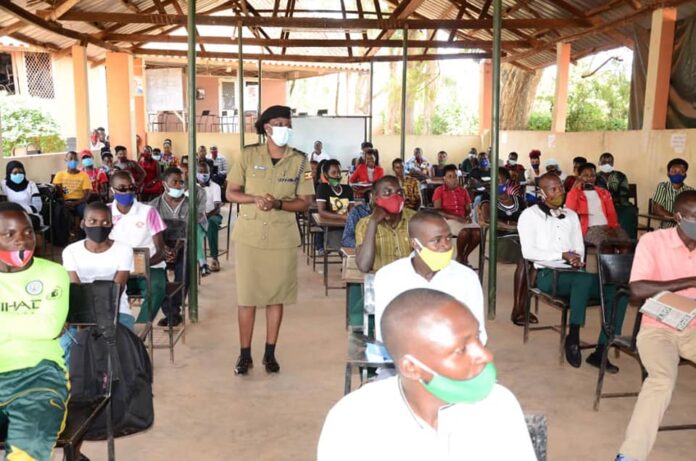
University Students and Lecturers are still frustrated by online learning and teaching systems yet it is the only way reading materials are supposed to reach students.
Most Universities reopened for continuing students to complete their semester two of academic year 2019/2020 which was not completed when education institutions were closed.
In March 2020, as one way of controlling the spread of Covid-19, the government put a closure on all education institutions.
As a way of keeping serving students who were home, different universities introduced online teaching and learning, however, this has not been well with both students and lecturers who are supposed to use the system.
Professor Elli Katunguka Rwakishaya, the Kyambogo University Vice Chancellor told our reporter that ever since they started online teaching, the administration has received complaints from both students and lecturers citing the failure to use online methods of delivering study materials.
“We are aware of challenges of ODel (Open, Distance E-learning), that is why for the students who had come around, we allowed them to use our internet to be able to get some materials because where they are, they have no internet or gadgets, that is why if we open, we shall give them sufficient time for face to face so that those who are failing can get the opportunity to ask questions and to be given assignments,” says Prof. Katunguka.
Kyambogo University adopted Open, Distance E-learning (ODel), electronic mode of delivering study materials to students through digital resources. It is provided through electronic devices such as computers, tablets and even cellular phones that are connected to the internet.
At Makerere University, students claim that since the time online learning started, it has been a misfortune to students. Makerere developed Makerere university E-learning Environment-MUELE system, which enables every student to register and attend classes. Teachers can also upload reading materials on the system for students.
According to Nelson Bahati, a finalist at the Department of Journalism and Communication says MUELE is a slow system that cannot allow many users at a time. The system also requires students to have university email, yet few people are available to help students open institutional email accounts.
“Imagine, college of humanities and social sciences with over 6000 students in five schools with only two authorized people to open emails for students at the college,” Bahati explains.
Makerere University currently has over 38,000 students, whereby not even 20,000 can afford being on the MUELE system at the same time due to traffic. On the other hand, the system is not understood by both students and lecturers.
Bahati says that lecturers have been trained well to use the system, instead they resorted to teaching on zoom and cloud meeting Apps that made it hard for students. This is because of the high data charges required to attend lectures of four to six hours per day.
A student needs a minimum of 3GB to attend three classes per day, each lecture planned for two hours.
Students further reveal that sometimes, lecturers chose to start zoom lectures of a class of 300 students, but only 70 students attend, while others remain behind due to lack of data and other internet related challenges.
In January, Prof. Barnabas Nawangwe, Vice Chancellor of Makerere University communicated to students and staff that the University had opened for finalists on 8th February and that the mode of study would be online, students do not know whether the university has improved the system or it will provide data for the zoom lectures. Students get worried whenever they hear of the proposal to study online.
John Mbaziira, a student of Kyambogo University says that the University keeps on boosting how the students are learning online, yet a number of students have never accessed studies on Online and lecturers struggle to send study materials.
A second year student of Makerere University Business School-MUBS who preferred anonymous said, the whole online system has benefited few students, yet it is intended to help all. She says that students can manage to observe the required SOPs; therefore, Universities should open for physical lectures.
Makerere and Kyambogo Universities will open for continuing students to appear for physical lectures on 1st March.
At the entrance of UN Human Rights offices in Kololo
The Security forces of military police and the army have roughed up journalists as former presidential candidate Kyagulanyi Ssentamu Robert aka Bobi Wine delivers a petition to United Nations Human Rights Council (UNHRC) in Kampala.
Earlier, security forces blocked all the roads to the Kololo-based international human rights body and allowed few people to access the offices.
In a few minutes, military surrounded the petitioners at the entrance of UN offices and ascended on to them. They beat them up and many Journalists who were filming the events as they unfolded. In the scuffle many journalists and petitioners sustained injuries.
The assaulted journalists include; Irene Abalo (Daily Monitor), John Cliff Wamala (NTV), Timothy Murungi (New Vision) and Josephine Namakumbi (NBS).
Bobi Wine wants the UN to intervene in continuous violations of human rights in the country exhibited in kidnappings, abduction and detention of the National Unity Platform-NUP supporters. He also wants the human rights body to engage state authorities to adhere to the international human rights laws and treaties of which Uganda is a signatory.
On Monday, the MP released a list of over 240 NUP supporters who were reportedly kidnapped by security agencies.
Since the launch of presidential campaigns in November last year, the country has witnessed spates of kidnappings by both armed men in civilian clothes and security personnel traveling in numberless Toyota Hiace vehicles commonly known as ‘Drones’. Most of the victims have since not been arraigned before courts of law nor released on police bond.
Bobi contends that throughout the campaign period the People of Uganda generally, and more particularly his supporters endured untold suffering, torture, degrading and inhuman treatment on the orders of Gen Museveni. He cites the dark days of 18th and 19th November 2020 which saw over 50 innocent, unarmed citizens murdered in cold blood by the police and military.
The Minister of Foreign Affairs Sam Kutesa has urged the European Union (EU) Parliament to respect Uganda as sovereign state and ensure non-interference in its democratic processes.
Last week European Parliament Chaired by President David Sassoli, passed a number of resolutions after the debating of Uganda’s 2021 post-election report. The MPs reiterated that sanctions against individuals and organisations responsible for human rights violations in Uganda must be adopted under the new EU human rights sanction mechanism, the so-called EU Magnitsky Act
The EU report indicates that the election process was marred with massive irregularities including state inspired violence, intimidation and harassment of my supporters and arbitrary arrest and detention of presidential candidates.
In a letter to the President of the European Parliament, Kuteesa said EU’s resolutions are undermining Ugandan institutions such as the courts of law and the Electoral Commission. “The statement is a mockery of the rule of law which the EU stands for, and an attempt to influence the outcome of the ongoing court process.”
“The relations between Uganda and the EU are both historical and strong. As a country, we acknowledge and value the partnership with the EU as a bloc and with individual member states. Nonetheless, we strongly believe that the sustenance of the relationship depends on upholding of the universally accepted principles of mutual respect, non-interference and respect for sovereignty,” he said
“This statement is partisan in tone and intent. We see this as an attempt to undermine and challenge the Electoral Commission and its work. The statements are unfortunate at a time when the matter was still before the court which will determine the validity of the elections.”
He retaliated that former Presidential candidates Robert Kyagulanyi Ssentamu of the National Unity Platform (NUP) and Patrick Oboi Amuriat of the Forum for Democratic Change (FDC) chose to defy all the standard operating procedures set by the Ministry of health and that is why they were arrested.
“These two repeatedly told or intimated to their supporters that COVID-19 was a hoax, incited them and willingly breached the SOPs, organizing mass rallies, thereby putting the lives of everyone, not just themselves and their supporters, at risk in the middle of a pandemic” he said.
He said following the arrest of Kyagulanyi, there was a pre-planned and funded riot in which his supporters engaged in robbery, mounting of illegal roadblocks, assaulting innocent people and attacks on security personnel in Kampala which resulted into arrests.
“The Government is on record as stating that the incidents of November 2020 were regrettable and will continue to be investigated with a view to determining conclusively if and where operational mistakes were made by individual security personnel thereby unlawfully causing death in particular cases,” he said.
CMA, UMA partner to increase access to financing from the Capital Markets
The Capital Markets Authority (CMA) and the Uganda Manufacturers Association (UMA) have signed a Memorandum of Understanding (MOU) that will enable Uganda’s manufacturing sector to take advantage of customized training on the various options for raising long-term capital to bolster their uptake of non-bank, market-based financing that best fits their needs.
Mr. Keith Kalyegira, the CMA Chief Executive Officer said the MOU will enable the CMA and UMA to consult, exchange information, and cooperate closely to expose UMA members to alternative means of meeting their financing needs, by tapping into both private and public markets.
“Following the signing of this MOU, the CMA looks forward to building the capacity of UMA members to increase access to market-based financing. Non-bank financing can drastically bring down the cost of raising capital which is relatively high and negatively impacts manufacturing. This will hasten Uganda’s socio-economic growth and transformation,” he said.
Mr. Deo Kayemba, the Vice-Chairman, Uganda Manufacturers Association (UMA); said that this partnership will offer industrialists insight into the various financing options available through the Capital Markets.
“The succession of businesses in manufacturing entities in Uganda; both at governance (board) level and shareholding level is largely focused on families with little or no interest to include more members outside their families. This partnership, therefore intends, through collaboration and research, to establish hybrid financing options, as well as identify and influence changes in law that allow for offering financing without requiring significant changes in shareholding structures,” he said.
Mr. Daniel Birungi, the Executive Director, UMA, said that that the collaboration will explore the promotion of market-based financing for manufacturers as a means of reducing the cost of capital that currently negatively impacts manufacturing as a priority sector for Uganda’s socio-economic growth and transformation.
“Manufacturers in the Scholastic materials, the beverages sector among others who have suffered from a slow-down in business due to the guidelines that were instituted by the World Health Organisation to curb the spread of the novel coronavirus. “Therefore, the MoU with CMA is a move towards better Capital Markets solutions for SME financing; a solution that will also catalyze recovery from the crisis occasioned by the pandemic,” Mr. Daniel added.
Since 1998, industrialists such as Kakira Sugar Limited, Uganda Clays, Cipla Quality Chemicals, British American Tobacco have turned to the capital markets for financing through equity and corporate bonds – which have all been well subscribed.
Kakira sugar issued a 10 year, $30million (about sh76 billion) corporate bond in 2013.
Other firms that have issued corporate bonds include East African Development Bank (EADB), the Trade Development Bank (TDB), MTN, Uganda Telecom Limited, Standard Chartered Bank, Housing Finance Bank Limited, Stanbic Bank Uganda Limited, African Development Bank (AfDB).
Even more firms, such as; Umeme, Vision Group, Uganda Clays, Stanbic, Bank of Baroda, Dfcu, and the National Insurance Corporation (NIC) have listed equity on the Uganda Securities Exchange.
Mr. Dickson Ssembuya, the CMA director for research and market development pointed out that in addition to providing much-needed capital to expand the operations of the manufacturing industry, non-bank financing also offers a clear path for succession, ensuring that manufacturing firms continue in operation even after their founders have left.
“We want Ugandan manufacturers to increase their uptake of non-bank financing such as through acquiring private equity, listing shares on the two licensed securities exchanges and/or by offering corporate bonds privately or publically. Our experts will train UMA’s members on the various ways to raise capital and the steps they need to take to participate in non-bank financing,” Ssembuya said.
The Ministry of Education and Sports is set to recruit 3096 secondary teachers across the country. The revelation was made by the chairperson of Education Service Commission Rev. Prof. Dr Samuel .A. Luboga.
According to Rev. Luboga, the commission received a submission from the Ministry of Education and Sports to recruit teachers in three categories.
The categories include; 82 operational seed secondary schools. The seed schools have been operational since 2019 and have sitting teachers who will be given priority. Each school was allocated 31 staff giving a total of 2542 vacancies. The interviews will be held at the respective schools starting from February 22nd to 13th March 2021.
“The ministry will also recruit 554 teachers for 18 non seed secondary schools and 16 existing government schools. The construction of non-seed secondary schools have been completed and there since no teachers for to operate,” he said.
He said the Ministry will deploy staff under normal deployment upon completion of recruitment exercise. Since the introduction of seed schools in 2010, the government has to-date recruited 9612 staff for a total of 356 schools.
He warned of corruption noting that the recruitment exercise will be professional, transparent, effective and efficient.
“The education services commission wishes to reassure our esteemed clients of continued quality service while at the same time mitigate the spread of Covid-19. We call upon the public to observe standard operating procedures put in place for safety of all persons,” he said.