Stanbic Bank
Stanbic Bank
27.2 C
Kampala
Stanbic Bank
Stanbic Bank
Home Blog Page 888

NRM lines-up 40 lawyers to defend Museveni’s victory

Museveni, Bobi Wine

The National Resistance Movement (NRM) has lined up a team of 40 lawyers to defend the party against a petition in which the National Unity Platform (NUP) team is seeking the annulment of the election of Mr.  Yoweri Kaguta Museveni in the January 14 presidential election.

On Monday, NUP president Robert Kyagulanyi filed a legal challenge in the country’s Supreme Court, seeking cancellation of the results of last month’s presidential election that handed incumbent Yoweri Museveni the victory citing 26 grounds on which they base their petition including ballot stuffing, intimidation of NUP agents and supporters and pre-ticked ballot papers.

In preparation NRM has put a 40-man legal team led by the party Legal Director Oscar Kihika. They will face off with the National Unity Platform’s 25-man legal team who petitioned the Supreme Court to overturn the outcome of the general election.

However, NRM party top lawyers while sharing thoughts on the party’s preparedness for the election petition say that the law is against the petitioners.

Oscar Kihika who is the party’s legal director says that he feels sorry for the petitioners adding that, it is only 20% of the evidence collected that are useful, referring to the rest as ‘wolokoso’ (hearsay). He says they are prepared enough for such petitions.

“It would be silly not to prepare for an election petition. You start preparing early so that when the petitions come, you are prepared. I feel sorry for the petitioners, it is only 20% of the evidence collected that is useful, the rest is hearsay,” Kihika said.

The deputy attorney general, Jackson Kafuuzi, confirmed receipt of the court summons saying these issues are always about evidence especially on the side of the petitioner.  “You can file a thousand allegations but all that matters is the substance in there. If there is no substance then it will be wasting time,” Kafuuzi said.

Stories Continues after ad

Troubled EOC boss leaves office

Sylvia Muwebwa

Equal Opportunities Commission (EOC) chairperson Sylvia Muwebwa Nabatanzi has left office after President Museveni declined to renew her contract.

Sylvia’s contract expired on January 19, 2021 after several efforts of lobbying for a renewal were futile.

Last month, she changed her name from Sylvia Muwebwa Ntambi to Sylvia Muwebwa Nabatanzi, a move perceived as tactical to run away from her dirty past.

According to sources, Sylvia will handover office on Friday and leaves along with some of her board members whose presence in the office has done more harm than good.

Sylvia is still grappling with corruption charges which were leveled against her in 2020.

The charging of Sylvia Muwebwa and nine others follows the lunging of complaints to President Yoweri Museveni calling for his intervention. According to a petition dated 22nd May 2019, the whistleblower accused her of causing financial loss of over Shs200 million through termination of workers contracts and forcing workers to resign and replace them with her relatives and friends.

Since she took over the chairperson-ship of the commission, the whistleblower said Mrs Ntambi has unfairly dismissed over 11 staff, terminated over 10 staff contracts, and four contracts have not been renewed. In 2017/ 2018, the Auditor General advised the commission to employ people on permanent contracts however the chairperson declined and this has since led to financial losses.

They accused her of directing the collection of Shs100 million which they had approved in the commission meeting and the said money was to be used as kickbacks for individuals who worked hard for passing of the commission budget in 2018/19.

Stories Continues after ad

Inter-continental Online Conference to Discuss the Role of Peace Education

On January 24th, over 2,400 pre-registered attendees from 70 countries, including the Philippines, the U.S.A, Germany, South Africa, China, and South Korea, joined the online inter-continental peace conference to discuss the role of peace education.

The conference was organized by a Korea-based international peace NGO, Heavenly Culture, World Peace, Restoration of Light (HWPL) under the UN DGC and the UN ECOSOC in celebration of the 7th Anniversary of the January 24 HWPL Peace Day.

The January 24 HWPL Peace Day declared by the Province of Maguindanao in the Philippines has been commemorated annually since the Mindanao Peace Agreement was made by the local government and civil society leaders on January 24th, 2014.

The Peace Day was named after HWPL since the agreement was suggested by Chairman Man Hee Lee of HWPL, known as a Korean war veteran, to overcome the 50 years of conflict that resulted in approximately 120,000 victims in the region.

With the theme, “The Role of Peace Education in Building a Peaceful World”, the celebration of this year aimed to raise awareness of peace education around the world and establish a global platform for peace educators to implement peace education in the educational system of each country.

Followed by the congratulatory messages from social, educational, religious, and political figures including President of Court of Appeal of Cairo, Former President of the UN Human Rights Council, Former Adviser of the Ministry of Education of Guatemala, Archbishop Emeritus of Davao Archdiocese of the Philippines, Chairman Man Hee Lee of HWPL delivered his commemorative message.

“Today, Mindanao is no longer a place of conflict; rather, it has become a model of peace to which the world looks. Once, the people of this region used to point guns at each other—now, they share food while sitting at the same table, despite their differences in religion and ideologies. Students who were once being trained to kill are now learning the precious value of life and peace through HWPL Peace Education,” he said.


Dr. Ronald Adamat, Commissioner of the Commission on Higher Education of the Philippines(CHED), who has made an effort to implement HWPL Peace Education by integrating peace education into the relevant higher education curricula, addressed the value of HWPL Peace Day and the progress of the peace education in the Philippines.

“Youth will fight for peace but are not given yet enough skills, understanding, or opportunity to talk for peace. I wholeheartedly support HWPL Peace Education. It raises the awareness for our youth to become peacemakers – the much-needed values of the youth. Future leaders must effect change for the world’s positive transformation. Our children need to be educated on how peacebuilding works effectively. Through education, the building of a truly peaceful world can one day become a reality.”

HWPL Peace Education consisting of 12 lessons aims to train the educators and students with the value of peace by raising awareness of the importance of fostering a culture of peace. Since 2016, more than 200 educational institutions in 34 countries, including India, Israel, and the Philippines, have been designated as HWPL Peace Academies, and Ministries of Education from 9 countries have signed MOAs for implementation of peace education.

Ms. Firoza Muradi, an educator from Afghanistan, said, “The Mindanao Peace Agreement in 2014 became a great model for countries like Afghanistan who experience wars and conflicts. I hope that the miracle of peace in Mindanao will happen in Afghanistan, and the beginning is from peace education. Through HWPL Peace Education, students seek answers to achieve peace in various ways, including harmony with nature, the value of cooperation, and how to protect their rights. I believe all of my students receiving peace education will grow up to be a peace messenger.”

At the event, the official of HWPL presented the plan for 2021 such as Online Peace Educator Training Program, Peace Education Volunteering Program, and Online Youth Peace Love Exchange Project that mostly designed as online programs according to the pandemic situation.


Stories Continues after ad

NRM win the national Youth MP elections

NRM win the national Youth MP elections

The ruling National Resistance Movement (NRM) party has won the national Youth MP elections in all regions of the country. The party flag bearers won all four regional seats in Parliament.

Agnes Kirabo the NRM flag bearer for Central region youth MP seat collected 780 votes against her closest challenger, Ivan Bwowe an NRM leaning Independent who garnered 85 votes. Close on the chase was Michael Katongole with 75 votes and Simon Sennyonga with 49 votes. Abdel Kareem Ziritwawula and Forum for Democratic Change (FDC) party’s Gyaviira Kasumba got nine votes each while Alvin Semmamba got one vote. Moses Kasule of the National Unity Platform (NUP) was disqualified by the Electoral Commission (EC) for using a non-delegate to support his candidature.

In Western Uganda, Edson Rugumayo emerged winner with 1,419 votes, beating five challengers, Denmark Adios Beineomugisha of FDC who got 26 votes, James Kamukama (NUP) got 3 votes, and Independent Edwin Muramuzi got 3 votes, Paul Kato got 1,891 votes and Arnold Turwomwe for 402 votes.

In Northern Uganda, Boniface Henry Okot carried the day after collecting 1,280 votes beating Boniface Young of the NUP who got 104 votes. Daniel Obal (independent) got 75 votes, Kelvin Ocaya of the Alliance for National Transformation (ANT) and Patrick Odero of the FDC scored 10 and 03 votes respectively.

Out of the 1,731 youth delegates from the 41 districts of West Nile, Karamoja, Acholi and Lango sub–regions, 1,485 delegates cast their votes while 246 were turned away for late arrival.

In Eastern Uganda, Odoi Bernard Onen Mutusa polled 967 votes to beat off a stiff challenge from Sumayyah Aliza Balunywa (Independent) who got 448 votes. Jackline Ajego garnered 208 votes followed by Judah Thadeo Wanyama with 105 votes. Alfred Ongwen polled 11 while John Solomon Nabuyanda trailed with one vote.

Stories Continues after ad

Semi-candidate classes cleared to re-open

secondary students.

Cabinet has cleared for the reopening of schools to non-candidate students. The schools were closed in March last year as a measure to control the spread of coronavirus disease.

Though there are no dates so far announced for the official reopening, the cabinet noted in their communication Tuesday morning that schools will now be allowed to reopen in a staggered manner that will ensure compliance with coronavirus SOPs.

The Ministers decided that in order to finish up the academic year and ensure progression, all semi candidate classes, which include primary six, senior three and senior five should report back to school in the short term and study with the candidate classes.

Meanwhile, pre-primary schools will remain closed because the learners in this category cannot observe SOPs and are prone to respiratory infections. It added that because many of the pre-primary institutions are day-based, there is a lot of interaction between learners, and parents, teachers which would increase the risk of contracting the virus.

Stories Continues after ad

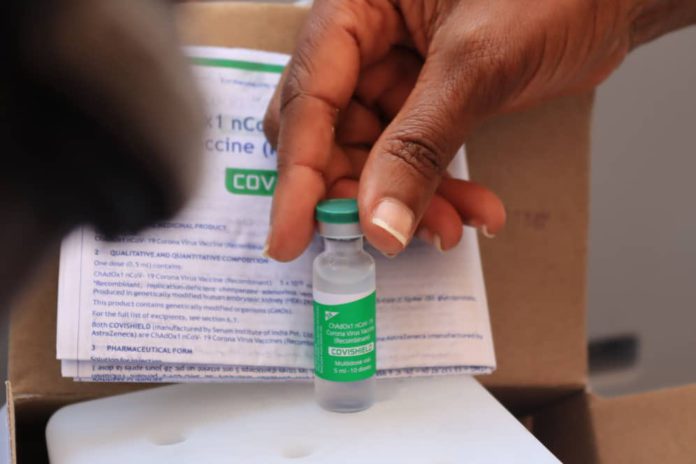
Ugandans to pay Shs60,000 for #Covid-19 vaccine as gov’t secures 18 million doses

#Covid-19 vaccine

The government of Uganda is set to procure 18 million doses of #Covid-19 vaccines.

The Ministry of Health working with the National Medical Stores (NMS) have place an order of 18 million doses of Astra Zeneca vaccine from Serum Institute of India which will be used to vaccinate person from the ages of 50 and above, persons with underlying health implications, teachers, security personnel, teachers and other essential workers.

Globally there 102,817,575 confirmed cases of Covid-19, including 2,227,420 deaths, reported to world health organisation (WHO). Uganda has 39579 confirmed cases and 324 deaths.

According to government spokesperson Ofwono Opondo, the eligible person will receive two doses in a space of four weeks and each dose costs USD 7 and that is USD 14 per person. The international transportation and handling cost by NMS is USD 3 making a total of 17 US dollars (approximately Shs60,000) per person.

“The order will be confirmed upon remitting of USD 5 million. COVAX facility managed by Global Alliance for Vaccines and immunisation confirmed that 3,552,000 doses will be imported by end of February or early in March. The vaccines will be available in the country on quarterly basis,” he said.

The move to import the vaccines comes at the time when private sector wants to participate in the importation of the vaccine however cabinet noted that their participation will be guided by #Covid-19 task force headed by the Prime Minister Dr. Ruhakana Rugunda.

Stories Continues after ad

CHAN 2021: Cameroon in semi-final clash with Morocco, Mali faces Guinea

chan trophy

Hosts Cameroon will face title holders Morocco in an epic semi-finals clash at the African Nations Championship (CHAN) in Limbe on Wednesday.

The other semi-final match will see Mali taking on Guinea in Douala on the same day.

All the countries to play in the last four of the tournament were known on Sunday night following the conclusion of the quarter-final matches.

The quarter-final matches saw the Atlas Lions securing their place when beating Zambia 3-1 at Reunification Stadium in Douala on Sunday.

The Moroccans progress to face Cameroon who secured a 2-1 comeback victory over two-time winner DR Congo at the Japoma Stadium in Douala on Saturday.

Mali progressed after they defeated Congo 5-4 in a penalty shooutout on Saturday as their clash ended in a 0-0 draw after extra time in Yaounde.

The Eagles will face their neighbours Guinea in the last four of the competition which is designed exclusively for home-based players after the latter defeated Rwanda 1-0 on Sunday.

The semi-finals will start on Wednesday when Mali play take on Guinea at the Japoma Stadium in Douala. Cameroon and title-holders Morocco at the Limbe Stadium will be also played on the same day.

The winners of Wednesday’s matches will clash in the final at the Ahmadou Ahidjo Stadium on Sunday.

The losers will play in the third-place playoff at the Reunification Stadium in Douala on Saturday.

Stories Continues after ad

New #Covid-19 variants powering Africa’s second wave

Covid-19 testing kits

Covid-19 cases and deaths are surging in Africa as new, more contagious variants of the virus spread to additional countries.

Over 175 000 new Covid-19 cases and more than 6200 deaths were reported in Africa in the last week while infections rose by 50% on the continent between 29 December 2020 and 25 January 2021 when compared with the previous four weeks. In the past week, there has been a small dip in cases in South Africa, but 22 countries continue to see their case numbers surge. Deaths rose two-fold in the same four-week period, with over 15 000 concentrated in 10 mainly southern and northern African nations.

The 501Y.V2 variant, first identified in South Africa, is predominant and powering record case numbers in South Africa and the sub-region. It has been found in Botswana, Ghana, Kenya, Comoros, Zambia and in 24 non-African nations.

“The variant which was first detected in South Africa has spread quickly beyond Africa and so what’s keeping me awake at night right now is that it’s very likely circulating in a number of African countries,” said Dr Matshidiso Moeti, the World Health Organization (WHO) Regional Director for Africa.

The variant that was initially detected in the United Kingdom has been found in The Gambia and Nigeria. Further research is needed to determine whether the new strain causes more severe illness.

WHO is working to track and tackle new variants by helping countries build and boost the complex genomic surveillance capacities needed to detect and respond to new variants, shipping samples to sequencing laboratories and providing supplies and technical guidance.

With the Africa Centres of Disease Control and Prevention, WHO helped set up a Covid-19 genomic sequencing laboratory network with laboratories in the Democratic Republic of the Congo, The Gambia, Ghana, Kenya, Nigeria, Senegal, South Africa and Uganda.

WHO calls on all countries to ship at least 20 samples to sequencing laboratories every month to help map the fast-evolving situation and best target responses at all levels.

“In addition to the new variants, Covid-19 fatigue, and the aftermath of year-end gatherings risk powering a perfect storm and driving up Africa’s second wave and overwhelming health facilities,” said Dr Moeti. “Africa is at a crossroads. We must stick to our guns and double down on the tactics we know work so well. That is mask wearing, handwashing and safe social distancing. Countless lives depend on it.”

Facing a second wave of infections, African nations must ramp up testing, the isolation of contacts and the treatment of patients, as well as enhancing proven prevention measures.

“Our shared goal is to get ahead of the virus. Unfortunately, the journey will be longer, harder and far more costly in the absence of consistent, all-of-society commitments to blocking infection,” said Dr Moeti.

Dr Moeti spoke during a virtual press conference today facilitated by APO Group. She was joined by Professor Tulio de Oliveira, Director, KwaZulu-Natal Research and Innovation Sequencing Platform, University of KwaZulu-Natal in South Africa, and Dr Amadou A Sall, Director of Institut Pasteur de Dakar in Senegal.

Stories Continues after ad

Uganda receives second A330neo Airbus

Uganda's A330neo Airbus aircraft

Uganda Airlines, the country’s flag-carrier has received the second A330neo Airbus aircraft. The aircraft is the latest version of the most popular wide body airliner which was established in 2019.

The delivered Airbus A330neo adds on the already received A330neo Airbus and four bombardier jets, making a great fleet for the start of the international long haul flights.

In line with the Company’s strategy to keep offering its customers unbeatable economics, increased operational efficiency and superior passenger comfort, the A330-800 is the latest addition to Airbus’ commercial aircraft product line. Thanks to its tailored, mid-sized capacity and its excellent range versatility, the A330neo is considered the ideal aircraft to operate as part of the post-Covid-19 recovery.

Featuring Airbus’ Airspace cabin, passengers can enjoy a unique experience and explore its full comfort with 20 full-flat, business-class beds, 28 premium-economy seats and 210 economy-class seats, totalling 258 seats.

The A330neo will enable the new airline to launch its long-range operations with non-stop intercontinental flights to the Middle East, Europe and Asia.

The A330neo is a true new-generation aircraft, building on the features of the popular A330 and using technology developed for the A350. Powered by the latest Rolls-Royce Trent 7000 engines and featuring a new wing with increased span and A350-inspired Sharklets, the A330neo provides an unprecedented level of efficiency.

The aircraft burns 25% less fuel per seat than previous generation competitors. The A330neo cabin offers a unique passenger experience with more personal space and the latest generation in-flight entertainment system and connectivity.

By last year, the government received four Bombardier CRJ900 regional Aircrafts that were ordered by Uganda National Airlines Company in July 2018.

The commercialization of the airline will start on 28 august to various destinations in Kenya, Burundi, Democratic Republic of Congo), Ghana, Nigeria, Rwanda, Somalia, South Africa, Sudan, Tanzania, Zambia, Zimbabwe and Zanzibar.

Established in May 1976, Uganda Airlines, started operations in 1977 and was liquidated in May 2001 after efforts to privatize the company failed due to massive debts it had incurred.

Its revival now means Uganda Airlines will have to compete with Africa’s best such as South Africa Airways, Ethiopian Airways, Kenya Airways, RwandAir and others on the continent, not forgetting International ones such as Emirates Airways, Qatar Airways and Turkish Airways among others that land at Entebbe International Airport.

Stories Continues after ad

Kyambogo students oppose University on online teaching

Kyambogo Students moving out of the University , infront of them is UPDF Soldiers patrolling the university, anticipating a protest from students.

Students at Kyambogo University have opposed the university’s saying that students have been studying online; some students have revealed to our reporter that they have never accessed any learning materials via online.

The students claim, it is unfair for the University to come out and say that all students have been studying Online yet most of them failed to access the study materials online.

According to the Vice Chancellor Elli Katunguka Rwakishaya, continuing students resumed studies using the ODel system on 18th January and they (students) were supposed to start their physical lectures on 1st February. However, this did not go like they had planned.

Professor Katunguka further stated that they had to relay the position of the government on the re-opening of the universities and encouraged students and academic staff to continue utilizing online learning using the ODel system as the University awaits government guidance.

John Mbaziira, a student leader said as students they are disappointed by the Vice Chancellor’s communication that the University will not open for the next three month, and students will remain studying online. Mbaziira reveals that the online studies have failed to help students.

He also highlighted that it is not only students challenged by online, ”I have interacted with lecturers who have oftentimes told me that they have failed to send study materials online apart from sending PDF’s on WhatsApp.”

Deborah Ampereza a bachelor of accounting and finance second year student explained that in her class, none of the students has managed to access the study materials online, and wonders which students the university says they are studying online.

Lawrence Otahunga a first year student of Bachelor of Arts with education said as students they have really suffered with online studies. He noted that since the university started sending student materials online, most of them have failed to access them due to issues to do with poor internet connections in rural areas among other challenges.

Commenting on the student’s argument that they have not been attending online studies, Reuben Twinomujuni, the Senior Public Relations Officer Kyambogo University, said it is true that some have managed and others failed. He further urged students who have challenges with online to come to the university and access free internet and perhaps seek guidance from ICT team.

“Those who have not, for whatever reason should have ways of joining because that is the way to go. We can’t say that okay, we have defied come and study,” Twinomujuni adds.

In 2020, Kyambogo University set aside more than Shillings 400 million to set up an online platform for continuing students as they moved to tap into the digital learning space. This was a decision taken by the top management to invest in online learning platforms after realizing that the Covid-19 pandemic may take long to warrant face to face learning.

The money was meant for training lecturers how to use online tools, purchase online teaching equipment and induct students. However students say they were not inducted like they had planned to also hinder the online learning process.

Stories Continues after ad