Stanbic Bank
Stanbic Bank
25.3 C
Kampala
Stanbic Bank
Stanbic Bank
Home Blog Page 890

ICC’s judgement in the matter against Dominic Ongwen for next week

Dominic Ongwen

The International Criminal Court (ICC) is set to deliver its judgment in the matter against former Lord’s Resistance Army (LRA) commander, Dominic Ongwen.

Ongwen is accused of commanding LRA rebels who attacked four camps for displaced people in Pajule in Pader District, Abok, Lukodi, Odek in Gulu and Oyam districts killing, raping and looting among other crimes committed by the insurgents.

According to a press statement released by the Netherlands based Court; the judgement will be delivered on 4 February 2021. The session will be transmitted live through the ICC website and Practical information on attending the session and information materials will be available in due course.

“The verdict will be read out in public and will either acquit or convict the accused. The accused before the ICC is presumed innocent. While the Prosecution must prove the guilt of the accused, the Trial Chamber will convict the accused only if it is satisfied that the charges have been proven beyond reasonable doubt. The Chamber bases its decision only on the applicable law and on evidence submitted and discussed before it at the trial,” ICC said.

The Chamber is composed of Judge Bertram Schmitt, Presiding Judge, Judge Péter Kovács and Judge Raul Cano Pangalangan. The three judges ensure the fairness of the trial and that the rights of both parties and of the victims are respected.

The trial in this case opened on 6 December 2016. Dominic Ongwen is accused of 70 counts of war crimes and crimes against humanity allegedly committed in northern Uganda. The Prosecution and the Defence have completed the presentation of their evidence. The Legal Representatives of Victims also called witnesses to appear before the Chamber. On 12 December 2019, the Presiding Judge declared the closure of the submission of evidence in the case. The closing briefs were filed on 24 February 2020. The closing statements took place from 10 to 12 March 2020.

Over the course of 231 hearings, the Chamber heard 69 witnesses and experts called by the Office of the ICC Prosecutor, Fatou Bensouda, 54 witnesses and experts called by the Defence team lead by Krispus Ayena Odongo and 7 witnesses and experts called by the Legal Representatives of the Victims participating in the proceedings. The judges ensured the respect of the rights guaranteed by the Rome Statute to each of the parties, including the right to question the witnesses.

A total of 4065 victims, represented by their legal counsels Joseph Akwenyu Manoba, and Francisco Cox, as well as Paolina Massidda, respectively, have been granted the right to participate in the proceedings. They have expressed their position on matters heard before the Chamber and were authorised to examine witnesses on specific issues.

The Trial Chamber issued 70 oral decisions, and 190 written decisions during the trial phase of the proceedings. The total case record, consisting of the filings of the parties and participants and the Chamber’s decision, currently includes more than 1750 filings.

Stories Continues after ad
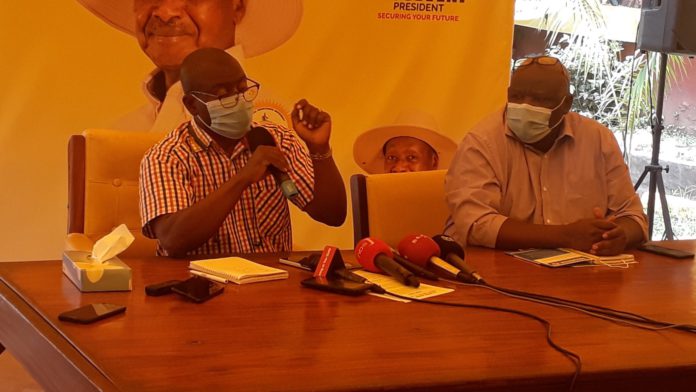
Somali Government Should Stop Scapegoating Kenya

Somalia President Abdullahi Mohamed Farmajo


 By David Matsanga

London

n African Forum wishes to issue the following statement in support of IGAD initiatives for peace in the region. For a long time now, the Federal Government of Somalia (FGS) has labelled several and outrageous grievances against Kenya which on several occasions have led to diplomatic tiff between the two countries. Commensurate to the cycles of such conflicts, Somalia has been quick to recall its ambassador to Nairobi and sending Kenyan Ambassador to Mogadishu in the reverse direction.

The latest of such diplomatic tiffs between the two countries happened in November 2020 on what Somalia alleged as interference by Nairobi on its internal affairs. All Somali accusations against Kenya have never been proven true to date. The recent fighting in Bulla Hawo, South West of Somalia bordering Madera town is yet another indicator of the incessant threats to Kenya’s national security emanating from Somalia under the auspices of President Farmajo’s FGS administration. Under President Farmajo, Somalia has ceaselessly accused Kenya of meddling into its internal affairs, the latest


Allegation being that Kenya is hosting and funding a Somali rebel group. An allegation which is untrue according to Kenyan authorities. Inimical activities by the FGS towards Kenya are retrogressive given the backdrop of many decades of political instability and insecurity in Somalia which has been occasioned by Al-Shabaab.

The porosity of Kenya’s border with Somalia has occasionally been used by Al-Shabaab and other criminal elements to create insecurity along the border areas and sometimes into the interior of Kenya. Consequently Kenya has responded by heightening security operations along the border with Somalia. Under the AMISOM mandate, the Kenyan troops have also remained in Somalia as part of the African Union’s ongoing stabilization and pacification processes.

It is therefore foolhardy for the government of Somalia to hoodwink other neighboring states and the international community that Kenya is working to undermine the ongoing peace processes and other internal matters of interests to Somalia. The Intergovernmental Authority for Development (IGAD) is seized of the diplomatic tiff between Kenya and Somalia and has been instrumental in

Resolving the cyclic conflicts between the two countries. Unlike Kenya, Somalia has been indifferent in welcoming the IGAD led initiative to arrive an amicable solution to alleged grievances which Somalia has always raised against Kenya. The recent accusations by Somalia that Kenya is arming a militia close to its common border with the latter is working at cross-purposes with IGAD led initiative to find lasting solutions to the cyclic diplomatic rows between the two countries.


Factors that are pertinent in Kenya’s relations with Somalia While Somalia seems to downplay the important role Kenya has played in restoring peace and stability after many decades of lawlessness and instability in the country. There are a number of salient issues which the manufactured hatred against Kenya should not cloud out; •Kenya has sincere security interests in the region. It cannot be refuted that Al-Shabaab and other terror groups operating in Somalia and beyond pose national security threats to Kenya and other states in the regional. Peace and stability in the

Region is an all-encompassing national security interest which should inform diplomatic engagement in the region. Farmajo’s administration should underscore the important role Kenya continues to play stabilizing Somalia and work with partner states to return Somalia to a lasting peace and stability. •Security and stability across Kenya-Somali border is important for local populations in terms of trade and other cultural exchanges.

Parochial interests of the FGS shouldn’t overshadow the genuine need for peace and stability for the local communities living across the border areas which continue to experience sporadic conflicts due to inimical activities of FGS. •Somalia has never been forthright on its allegations against Kenya, the allegations seems to be charades aimed at covering up for the shortcomings of President Farmajo’s administration. President Farmajo is up for elections and seems keen on stroking manufactured hatred towards Kenya to divert the attention of the population back at home. Since postponing last year’s general elections, Farmajo

Has been keen of finding scapegoats to hoodwink Somalis back at home to support his failing administration. •Kenya’s heightened security operations along the border areas with Somalia is premised on the existence of Al-Shabaab in Somalia and hence the necessity to protect its border areas from access by the militia group from Somalia. This, Kenya has ably done using its national security forces and agencies. To accuse Kenya of funding a militia is an affront tithe state and the people of Kenya.

I BELIEVE that Kenya will remain committed to peace processes and stabilization of Somalia which is a part of the country’s regional commitment to peace and stability. Kenya stands to gain nothing when its neighboring states are at war. Therefore, Somalia should cease from labelling wild allegations against Kenya. •The Kenya Defense Forces (KDF) troops in Somalia remains under the auspices of the AMISOM therefore Somali’s continual accusation of KDF troops’ misdemeanor is not in good faith. In any case, Somali national security

Chairman 

Pan African Forum

Stories Continues after ad

Uncle Money sentenced to 4 years in prison

Renowned Uganda Cranes fan Jackson Ssewanyana commonly known as Uncle Money

Buganda Road court chief magistrate, Miriam Akello Ayo convicted renowned Uganda Cranes fan Jackson Ssewanyana commonly known as Uncle Money to four years in jail on charges of manslaughter.

Uncle Money was convicted together with Benson Ssenyonga after finding them guilty of causing the unlawful death of Siraje Akim Tumusiime, a former mechanic in Kasubi Zone Four, Kampala district who was suspected of stealing a phone.

Magistrate Miriam Okello said that she was convinced by the evidence from witnesses that the duo participated in the act of mob justice that she said was barbaric and ought to be condemned.

Tumusiime died on August 16, 2019, a few days after being subjected to mob justice. During the hearing, court heard that Uncle Money held the deceased by the collar and dragged him on the road towards the Royal hotel in Kasubi before handing him over to a mob led by Ssenyonga.

The mob thereafter undressed the deceased and battered with electricity cables after tying his arms together with the legs.  He pleaded with the mob to spare his life in vain.

Akello directed that court refunds the Shs 2 million the convicts deposited as security for their bail and advised them to appeal the decision in a higher court if they are dissatisfied with her judgment.

State prosecutor, Timothy Amerit had asked the court to sentence the convicts to 30 years in jail, arguing that cases of mob justice have been rampant in Ugandan societies. However, the convict’s lawyer, Robert Kasozi asked the court to give his clients a lenient sentence because they are sole breadwinners of their families and first-time offenders.

Stories Continues after ad

#Covid-19 vaccine is a path for recovering human capital

#Covid-19 vaccine

The #Covid-19 pandemic presents a global health emergency and an unprecedented economic crisis. In addition to the loss of life and productivity directly attributable to COVID-19, the pandemic poses risks to human capital through several other pathways, key among which is the disruption in the provision of essential primary health, education, and community services.

A recent World Bank report estimates that the level of both schooling and learning will fall due to COVID-19, resulting in a loss of between 0.3 and 0.9 years of schooling, adjusted for quality. Measures taken to contain the pandemic are also unleashing severe consequences for livelihoods and food security, and the stress of insecurity, isolation, and quarantine are associated with an increase in depression and domestic violence. These effects are exacerbating pre-existing inequalities, especially for vulnerable populations including women and girls who bear a disproportionate impact from disruptions in core services.

Simulated results from the 2020 Human Capital Index report show that without any remediation, #Covid-19 impacts could leave an entire generation behind, and a decade of human capital progress reversed. The implications for future productivity are sobering. In 20 years, roughly 46 percent of the work force in a typical country (people ages 20-65) will be composed of individuals who were either in school or under the age 5 during the Covid-19 pandemic. Protecting investments in the human capital of this generation is critical.

The emergence of new, more transmissible variants has led to further large-scale shutdowns and redoubles the urgency of vaccination. Recovering from setbacks in human capital outcomes will depend greatly on the successful deployment of vaccines.  The re-opening of early childhood development services and schools is essential to a recovery in learning and years of schooling, and to caregivers’ return to work. Restored access to health services and relief to overburdened health systems are needed to restore preventive health services and control infectious diseases and non-communicable diseases.

With a re-opening of the economy, there will be an increased availability of jobs, improving labor productivity, helping to restore remittances, address supply disruptions, and leverage decreases in poverty and hunger.

Vaccine deployment will require a national level “whole of society” approach, including; mobilizing financing; leveraging private and public actors within the health system; infrastructure support for vaccine delivery including energy solutions for cold chains and digital information systems to monitoring delivery; and civil society support for delivery, communication, and setting behavioral norms.

While vaccination coverage expands, risk reduction measures must be maintained. This includes social distancing, face and eye protection, hand and surface sanitation, a preference for outdoor activities, and the avoidance of large superspreading events.

Finally, international solidarity and cooperation are critical. From clinical trial collaboration to technology transfer, from procurement and logistics assistance to implementation support, COVID-19 vaccination requires dedicated national and international coordination across a wide range of stakeholders as illustrated in this theory of change.  Financial assistance, including debt forgiveness and concessional financing, will be important to ensure access to vaccines and recovery of human capital, particularly in low-income countries.

These international efforts are needed to combat vaccine nationalism and ensure equitable global access to vaccines. According to a recent RAND estimate, the unequal allocation of COVID-19 vaccines could cost the global economy up to $1.2 trillion a year in GDP. A nationalistic stance toward the pandemic will only prolong this global health and economic crisis.

That’s why the World Bank Group is building on its initial COVID-19 response with $12 billion to help poor countries purchase and distribute vaccines, tests, and treatments, and strengthen their health systems to ensure the vaccines reach everyone, especially the most vulnerable.  World Bank financing will complement and work alongside other efforts, such as COVAX, a global partnership to promote equitable access to vaccines.

Stories Continues after ad

Carrefour celebrates first anniversary in Uganda

Carrefour Celebrates First Anniversary in Uganda

Ugandan shoppers are set to win 100 free trolleys and enjoy massive daily discounts as Carrefour celebrates one year in Uganda from 29th January, until 11th February.

To celebrate the first anniversary in Uganda, Carrefour has launched a series of unique offers to reward their shoppers who have chosen the store as their preferred shopping destination all year.

The celebrations will start with a Spin and Win game, where shoppers will win a total of 100 trolleys spread throughout the 14-day celebration.

Carrefour will also give out free cakes for shoppers* born in the anniversary period every day for two weeks.

There will be special deals of up to 50% on electronics, appliances, groceries, fresh food range and more at the Oasis Mall store.

Located at the Oasis Mall in Kampala, the 2,800 square metre store was opened in January 2020 at a high-profile event presided over by Amelia Kyambadde, the Minister for Trade in Uganda together with Carrefour and Majid Al Futtaim executives.

Stories Continues after ad

SACKED OR RESIGNED: Robert Kabushenga exits Vision Group

Robert Kabushenga

Vision Group’s Managing Director Robert Kabushenga has resigned. However according to various sources, he has been sacked by the board for poor performance.

In an email to all the Vision Group staff on Friday January 29, 2021, Kabushenga explained his decision, in which he said the board had agreed to.

“This is to let you know that for personal reasons I have asked the Board for an early retirement and this has been accepted,” he wrote.

Kabushenga explained that he will oversee a 90-day transition, as requested by the Board, before moving on.

“I am proud of the success we achieved and the impact we have had in society. This was possible because we worked together as a team. No single person could have done it on their own, certainly not me. It was an absolute honor and pleasure to have done so,” he explained.

Kabushenga has been the CEO of the news company since 2007. Announcing his exit was welcomed by mixed reaction from the group employees with some saying his exit is overdue. Other sources say Kabushenge realised that his contract wasn’t going to be renewed given that the new board wasn’t happy with the group performance.

Stories Continues after ad

Police’s modern lab commissioned to step up forensic investigations

Police’s modern lab commissioned

The Uganda Police Force have commissioned a modern laboratory in efforts to improve investigations capabilities in forensic technology which will aid detectives in their work.

“The facility (the laboratory) will not only support a speedy investigation but also improve the conviction rates (in Courts of law) hence the need to invest more resources in it,” The Principal Judge, Dr. Flavian Zeija said these while commissioning the Forensic Laboratory Capabilities at Police headquarters, Naguru.

He said that forensic evidence is very crucial in investigation and its success does not come cheap but with a cost.

“The crime is becoming sophisticated and technology advancement keeps changing with time hence more training and investment in such machinery is needed,” Dr. Zeija said.

He added that the Police leadership must be in position to train more officers especially in forensic science in order to have more man power to run the facility.

He said that there must be coordination and integrations of DATA Base between institutions like Police, NIRA, DPP and Court for the success of the project.

“It makes no sense for you to develop all the DNA Profile and if you bring them to court, The DPP must be in position to appreciate what is being done here to achieve a conviction,” the Principal Judge said.

The Inspector General of Police Okoth Ochola was represented at the function by his deputy Maj.Gen. Paul Lokech. He said that police management is committed in building a modern and professional Force in the country.

“Our major focus as Police Management is to rebuild and transform the Uganda Police Force in a modern, professional, service oriented, pro-people and effective institution. Key among the challenges has been the capacity gaps in terms of use of robust scientific methods of intelligence gathering and crime investigation,” the Inspector General of Police said these in a speech read for him by his Deputy Maj. Gen. Lokech.

He added that, the application of robust scientific methods such as these commissioned will enhance capacity to investigate crimes such as transnational crimes, cybercrimes, trafficking in drugs and persons, human sacrifice, trading in wildlife and their products, environmental related crimes, proliferation of small arms and light weapon.

The IGP added that, “The use of science in modern policing is key to investigations globally and we are now proud to have a directorate of Forensic Services that spearheads the application of science in our approach.”

As part of the strategy to prevent and detect crime, The IGP revealed that Police is emphasizing developing capacity to deal with gender and sexual based violence and the DNA capabilities commissioned are part of this capacity building.

The Police Boss said the commissioning is an addition to the efforts that are already underway to preserve Law and order in the country.

He revealed that they have now entrusted these capabilities to the Directorate of Forensic Services and encourage the forensic personnel to continue performing as a team whilst ensuring that these new capabilities are put in to proper use in the investigation of crimes.

According to the acting Director Forensic Services Superintendent of Police Andrew Mubiru, the directorate handles ballistic and tools marks, Crime identification, Chemical, Biological, Radiological, Nuclear and explosives analysis and cybercrime among others.

He said the directorate has drastically contributed to policing and exists to provision of scientific evidence to link suspects to specific criminal acts, identify offenders and criminals using fingerprints and photographs, Identify disaster victims using DNA and other scientific techniques.

Mubiru revealed that the Directorate has been hosting the East African Regional Forensic Referral Center of Excellence (RFRC) on behalf of the government of Uganda since 2012 adding that, the choice was based on the fact that Uganda had an existing dedicated laboratory, trained human resource and capacity to expand since plans are underway to establish an ultra-modern forensic center in line with the presidential directive made on the floor of parliament in June 2018.

Stories Continues after ad

NRM celebrates winning in Kamwokya, NUP’s strong hold

Muhire Moving with NRM Suporters in Kamwokya Kisenyi 2 Zone. Photo by Ronard Shabomwe.

National Resistance Movement-NRM supporters in Kamwokya a capital city suburb have celebrated the victory of their two local council three-LC3 victory over their close National Unity Platform-NUP contenders in NUPs strong hold area.

NRM won Kamwokya 2B and Kamwokya 2C parishes defeating NUP candidates; FDC, DP and independent candidates, in NUP strong hold area which hosts the NUP headquarters, Bobi Wine’s music studio and a home of his elder brother, Fred Nyanzi Sentamu alias Chairman Nyanzi.

Stephen Muhire, the new elected LC3 Councilor of Kamwokya 2B who garnered one thousand six hundred forty two-1642 votes attributed their victory to the hard work and cooperation they have with Kamwokya residents.

Muhire said that his closest contenders Robert Abigaba an independent former candidate and Ramathan Kanane NUP former candidate who scored three hundred sixty seven-367 and three hundred fifty six-356 votes respectively, have been great candidates but failed because voters chose workers not parties.

Other contenders in the race included FDC’s Aggrey Ngabirano, DP’s Godfrey Mabirizi Kayongo and independent Abasi Kayondo. Kamwokya 2B parish is made up of five zones which include Green Valley, Kisenyi 2, Market area and Kamwokya Central.

According to James Kakooza, the LC3 councilor elect of Kamwokya 2C a Parish with three zones which include Contafrica, Church area, and Kisenyi 1 who scored one thousand five hundred and three-1503 votes against other five candidates, said Kamwokya residents voted according to  the capabilities of the people. He also attributes his win to the good mobilization done by his campaigns.

NRM supporters celebrating their win. Photo Ronard Shabomwe.

Other contenders in Kamwokya 2C Parish is NUP’s Francisco Bwambale who garnered four hundred ninety three-493 votes, independent Frank Kilule with twenty seven-27 votes, FDC’s Stephen Agaba with fifteen-15 votes and DP’s Denis Mpoza who came the last with nine-9 votes. Kakooza is also the chairperson LC1 Church zone area in Kamwokya 2C parish.

According to Charles Ssegatale, a resident of the Church area zone, it was an amazing NRM getting this victory since Kamwokya is a home for NUP. He adds that if NUP managed to win most of the areas in Buganda region and other urban settings, they thought it would be the same wave in Kamwokya, however, this turned up differently which is a great victory in NRM.

“This is like opposition winning against President Museveni in his home area in Kiruhura. Bobi wine was born and raised here, but I think these people (James Kakooza and Stephen Muhire are great leaders; it is their character and hard work that brought this victory,” Says Ssegatale, the Kamwokya resident.

However, the National Unity Platform contender explained that their loss was due to various irregularities marred the election process. Francisco Bwambale NUP former candidate who lost to James Kakooza in Kamwokya 2C said that NRM has a record of winning in Kamwokya even when other opposition parties were still powerful.

Bwambale however, says that since Kamwokya is a home for their party, they had many hopes to win but because the election was not free, things did not come out well. “The election has not been free and fair, but we have nothing to do other than continuing working for people and to wait for another chance,” he added.

Stories Continues after ad

Housing Finance Bank, Buganda Kingdom partner to offer affordable and quality housing

Housing Finance Bank, Buganda kingdom partner to offer affordable and quality housing

Housing Finance Bank has signed a Memorandum of Understanding with the Buganda Kingdom to enable people access mortgage financing to acquire affordable housing units in Mirembe Villas estate in Sentema.

The MoU will see the development of 400 housing units comprising of one to three bedrooms on 50 acres, a vocational school on 10 acres, an industrial park on 50 acres as well as restaurants, shopping mall, clinic and other recreational sites, in Sentema located only 13 kms from the Kampala Northern By-Pass.

Single bedroom house goes for Shs58 million, two bedroom at Shs95  million and three bedrooms at Shs130 million.

Speaking at the signing of MoU, Katikkiro Charles Peter Mayiga said; “You gauge the development of a country by looking at how its people are housed. We have a housing crisis in Uganda.”

“I am happy for this partnership between Buganda Land Board (BLB), Gouji and Housing Finance Bank which will enable people to get access to credit to buy housing units being built at Sentema.”

The Managing Director (MD) of Housing Finance Bank Mr. Mugabi Micheal said; “Uganda has a deficit of 2.5 million housing units. We are therefore happy to be part of this project to help people acquire affordable housing. We are long time partners of Buganda Kingdom.”

Ms. Wind Shen from Guoji group said; “We are happy to be part of this ceremony and the entire process of helping people have access to affordable quality housing. We started partnering with Buganda five years ago with Mirembe villas.”

Stories Continues after ad

Continuing students to remain home for next three months

Mary Okwakol

Government has directed Universities and other teaching institutions to shun the reopening of classes for non-finalists following closure in March 2020. The closure of schools peddled at curbing the spread of #Covid-19 pandemic.

On 20th September 2020 during a televised address to the nation President Yoweri Museveni ordered for reopening of schools for candidates and learning has been ongoing since October 15, 2020.

On 21st January 2020, the Executive Director of National Council for Higher Education (NCHE), Prof Mary Okwakol directed institutions to remain closed pending official communication from the government.

The institutions had however defied the directives and embarked on advertising for continuing and new students were will to join for next term which a according to running adverts was slated for next week.

“The NCHE is in receipt of a communication from the First Lady and Minister of Education informing us that based on the advice from the Presidential Scientific Advisory Committee, the President has guided that all higher education institutions should continue studying online using the Open Distance E-learning (ODeL) for at least another three months. This is so to enable government find a lasting solution,” Prof Okwakol said yesterday.

She encouraged teaching institutions to continue embracing the ODeL system in a bid to curb the spread of #Covid-19.

Stories Continues after ad