Stanbic Bank
Stanbic Bank
18.8 C
Kampala
Stanbic Bank
Stanbic Bank
Home Blog Page 91

Uganda Airlines and Air India sign interline deal to expand Africa–India connectivity

Uganda Airlines, the national carrier of the Republic of Uganda has signed a new interline partnership with Air India, one of Asia’s most established airlines in a bid to greatly enhance connectivity between Africa and the Indian subcontinent.

The agreement, which came into effect on August 25, 2025 allows the two carriers to link their networks and provide passengers with wider travel options on a single ticket.

The arrangement enables Uganda Airlines passengers flying from Entebbe International Airport (EBB) to connect through Air India’s global hub in Mumbai (BOM) to more than 25 cities across India and several international destinations. These include major Indian cities such as Ahmedabad, Amritsar, Bengaluru, Bhubaneswar, Chandigarh, Chennai, Coimbatore, Delhi, Goa, Hyderabad, Indore, Jaipur, Kochi, Kolkata, Lucknow, Nagpur, Patna, Thiruvananthapuram, Vadodara, Varanasi, and Visakhapatnam, as well as international hubs like Bangkok, Colombo, Dhaka, London Heathrow and Singapore.

In return, Air India customers will gain access to Uganda Airlines’ expanding African network, with connections to Nairobi, Johannesburg, Dar es Salaam, and Kinshasa. The partnership is designed to offer seamless connectivity, a single-ticket booking experience, and smoother baggage handling across the networks of both carriers.

Uganda Airlines Chief Executive Officer, Jennifer Bamuturaki, hailed the agreement as a turning point for the airline.

She noted, “We are excited to launch this partnership with Air India, an iconic brand in global aviation. This partnership is a significant step forward in our ongoing efforts to expand our international footprint and strengthen our network. This collaboration will provide our passengers with seamless connectivity, a single ticket travel experience to a wider range of destinations, and stronger economic and cultural ties between our regions.”

Air India’s Chief Commercial Officer, Nipun Aggarwal, emphasized the partnership’s importance in bridging the two regions.

Nipun Aggarwal said, “We are happy to partner with Uganda Airlines, enhancing connectivity between India and Africa. This partnership not only provides our customers with seamless access to Uganda and an extended network across Africa but also warmly welcomes Uganda Airlines’ passengers to explore Air India’s extensive routes within India and beyond, fostering stronger economic and cultural ties between our regions.”

Uganda Airlines revived in 2018 operates a modern fleet that includes Airbus A330neo aircraft and CRJ900s. The carrier has been recognized five times by CH-Aviation as having Africa’s youngest fleet. Beyond connecting Africa, the Middle East, Asia, and Europe, the airline is committed to reliability, safety and delivering authentic Ugandan hospitality while showcasing the “Pearl of Africa.”

Air India, part of the Tata Group, has a rich history dating back to 1932 when J.R.D. Tata piloted its inaugural flight. Today, it operates over 200 aircraft, employs more than 20,000 people, and serves 55 domestic and 31 international destinations across five continents. Under its five-year transformation plan, Vihaan.AI, the airline is modernizing its operations, investing in technology, and upgrading its fleet. This includes a USD 400 million commitment to refurbish its wide-body aircraft with new seats and inflight entertainment, as well as a record-breaking order of 470 new aircraft from Boeing and Airbus, the largest in commercial aviation history.

With both airlines investing in growth and global reach, the Uganda Airlines–Air India partnership is poised to strengthen aviation links between Africa and India, while deepening economic, social, and cultural exchanges between the two regions.

Stories Continues after ad

EU, Sweden host podcast on press freedom to mark International Day of democracy in Uganda

Moderators Raymond Mujuni and Mr. Simon Kasyate, and panelists Daniel Kalinaki, General Manager of Nation Media Group Uganda, and Dr. William Tayebwa, Head of the School of Journalism at Makerere University.

In a #TeamEurope initiative, the Delegation of the European Union to Uganda and the Embassy of Sweden in Uganda, once again joined forces to mark the International Day of Democracy with an event that underscores the vital role of press freedom during electoral periods.

As Uganda prepares for its General Elections scheduled for January 2026, the EU and Sweden curated a high-level round-table dialogue titled “Navigating Press Freedom During Electoral Periods”. This timely discussion sought to address the complex and often contradictory media landscape in Uganda, where vibrant journalistic activity coexists with legal and extra-legal restrictions on free expression—particularly during sensitive electoral times.

A distinguished panel was featured, comprising seasoned Ugandan journalists, media scholars and interventions from the audience who included political actors, civil society representatives, academics, youth and women leaders. The event took place on September 16, 2025, at the Residence of the Swedish Ambassador in Kampala.

On panel sat Mr. Daniel Kalinaki, General Manager of Nation Media Group Uganda, Dr. William Tayebwa, Head of the School of Journalism at Makerere University. Moderated by respected Ugandan media professionals, Mr. Raymond Mujuni and Mr. Simon Kasyate — hosts of the novel podcast “Grab A-Coffee”— the event was recorded and presented as a podcast. This innovative format enables the conversation to reach a broader audience, exploring the nuances of press freedom and its challenges during elections.

Despite constitutional guarantees of press freedom, journalists in Uganda face significant challenges including harassment, violence, and operational constraints, especially when reporting on the run-up to elections.

“A healthy democracy requires a vibrant free press to operate without reprisal, intimidation and harassment,” noted Swedish Ambassador to Uganda, H.E Maria Håkansson.

Speaking at the closing of the event, EU Ambassador to Uganda, H.E Jan Sadek noted, “We often say that democracy depends on dialogue. But that only means something if we are ready to face complexity and contradiction. That is exactly what happened here today.”

The event sought to foster a constructive and non-confrontational debate on balancing the media’s duty to inform with national security concerns, a delicate equilibrium crucial to Uganda’s democratic process. The collaborative event highlights Team Europe’s ongoing commitment to supporting democracy, freedom of expression, and good governance in Uganda.

A live audience of approximately 70 key stakeholders, including diplomats, members of the Uganda Media Sector Working Group and Uganda Editors’ Guild, groups that play a critical role in supporting a professional and sustainable media, were present at the event.

Stories Continues after ad

Businessman Garuga’s son blocks administration of late father’s multibillion-dollar estate

Late James Garuga Musinguzi.

A legal caveat has been lodged in the High Court of Uganda to stop the granting of letters of administration for the estate of the late businessman, James Musinguzi Garuga, following his death at Nakasero Hospital on August 6, 2025. The caveat was filed by his son, also a biological beneficiary, Alwyn Carl Musinguzi Garuga.

The application, registered under Administration Cause No. 1046 in the Kampala High Court’s Family Division, was lodged through legal representatives Abaine‐Buregyeya & Co. Advocates. It directs that “nothing be done in the matter of the estate of the late James Musinguzi Garuga … without notice to I, Musinguzi Alwyn Carl Garuga …” and that no letters of administration be issued to Peace Kesiime Musinguzi, who had earlier petitioned the court for the letters.

Caveats like this serve as a legal mechanism under Ugandan succession law to protect the rights of people who may have a claim to an estate before the courts formally grant administration. They essentially freeze progress until the caveator’s interest is assessed. In this case, Alwyn Carl Garuga claims he is a bona fide beneficiary of his father’s estate. He wants to ensure any administration process includes him, while Peace Musinguzi, presumably another family member, has already submitted a petition to be appointed administrator.

James Garuga was a prominent Ugandan businessman and political figure. He died on August 6, 2025, at Nakasero Hospital after treatment. Among his business interests were real estate, agriculture, transport, and tea plantations. He was also a founding member and financier of the Forum for Democratic Change (FDC).

If the court finds no good cause in Alwyn’s caveat, the petition for letters of administration may proceed in Peace’s favour. Otherwise, there may be a joint administration or new directions set by the court. Until then, the estate’s assets, including properties and businesses, may remain in limbo.

“Nothing be done in the matter of the estate of the late Musinguzi James Garuga … without notice to me, Musinguzi Alwyn Carl Garuga,” reads part of the caveat lodged on 2 September 2025.

“It’s true my father died this morning at Nakasero Hospital …,” another son, Johnnie Musinguzi, confirmed at the time of his father’s passing.

Under Ugandan succession laws, a successor or other interested person may lodge a caveat against the issue of letters of administration or probate before the grant is made, ensuring that they have the opportunity to be heard. Courts have, in past rulings, condemned the misuse of caveats when they serve merely to block or delay administration unjustifiably, rather than to protect a genuine interest. In this case, the High Court will have to consider Alwyn Carl Garuga’s caveat and decide whether his claim as beneficiary is valid, whether he should be notified and involved in the administration or whether Peace Musinguzi’s petition should proceed without his inclusion.

The coming weeks are expected to reveal whether the dispute will deepen into a drawn-out succession battle or be resolved amicably among the family members.

Stories Continues after ad

Why Your Career May Be Stuck and How Cleansing Your Star Can Open New Doors

Esther, a nurse at Soroti Regional Referral Hospital, had always believed that hard work speaks for itself. She was the type of employee who would sacrifice weekends to cover extra shifts, mentor younger colleagues, and take on additional responsibilities. Her dedication was unquestionable. Yet, for eight years, Esther watched her juniors rise through the ranks while she remained in the same position.

Whenever there was an opening for promotion, her name never even made the shortlist. Each time she applied, she received polite rejection letters, often without explanation.

At first, she thought it was favoritism in the hospital administration. Later, she blamed herself for not being smart enough. But deep inside, she couldn’t understand why no matter how much effort she put in, her career seemed stuck.

She is not alone. Many in Soroti and across Uganda share similar stories working hard, staying disciplined, yet feeling unseen.

The Invisible Forces Blocking Progress

In Ugandan culture, it’s often believed that a person’s destiny is guided by their “star.” This star represents the light that shines on your path, attracting opportunities, recognition, and success. When the star shines bright, doors open, people notice you, and life flows with ease.

But sometimes, the star can be dimmed. The causes vary:

  • Jealous colleagues or relatives who cast envy or negative energy.
  • Repeated bad luck that prevents progress even when opportunities come.
  • Invisible blockages that make your efforts unnoticed.
  • Spiritual interference that keeps you at the same level despite qualifications.

In Esther’s case, she later discovered that people had whispered negative words about her whenever promotions came up. At the same time, a cycle of envy and energy blockage had dimmed her star.

Why Star Cleansing Matters

“Star cleansing” is a spiritual process aimed at restoring your destiny’s brightness. It removes blockages caused by envy, curses, negative energy, or unresolved spiritual battles.

In Soroti, many who undergo cleansing through trusted healers like Masunga Doctors experience remarkable changes:

  • Long-delayed promotions suddenly come through.
  • New career doors open sometimes even outside the workplace.
  • Respect and recognition increase among colleagues.
  • Confidence and self-belief are restored.

Esther’s life changed dramatically after a cleansing session. Within six months, she was not only promoted but also recommended for a specialized training program in Kampala something she had dreamt of for years.

Real Stories from Soroti

  • Michael, a teacher in Soroti town, had applied for head teacher positions for five years without success. After cleansing his star, he received two offers within months.
  • Sarah, a businesswoman in Opiyai village, kept experiencing losses and theft in her retail shop. After star cleansing, business stabilized, and she later expanded into wholesale trade.
  • David, a civil servant in Soroti Municipality, was always sidelined during departmental selections for training and allowances. After cleansing, his name began appearing on the lists, and he now travels regularly for workshops.

These examples show that when your star is realigned, both your effort and your destiny begin to work together.

Practical and Spiritual Go Hand in Hand

Cleansing does not replace hard work, skills, or discipline. Instead, it removes hidden barriers so that your effort is visible. A bright star makes people notice your talent, respect your work, and trust you with opportunities.

For those in Soroti and beyond who feel trapped in the same position for years, combining practical effort with spiritual cleansing may be the missing link.

Steps You Can Take

  1. Acknowledge that your struggle may not be purely physical there may be spiritual interference.
  2. Seek help from experienced spiritual healers like Masunga Doctors, who understand how to cleanse stars and open new doors.
  3. Complement cleansing with action apply for new opportunities, attend interviews, and keep improving your skills.
  4. Stay positive cleansing restores not only destiny but also inner peace and courage.

Conclusion

If your story sounds like Esther’s hardworking yet stuck it may be time to consider cleansing your star. Many in Soroti have seen transformation after this step, gaining promotions, recognition, and new opportunities.

Masunga Doctors have guided countless people in Uganda, Kenya, and Tanzania through such blockages. With confidentiality and proven spiritual practices, they help individuals restore their destiny’s brightness.

📞 Contact Masunga Doctors

AFRICA OFFICES

Don’t remain stuck while others move ahead. Your career breakthrough may simply be a matter of cleansing your star and realigning your destiny.

Stories Continues after ad

Ssemujju Nganda: 2026 elections will be a reign of military terror

PFF party leaders, Erias Lukwago, Ssemujju, and Musumba addressing the media at the party head office on Katonga Road.

Opposition politician and Kira Municipality MP, Ibrahim Ssemujju Nganda, has warned that the upcoming 2026 general elections will be characterized by what he described as “a reign of military terror” aimed at keeping President Yoweri Museveni in power.

Speaking during a press briefing, Ssemujju said opposition forces were preparing a united front to resist what he termed a “military expedition” against Ugandans.

“The 2026 elections are nothing but a reign of military terror on right-minded Ugandans,” he stated.

He added, “Our leadership held a press conference and key to note were points around the upcoming 2026 military operation to keep the senile dictator in power and the illegal detention and countrywide abductions.”

Ssemujju, speaking on behalf of the People’s Front for Freedom (PFF) revealed that the party will not front a presidential candidate but instead support a joint opposition contender.

“In the bid to counter the junta, the PFF shall not field a presidential candidate but will rally behind a joint presidential candidate who will run the FREEDOM CAMPAIGN to counter the military expedition,” he explained.

The MP announced the formation of a 28-member National Campaign Team to spearhead the opposition’s mobilization efforts. The team will be led by veteran opposition leader Dr. Kizza Besigye, who is also the founding figure of the PFF. According to Ssemujju, the team will traverse the country spreading what he termed “the freedom message.”

He expressed concern over what he called escalating lawlessness by state security agencies.

“We are deeply concerned about the lawlessness by the regime security agents who have since chosen the Amin methods of abducting Ugandans and the judiciary that is now an accomplice to such illegalities,” he said.

The opposition leader cited the disappearance of activist Sam Mugumya, whose whereabouts remain unknown.

“The abduction of Sam Mugumya who the security operatives claim is not in their custody is an issue that should bother us as a country. The continued detention of our leader and Hajji Obeid plus all other political prisoners is a matter we must all rise up and detest in the strongest terms possible,” Ssemujju added.

The PFF, launched by Dr. Besigye in 2021, has consistently pushed for opposition unity and a citizen-driven movement to challenge what it calls the “militarized regime.” The group positions itself as a platform for galvanizing opposition parties, civil society actors, and the youth under a broad coalition aimed at regime change.

Ssemujju reiterated the PFF’s resolve, “The Freedom Party continues to provide room for a galvanized opposition to oust the dictator once and for all.”

Stories Continues after ad

Deputy Speaker Tayebwa demands serious gov’t action as Ugandan man accused of trafficking girls to Dubai brothels

Deputy Speaker Thomas Tayebwa.

Parliament was shocked after revelations that a Ugandan man, Charles Mwesigwa is at the centre of a human trafficking ring that lured young women with fake job promises in Dubai only for them to end up in brothels (illegal sex rings). Some of the girls have reportedly died under mysterious circumstances while others were buried in unmarked cemeteries after their families failed to repatriate their bodies.

Deputy Speaker Thomas Tayebwa described the matter as one of the most disturbing human rights abuses facing Ugandan migrant workers abroad and demanded urgent government action.

“Though we know he’s Ugandan born, he has been trading in human beings, trading our girls, some of them, I’m told they died under mysterious circumstances,” Tayebwa said.

Tayebwa warned that Uganda was failing to protect its citizens abroad compared to other countries that negotiate directly with host governments.

“Some countries negotiate on their workers’ behalf. You find people working in the same environment, same job, but like the starting amount for country ‘A’ is two thousand dollars. For Ugandans, they leave you to negotiate on your own. We need to reopen that debate, we look into the plight of our Ugandan workers, especially the girls who need much more protection,” he added.

He also expressed deep concern about the lack of accountability for victims who have died abroad.

“It was very, very disturbing, very, very disturbing. You see someone really, the way they were talking, what girls can do, it was so disturbing. I urge the government to take keen interest in this matter to comfort Ugandans. Especially those young girls who died, some of whose parents could not afford repatriating the bodies, and they were buried in what is marked as unknown persons’ cemeteries. A family would never settle, a family would never settle,” Tayebwa said.

Tororo Woman MP Sarah Opendi narrated the ordeal of one young woman who narrowly escaped after being trafficked to Dubai.

“She was taken to Dubai, and then when she reached there, she thought she was going to work in the supermarket or something, only to find herself in a sex brothel. And finally, she escaped and found her way back, came and reported the case to the police,” Opendi revealed.

But her account exposed deeper failures in Uganda’s justice system.

“The police mishandled this lady’s case to a point of actually calling her mentally unstable. They even confiscated her phone which had evidence. Finally, the police returned the phone, only for the DPP to close the case. Where should somebody seek justice?” Opendi asked.

Leader of Opposition Joel Ssenyonyi described the revelations as heartbreaking and accused the government of ignoring a crisis that has destroyed young lives.

“For our young people who leave this place to go and seek employment, eventually they are hoodwinked because many of them are taken. You’re going to work as a security guard, you’re going to work in a restaurant, and they end up in an illegal, coercive prostitution ring where they are sexually abused. It is the responsibility of the government to care for Ugandans here and Ugandans abroad,” Ssenyonyi said.

He castigated the government for failing to communicate with the public and provide assistance to victims and families.

“I’m surprised that the government has not come out to communicate to the country about this situation and what they are doing. Many of our young people who go for these jobs come back in body bags. Families beg for help to bring the bodies back, but the government doesn’t act. We want a lot more action, not just a statement,” he added.

Ssenyonyi also linked the crisis to Uganda’s youth unemployment problem.

“The 2024 National Population and Housing Census showed that between the age of 18 and 30, 16.1 percent of those young people are unemployed. What’s even more bothersome is that those who are employed are either underemployed, doing very odd work that only enables them transport. It doesn’t include feeding, they can’t get where to stay. So any young person is desperate to go and work wherever. When they hear of an opportunity, they’ll run quickly to go and board the plane, and for them to come back in body bags. That’s something we need to resolve and remedy as a country,” he said.

Under Uganda’s Anti-Trafficking in Persons Act, those who recruit or traffic citizens abroad face life imprisonment. UAE law equally imposes long-term prison sentences and deportation. Since recruitment occurred in Uganda and exploitation took place in Dubai, both countries hold jurisdiction, making a joint investigation critical.

MPs are now demanding government moves quickly to investigate Mwesigwa, dismantle his alleged network, and provide immediate protection for Ugandans abroad, including repatriation of stranded victims and bodies.

Tayebwa stressed the need for urgency, “I urge the government to take a keen interest in this matter and follow up to its conclusion. A family would never settle knowing their daughter was buried as an unknown person in a foreign land.”

Charles Mwesigwa, a Ugandan man who claims to be a former London bus driver, has been identified as the operator of a high-end sex trafficking network based in Dubai. He lures young women from Uganda with promises of legitimate employment in supermarkets, hotels, or other sectors, only for them to end up working in brothels catering to wealthy clients. Some of his victims are reportedly coerced into extreme sexual acts, with a few having died under mysterious circumstances, including falls from high-rise apartments. Families of deceased victims, such as Monic Karungi, were unable to repatriate their bodies, leaving them buried in unmarked graves in Dubai.

Mwesigwa’s operation is highly organized and lucrative. He reportedly offers women for parties at a starting price of $1,000 per night, with higher payments for clients’ more extreme requests. Women often accrue large debts to him shortly after arrival, covering air tickets, visas, food, and accommodation that must be repaid through coerced sexual labor. Former members of his network claim he manipulates others to act as proxies for renting apartments and hiring cars, keeping his own name off records and shielding him from legal accountability.

Estimates from witnesses and activists indicate that dozens of young Ugandan women have been exploited through Mwesigwa’s network, with at least two confirmed deaths, Monic Karungi and Kayla Birungi, and hundreds more potentially at risk. Survivors recount the abuse, extortion, and manipulation they faced, highlighting systemic failures to protect Ugandan migrant workers abroad. Mwesigwa, despite these allegations, denies running a sex trafficking operation and insists the women voluntarily attend parties for social networking purposes.

Stories Continues after ad

Gov’t signs fertiliser MoU to boost agricultural production

Prime Minister Robinah Nabbanja, Finance Minister Matia Kasaija, and Itracom Fertilizers officials at the signing ceremony.

The Government of Uganda, through the Ministry of Agriculture, Animal Industry and Fisheries (MAAIF) has signed a Memorandum of Understanding (MoU) with Itracom Fertilizers to enhance crop yields and promote sustainable agriculture across the country.

Itracom Fertilizers, based in Bujumbura, Burundi, is a leading producer of organo-mineral fertilisers and currently supplies several African countries, including Tanzania, Kenya, Burundi, Zambia, Malawi and the Democratic Republic of Congo [DRC].

Under the agreement, the government has allocated 130 acres of land in Kampiringisa, Mpigi district, for the establishment of a fertiliser production plant. The facility is expected to significantly reduce the cost of fertilisers for local farmers and increase accessibility.

“This development will enable our farmers to access fertilisers at affordable rates, leading to improved productivity and increased household incomes,” said Gen. David Kasura Kyomukama, Permanent Secretary at the Ministry of Agriculture, speaking at the MoU signing on Wednesday in Kampala.

Kasura added that organo-mineral fertilisers are essential for revitalising depleted soils, especially as climate change continues to challenge agricultural systems.

“Modern agriculture requires the enhancement of soil fertility, improved water supply through irrigation, the use of quality seeds, and farmer training on proper input application,” he emphasised.

Factory to produce 240,000 tonnes monthly

The agreement was facilitated by the Prime Minister Robinah Nabbanja, who revealed that the Kampiringisa-based factory will have the capacity to produce up to 240,000 tonnes of fertiliser per month.

“These investors have assured me that they will produce at least 240,000 tonnes of fertiliser monthly, not only for our farmers but also for export to neighbouring countries such as the DRC and Central African Republic,” said Nabbanja.

She urged the investors to fast-track construction of the plant, noting the availability of both local labour and a ready market.

Eco-friendly fertiliser and local sourcing

Jean-Luc Bigirimana, Itracom’s Country Director for Uganda, highlighted that the fertiliser is environmentally friendly, made from natural ingredients such as cow dung, potassium, and phosphorus sourced from nature.

“The world no longer needs more chemicals in the food we consume. We’ve seen the effects. That’s why we developed a natural fertiliser solution,” he said.

Bigirimana assured farmers that the fertiliser will be affordably priced to ensure accessibility for all categories of farmers, regardless of scale.

“We face persistent food insecurity in the region, largely due to poor harvests. This fertiliser can change that. We want every farmer to have access to it to ensure food security for all,” he said.

He stressed that the product has been certified as safe for the environment, suitable for all crop types, and proven to increase yields.

Fertiliser varieties and raw material sourcing

The first batch of fertilisers to be produced will include: Fomi Otesha – Applied during planting; Fomi Kuzia – Suited for crops like maize, tomatoes, beans, and other cereals; and Fomi Nenepesha – Designed for root and tuber crops such as cassava, potatoes, and sweet potatoes.

The factory is also expected to create a new market for animal waste, especially cow dung, which is a key raw material. Bigirimana revealed that the company has developed an open-market collection strategy to source cow dung from the Karamoja region, where livestock owners will be paid upon delivery.

“Uganda does not currently have enough cattle to supply all the organic waste required, hence we are engaging communities in Karamoja to bridge this gap,” he said.

A PPP for agricultural transformation

The MoU outlines that Itracom Fertilizers will produce and distribute the fertiliser at relatively low prices. In turn, the government will provide enabling infrastructure, including access roads, electricity, and security for the plant’s operations.

The establishment of this fertiliser plant marks a significant step towards improving agricultural productivity and food security in Uganda.

Stories Continues after ad

Police raise bounty to Shs60m in hunt for killers of Entebbe couple

The late Mr. and Mrs. Mutaaga.

The Uganda Police Force has increased the reward for information leading to the arrest of suspects behind the brutal murder of Mr. and Mrs. Mutaaga in Entebbe.

Police spokesperson Rusoke confirmed on Tuesday that the bounty has been raised from Shs50 million to Shs60 million as investigations intensify.

“The Uganda Police Force continues to search for those responsible for the murder of Mr. and Mrs. Mutaaga in Entebbe. We initially offered a reward of Shs50 million for information leading to the arrest of the suspect, whose photo and voice we have shared. This reward has now been increased to Shs60 million,” Rusoke said.

He dismissed claims circulating that police had already identified the suspects.

“It has been suggested that we have identified the actual suspects; however, this is not the case. For clarification, we highlighted individuals whom our investigative sources suspect may be connected to the crime. Once conclusive evidence is established against any suspect(s), we will formally release their details to the public,” he explained.

The double murder, which shocked residents of Entebbe, occurred late last month when unidentified attackers raided the couple’s home in Katabi Town Council. According to preliminary findings, the assailants broke into the residence during the night, tied up the couple, and inflicted fatal injuries before fleeing with valuables.

Neighbors reported hearing unusual noises but only realized the tragedy in the morning when the bodies were discovered. Police forensic teams later recovered several items believed to have been used in the attack, including blood-stained clothing and broken restraints.

The killings have raised fear in the community with local leaders urging residents to remain vigilant and cooperate with security agencies. Police say they are pursuing multiple leads, including possible links to organized crime groups targeting prominent families in the area.

“We appeal to the public to share any information that could lead to the arrest of those behind this heinous act. Together, we can ensure that justice is served for the Mutaaga family,” Rusoke added.

Stories Continues after ad

Road carnage: Over 90 road crashes, 38 lives lost in seven days

An accident scene.

At least 38 people have been confirmed dead and dozens injured in over 90 road crashes recorded across Uganda in the past week, according to figures cited by the Centre for Policy Analysis (CEPA).

Police statistics indicate that an average of 10 Ugandans die every day due to road traffic incidents, making road carnage one of the leading causes of preventable death in the country.

In a statement issued on Tuesday, CEPA described the fresh surge in accidents as both tragic and avoidable.

“These tragic events are a stark reminder of the persistent and preventable nature of road carnage in our country,” CEPA said.

The warning comes as the September–November rainy season sets in, with the Uganda National Meteorological Authority (UNMA) forecasting above-normal rainfall in central and western regions. The downpours have created slippery roads, reduced visibility, and increased the risk of hydroplaning.

CEPA urged drivers, pedestrians, cyclists, and boda boda riders to exercise extra caution.

“We call for reduced speeds, especially in high-traffic and flood-prone areas, proper vehicle maintenance including tire and brake checks, increased vigilance at pedestrian crossings and school zones, and avoidance of reckless overtaking and distracted driving,” the statement added.

Through its Road Safety Advocacy Programme, CEPA said it will continue working with youth leaders, civil society actors, and local authorities to promote behavioral change, civic education and policy reform.

“Our recent road safety trivia campaigns and public perception surveys have revealed critical gaps in awareness and enforcement, gaps that must be urgently addressed,” CEPA emphasized.

The organization reaffirmed its commitment to supporting Uganda’s Vision 2040 and the global Decade of Action for Road Safety (2021–2030).

“Let these recent tragedies not be just statistics but a wake-up call for collective action,” CEPA noted.

Stories Continues after ad

URA queried over double retirement benefits and costly vehicle repairs

John Musinguzi, Commissioner General of URA before the committee.

Uganda Revenue Authority (URA) is under scrutiny in Parliament following the Auditor General’s concerns about government’s “double contribution” to the tax body’s staff retirement benefits, as well as high expenditure on repairing an aging fleet of vehicles.

During the September 11, 2025, plenary sitting, MPs considered the Committee on Commissions, Statutory Authorities and State Enterprises (COSASE) report on URA’s corporate services for the financial year ending December 2024. The report was presented by committee chairperson Medard Sseggona (Busiro East).

Auditor General Edward Akol revealed that in FY2023/24, the government contributed Shs47 billion towards URA staff retirement benefits. This included Shs24.6 billion (10%) to the National Social Security Fund (NSSF), and an additional Shs22.4 billion to URA’s internal retirement benefits scheme — a practice auditors described as “double payments.”

However, URA defended the arrangement, arguing that the internal scheme is a critical tool for attracting and retaining staff amid rising attrition to other government agencies and private institutions offering higher pay.

Sseggona backed URA’s defense, noting that compared to other state agencies, URA offers relatively lower salaries and fewer allowances. He warned that scrapping the in-house scheme could trigger “spiraling talent attrition” and undermine the Authority’s ability to mobilize revenue.

“The Committee did not find any legal or regulatory impediment, especially considering that the amount has always been appropriated by Parliament. Withdrawing the benefit may amount to breach of employee contracts with attendant legal ramifications,” Sseggona told Parliament.

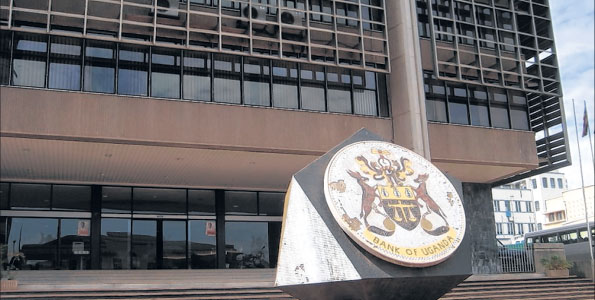
He also pointed out that URA is not the only institution running a parallel retirement scheme. Others include the Bank of Uganda, Uganda Bureau of Standards, National Water and Sewerage Corporation, and Uganda Electricity Generation Company Limited.

To address inconsistencies, Parliament tasked the Uganda Retirement Benefits Regulatory Authority (URBRA) to streamline approval processes for retirement schemes across ministries, departments, and agencies (MDAs), and to introduce a cap to prevent budgetary distortions.

URA was also faulted for excessive spending on vehicle repairs. The Auditor General’s review found that over the last three years (2021/22–2023/24), the Authority spent Shs6.4 billion on repairing just 61 vehicles, averaging Shs106 million per vehicle. In some cases, repair costs for a single vehicle reached Shs106 million in one year.

Auditors noted that the costs were a sign of an old, uneconomical fleet.

In response, URA explained that the vehicles in question had been in service for 8–12 years, with some undergoing major engine overhauls. Of the 61 vehicles, 21 were deployed in upcountry regions, 16 were used in enforcement operations, and 12 had full engine replacements.

The Authority assured Parliament that resources amounting to Shs6.7 billion had been allocated in FY2024/25 to purchase new vehicles. Procurement for 25 new vehicles was already underway, with delivery expected in December 2025. Meanwhile, URA said the disposal of 38 old vehicles was in its final stages.

Stories Continues after ad