Stanbic Bank
Stanbic Bank
22.2 C
Kampala
Stanbic Bank
Stanbic Bank
Home Blog Page 991

Four top officials at Tropical bank resign as bankruptcy rumour persists

Tension has engulfed the Kampala Road based Tropical Bank after almost the entire senior management tendered in their resignation.

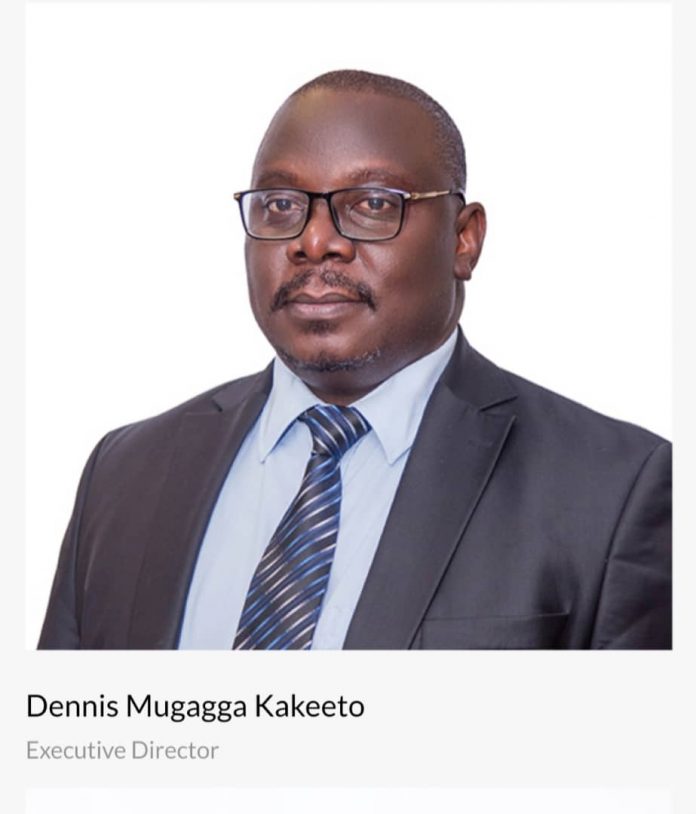
According to a highly placed source with the bank, those who have handed in their resignations include the Executive Director Denis Muganga Kakeeto, Hussein Sentamu the Head Credit Department and a one Maurice the head of operations.

This source cites infighting for top jobs within the bank management as a result for these resignations.

“There are two groups within the management, the one that is led by our Managing Director (MD) and this one that has been forced out” Says a source.

It is indicated that this brutal force is comprised of the Managing Director Abdul Aziz Manusul, Caroline B Ogwang the Head of Compliance and Joweria Mukalazi the Acting Executive Director.

” Madam Caroline Ogwanga is a challenge, she worked as Acting ED before Kakeeto came in so she has been fighting him. She has also been fighting to be named the Company Secretary”.

Kakeeto and his group are fought because of their work principles and transparence in handling clients.

It is against this infighting and power struggles that the bank has been struggling because of lack of liquidity as result of working in losses for the last two years.

It has also been confirmed that the Executive Director Supervision Bank of Uganda is already auditing Tropical bank books of accounts after its capital was depleted in Central bank despite efforts to recapitalize it because of non performing loans.

The bank became under-capitalized after it posted the biggest loss in the banking sector this year.

The bank which first opened in the country in 1973 as Libyan Arab Uganda Bank is now below the required minimum capital by Shs3.8 billion according to audited results.

Commercial banks are expected to have at least Shs25 billion as minimum capital. For Tropical, this has been eaten into by cumulative losses the bank has been making.

With the bank under capitalized and unprofitable – it made a loss of Shs23.9 billion in 2019 from Shs5.7 billion in 2018 something that worried auditors.

According to KPMG, an audit firm that audited the bank’s accounts, Tropical bank’s situation points to the fact that “material uncertainty exists which cast significant doubt on Tropical Bank Limited’s ability to continue as a going concern”

A going concern is a business that is assumed will meet its financial obligations when they fall due.

The auditors added that “the #Covid-19 outbreak affects the bank and results in certain uncertainties for the future financial position and performance of the bank. “

This means Tropical bank needs capital injection as fast as possible. If the owners can’t put in money, the bank will have to be sold.

Tropical bank is 99 per cent owned by Libya. The bank was in 2011 – at the height of the uprising that ousted former Libyan leader Muammar al-Gaddafi – handed over to Bank of Uganda after a resolution by the United Nations Security Council to declare a freeze on all Libyan assets in foreign territories.

In 2018, the bank’s then managing director Kreshi Sameh Mahmud was terminated and ordered to handover office immediately. Abdulaziz was appointed in the position.

Last year results show the bank holds Shs43 billion in cash with Bank of Uganda – this is the money drawn for the needs of its customers.

It’s loans to customers grew to Shs180 billion in 2019 from Shs128 billion in 2018.

Yet out of these large exposures – the money given to few big borrowers amount to Shs114 billion putting the bank in a precarious situation in the case that big borrower fails to pay.

The bank’s assets topped Shs316 billion last year from Shs289 billion in 2018. However, some of these might have to be offloaded to get money to shower the company’s minimum capital.Without that, Tropical bank could have a hard time operating going forward.

Stories Continues after ad

City Traders threaten to reopen Arcades

RIP: Everest Kayondo - KACITA Chairman

Traders under Kampala City Traders Association (KACITA), a business support association, have threatened to open up their shops following a three months lockdown.

In March, President Museveni ordered for closure of all none-food markets, schools, shops, Salons among other businesses. The lockdown peddled at curbing the spread of the deadly covid-19 virus. The president has however eased the lockdown for some business in the country.

According to Everest Kayondo, the chairperson of KACITA, they have mobilized all Arcade traders to open up shops tomorrow if the government declines to give them a go ahead.

“Traders have waited so long, they are ready to observe the Standard Operating Procedures (SOPs) which were put up by the ministry of health to control the spread of Covid-19.” He said

“Dear members, please be reminded that we have an ultimatum of today Monday 13th for the government to allow arcades open. This is the only way to handle rent issues since most landlords have not given tenants their position on whether to pay for it because arcades are closed. We will announce what will be next tomorrow but top on agenda will be having all tenants to come and have their shops open.” He said.

Mr Sekitto said they have been engaging in endless meetings with city traders, arcade owners, police and the ministry of health to see people work again. Traders are ready to adhere to all SOPs which include wearing face masks, washing hands, emergency room and observing social distance.

“We hope to see police cooperating with us because we have been working together to seek that all buildings meet required standards to open and they have indeed met them” he said.

He faulted health minister Jane Ruth Aceng for flouting Covid-19 guidelines when she addressed a congregation without observing social distance on top of not wearing face masks.

Stories Continues after ad

MPs call for disciplinary action against Health Minister Jane Ruth Aceng

Jane-Aceng

A section of MPs have called for disciplinary action taken against Health Minister Jane Ruth Aceng who was captured in videos allegedly flouting the COVID19 guidelines.

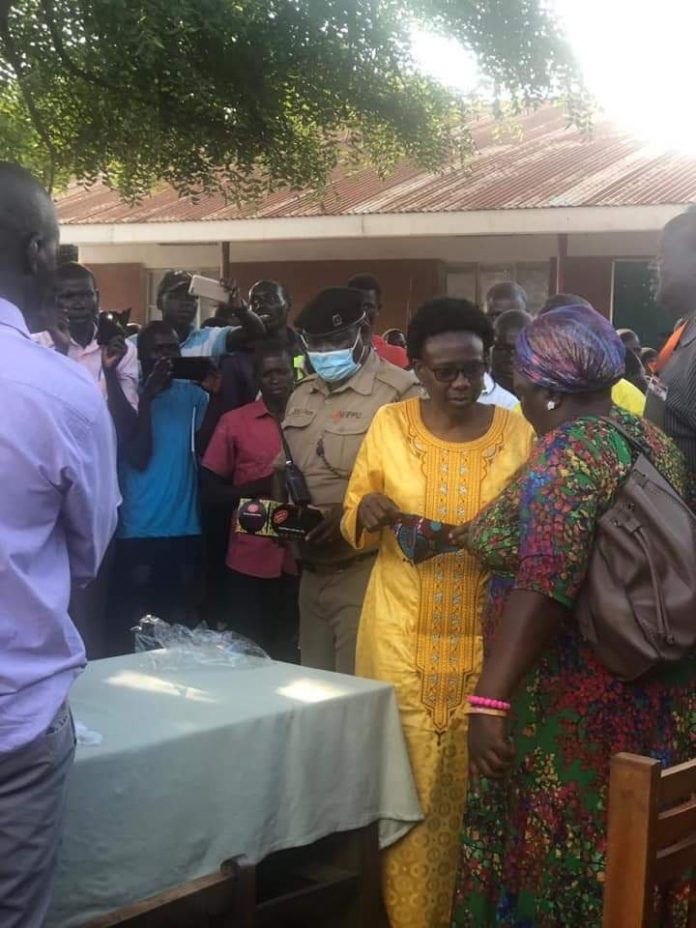
The minister was filmed addressing a congregation of people without observing social distance on top of not wearing masks. In response, the minister refuted all claims that she was not holding a political rally rather launching the distribution of face masks in Aromo Subcounty and training people on how to properly use the masks on Friday 10 July 2020.

She explained that people got excited when they heard about face masks, and specifically the Minister for health whom they call ‘mama Corona’ and rushed to see me. They were difficult to control as seen in the picture as many wanted to take pictures and also get masks from me.

Speaking at parliament Rubaga north MP Moses Kasibante said the minister should be subjected to disciplinary action. They accused her of flouting covid-19 guidelines and campaigning ahead of the 2020-2021 general elections. Last week, Aceng declared her bid to run for Lira woman MP in the forthcoming elections.

“Opposition politicians are not allowed to conduct a meeting of five people but individuals are holding seminars, and rallies throughout the country.” He said at parliament

Stories Continues after ad

Sanyu FM rewards employee who walked to work for 3 months during lockdown

Sanyu-fm rewarding mr steven

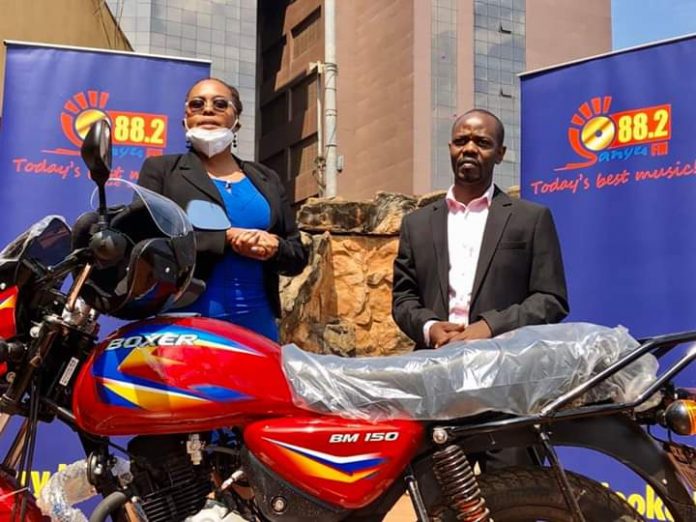
Sudhir’s radio station Sanyu FM has rewarded its hardworking employee Mr. Steven Kyaka who walked to and fro Buloba during the three month lockdown to serve at the Kampala based station.

Steven Kyaka, a traffic controller at Sanyu FM, walked about 20km on foot every morning to work and back home in the evening.

After the management noticed their employee’s commitment, they pushed a message to Rajiv Ruparelia, the station Manager.

Upon receiving the message, Mr. Rajiv was touched with the situation his employee worked in and decided to reward him with a brand new Bajaj boxer motorcycle.

Betsy Mugamba who handed over the motorcycle noted that Kyaka has been working at the station for the last seven years.

“We are gifting him with this motorcycle because during COVID-19 time when we were all under lockdown, Mr. Kyaka never gave up walk to work every morning,” Mrs Mugamba said.

Mugamba also thanked Sanyu FM Managing Director Rajiv Ruparelia for accepting to reward Steven Kyaka because of his commitment.

“When I told Mr Rajiv, he was so touched and said that we should give Kyaka a motorcycle, Therefore i ask other employees to to copy a leaf from Kyaka’s commitment,” Mugamba added.

Kyaka in his remarks also said the respect for his work acted as a driving force to walk from home to work every day.

“I felt so bad about Presidential directives on COVID 19 which included curfew and suspension of public transport, From then I knew keeping a job would be survival for the fittest because I stay very far in Buloba, no way the staff van could come to pick and drop me,” Kyaka said.

“I was advised by management to stay home until the Lockdown is lifted but I had to be around with the aim of delivering positive results and keeping my job and this forced me to walk to work”.

Kyaka is not only a radio traffic controller but also an author and has written a number of books such as Tuzaalibwa Kubonaabona (Born to Suffer), The Route to my Saviour, Kadongokamu Music Directory (detailing Herman Basudde’s and other stars in Ugandan country music, The Ark of Love and Why some pass and others fail among others.

Sanyu FM is the pioneer private FM radio station in East and central Africa, broadcasting with a footprint of 100 KM radius around Kampala, on the frequency of 88.2 Mhz, and another 100KM footprint around Mbale, on the frequency of 96.4 Mhz.

The Station has over its 20-year existence maintained its position as a leading radio station in Uganda with its strength rooted from the unique, clearly differentiated mix of music, top-notch presenters and hourly news updates.

Sanyu FM is an urban youth station targeting the 18-35 year old in the ABC1-C2 socio-economic group.

Stories Continues after ad

World Bank calls for revisiting and re-examining social media and mobile money taxes

The World Bank has called for revisiting and re-examining over the top (OTT) and mobile money taxes saying that they risk reducing the proportion of internet users and contribute to both digital and income inequality.

In the 2018/19 financial year, the government of Uganda introduced social media and mobile money tax. Social media platforms such as WhatsApp, Twitter, Facebook, You Tube, Viber and Skype among others have been subjected to a daily levy of Shs200 as mobile money transactions have been subjected to a 0.5 per cent excise duty.

The tax sparked protests from a cross section of Ugandans among whom were Kyadondo East MP, Robert Kyagulanyi aka Bobi Wine and other activists like journalists Joel Ssenyonyi, Raymond Mujuni, A Pass and others calling for trashing of the law.

The latest World Bank economic analysis says more needs to be done for citizens to harness the full benefits of technological innovation post-COVID-19 despite significant strides made in developing the country’s digital economy.

The 15th edition of the Uganda Economic Update, ‘Digital Solutions in a Time of Crisis,’ notes that during the lockdown period, the increased use of digital technology shows its great potential to not only support the health response, but to aid in faster economic recovery and strengthen resilience against similar shocks in the future.

“Uganda’s digital economy holds tremendous potential which can be realized by improving the regulatory environment, investing in support for digital enterprises through hubs and digitalization of the real sector, and capitalizing on regional opportunities through development of a Single Digital Market,” said Qursum Qasim, World Bank Private Sector Specialist, and an author of the report.

“The imposition of taxes on mobile money transactions and social media should be revisited and re-examined given the impact on suppression of transaction volumes and access, particularly among the poorest. In contrast to traditional financial services, mobile money withdrawals are subject to 0.5% tax, while social media access is taxed at UGX6000 ($1.61) per day. These taxes risk reducing the proportion of internet users and contribute to both digital and income inequality.” The bank recommended

Measures to contain the COVID-19 (coronavirus) pandemic in the past three months, including restricting movement of goods and services, has severely affected the economy and disrupted people’s livelihoods. The analysis projects real gross domestic product (GDP) growth in 2020 will be between 0.4 to 1.7%, compared to 5.6% in 2019. With the economic impact of COVID-19, locusts and floods, the report warns that more than one million Ugandans could fall into poverty due to economic hardship and a lack of alternative means of survival.

The report notes that the Information and Communications Technology (ICT) sector is among the country’s fastest growing sectors, contributing an estimated 8.7% to Uganda’s gross domestic product (GDP) and recording annual growth rates of up to 20%. But access to digital technologies remains limited for many while seven out of 10 Ugandans  in urban areas own a mobile phone, fewer than one in 10 have fast internet, compared to 84% for the rest of Africa.

Only one in two have mobile money. Some areas have better access than others: more than half the population in the Central region is covered by 4G, compared to only 15% and 9% in the North and Western regions.

In Africa, faster internet has been linked to increased employment and job creation, and evidence from other countries shows that a 10% increase in mobile penetration has led to a 4% increase in productivity across the economy.

A more integrated digital market in East Africa (a ‘Single Digital Market’) has the potential to unleash critical gains through the creation of seamless connectivity, data and online markets across the region. For Uganda to keep pace with technology innovation, the economic update recommends several reforms and investments to support a more inclusive digital economy, including; leveraging digital technologies to support post pandemic health and economic recovery: Equipping and training community health workers in digital data collection would generate real-time data for disease surveillance and monitoring.

Existing digital inventory management solutions can be scaled up in the public health sector and public information campaigns and medical chat bots deployed, leveraging social media participation.

For firms, investing in digitalization is key to build resilience in the private sector, gov’t should strengthen regulations and policies to support expansion of the digital economy, Review taxation of the digital economy, Develop strategy to support digital entrepreneurship, including skills development and Catalyze regional and global integration of Uganda’s digital economy.

Stories Continues after ad

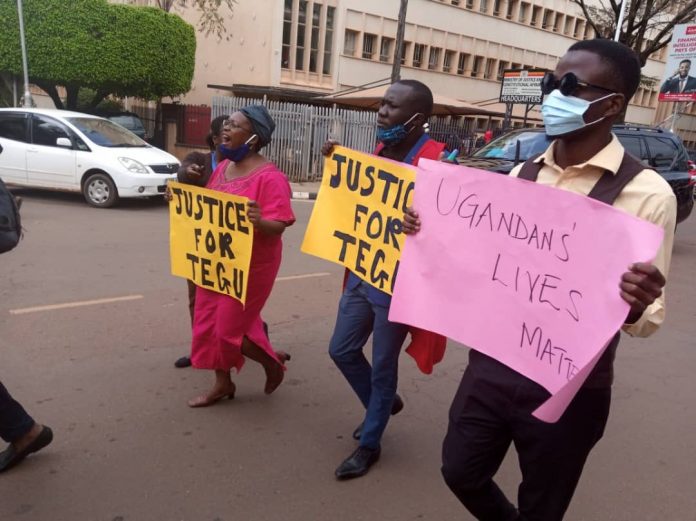
Emmanuel Tegu’s death:Dr Stella Nyanzi, two MAK students arrested

Former Makerere University researcher and Kampala Woman MP Aspirant, Dr Stella Nyanzi has been arrested as she made her way to petition the speaker of parliament Rebecca Kadaga over the death of Makerere University third year student Emmanuel Tegu.

Tegu, who was pursuing BSc. Animal production (BAP), was beaten by a mob on 28th June at 11:00 PM near Lumumba hall. He later passed on at Mulago hospital on Saturday 4th July.

Dr. Nyanzi, who was carrying placards, was arrested along with two other Makerere university students.

He is averred to have been battered by aggressive Local defence unity (LDU) officers for allegedly flouting curfew guidelines.  However police spokesperson Fred Enanga Tegu had Bipolar, a mental illness and was found half-naked in Makerere University by patrol teams.

“Tegu became more aggressive as they (patrol teams) tried to pursue him and started pelting them with stones.” Enanga said, adding that CCTV footage shows him pelting officers with stones.” Enanga said last week.

CCTV footage which was captured at St Augustine Chapel contradicts Enanga’s statements. The deceased was fully dressed and he did not pelt stones to any of the police officers.

Last week LDC court charged four suspects for reportedly beating Tegu to death.

Stories Continues after ad

CAF reopens hosting bids for 2020 AFCON Beach Soccer

Sand-Cranes-team

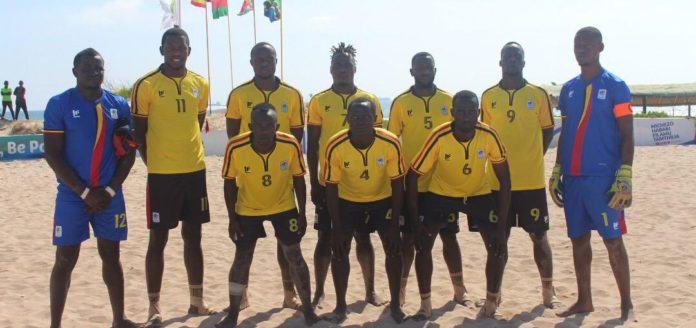
Following the withdrawal of Uganda from hosting the 2020 Africa Cup of Nations Beach Soccer Championship, CAF has confirmed that a new hosting bid for the tournament will be launched for the organization of the final tournament either in 2020 or 2021.

The bidding process for the hosting rights of the Beach Soccer Africa Cup of Nations 2020 has been reopened to Member Associations from 5 July 2020 till 31 July 2020.

The bidding file must include the dossier on Accommodation, Transportation and Sporting Infrastructure as well as Government guarantee to host the tournament.

CAF will also provide a financial support package to the host towards the successful organisation of the event.

The eight-team final tournament has been scheduled for within the period of December 2020 and April 2021.

The winner and losing finalist will qualify to represent Africa at the FIFA Beach Soccer World Cup Russia 2021.

Senegal is the most successful beach soccer team in Africa with five titles which they won in 2008, 2011, 2013, 2016, and 2018. Nigeria with two titles in 2007 and 2009 is the second most successful team in Africa. Cameroon in 2006 and Madagascar in 2015 both have one title each.

Uganda had won the bid to host the 2020 finals in 2018 and preparations had already started but withdrew due to the coronavirus situation and rising water levels on the shores of Lake Victoria.

Stories Continues after ad

Shincheonji Church of Jesus offers plasma for 500 members of the Daegu Church

While the quarantine authorities are rushing to develop a corona treatment as the plasma of a person who has completely cured the corona infection, 500 members of the Shinchonji Daegu Church, which was considered the main culprit of the spread of the corona in Korea, have started to donate plasma.

The church in Daegu announced on the 13th that it will hold a five-day event from the 13th to 17th in front of the main building of Kyungpook National University Hospital, where 500 of the patients who received treatment will donate plasma as a group.

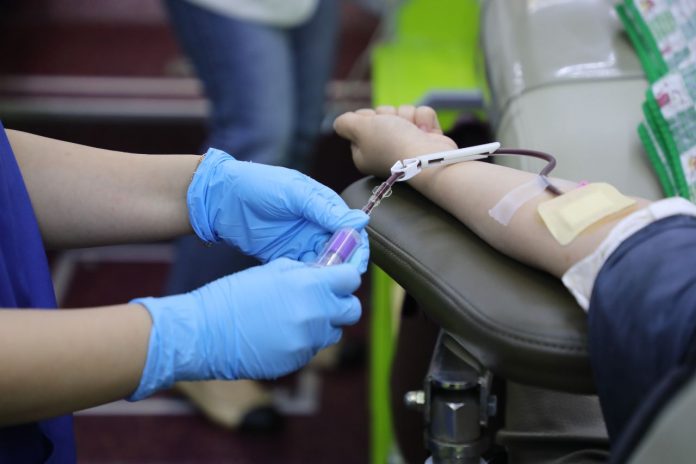
500 members of the Shinchonji Daegu Church are holding a plasma donation event. Three blood donation cars of the Korean National Red Cross are standing in front of Kyungpook National University Hospital. /Shincheonji Daegu Church

500 members of the Shinchonji Daegu Church are holding a plasma donation event. Three blood donation cars of the Korean National Red Cross are standing in front of Kyungpook National University Hospital. /Shincheonji Daegu Church
The Sincheon branch said 4,000 members of the Sinchonji Daegu Church have decided to donate plasma to develop the Corona treatment. However, the plasma donation event has been delayed in Korea as only a few plasma collection vehicles are equipped.

Shin Cheon-ji Daegu Church said, “According to consultation between the Centers for Disease Control and Prevention and the Korean Red Cross, 500 members of the Shin Cheon-ji Daegu Church have decided to give blood plasma this time.”

Members of the Daegu Church are waiting for plasma donation. /Shincheonji Daegu Church

Members of the Daegu Church are waiting for plasma donation. /Shincheonji Daegu Church
As a result, about 100 people will be given plasma every day from the 13th, and 500 people will be given plasma for five days.

The plasma donation takes about 40 minutes from the doorstep per donor.

Members of the Daegu Church in Shincheonji are giving blood plasma in a blood donation vehicle on the 13th. /Shincheonji Daegu Church

Members of the Daegu Church in Shincheonji are giving blood plasma in a blood donation vehicle on the 13th. /Shincheonji Daegu Church
“In the first place, 4,000 members of the Shincheonji Daegu Church decided to donate plasma, but only 500 people are holding plasma donation events due to current conditions, but we are seeking to increase the number of donors by consulting with the Korea Centers for Disease Control and Prevention in the future,” said Shin Cheon-ji, a member of the Daegu Church.

In Daegu, 6,812 Corona infections were confirmed as of midnight on July 13, 61.8 percent, or 4,265, of which were Shincheonji believers, starting with the first infection of the church in Shincheonji on February 18.

The Korea Centers for Disease Control and Prevention plans to produce corona-related drugs with plasma donated by members of the Shinchonji Daegu Church and conduct clinical tests.

Shin Cheon-ji, a member of the Daegu Church, said, “I pray that this blood plasma donation of believers will serve as an opportunity to take a step further toward the end of the Korona in Korea and around the world.”

Stories Continues after ad

Minister Janet Museveni urges universities to invest in endowment fund

First Lady and Minister for Education and Sports, Janet Museveni.

The First Lady and Minister of Education and Sports Janet Museveni has urged all heads of both Public and Private Universities to plan to invest in endowment funds which will become a critical source of revenue for their institutions of higher learning.

Mrs Museveni was chairing a meeting to brainstorm on how to solve the challenges facing the private universities because of the continued closure of all education institutions as part of the #Covid-19 restrictions.

This meeting followed a directive made by the President to the Ministers of Education and Finance to meet the Vice Chancellors of private Universities following a plea for help to him by the Uganda Vice Chancellors Forum.

She said that universities worldwide cannot survive from tuition fees or government support alone because these funds are not sufficient to run all their activities and therefore emphasized the need to plan for such things as an endowment fund.

“The University endowment fund would provide a critical source of funding in times of need when unanticipated problems like the #Covid-19 pandemic that resulted into current closure of all education institutions come up,”Mrs Museveni said.

“So please consider establishing an Endowment Fund in your plans and a committee to manage this fund for your institution”, she told the Vice Chancellors.

She observed that the #Covid-19 pandemic has been a wake-up call to people, government sectors, universities, schools, businesses and other entities that it is not practical to live from hand to mouth in the world we are living in.

Mrs Museveni said the government is cognizant and appreciates the work and contribution of the private universities to nation building, but because of the heavy burden it is facing to provide for literally everybody, it currently does not have adequate resources to bail them out with grants and off-setting their wage bills.

She however, introduced them to the possibility of benefiting from low interest loans from the government Fund placed in the Uganda Development Bank.

She promised to table their proposals before the Cabinet for further discussion on their viability.

“We hope there will be some solutions before the education institutions are re-opened”.

In their presentation read by Dr. John Senyonyi, the Chairman Uganda Vice Chancellors’ Forum, the Private Universities leaders expressed fear that if there is no help during and following the #Covid-19 Pandemic, the private higher education institutions may be forced to close either partially or fully or continue as ghosts of their former selves.

They recommended cancellation of all outstanding tax obligations of the private universities and requested for an income tax and paye tax holiday for one or two years arguing that when these institutions reopen after the #Covid-19 Pandemic, they will be faced with financial hardships including depleted bank accounts and students unable to meet their Fees obligations.

The Private Universities also proposed a review of the modus operandi of the Student Loans Scheme so that it becomes equitably accessible in all universities licensed by the Uganda National Council for Higher Education just as it is in Kenya and Tanzania. They also want the cap of Shs7.2 million on Student Loans to be removed and the 4,000 scholarships to be rolled into the students’ loan scheme.

Other recommendations include government extending an annual budget grant that supports all private universities to enhance their ICT platform and sciences, set up infrastructure to support E-Learning and to negotiate for low cost internet data bundles. They propose an offset of their wage bills for at least a semester, as they wait for their operations to normalize and to be equally considered in the government’s resolve to promote multidisciplinary research to unearth the effects of the coronavirus pandemic on the economy and social fabric of the Ugandan society and the solutions thereof.

They requested the government to also support their institutions to procure Temperature monitors, sanitizers and face masks when the time for re-opening comes.

David Bahati, the State Minister for Planning, said that cancellation of the outstanding tax obligations is not feasible because all other businesses are also facing a similar situation. He advised them to instead take advantage of the government’s extension of the period in which to pay their tax obligations and the cancellation of penalties and interest on tax arrears.

He assured the Vice Chancellors that the Ministry of ICT was in the process of discussing with the World Bank a facility to do with the extension of Internet and ICT services to the entire country that may include supporting infrastructure for e- Learning.

Stories Continues after ad

MTN Uganda granted 12-year operation license

MTN-Uganda CEO Vanhellpute receives a certificate from UCC Acting CEO Ssewakambo.

MTN Uganda has been granted a 12-year operation license extension effective July 1, 2020, the Uganda Communications Commission (UCC) announced.

At a brief ceremony held at the UCC offices in Bugolobi, Ag. Executive Director Irene Kaggwa Ssewankambo congratulated MTN on this momentous occasion while the MTN Uganda CEO Wim Vanhellpute pledged to deliver a new digital life to everyone, everywhere.

MTN Uganda was first granted a Second National Operator License for the provision of telecommunications services on October 20, 1998 for a period of 20 years. The telecommunication giant paid $100 million for renewal of the license.

The telecom’s license, having expired in October 2018, was followed by protracted negotiations involving the government, UCC and MTN Uganda, culminating in this breakthrough.

Under section 5, 22 and 39 of the Uganda Communications Act 2013, the Commission is mandated to monitor, license, inspect, supervise, control and regulate communications services.

In addition, the Commission is empowered, under section 38 and 43 of the Uganda Communications Act 2013, to grant an extension to the Second National Operator licensee upon terms and conditions that reflect the prevailing circumstances of the communications sector in Uganda.

Having conducted a performance assessment of MTN Uganda operations over the last 20 years, the Commission came to the conclusion that MTN Uganda had substantially complied with its financial and legal obligations, as well as most of the technical obligations.

Noting that this was the first license under the new licensing framework, Ms Ssewankambo congratulated MTN and the Government of Uganda on this milestone and expressed readiness to continue to work with the telecom operator to modernise the communications sector and to provide quality and affordable services to the people of Uganda.

On his part, Mr Vanhellpute expressed gratitude to President Museveni, the government and UCC for the engaging discussions that led to the license extension.

“We’ve fulfilled our obligations,” he said.

However, although Mr Vanhellpute observed that MTN Uganda has a presence in all of Uganda’s 135 districts currently, he was quick to acknowledge that there is much more to do on the technical side to make the slogan “Everywhere you go” a “scientific reality.”

The MTN Uganda CEO also underscored MTN’s commitment to the terms and conditions of the license agreement, including the listing of a portion of its shares on the Uganda Securities Exchange (USE).

“We believe this is an opportunity to enhance our relationship with our customers who will also now be able to become owners in this venture,” he said, adding that this will come to pass within the next 24 months.

Stories Continues after ad