


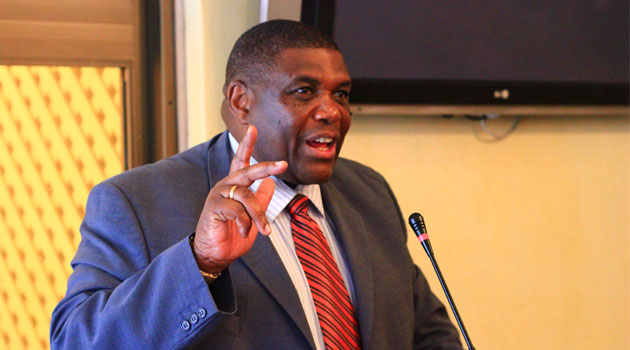

By Dr. David Nyekorach -Matsanga (RAS)
In the recent past, West Africa has become a hotbed of Coups and Counter- Coups. The constant jostling for power in mostly Francophone West African countries has thrown the continent into a miasma of precariousness and eminent instability.

The most recent regime change in Niger closely resembles those in neighboring Mali and Burkina Faso in 2021 and 2022 respectively where members of the military seized power on similar pretexts.
Those two’s new leaders weren’t Western puppets like their predecessors but firm believers in multipolarity, which resulted in them standing up to France and comprehensively expanding strategic ties with Russia.
Africa needs to properly understand the potentially game-changing significance of the Niger coup in the context of a New Cold War era. To peek briefly into this, Russia is accelerating multipolar processes in Africa through Wagner’s “Democratic Security” operations, with Mali and the CAR functioning as the associated cores in their respective regions.

Meanwhile, France and the US oppose these developments, which is why they’re jointly waging proxy wars against Russia in the region. So, Africa is being used as a base for a new Cold War.
It’s apparent that these two fears that Chad will follow in corresponding neighbor’s footsteps, despite not experiencing a coup as proven by the moves that its interim government began to make over the past year to strengthen its sovereignty.
This had left Niger as the last reliable bastion of Western influence in this broad swath of Africa, and yet its traditional role can no longer be taken for granted if the current junta emulates the Malian and Burkinabe precedents.
It’s a matter of fact that this Niger is indispensably important to France, since 62.6% of France’s electricity is generated from nuclear power, of which at least one-third of was fueled by Nigerien uranium.
These statistics mean that this West African country’s prime export accounted for roughly 20% of all French electricity in 2022, which is expected to increase even further due to more uranium deals and Paris’ commitment to the “Green alAgenda”.
Furthermore, France recently set up a regional “Partnership HQ” in Niger after its forces were expelled from Mali and Burkina Faso, which reinforced its long-standing role there.
Over the past half-decade, Italy and Germany deployed troops to Niger too to help them stem illegal immigration to the EU, while the US built a major drone base on the pretext of fighting terrorism.
Despite all these, Niger had remained one of the poorest places on earth, and sporadic terrorist attacks have been picking up pace over the past years.
This context resembles the situations in pre-coup Mali and Burkina Faso, thus extending credence to the explanation put forth by the Nigerien military for its latest coup regarding their desire to reverse the deteriorating socio-economic and security situations.
To that end, the region’s newest junta might emulate its two western neighbors by cracking down on foreign media and “NGO” meddling, kicking out French (and possibly all other foreign) troops, and requesting Russia’s “Democratic Security” assistance through Wagner Marcenaries.
Unlike Mali and Burkina Faso, however, Niger has strategic natural resources that it could consider nationalizing in order to immediately obtain the wealth required to improve its largely impoverished populace.
Any such moves in that direction would be likely be regarded by France as a potential national security threat and may not auger well with France and its Western allies.
It might be too early to tell now whether the Nigerien junta is multipolar like its neighbors or if it’ll be co-opted by the West to function as a new face for their neo-imperialist system there, however it would be a game-changer in the New Cold War’s African front, if this group took a page from its Malian and Burkinabe counterparts.
In that event, the West would have lost its last stronghold in this broader region of Sahel, which would unprecedentedly accelerate Africa’s rise as an independent pole in the emerging Multipolar World Order, which could essentially enable Africa to seek new allies like Russia, China and the Middle East.
God bless Africa
The writer is Pan African, a Political Scientist & International Relations Expert with bias in Conflict Resolution based in London United Kingdom. He is a member of Royal African Society an author, and media owner. He defends Africa.