


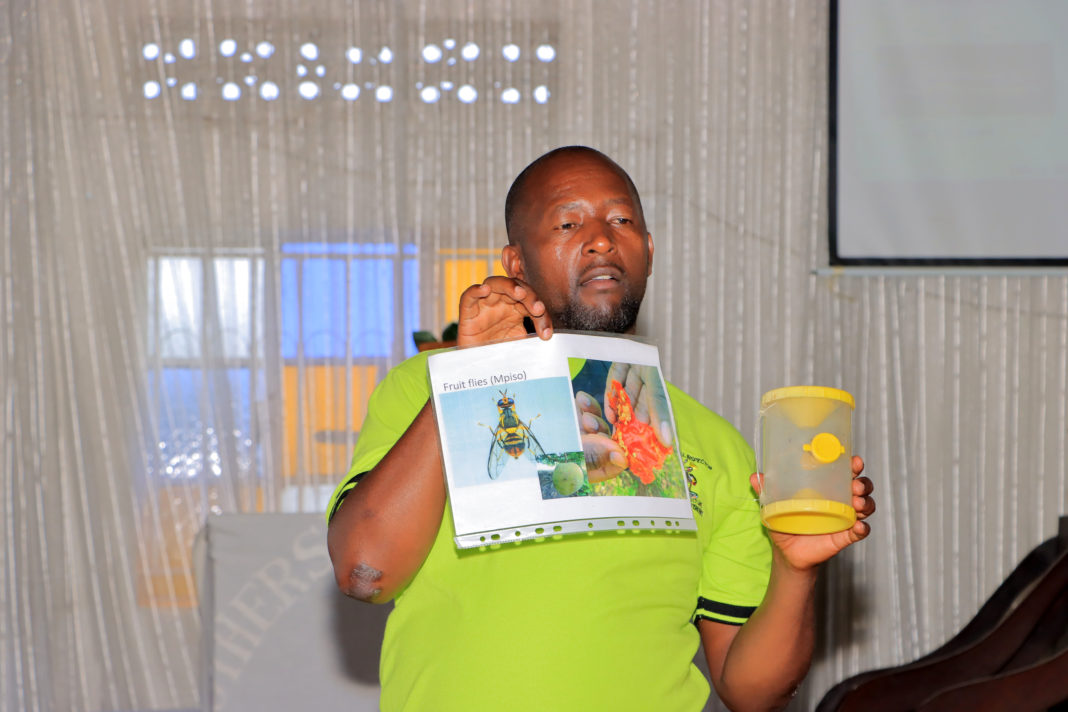
HortiFresh Association the apex body of growers and exporters of Fresh Fruits and Vegetables (FFV), in partnership with Ministry of Agriculture Animal Industry and Fisheries and GIZ_ Uganda has organized a training of Farmers in Ntungamo district on safe handling and use of Agrochemical with an aim of reducing interception of Ugandan produce at both local and international market.
The training is facilitated by Agricultural inspectors from the Ministry of Agriculture, Animal Industry and Fisheries regarding the subject.

Mukisa Joseph, the HortiFresh project coordinator said that this project was scoped as a reason for the response received from ministry of agriculture and animal industries in response to the increased interceptions at that point of time where the European Union had sent warnings to the country that the interception had increased.
“We sat down as a private sector player to devise means and also come up with interventions on how we can support the farmers but also the exporters in terms of reducing the interception. So, it is the reason why we decided to scope this project and basically design what would be the intervention for us to ensure that we reduce the number of interceptions,” Mukisa said.
He added that they agreed with their partners, which are GIZ and the East African community, to basically ensure that there is the capacity of the farmers to get the services. Adding, “In the building capacity, we are looking at training, disseminating information, creating awareness on the current reasons why Ugandan products are intercepted. So, this is the reason why we started conducting this training.”

Mukisa noted that to solve the farmers’ problem, they needed to start from the grass root where the problem starts from because it is the farmers who are supposed to start up on the process of compliance after being equipped with practical knowledge on the good agriculture practices.
He further revealed that the project came in after so many cases were reported that farmers thought prolonging the life of any products required too much pesticides. Yet by the time that product is shipped to the international market, there are a lot of pesticides which are not good for human consumption.
“The international market is looking forward to ensuring that these pesticides are not in the product because they are dangerous and have increased cancer cases among the public,” Mukisa said.
Johnson Nuwagaba, Agricultural officer, Ntungamo said, “We are here trying to train the fresh fruits and vegetable farmers on the use of agrochemicals, because these fresh fruits and vegetables are exported in the outside countries, like in the UK. And you find that there are interceptions to find the fresh fruits and vegetables that are put there or that are exported, like hot pepper, it contains maximum high levels of chemicals. You find there are some pesticides and for that matter, they are rejected and banned. And that causes a great loss to the farmers, causes a great loss to the government and the whole country at large.”
The team explains to the farmers the right dosage while spraying, the right pre-harvest interval that should be followed, and the right post harvest handling procedures from harvesting, the way to store it, and transport it up to the end market, so that whatever is produced is sold to the outside market and beneficial to all parties.
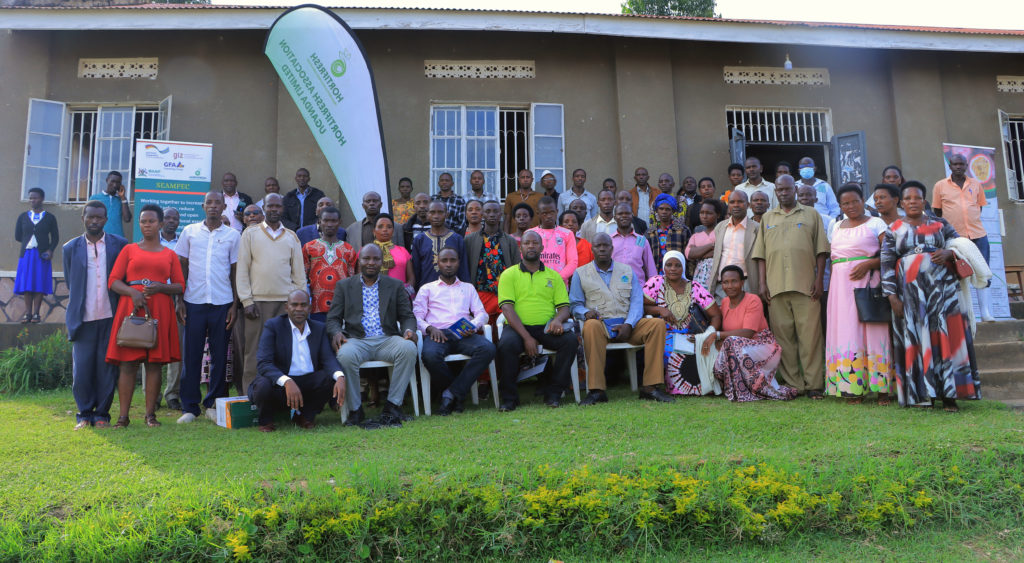
“It has been found that during these days we cannot do without chemicals because the pests are increasing due to climate change. So, spraying cannot be avoided. But using the right chemicals, using the recommended dosage and using the right procedures is the way to go. Together with the Ministry of Agriculture, Animal Industry and Fisheries, working hand in hand with the local government, we are training these farmers of fresh fruits and vegetables to ensure that they use the chemicals very well for the safety of our fresh fruits and vegetables,” Nuwagaba said.
He added that it is the role of HortiFresh extension workers to continue without losing morale to explain and train these farmers and also continue monitoring and supervising them to ensure that they do the right thing.
It should be noted that Uganda holds substantial potential to enhance its FFV exports to regional and overseas markets, setting a target of exporting $1 billion by 2030. However, achieving this goal necessitates urgent and unified actions to address the issue of interceptions.
Furthermore, ensuring the provision of safe food, both for domestic consumption and international trade, is paramount. The training initiative is imperative to curb the increasing interceptions of Ugandan produce in the European market. Recent statistics from the
MAAIF FFV export trends report indicate a staggering rise in interceptions between 2021 and 2022 due to harmful organisms, exceeding maximum residue levels, and errors in documentation.




Comments are closed.