The National Identification and Registration Authority (NIRA) has today officially launched a massive nationwide identity card enrolment and renewal campaign, targeting over 30 million Ugandans.
The exercise is expected to last between six to ten months, covering all districts and parishes across Uganda.

The rollout, seen as one of the country’s most ambitious citizen data initiatives, seeks to renew 15.8 million national IDs set to expire by June 2025 and to register an additional 17.2 million Ugandans—particularly children below 17 and citizens who missed earlier enrolment drives.
“This exercise will be conducted at the parish level, operating six days a week from Monday to Saturday,” said NIRA Executive Director Rosemary Kisembo at the launch. “Citizens can choose to register or renew either by first pre-registering online and completing the process at the parish or by registering entirely at the parish manually.”
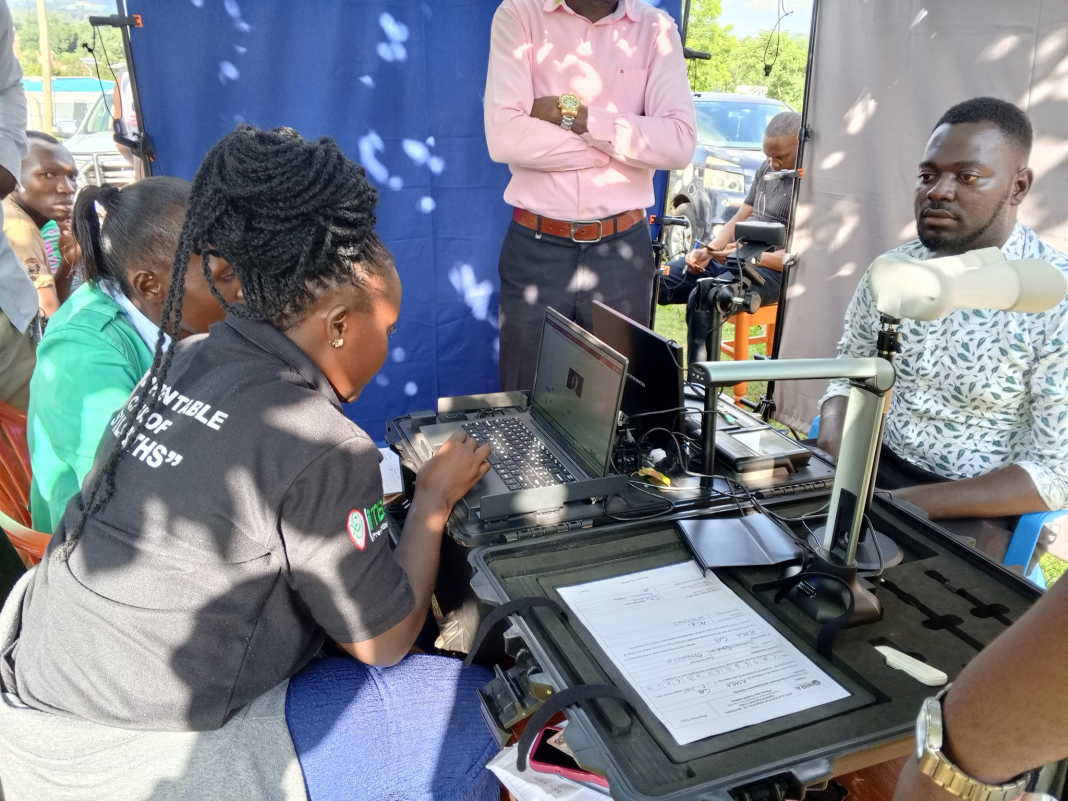
To support the exercise, NIRA has deployed 5,300 biometric kits to districts, reserving 365 for emergencies. Each parish will have at least 10 kits, with more sent to areas of higher population. Ugandans will be required to present themselves in person with proper documentation. For individuals seeking to change ID details such as names or dates of birth, a Shs200,000 fee applies unless the error originated from NIRA itself.

The government is expected to spend approximately Shs666.85 billion on the exercise. Of this, Shs183 billion will go toward purchasing new ID cards, Shs293 billion on technology infrastructure, including data centres and biometric kits, and Shs190.85 billion to pay 13,864 staff working on the project.
The exercise adopts a “comb and clean” strategy at the parish level—Uganda has 10,594 parishes—using a zone-based categorisation to streamline the process. Vulnerable groups, such as children under five, expectant mothers, the elderly, and persons living with disabilities, will be prioritised under Zone A and E. Other zones focus on mass enrolment, ID renewals, and card issuance.
Kisembo defended the exercise, describing it as a crucial step toward updating the national registry and enhancing the integrity of government services, elections, and social protection programs such as the Social Assistance Grant for Empowerment (SAGE).
“Let us all get involved in this exercise,” she urged. “This is about citizenship, identity, and access to services.”
With just over a year to the next general elections, the success—or failure—of this exercise will likely shape voter registration, public trust, and service delivery across Uganda. How efficiently NIRA and its partners navigate logistical, political, and technological challenges in the coming months will be critical.