Uganda, partners reaffirm commitment to end HIV as 2025 estimates inform shift to sustainable response
Uganda’s renewed fight against HIV has gained fresh momentum as the country releases its 2025 HIV estimates with strong reaffirmations of support from the U.S. President’s Emergency Plan for AIDS Relief (PEPFAR), UNAIDS, and the Ministry of Health. The data-driven review is shaping a national strategy focused on sustainability, integration, and long-term resilience in the face of declining external aid.

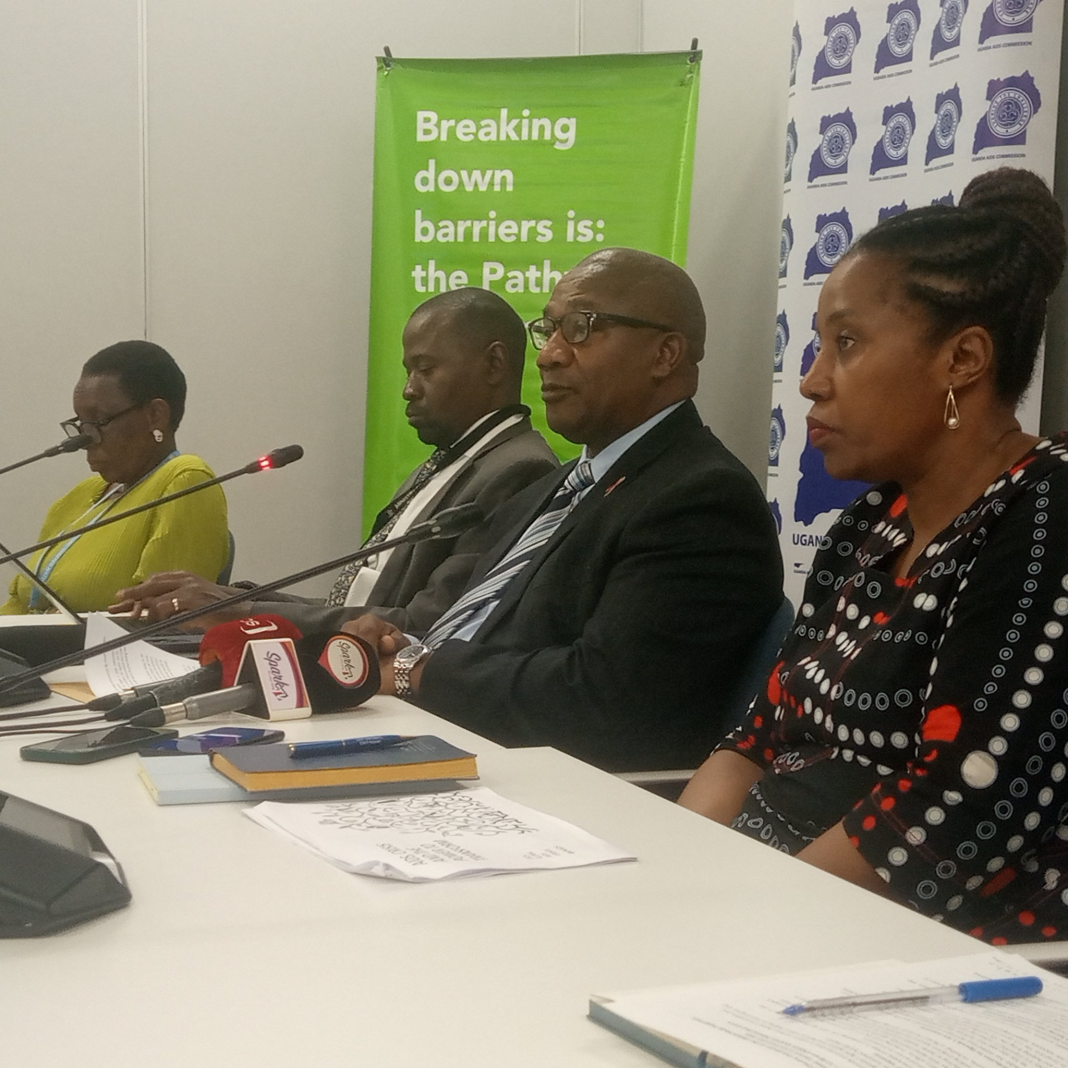
Speaking at the dissemination of the latest figures, Mary Borgman, the U.S. PEPFAR Country Coordinator for Uganda, underscored the critical role of the 2025 estimates in guiding investments and targeting interventions:
“The 2025 HIV estimates provide critical data to guide financial investments and evidence-based interventions, ensuring that resources are targeted effectively to reach those most in need and to bend the curve towards ending HIV as a public health threat.”
She praised Uganda’s progress in reducing new infections and expanding treatment access, while also reflecting on the enduring partnership between the two nations.

“Uganda has made remarkable strides in reducing new HIV infections and improving access to treatment,” she said.
She added, “We commend the strong partnership between Uganda and PEPFAR, which has spanned over 20 years, within the broader 60-year partnership between the United States and Uganda.”
Borgman revealed that PEPFAR has invested over USD 6 billion into Uganda’s HIV response, backing programs that include prevention of mother-to-child transmission, care and treatment services, and health system strengthening.
However, she cautioned that domestic investment remains insufficient, affecting key health system pillars. She emphasized the need for sustainable, country-led solutions:
She said, “As countries achieve their targets, external assistance should gradually transition towards domestic responsibility. The 2025 estimates offer an opportunity to refine strategies, prioritise interventions, and mobilise resources to address remaining gaps in the HIV response.”
She further noted Uganda’s collaboration with UNAIDS and the Ministry of Health on a sustainability roadmap.
“We call on all stakeholders including government, civil society, implementing partners, the private sector, and communities – to work together to sustain progress, innovate, and ensure impactful interventions.”
“The United States remains committed to its partnership with Uganda to achieve better health outcomes, end HIV as a public health threat, and make the region healthier, more prosperous, and more secure.”
The Ministry of Health has announced a bold move to integrate HIV services into general healthcare, as part of a long-term sustainability strategy aimed at reducing dependency on donor funds.
Peter Mudiope, the Coordinator of HIV Prevention, explained the shift and said that Uganda is aligning its strategies with global and regional approaches similar to those implemented in Kenya, Rwanda, and Botswana to ensure continued progress in fighting HIV.
On February 7, 2025, Permanent Secretary Dr. Diana Atwine issued a directive for all government health facilities to phase out stand-alone HIV and TB clinics. Now, primary healthcare clinicians are required to manage HIV, TB, non-communicable diseases, and mental health conditions as part of a holistic model.
“The previous model was heavily reliant on external funding. The integration approach is intended to optimise resources and improve patient care.”
Mudiope emphasized that integration aligns with how health workers are trained.
Mudiope said, “Integration is not a new concept. Medical training equips clinicians to manage all diseases. Patients often suffer from multiple conditions simultaneously, such as HIV, mental health challenges, and hypertension.”
The Ministry has already issued integration guidelines, begun training health workers, and reorganized patient flows in outpatient departments. He also highlighted the Chronic Care Model, which links facility-based services with community support for better viral suppression.
“Patients who are not virally suppressed are followed up at community level by peers, Village Health Teams (VHTs), or extension workers to provide counselling, adherence support, and household interventions, including nutrition.”
Pilot programs in the Acholi region have already shown promising results, raising HIV testing positivity from 3% to 15%.
Other initiatives include partnerships with local pharmaceutical companies, such as Quality Chemicals and Ntinda-based firms, to locally produce HIV medicines and test kits. The Ministry is also working with private pharmacies to distribute HIV prevention commodities like PrEP, condoms, and self-test kits.
“New prevention tools such as long-acting injectable PrEP are being introduced to reduce the burden on patients who previously had to visit health facilities monthly.”
Mudiope noted that government health financing is increasing, and efforts to pass a National Health Insurance Scheme are underway to further bolster sustainability.
Global Push to End AIDS by 2030 Gains Urgency
Meanwhile, Jacqueline Makokha, UNAIDS Country Director for Uganda, emphasized that while progress has been made, the global community is not on track to meet the 2025 targets.
“This is not the time to cut back. It is the time to increase efforts in the last mile towards 2030 to save 2.9 million potential new infections and 1.3 million AIDS-related deaths. We must ensure no one is left behind.”
Makokha reported that in 2024, there were 41 million people living with HIV, with 1.3 million new infections, half of them in Sub-Saharan Africa. Though deaths declined by 50% globally, including a 60% drop in Africa, children and men continue to lag behind in treatment and viral suppression.
“Globally, only 63% of children living with HIV know their status, 55% are on treatment, and 47% are virally suppressed. Among men, 84% know their status, 73% are on treatment, and 69% have achieved viral suppression.”
She praised Uganda for its gains, noting the country’s improved life expectancy at 72 years above the regional average and urged acceleration in the elimination of mother-to-child transmission.
On funding, Makokha reported a 12% rise in international financing for HIV in 2024, the first increase since COVID-19, bringing hope but also caution:
“Funding restrictions could reverse gains, taking us back to infection and death rates last seen in 2000.”
The 2025 HIV estimates serve as a call to action for Uganda and its partners. With a shift toward integrated care, local manufacturing, and community-led approaches, the country is laying the groundwork for a resilient, self-sustaining HIV response but global solidarity and domestic commitment remain essential to reach the finish line.