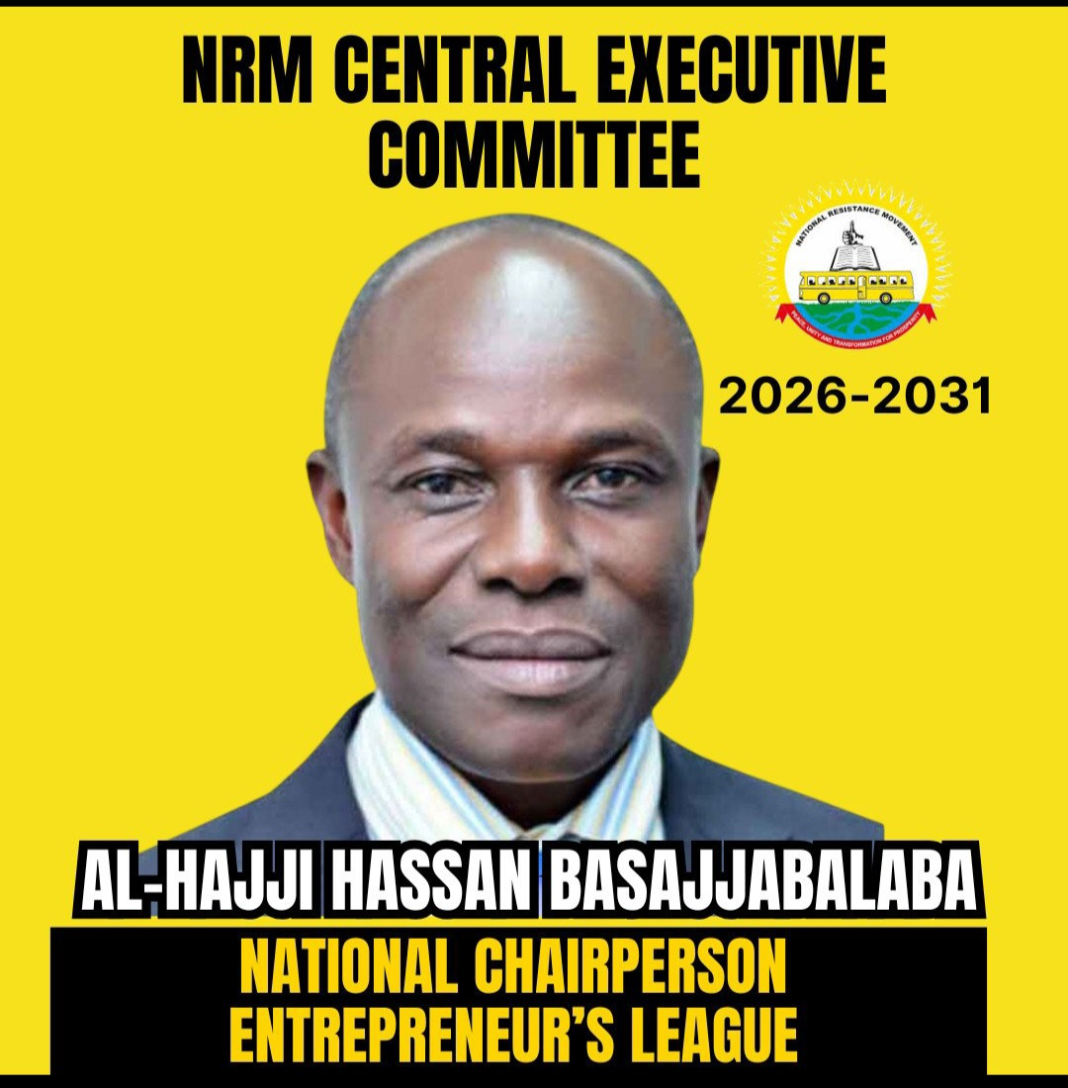
Uganda’s entrepreneurial environment is once again in the spotlight as Al Hajji Hassan Basajjabalaba unveils an expansive manifesto that redefines the very identity of the NRM Entrepreneurs’ League.
Under the theme “Reviving and Building a Vibrant Entrepreneurs League from Village up to National Level: Simple Solutions, Big Results”, his program for 2025–2031 promises not just revival but transformation.

The manifesto is very ambitious. Branded with the slogan “Action Now”, it seeks to rebuild a League that has withered over the past decade and reposition it as both a grassroots mobilizer and an international policy lobby. Hassan Basajjabalaba is not just a candidate; he is a legacy-builder whose ventures pulse at the heart of Ugandan enterprise.
Central to his plan is a revival of League structures at every level, from villages and parishes to districts, regions and the national stage. He argues that without functional systems and properly trained leaders, the League cannot serve its purpose. His strategy therefore includes capacity building, mentorship, and training programs to give grassroots leaders the skills and resources they need to inspire entrepreneurs in their communities.
But Basajjabalaba’s manifesto goes far beyond organizational housekeeping. It positions the League as the NRM’s “think tank” on private-sector-led development, emphasizing its role in industrialization, job creation and wealth generation. He pledges evidence-based policy advocacy at the party’s highest decision-making table, the Senior Executive Committee (SEC). Through structured consultations with entrepreneurs across the country, he intends to lobby for fair tax policies, access to affordable financing, and protection of local businesses from predatory foreign competition.

This focus on advocacy marks a sharp departure from the 2015 Chairman’s manifesto, which emphasized mobilization and alignment with government programs like NAADS and Operation Wealth Creation. The earlier plan was inward-looking, concerned with order and discipline, while Basajjabalaba’s outlook was outward-facing, concerned with competitiveness, innovation, and global relevance.
He also leans heavily on his personal achievements as proof of capability. As founder of Kampala International University (KIU), Uganda’s largest private university with a branch in Tanzania, Basajjabalaba has overseen the graduation of nearly 80,000 students, with 30,000 of them on scholarships or bursaries he personally funded. His KIU Teaching Hospital has become a vital healthcare hub, while his partnerships with global universities underscore his ability to connect Ugandan initiatives to the world.
In business, his HABA Group of Companies embodies the breadth of his experience. It spans leather processing and export, pharmaceuticals, real estate development, hospitality and healthcare. His Tea-Maria estates and factories in Bushenyi and Buhweju employ thousands, supporting out-grower farmers, factory workers and exporters. Even during shocks like the Russia–Ukraine war, he maintained stability in production and safeguarded incomes for smallholder farmers. The Group’s estimated value of $520 million reflects the scale of his enterprise, but his manifesto insists that his real legacy lies in the futures he has built for others through jobs, scholarships, and mentorship.
This dual character, business titan and social entrepreneur infuse his vision for the League. He wants to establish district entrepreneur hubs for mentorship and training, create platforms for SMEs to connect with global partners and spearhead district and regional trade fairs under the spirit of Buy Uganda, Build Uganda. He also highlights public-private partnerships as a tool for expanding opportunities.
Significantly, Basajjabalaba identifies digital transformation as the defining challenge of the era. He describes it as “the new determinant of business survival and sustainability,” and vows to prioritize digital literacy, online marketplaces, and advocacy for affordable internet access. By embracing digital inclusion, he argues, SMEs in towns and villages alike will be able to reach regional and global markets.
His manifesto is not without a populist touch. Youth and women feature prominently, with promises of targeted bursaries, mentorship programs and financing for women-led enterprises. He also proposes annual entrepreneur awards to recognize innovation and risk-taking across the country, ensuring that success stories inspire the next generation.
When set against the 2015 manifesto, the difference is stark. The earlier plan provided structure, discipline and access to government opportunities. Basajjabalaba’s 2025 manifesto offers vision, global markets, digital readiness and policy influence. One looked backward at mobilization; the other looks forward to transformation.
For NRM delegates, the choice will be pivotal. Voting for continuity would preserve the League’s traditional role as a mobilization arm. Voting for Basajjabalaba, however, would elevate it into a policy powerhouse with ambitions stretching from local markets to international trade.
At its core, his message is clear: “From bursaries that unlock dreams to factories that sustain families, I don’t just build businesses; I build futures.”