The government has confirmed plans to split Tororo district into three new districts and elevate it to city status with each new administrative unit receiving Shs26 billion to facilitate its operationalization. Bundibugyo district will also be subdivided to create Bughendera district in order to enhance service delivery and end recurring ethnic tensions.
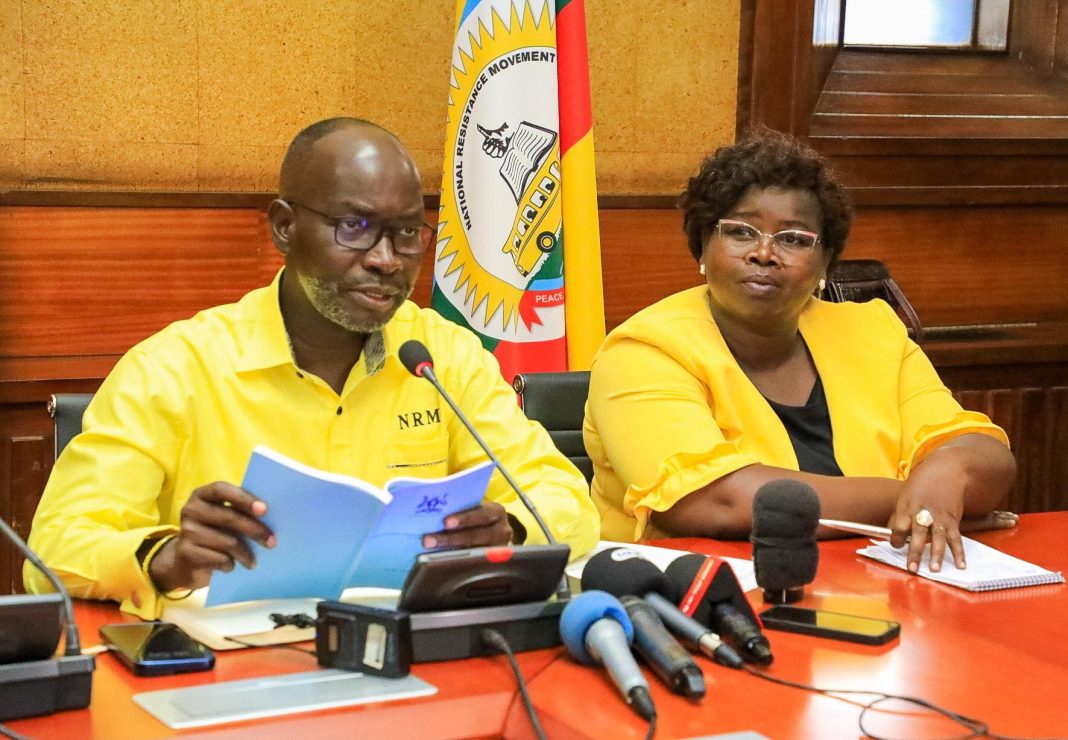
The decision was endorsed by the ruling National Resistance Movement (NRM) Parliamentary Caucus during a meeting at State House, Entebbe, on Friday, September 12, chaired by President Yoweri Museveni. Government Chief Whip Hamson Denis Obua revealed the resolutions while addressing journalists at Parliament.

“Having received the report of the Minister of Local Government, we resolved to support the creation of Mukuju District, Mulanda District, Kisoko District and Tororo City in the financial year 2025–2026, subject to the law. We also agreed to support the creation of Bughendera District out of Bundibugyo District, and to handle other districts, cities and municipalities in the period 2026–2031,” Obua announced.
The Minister for Local Government, Raphael Magyezi defended the plan after journalists questioned whether the timing was politically motivated, given that the Electoral Commission is already preparing for the 2026 General Elections. He dismissed accusations of gerrymandering, citing past examples where new constituencies were won by opposition candidates.
“Where is gerrymandering in that? When Nakawa was split, both seats went to the Opposition. We are doing this for service delivery, peace, and better administration. When people express their will through council resolutions, it is my duty to study and present it to the Cabinet. That process is within the law,” Magyezi said.

Magyezi acknowledged the financial cost but argued the benefits outweighed the burden. “Yes, there’s no doubt it has a cost, but it also has an advantage. The population keeps increasing, urbanisation is accelerating at 5.3 percent annually, and people want services closer to them. That’s what we are responding to,” he added.
The Attorney General, Kiryowa Kiwanuka, together with the Electoral Commission will determine when elections in the new constituencies will be held, once Parliament approves the creation of the districts.
According to Magyezi, the law stipulates that new districts created after a general election take effect six months prior to the next polls.
“That’s why we are talking about deeming them created in July 2025, to enable the Electoral Commission to align with constitutional requirements,” he explained.
However, under the Electoral Commission Act, districts created after the electoral process has begun may only be recognized in subsequent elections. Magyezi clarified that this does not prevent the government from establishing them now.
The creation of Mukuju, Mulanda, and Kisoko districts alongside Tororo City, plus Bughendera District out of Bundibugyo will significantly expand Uganda’s already bloated Parliament of over 500 legislators.
“Each new district will have a Woman Member of Parliament. Tororo City will have a city woman MP and two MPs for its divisions. This means representation will inevitably increase,” Magyezi confirmed.
Despite concerns over cost, the government insists the reorganisation is necessary to ease service delivery, reduce administrative tensions, and respond to Uganda’s rapid demographic and urbanisation pressures.
However, Timothy Chemonges, the Executive Director of the Centre for Policy Analysis (CEPA), fears that the continuous trend of splitting districts defeats rational planning because the process makes Uganda’s wage bill heavier and stretches the already explosive administrative costs on the national purse.
“The NRM Caucus resolution to split Tororo into four districts and further divide Bundibugyo reflects a growing trend where political expediency is prioritized over rational planning. Every new district comes with a full bureaucracy RDCs, CAOs, technical staff, and MPs; all of which expand the recurrent wage bill at a time when the government is struggling with debt servicing, revenue mobilization, and underfunded service sectors,” Chemonges said.
He added,“Uganda’s experience with the newly created cities, many of which remain underfunded and non-operational, demonstrates the risks of expanding administrative units without adequate planning, financing, or institutional readiness. This is less about service delivery and more about the multiplication of political positions.”