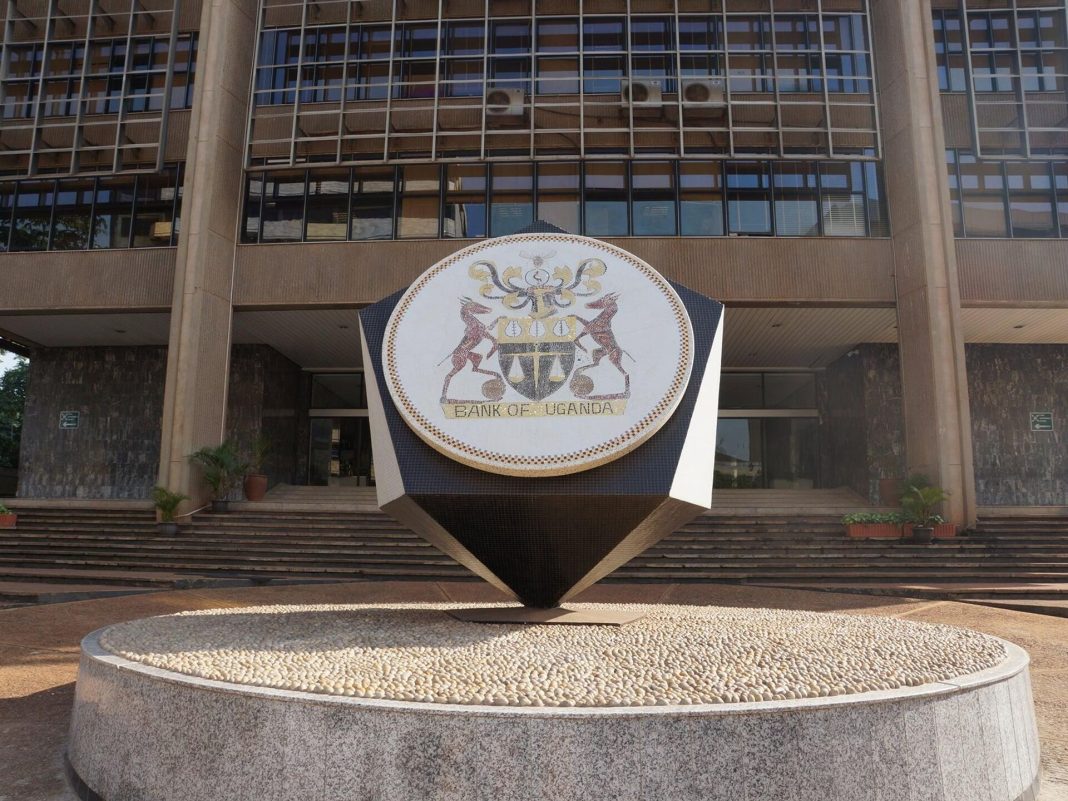
The Bank of Uganda (BoU) has maintained the Central Bank Rate (CBR) at 9.75 percent for November 2025, hence showing confidence in the country’s improving economic performance while exercising caution amid global uncertainties.
In a statement released on Wednesday, the Central Bank said the decision was based on the continued stability of inflation and sustained growth momentum across key sectors of the economy.

“This decision reflects confidence in the improving domestic economic environment while remaining cautious about global risks,” BoU noted.
According to the statement, core inflation averaged 3.9 percent over the past year, while overall inflation stood at 3.6 percent. The Bank attributed this subdued price growth to prudent monetary policy, a stronger shilling, and favorable energy prices.
“Low inflation was largely driven by prudent monetary policy, a stronger exchange rate, and favourable energy prices,” the statement added.

Economic activity has also remained robust, with growth reaching 6.3 percent in the financial year 2024/25, compared to 6.1 percent the previous year. BoU said the expansion was supported by higher agricultural and industrial output, as well as increased household consumption and investment.
“The domestic economy continues to strengthen, supported by coordinated monetary and fiscal policies that have anchored investor confidence and maintained macroeconomic stability,” the Central Bank observed.
Looking ahead, the Bank projects that core inflation will range between 4.0 and 4.5 percent in the 2025/26 financial year, slightly below the previous forecast of 4.5 to 4.8 percent.
Meanwhile, economic growth is expected to rise further to between 6.5 and 7.0 percent in FY2025/26, and to average about 8 percent in the medium term, supported by large-scale infrastructure projects, sustained private investment, and improved global financial conditions.
However, the Bank cautioned that potential risks remain. Factors such as heightened geopolitical tensions, poor weather affecting food production, and weaker capital inflows could exert upward pressure on inflation. On the other hand, strong oil-sector foreign exchange inflows and favorable weather conditions are expected to help moderate prices.
While optimistic about Uganda’s growth trajectory, BoU warned that rising trade barriers, tight global financial conditions and increased policy uncertainty could constrain the pace of expansion if not well managed.
The Central Bank reaffirmed its commitment to maintaining macroeconomic stability and ensuring inflation remains close to its medium-term target of 5 percent, a key objective in fostering sustainable growth.
“Bank of Uganda will continue to closely monitor developments and stands ready to take appropriate action to ensure that inflation remains around the 5 percent target while supporting economic growth,” the statement read.