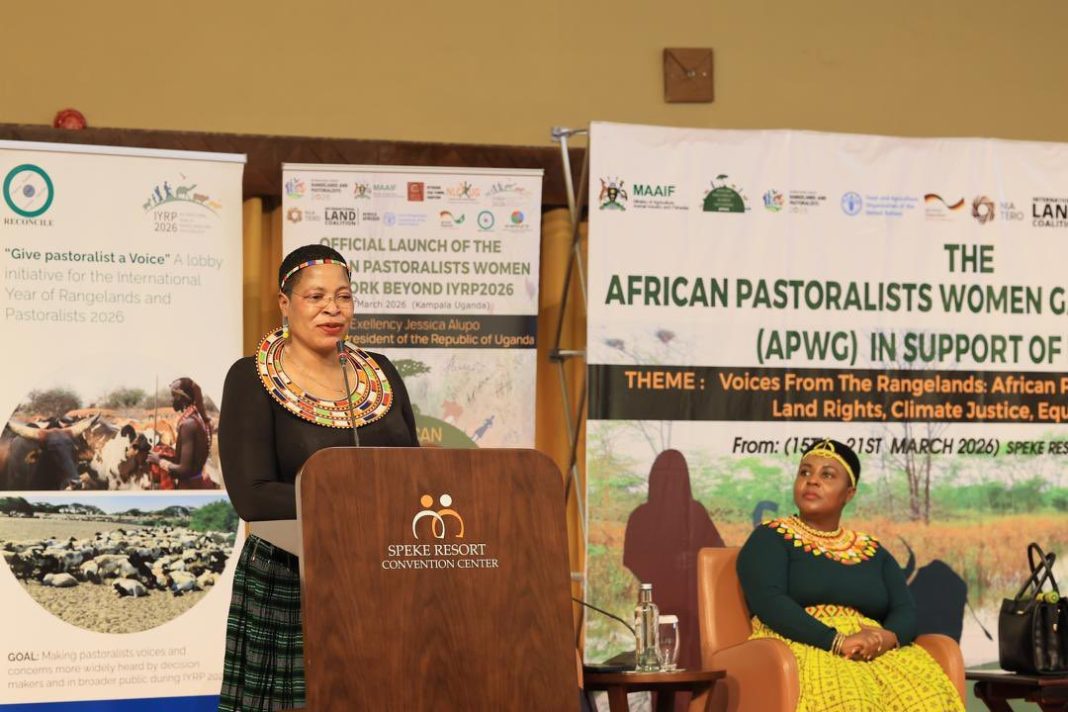
Speke Resort Munyonyo has hosted the official launch of the African Rangelands and Pastoralists Women Charter, an event aimed at advancing the role of women in pastoral communities across the continent.
Presiding over the event, the Speaker of Parliament, Anita Among emphasized the significance of the gathering, which also marked the closing of the African Pastoralists Women Gathering that attracted over 200 participants from across Africa, including grassroots pastoralist women, government officials, civil society actors and development partners.

“It is with great honour and gratitude that I preside over both the closing of this historic gathering and the official launch of the African Rangelands and Pastoralists Women Charter,” Among said.
She noted that discussions on pastoralism have often overlooked the critical contribution of women, despite their central role in sustaining livelihoods.
“Oftentimes, discussions of rangelands and pastoralism in Africa focus mainly on men, yet the story is incomplete without women. I commend the organisers for highlighting the central indivisible role of women in pastoralism,” she said.

Among stressed that any meaningful efforts to improve the condition of pastoralists must fully recognise women’s contributions in areas such as animal care, food production, household resilience, and peacebuilding.
“I want to inform you that I am a pastoralist woman myself. I have cattle, so the issues of pastoralist women are pertinent to me,” she added.
The Speaker conveyed greetings from President Yoweri Kaguta Museveni, noting his support for the gathering and ongoing government efforts to strengthen pastoralism.
“I bring you fraternal greetings from His Excellency the President, who has blessed this gathering and expressed his full support,” she said.
Among highlighted government interventions aimed at improving pastoral livelihoods, including policy frameworks such as the National Land Policy and the National Climate Change Act 2021, as well as security measures like the disarmament process in the Karamoja sub-region.
“Today, unlike previous years, incidences of livestock theft have significantly reduced, while various government-led interventions are underway to diversify household livelihoods through irrigation and skilling,” she said.
She further underscored the importance of unity among African nations in addressing shared challenges affecting rangelands, invoking the spirit of Ubuntu.
“The future of Africa requires such unity in the spirit of ‘Ubuntu’. I therefore recognise the participation of representatives from Benin, Cameroon, Kenya, South Sudan, Tanzania, and Uganda,” Among noted.
Uganda’s rangelands, which cover about 44 percent of the country’s total land area and support more than 6.6 million people, were highlighted as critical to the nation’s economy and food systems, stretching across the cattle corridor from the north-east to the south-west.
Despite their importance, Among acknowledged persistent challenges affecting pastoral communities, including land fragmentation, climate change, limited veterinary services, and weak institutional support systems.
“Women and children disproportionately bear the brunt of these challenges, facing increased workloads and reduced educational opportunities. Urgent, inclusive, and sustainable interventions are essential,” she said.
She called for concrete outcomes from the gathering, particularly in strengthening women’s leadership, securing land rights, enhancing climate resilience, and recognising pastoral mobility as a fundamental right.
“As the Government of Uganda, we pledge to continue creating an enabling environment for pastoralism and rangelands to flourish, strengthen the rights of pastoral communities especially women, and mitigate the effects of climate change,” Among affirmed.
The newly launched charter will amplify the voices of pastoralist women and ensure their inclusion in decision-making processes that shape policies and interventions affecting rangelands across Africa.