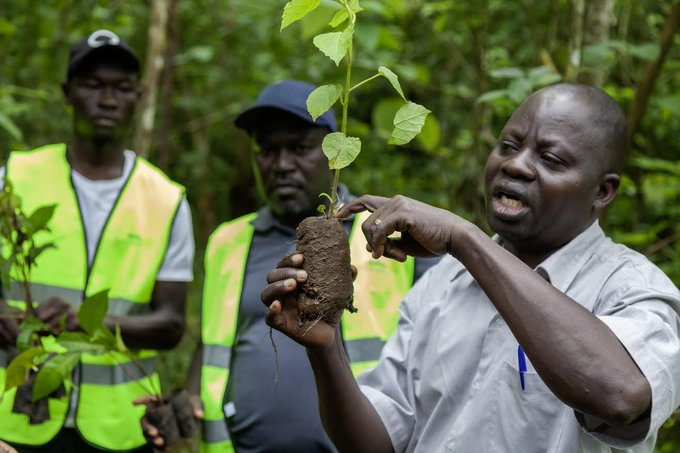
Rotary International has joined hands with Uganda Breweries Limited and the National Forest Authority to launch a major forest restoration initiative targeting 80,000 indigenous trees in the Namananga Central Forest Reserve.
The three year project, valued at Shs 372 million, was unveiled this week as part of Uganda Breweries Limited’s 80th anniversary celebrations, with partners committing to restore degraded sections of the 459 hectare reserve.

Namananga Central Forest Reserve plays a critical ecological role as a corridor linking Mabira Forest to the Musamya Swamp, while also protecting vital water catchments such as the Nalwe and Wugula streams that support surrounding communities, agriculture and wildlife.
Speaking at the launch, Rotary representatives underscored the importance of partnerships in addressing environmental challenges and ensuring long term impact.
“The restoration of Namananga Forest is a significant undertaking that requires collective effort. We are proud to support UBL as they mark 80 years by giving back to the environment,” said Geoffrey Martin Kitakule.

He added that sustained collaboration among stakeholders will be key to advancing environmental, social and governance initiatives and delivering meaningful results for communities.
Uganda Breweries Limited said the project reflects its broader commitment to environmental sustainability and responsible business practices.
“As we mark 80 years of brewing in Uganda, we know our business depends on a healthy environment,” said Felicite Nson.
“Today’s activities added 2,000 indigenous seedlings to the 26,000 already planted under this restoration effort. Restoring Namananga Forest supports the natural systems that sustain our value chain, from water sources to the crops grown by farmers across the country.”
The initiative comes at a time when Uganda is working to rebuild its forest cover, currently estimated at about 13.3 percent, with efforts underway to restore degraded ecosystems and strengthen climate resilience.
Officials from the National Forest Authority emphasized that the project goes beyond tree planting, focusing on long term protection and sustainability of the restored forest.
“Restoring Namananga provides an opportunity to expand Collaborative Forest Management and ensure that what we plant is protected,” said Martin Mwodi Kegere.
“Today’s event is more than a ceremonial planting of trees. It is a declaration of our shared responsibility to restore Uganda’s natural heritage and secure its ecological future.”
The partners said the project will prioritize indigenous tree species to rebuild a resilient ecosystem capable of supporting biodiversity, regulating local temperatures and safeguarding water resources.
Beyond planting, all stakeholders have committed to ensuring the survival and maturity of the trees over the three year period, with success to be measured through increased forest cover, improved water systems and tangible benefits to surrounding communities.
The Namananga restoration effort is expected to contribute to national environmental goals while reinforcing the role of public, private and civil society partnerships in protecting Uganda’s natural resources.