President Yoweri Museveni has clarified that recommendations made by the ruling party’s Central Executive Committee (CEC) on the leadership of Parliament are not binding.
The final decision on the Speaker and Deputy Speaker positions will rest with the National Resistance Movement (NRM) parliamentary caucus.

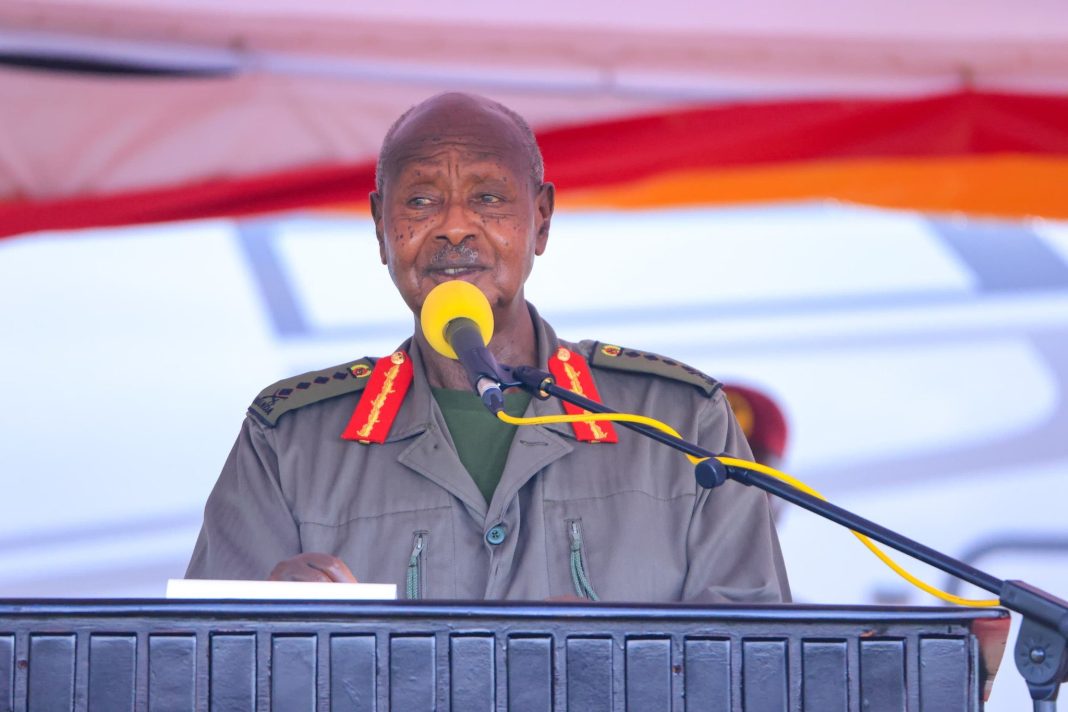
Speaking during a retreat of NRM Members of Parliament-elect at the National Leadership Institute in Kyankwanzi District, Museveni said the party would take time to deliberate before settling on its flag bearers for the top parliamentary seats.
The President noted that while the CEC had earlier proposed retaining the current leadership of Parliament in line with party practice, this position remains advisory.
“Regarding the issue of standing for Speaker, that is a matter we shall discuss at the appropriate time. CEC had earlier recommended that we maintain the current arrangement, as it has become something of a tradition. This remains a recommendation,” Museveni told the legislators.

His remarks followed a submission by Aringa County MP Yorke Alioni Odria, who urged the party leadership to ensure fairness and equity in determining candidates for the positions of Speaker and Deputy Speaker.
Museveni’s response appeared to calm concerns among sections of legislators who have questioned the endorsement of incumbent Speaker Anita Annet Among and her deputy Thomas Tayebwa, with some arguing that the move limits internal competition within the party.
The race for the speakership has attracted several contenders among members elected to the 12th Parliament. Those who have publicly expressed interest include Among, Odria, Mbale City Woman MP Lydia Wanyoto, Laroo-Pece MP Norbert Mao, Masindi Woman MP Florence Akiiki, and Bukono MP Persis Namuganza.
Museveni said the party would weigh all relevant considerations before arriving at a position, leaving room for further internal discussion among NRM legislators.
During the same session, Odria raised concerns over accountability, questioning why more arrests had not been made in relation to reported corruption in government institutions, including the finance ministry and Parliament.
In response, Museveni defended ongoing enforcement efforts, citing previous prosecutions of public officials implicated in corruption-related cases.
“Why are you saying that corruption is not being addressed? People are being arrested. As I have said, they were arrested, they were prosecuted and due process was followed,” he said.
The President also used the retreat to emphasise the NRM’s ideological foundations, urging legislators to remain grounded in patriotism and socio-economic transformation. He cautioned that weak ideological grounding among leaders continues to undermine progress.
“Leadership that continuously embraces ideological orientation facilitates progress. On the other hand, ideologically bankrupt leadership retards progress and can be reactionary,” Museveni said.
The Kyankwanzi retreat, a regular platform for orienting NRM legislators, has also featured sessions on legislative responsibilities, party discipline, and constituency priorities. Several MPs-elect used the engagement to raise local concerns, including calls for infrastructure improvements and action against theft of medicines from government health facilities.