The Forum for Democratic Change (FDC) has demanded answers over the controversial Protection of Sovereignty Bill and questioned who altered the proposed law after President Yoweri Kaguta Museveni disowned the version currently before Parliament.
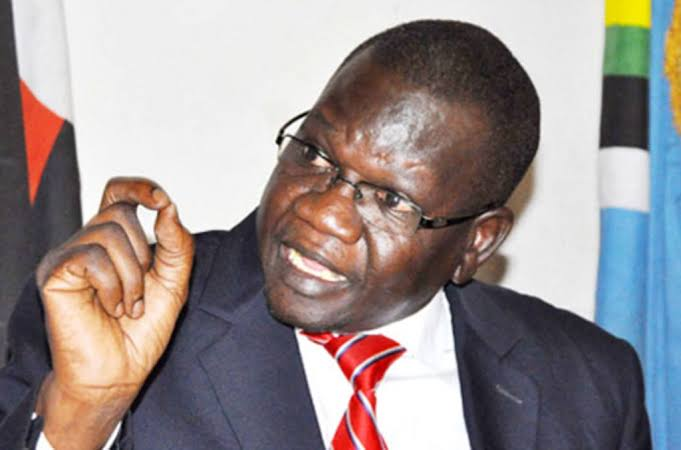
Addressing a press conference at the party headquarters in Najjanankumbi, FDC President Patrick Oboi Amuriat said the President’s remarks had exposed a serious breakdown in the legislative process.

“If it is true that the Bill that was tabled in Parliament is not what he sanctioned, then this signals a very big problem,” Amuriat said.
He questioned how a Bill could be formally introduced in Parliament only for its originator to later distance himself from it.
“Who distorted the Bill? Who authorised its tabling in its current form? Who in the Attorney General’s chambers, in the Ministry of Internal Affairs, or in Cabinet is responsible for presenting to Parliament and the entire nation a piece of legislation that its own initiator now disowns?” he asked.

The FDC leader said the President’s public statement amounts to a vote of no confidence in government legal and policy structures.
“The President distancing himself from this Bill is a vote of no confidence in his own Attorney General and all those involved in its drafting and presentation. Any serious and accountable leader would hold those responsible to account to avoid a recurrence of such,” he said.
Amuriat also criticised the manner in which the clarification was made, arguing that a matter already before Parliament should follow formal procedures.
“The Bill was formally tabled before Parliament. Any denial or advice by the President should have followed the established procedures and not social media,” he said.
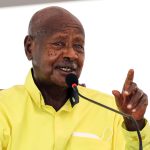
The FDC’s position follows Museveni’s statement last week in which he dismissed widespread claims that the Sovereignty Bill seeks to restrict foreign direct investment, remittances, and financial support to religious institutions.
“I have noticed a lot of noise regarding the Sovereignty Bill. Which Sovereignty Bill is the noise about? The one I initiated in the Cabinet or another one? The claims that the Bill will stop foreign direct investments, support for religious bodies from abroad, or remittances are not true. That is not the Bill I initiated,” Museveni said.
The President explained that the proposed legislation is intended to safeguard Uganda’s independence in policy decision making, drawing from the country’s historical struggle for self-determination.
“The sovereignty we fought for is about policy decision-making. It is about deciding on political, social, economic, and diplomatic issues as a country without interference,” he said.
He stressed that sovereignty should not be interpreted as hostility to economic openness.
“Sovereignty means please leave us alone so that we can make our own decisions. Do not fund groups to influence our decisions as a country,” Museveni said.
He added that Uganda’s liberal economic framework remains intact and unaffected by the proposed law.
“None of our policies says do not send money to Uganda or take it out. We run a free economy. Forex is bought and sold in privately run bureaus, and this freedom is the strength of our economy,” he said.
Museveni also pointed to the role of the private sector in sustaining economic performance.
“The freedom of the private sector compensates for the obstruction of corrupt or non-patriotic public servants and political opportunists,” he said.
He revealed that he had engaged parliamentary leaders to ensure the Bill remains focused on policy sovereignty and does not extend into economic controls.
“I have talked to the relevant leaders in Parliament to make the Bill concentrate on the sovereignty of policy decision making and not to meander into private enterprise or money transfers,” he said.
He further cautioned against external influence in Uganda’s internal affairs.
“Influence people by example and not by coercion or manipulation,” Museveni added.
Back in Najjanankumbi, Amuriat said the developments highlight the power of public resistance, noting that the Bill had faced overwhelming opposition during parliamentary consultations.
“What has happened with this Bill is a demonstration of what Ugandans can achieve when they speak with one voice. Civil society, religious leaders, cultural leaders, economists, legal scholars, diaspora Ugandans, opposition parties, and ordinary citizens came together and rejected this Bill in overwhelming numbers,” he said.
According to Amuriat, more than 90 percent of those who appeared before Parliament’s joint committees opposed the Bill.
“This government has now been forced to retreat and even deny itself. That shows that when we stand together, we win,” he said.
However, he warned that the legislative process is not yet over, claiming that parliamentary committees have already backed the Bill, leaving the final decision to the full House.
“We are now aware that the committees charged with scrutinising the Bill have overwhelmingly voted in favour of it and now the burden is left to the entire House,” he said.
He called on Members of Parliament to reject the Bill in any form that threatens constitutional freedoms.
“We call upon all Members of Parliament to reject any attempt to pass this Bill in its current form or in any amended form that continues to threaten the rights of Ugandans Parliament was not established to manufacture tools of oppression but to create an environment conducive to fairness and progress of the nation,” Amuriat said.
At a separate event, former Ethics and Integrity Minister Miria Matembe criticised both the substance of the Bill and the urgency with which it is being pushed, warning that the speed itself should alarm citizens.
“What kind of leaders ignore Ugandans? Are these human beings? If they cannot listen to Ugandans, it means their ears are closed and their eyes are closed. We shall continue to try to open those ears and eyes so that they listen to us,” Matembe said.
She argued that laws rushed through Parliament often conceal deeper risks.
“For me, the speed at which this Bill is being run to pass as a matter of life and death should open our eyes as Ugandans. Anything that is to be done as a matter of life and death has more danger behind it. There is greed and personal interest rather than the interest of Ugandans,” she said.
Matembe also questioned the urgency driving the legislation, saying the public has not been told what threat necessitates such action.
“What is it that has threatened Uganda with such immediate destruction all of a sudden to call for enactment of a law which is more dangerous than protective to this nation?” she asked.
Reflecting on Museveni’s statement, she said it did not address the concerns raised by Ugandans.
“I thought when the President came out to talk, he would tell us the danger that we are facing so that we join and protect ourselves. But I was not shocked. For the last forty years, I have seen our President as a leader. I have never heard him accept personal responsibility,” she said.