Uganda’s export sector posted robust growth in April 2026, with merchandise export earnings rising by 24.3 percent to $1.40 billion (about Shs5.1 trillion), up from $1.13 billion (about Shs4.1 trillion) recorded in April 2025, according to the latest Performance of the Economy Monthly Report released by the Ministry of Finance, Planning and Economic Development (MoFPED).
The report indicates that the country earned an additional $274.18 million from exports over the past year, largely driven by increased receipts from gold, base metals and related products, electricity exports, oil re-exports, cement, crude oil, cotton, beans, hides and skins.

“The increase in export earnings was mainly driven by higher earnings from gold, base metals and products, electricity, oil re-exports, cement, crude oil, cotton, beans and hides and skins, among others,” the report states.
Gold remained the dominant contributor to Uganda’s export earnings, with receipts nearly doubling over the year. Export earnings from the precious metal surged by 87.1 percent from $462.86 million in April 2025 to $866.10 million in April 2026.
According to the Finance Ministry, the impressive growth was supported by both higher export volumes and favorable conditions on the international market.

“The upward pressure on global gold prices has been attributed to the global shift to gold as a safe haven amidst rising global tensions,” the report notes.
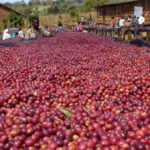
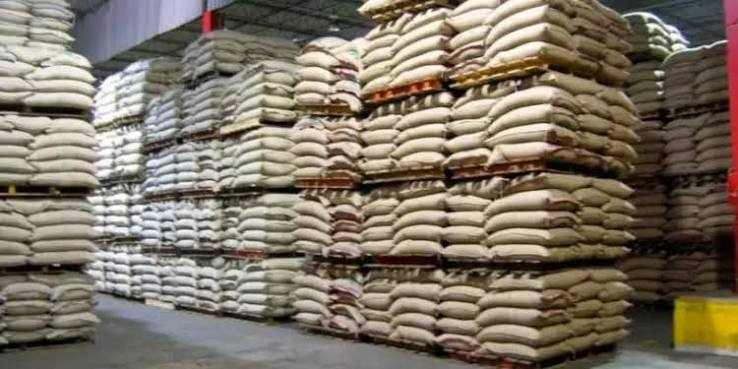
In contrast, coffee exports experienced a significant setback despite remaining one of Uganda’s key foreign exchange earners.
Coffee export earnings declined from $214.38 million in April 2025 to $150.81 million in April 2026. The drop was attributed to both lower export volumes and declining global prices.
The volume of coffee exported fell from 687,299 sixty-kilogram bags to 591,687 bags during the period, while average prices dropped from $5.15 per kilogram to $4.25 per kilogram.
“Coffee prices continue to decline in line with international coffee prices due to an improved global supply outlook following increased supply from Vietnam, Indonesia and Ethiopia,” the report explains.
Compared to March 2026, however, Uganda’s export earnings registered a slight decline of 2.4 percent, falling from $1.44 billion to $1.40 billion. The decrease was largely attributed to reduced earnings from coffee, cocoa beans, sugar, tobacco, beans, and oil re-exports.
The Middle East maintained its position as Uganda’s leading export destination, accounting for 54.2 percent of total exports during April. The United Arab Emirates remained the country’s most significant market within the region, absorbing 99.1 percent of Uganda’s exports to the Middle East.
Other major export markets included the East African Community (20.8 percent), Asia (12.3 percent), and the European Union (7.6 percent).
Meanwhile, Uganda’s import bill also expanded considerably during the review period.
Merchandise imports increased by 23.1 percent to $1.51 billion (about Shs5.5 trillion) in April 2026, up from $1.23 billion (about Shs4.5 trillion) recorded in April 2025.
The growth was mainly driven by increased formal private sector imports, which outweighed a decline in government project-related imports.
Major imports included mineral products excluding petroleum, chemicals and related products, base metals, petroleum products, machinery, equipment, vehicles and accessories.
Every month, imports rose slightly from $1.49 billion in March 2026 to $1.51 billion in April 2026, supported by higher purchases of plastics, rubber products, machinery and transport equipment.
The East African Community remained Uganda’s largest source of imports, accounting for 48.4 percent of the country’s import bill. Asia followed with 37.3 percent, while the European Union and the Middle East contributed 7.1 percent and 2.7 percent respectively.
Within Asia, China, India and Japan continued to dominate Uganda’s import market, accounting for 48.8 percent, 29.6 percent and 7.2 percent respectively of imports from the region.
Despite the decline in coffee earnings, the strong performance of gold and other export commodities helped sustain Uganda’s external trade growth, reinforcing the country’s export resilience amid shifting global market conditions.