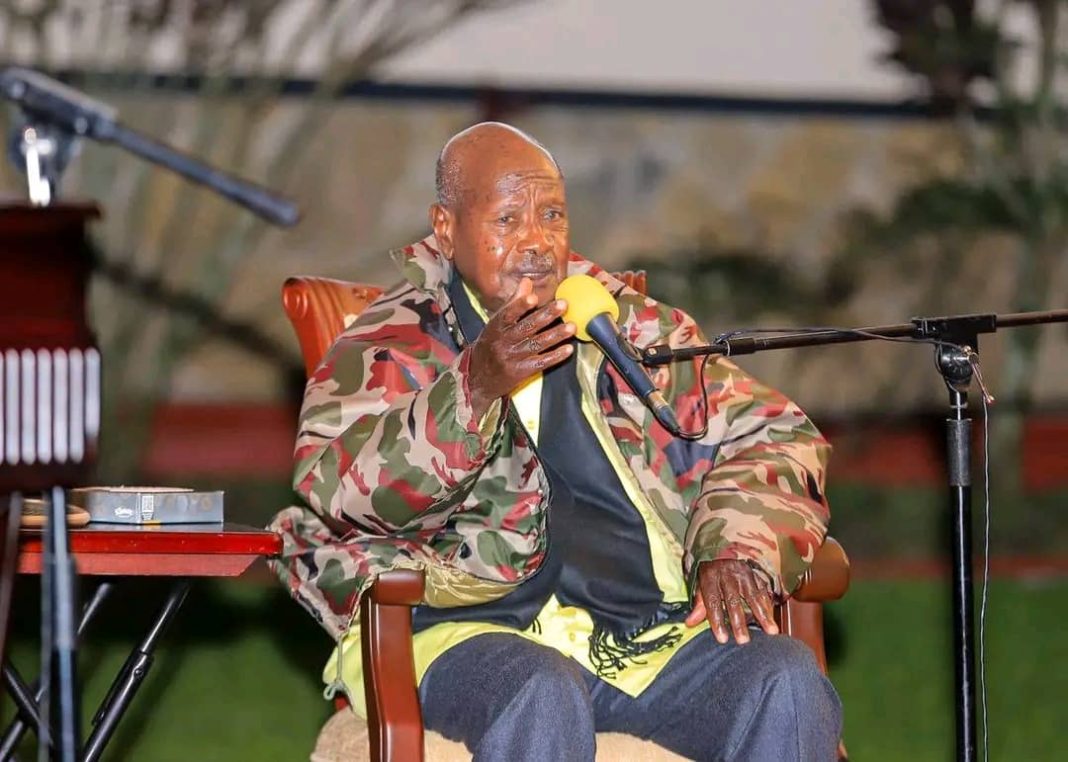
President Yoweri Museveni has ordered Finance Minister Henry Musasizi to explain the circumstances under which millions of dollars meant for servicing Uganda’s international debt obligations were diverted to private companies in the United Kingdom and Japan.
In a letter dated June 14, 2026, addressed to the Minister of Finance, Planning and Economic Development, the President said he had received and reviewed a Financial Intelligence Authority (FIA) report detailing suspicious transactions involving government debt repayments.

The letter reveals that the funds, amounting to USD 14.73 million (Shs54 billion), were allegedly diverted from their intended beneficiaries, the World Bank Group and the African Development Bank (AfDB)to MJS International Ltd in London and Roadway Company Ltd in Tokyo, Japan.
“I have seen a Financial Intelligence Authority report dated the 12th of September, 2025, concerning the USD 8 million plus and USD 6 million plus meant to pay Uganda’s loan obligations to World Bank Groups and African Development Bank (ADB) was diverted to private companies in the UK and Japan,” Museveni wrote.
The President demanded a comprehensive account of what transpired.

“I demand a report of what has happened to this money, those who diverted it (stole it) and those who received it,”he added.
Museveni copied the directive to Vice President Jessica Alupo, Prime Minister Robinah Nabbanja, the Chief of Defence Forces, Inspector General of Police, Director General of the Internal Security Organisation, Inspector General of Government, the Permanent Secretary in the Finance Ministry and the Attorney General, signalling the seriousness with which State House is treating the matter.
The President’s intervention comes as criminal proceedings continue against senior officials from the Ministry of Finance over the same fraudulent transactions, which investigators believe were orchestrated through manipulation of Uganda’s electronic payment systems.
According to court documents and findings from a special forensic audit, the fraud occurred in September 2024, when debt repayment instructions generated through the government’s Integrated Financial Management System (IFMS) were allegedly altered before being transmitted to the Bank of Uganda for execution.
Investigators say the first transaction involved USD 6.13 million, which had been earmarked for repayment to the International Development Association (IDA) of the World Bank. Instead, the money was redirected to Roadway Company Limited in Tokyo, Japan.
A second payment of USD 8.59 million, intended for the African Development Fund (ADF) under the African Development Bank, was allegedly diverted to MJS International in London. Together, the two transactions amounted to more than USD 14.7 million, equivalent to about Shs54 billion.
Forensic investigators concluded that the payment instruction files were manipulated before encryption, allowing fraudsters to substitute the genuine beneficiaries with private foreign companies. The audit also points to the use of administrator-level access and specialised computer scripts to alter payment details without detection.
The scandal has since resulted in the prosecution of several senior officials from the Ministry of Finance, including former Accountant General Lawrence Semakula, Commissioner for Treasury Services Jennifer Muhuruzi, Assistant Commissioner for Accounts Pedson Twesigomwe, and several information technology officers accused of manipulating electronic payment files and concealing the fraudulent transfers.
Prosecutors allege that weaknesses in internal controls within the Accountant General’s office and the Treasury Services Department enabled the fraudulent transactions to proceed without raising immediate red flags.
Earlier investigations by the Auditor General and independent forensic experts also established that the Bank of Uganda merely acted on payment instructions received from the Ministry of Finance, with no evidence that the central bank’s core banking systems had been hacked. Instead, investigators concluded that the fraud originated before the payment files reached the central bank.
Authorities have managed to recover a substantial portion of the money that had been transferred to the London account, although part of the funds remains unaccounted for, while recovery efforts involving the money sent to Japan have proved significantly more difficult.
The directive is aimed at intensifying investigations into the international money trail, establish how the transactions escaped internal controls, identify all beneficiaries of the diverted funds, and determine whether additional government officials or foreign collaborators played a role in the sophisticated fraud.
The President’s demand for a detailed report also mounts pressure on the Ministry of Finance and investigative agencies to account for public finance scandals and ensure those responsible are brought to justice.