President Yoweri Museveni has defended Uganda’s nearly two decade military engagement in Somalia, revealing that the deployment of the Uganda People’s Defence Forces (UPDF) is a principled and strategic intervention aimed at protecting Africa from violent extremism rather than advancing Uganda’s territorial interests.
Museveni made the remarks on Friday while chairing the Second Extraordinary Summit of Heads of State and Government of Troop Contributing Countries (TCCs) to the African Union Support and Stabilisation Mission in Somalia (AUSSOM) at Speke Resort Munyonyo, where regional leaders gathered to chart the future of the peace support mission amidst uncertainty over international financing.

“Uganda’s involvement in Somalia was never because we share a border, but out of principle and strategy. We rejected the extremism that seeks to impose itself on African societies and stood in solidarity with our brothers and sisters,” Museveni said.
The President said Africa has historically thrived on mutual respect among its diverse communities and cultures, arguing that defeating extremist ideologies remains essential to safeguarding the continent’s future.
“Africa has a rich history of respecting one another’s identity, and I remain confident that, through our collective efforts, we shall continue supporting Somalia’s journey towards lasting peace and stability,” he said.

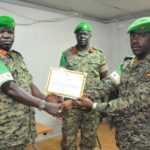
Museveni paid tribute to the troop contributing countries and thousands of soldiers who have served under the African Union mission over the years.
“I thank the Troop Contributing Countries and their leaders for their commitment and sacrifice in the pursuit of a peaceful and stable Somalia,” he added.
Uganda became the first country to deploy troops under the African Union Mission in Somalia (AMISOM) in March 2007 after Somalia descended into prolonged instability following the collapse of the Siad Barre government in 1991. Since then, Uganda has remained the backbone of successive African Union peace support operations, beginning with AMISOM, transitioning to the African Union Transition Mission in Somalia (ATMIS) in 2022, and subsequently AUSSOM, which officially replaced ATMIS in January 2025.
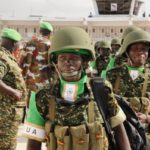
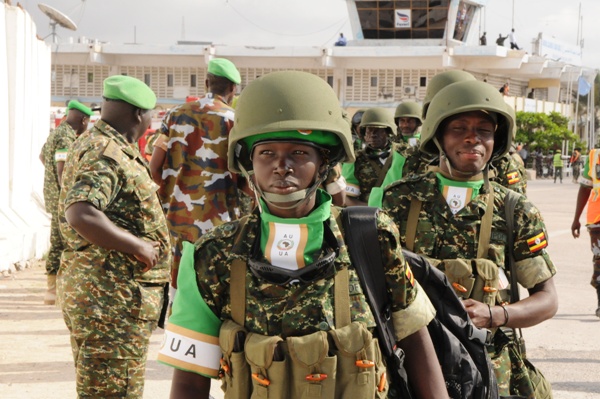
Over the last 19 years, UPDF troops have played a decisive role in securing Mogadishu, protecting Somalia’s key government institutions, reopening major supply routes, liberating strategic towns from the Al-Shabaab terrorist group, training Somali security forces and providing the security space necessary for political reconstruction and humanitarian operations. Uganda’s soldiers have participated in major offensives that reclaimed territories including Mogadishu, Marka, Baraawe and several districts across Lower Shabelle, while also protecting critical infrastructure such as Aden Adde International Airport and Villa Somalia.
Throughout the mission, several senior UPDF commanders have led Ugandan contingents in Somalia, including the late Maj. Gen. Nathan Mugisha, who became the first Force Commander of AMISOM in 2007, Maj. Gen. Levi Karuhanga, Lt. Gen. Andrew Gutti, Lt. Gen. Sam Kavuma, Lt. Gen. Jim Owoyesigire, Maj. Gen. Kayanja Muhanga and Maj. Gen. Keith Katungi, among others, with different commanders overseeing Ugandan battle groups during various phases of the operation.
The summit came at a critical moment for the mission following indications that the United States will oppose the continuation of United Nations logistical support for AUSSOM after the current mandate expires at the end of December 2026.
Washington argues that despite years of international investment, Somalia’s security institutions have not yet become self sustaining, raising concerns over the future of the UN Support Office in Somalia (UNSOS), which provides transport, medical evacuation, engineering, fuel, communications and other logistical support to African Union forces.
The funding uncertainty has alarmed troop contributing countries, which argue that withdrawing support prematurely could reverse hard won gains against Al-Shabaab and create fresh security risks across the Horn of Africa.
The African Union has consistently maintained that preserving the progress achieved in Somalia requires predictable and sustainable financing, while calling on member states and international partners to honour commitments to African led peace operations.
Earlier during the meeting of Chiefs of Defence Forces that preceded the summit, Uganda’s Chief of Defence Forces, Gen. Muhoozi Kainerugaba, warned that the future of AUSSOM depends on reliable financial backing from international partners.
“We cannot continue asking African soldiers to make the ultimate sacrifice without guaranteeing the resources they need to accomplish the mission,” Muhoozi said.
He added that the mission had delivered significant security gains over the years but warned that those achievements could easily be undermined if troop contributing countries were left to shoulder the financial burden alone.
“We have paid in blood for the stability that Somalia is enjoying today. The international community must match our sacrifice with predictable and sustainable funding,” Muhoozi told the defence chiefs.
His remarks echoed earlier warnings that continued funding shortfalls could force troop contributing countries to reconsider their deployments if a long term financing mechanism is not agreed upon.
Reporting from Mogadishu in the past years, regional security correspondents, including late Risdel Kasasira, noted that Somali authorities, the African Union and troop contributing countries were racing to secure a new funding framework before the current arrangements expire, amid fears that any disruption in logistical support could weaken ongoing operations against Al-Shabaab and slow Somalia’s transition towards assuming full responsibility for its own security.
The Kampala summit also aimed at producing a unified regional position on the future of AUSSOM, including proposals for sustainable financing, force generation and continued international support, as African leaders seek to preserve nearly two decades of security gains achieved through one of the continent’s longest running peace support missions.