Finance Minister Henry Musasizi has assured Parliament that Uganda’s rapidly growing public debt remains sustainable over the medium to long term, despite the country’s debt stock rising to Shs126.16 trillion.
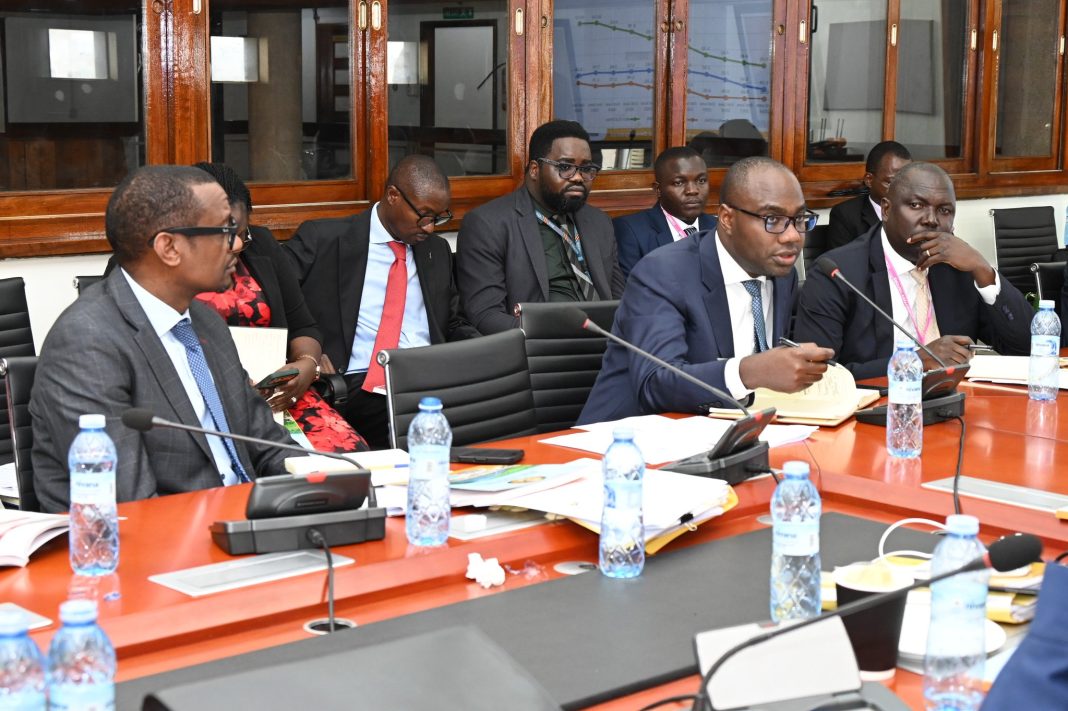
Musasizi, together with technical officials from the Ministry of Finance, Planning and Economic Development, appeared before Parliament’s Committee on the National Economy to brief MPs on the country’s public debt position, debt sustainability, external financing, contingent liabilities and domestic arrears.

According to the Minister, Uganda’s total public debt increased by 19.96 per cent, from $29.06 billion (Shs105.17 trillion) at the end of December 2024 to $34.86 billion (Shs126.16 trillion) by December 2025.
Of the total debt, $15.84 billion was external debt, while $19.02 billion was domestic debt.
Musasizi attributed the sharp increase largely to increased domestic borrowing to finance the fiscal deficit and continued government investment in strategic infrastructure projects intended to support economic transformation and long-term growth.

He, however, told MPs that the size of the debt alone should not be used to determine whether the country is overburdened, arguing that its sustainability should also be assessed against Uganda’s ability to generate enough resources to service and repay it.
“Debt sustainability should not only be assessed by looking at the nominal debt stock, but also by considering the economy’s capacity to service the debt,” Musasizi said.
Uganda’s public debt as a proportion of the economy also increased, with the debt-to-GDP ratio rising from 46.86 per cent in June 2024 to 50.90 per cent in June 2025.
Despite the increase, Musasizi maintained that the debt remains within sustainable levels, pointing to government’s fiscal consolidation measures, efforts to increase domestic revenue collection and plans to improve efficiency in public expenditure.
He also cited the anticipated benefits from Uganda’s oil sector and implementation of the government’s Ten-Fold Growth Strategy as measures expected to strengthen the economy and improve the country’s capacity to meet its debt obligations.
“Government remains committed to responsible borrowing and prudent debt management, with emphasis on productive investment, fiscal sustainability and value for money,” he said.
The Minister nevertheless acknowledged that the rising debt stock presents significant risks, particularly through the growing cost of servicing the loans.
He said government would therefore prioritise concessional and cost-effective financing while strengthening debt management and domestic revenue mobilisation.
“Borrowed funds must be directed towards productive investments that generate sufficient returns to support repayment,” Musasizi told the committee.
The Minister’s remarks come amid growing scrutiny of Uganda’s borrowing, with the increase in both domestic and external obligations raising questions about how future governments and taxpayers will meet the country’s repayment commitments.
Musasizi said government is also working to ensure that externally financed projects are implemented efficiently so that borrowed funds generate the intended economic and social benefits.
By December 2025, commitments for ongoing externally financed projects and programmes stood at $18.23 billion, of which $8.59 billion had been disbursed, representing 47.16 per cent.
He said government is working with implementing agencies and development partners to accelerate project implementation and disbursement while ensuring that the projects deliver value to the economy.
Beyond public debt, the Minister disclosed that Uganda’s contingent liabilities had also increased from Shs18.96 trillion in June 2024 to Shs20.57 trillion in June 2025, representing an increase of Shs1.61 trillion, or 8.5 per cent.
The increase was largely attributed to legal proceedings against the central government, including land compensation disputes, contractual claims arising from infrastructure projects, and other statutory obligations.
Musasizi also reported that Uganda’s audited domestic arrears stood at Shs8.68 trillion for the 2024/25 financial year.
Of this amount, Shs8.54 trillion, equivalent to 98.45 per cent, was owed by the central government, while Shs134.83 billion, representing 1.55 per cent, was attributed to Local Governments.
The Minister said government was tightening commitment controls and expenditure management while enforcing the Public Finance Management framework to prevent the accumulation of new arrears.
He said verified and approved obligations would progressively be cleared as government continues to strengthen financial discipline.
The government’s position is that Uganda’s borrowing has largely been used to finance infrastructure and other investments expected to expand the economy and create the revenue needed to repay the debt.
However, the rising debt stock, debt-servicing costs, contingent liabilities and domestic arrears remain key issues for Parliament as it scrutinises government borrowing and expenditure.
Musasizi reiterated that government would continue borrowing cautiously and focus on investments capable of generating economic returns, while strengthening domestic revenue mobilisation to reduce reliance on borrowing.