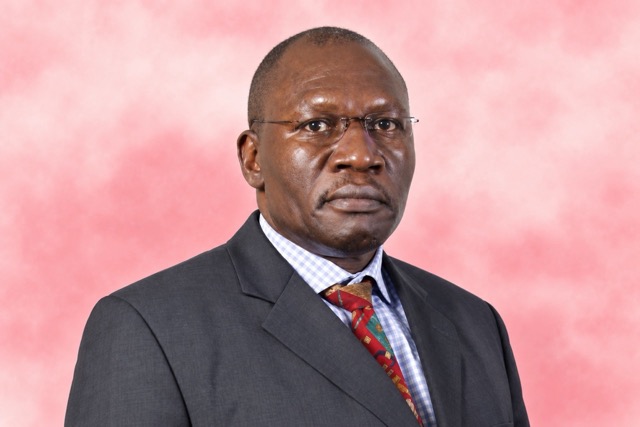
Geoffrey Alan Onegi-Obel, a prominent Ugandan investment banker who helped establish the Uganda Securities Exchange (USE) and later chaired the National Social Security Fund (NSSF) has died in Nairobi-Kenya, aged 70.
Onegi-Obel died on Sunday, October 18, 2026, at MP Shah Hospital, where he had been admitted, according to a report published by Watchdog Uganda. At the time of his death, he was the Group Chairman of Pinnacle Holdings E.A. Limited.

His death marks the passing of a figure whose career was closely linked to the development of Uganda’s capital markets, pension fund investment and private sector institutions.
Onegi-Obel played a central role in efforts to establish a securities exchange that would give Ugandan businesses access to capital and provide investors with a formal platform to trade shares. He became the founding chairman of the Uganda Securities Exchange, which opened for trading in January 1998.
Before the exchange was established, he founded *The Financial Times of Uganda*, a publication that focused on economic affairs and helped advance debate about investment, financial markets and the mobilisation of domestic capital.

He later sold the publication and worked with stakeholders in the public and private sectors to establish the exchange, becoming one of the key figures in the development of Uganda’s formal capital market.
His contribution was subsequently recognised through a Lifetime Achievement Award from the Uganda Securities Exchange.
Onegi-Obel also served as chairman of the NSSF board between 2001 and 2005, a period during which he advocated the use of workers’ retirement savings to support long-term national development, including housing and mortgage financing.
His time at the fund also became associated with the controversial Nsimbe Housing Estate project, which led to criminal proceedings over alleged abuse of office and financial loss. However, the Anti-Corruption Court acquitted him of all charges on November 27, 2014, after finding that the prosecution had failed to establish its case against him.
Beyond the securities exchange and the pension fund, Onegi-Obel held leadership and advisory positions in several financial and business institutions. He served on the board of Standard Chartered Bank Uganda and held directorship and chairmanship roles at UAP Financial Services Uganda.
He also contributed to the work of institutions including Housing Finance Bank, the Private Sector Foundation Uganda, the National Planning Authority and Enterprise Uganda. His public service included serving as a senior presidential adviser on trade and matters relating to the African Growth and Opportunity Act, which provides eligible African countries with preferential access to the United States market.
Onegi-Obel’s background combined legal training with specialised education in finance and capital markets. Born on October 20, 1955, he was the son of the late Angelo Onegi Obel, who served as Governor of the Bank of Uganda from 1973 to 1978.
He attended St Mary’s College Kisubi before studying law at Makerere University. He later undertook advanced training in capital markets through an Albert Parvin Fellowship at Princeton University and executive studies at the New York Institute of Finance. He was also a Fulbright Scholar in 1987.
His involvement in education and community initiatives included chairing the St Mary’s College Kisubi Endowment Fund and its fundraising committee. He also received honorary recognition from the State of Oklahoma and Oklahoma City, as well as an honorary doctorate from Turks and Caicos University.
Until his death, Onegi-Obel remained associated with efforts to channel domestic savings into productive investment, arguing for a stronger link between Uganda’s financial resources, infrastructure development and job creation.
Pinnacle Holdings E.A. Limited confirmed his death in a statement, describing him as a visionary leader, mentor, and steadfast champion of economic transformation.
Tributes from Uganda’s financial and corporate sectors focus on his role in building institutions that have shaped the country’s investment landscape.
Funeral and burial arrangements will be communicated by the family.