Stanbic Bank
Stanbic Bank
29.2 C
Kampala
Stanbic Bank
Stanbic Bank
Home Blog Page 109

Ministry of Internal Affairs re-tables bill proposing a 5-year jail term for unauthorized DNA sample leakage

Prof. Badru Kateregga and his wife, Mrs. Jolly Shubaiha Kateregga are in a bitter fight over property and DNA results that indicated that one of the children didn't match the father's results.

The Ministry of Internal Affairs has re-tabled the Forensic & Scientific Analytical Services Bill, 2025, proposing a five-year jail term for persons who leak and obtain DNA samples and other biological specimens without approval from the government’s Analytical Laboratory.

The Bill, signed by the Minister of Internal Affairs, Gen. Kahinda Otafiire, aims to formalize the country’s forensic science ecosystem by establishing the Government Analytical Laboratory (GAL) as the national referral centre and the Department of Inspection and Legal Services as the sector regulator.

“The object of the Forensic and Scientific Analytical Services Bill, 2025 is to provide for the regulation of forensic and scientific analytical services; to establish the Government Analytical Laboratory… and designate it as the national referral for forensic and analytical services,” reads the Bill’s memorandum.

According to the draft, Uganda currently lacks a clear legal framework to govern forensic science or manage poisoning incidents. The country has no national poison information centre, and although the Government Analytical Laboratory has long provided forensic services, it is not officially designated as the national referral facility.

“Currently, there is no legal framework governing these services, nor does Uganda have a national poison information centre to analyze and disseminate information on poisons and poisoning incidents,” the Bill states.

The proposed law seeks to fill these gaps by giving legal status to the Government Analytical Laboratory, formalizing its functions, and recognizing it as Uganda’s referral hub for forensic and analytical services. It also designates the Department of Inspection and Legal Services at the Ministry of Internal Affairs as the lead regulatory agency.

Under the proposed framework, all analytical laboratories will be required to register and obtain licenses from the department. The Government Analytical Laboratory, led by a Chief Government Chemist, will coordinate with regional labs across the country. These laboratories will be empowered to conduct analyses in fields such as toxicology, DNA, cybercrime, environmental samples, food safety, and questioned documents.

The Bill also introduces new safeguards for the collection and use of bodily samples. It mandates that samples must be taken voluntarily, or by court order, and must follow strict consent procedures, especially in the case of children. Any sample collected is to be stored temporarily and destroyed after investigation, preventing permanent retention or misuse.

“An analytical laboratory shall collect samples for the analysis of forensic biology and DNA… [from persons] with informed consent or court order,” the Bill mandates.

The establishment of a central forensic and scientific database is another key highlight. This database will store DNA data and other forensic records, which will only be accessible to authorized agencies for criminal investigations or comparison purposes. The Bill sets stringent conditions on who may access or alter such information.

Violations of these provisions will be met with harsh penalties. A person who unlawfully obtains, leaks, or publishes DNA profiles or forensic data without written authorization from the Government Analytical Laboratory faces a fine of up to 1,500 currency points (Shs30 million) or five years in prison or both.

“A person who operates an analytical laboratory without a license… is liable on conviction to a fine not exceeding five hundred currency points or imprisonment for up to three years, or both,” the Bill warns.

Additional offenses include tampering with analysis reports, using results for commercial advertisements without permission, obstructing inspectors, and giving false information to the regulator. Offenders found guilty may face imprisonment, fines, and forfeiture of lab equipment to the state.

The Bill also designates the Government Analytical Laboratory as the National Poison Information Centre, responsible for coordinating and managing poisoning incidents, conducting toxicological tests, training professionals, and maintaining national poison case records.

“These improvements will support fair and effective legal proceedings, strengthen environmental health and safety measures, and contribute to the overall administration of justice in Uganda,” the Bill concludes.

If passed, the Forensic and Scientific Analytical Services Bill, 2025, will not only institutionalize Uganda’s forensic sector but also provide the much-needed legal and ethical guardrails to protect sensitive biological data and uphold justice.

Stories Continues after ad
EACOP, Rotary partner to launch Green Schools Initiative for environmental sustainability

Mr. JB Habumugisha, EACOP Ltd. Deputy Managing Director, Rotary District 9213, District Governor Mr. Geoffrey Kitakule, Fabian Kasi, MD Centenary Bank and Ms. Christine Kyeyune Kawooya, District Governor of Rotary District 9214, at the signing ceremony.

The East African Crude Oil Pipeline (EACOP) Ltd., the company spearheading the development of Uganda’s crude oil export pipeline, has signed a landmark Memorandum of Understanding (MoU) with Rotary to advance environmental sustainability in schools along the pipeline corridor.

The agreement establishes a framework for implementing the EACOP Green Schools Initiative, an ambitious program designed to transform learning environments in the districts of Hoima, Kikuube, Kakumiro, Mubende, Kyankwanzi, Lwengo, Kyotera, Rakai, Sembabule, and Gomba. The initiative is part of EACOP’s broader social and economic investment strategy to promote environmental stewardship and climate-smart practices in local communities.

The EACOP Green Schools Initiative will equip schools with the tools and knowledge to become hubs of sustainability —fostering eco-friendly practices, clean energy adoption, improved waste management, and climate education.

Speaking at the MoU signing ceremony in Kampala, Mr. JB Habumugisha, Deputy Managing Director of EACOP Ltd., said that the EACOP Green Schools Initiative is a proactive response to the pressing need for sustainable solutions within our communities.

He added, “By embedding environmental interventions in schools, we will address immediate challenges while nurturing a generation that values and protects our natural resources. This partnership with Rotary is an important step towards that vision.”

Representing Rotary District 9213, District Governor Mr. Geoffrey Kitakule reaffirmed Rotary’s dedication to protecting the environment.

He noted, “This partnership is timely. Rotary’s commitment to supporting the environment aligns perfectly with the Green Schools Initiative. There is no better way to secure a sustainable future than working with young people — the champions of tomorrow. Together, we see a world where communities unite and take action to create lasting change.”

Ms. Christine Kyeyune Kawooya, District Governor of Rotary District 9214, also commended the collaboration, noting, “Our communities depend on how well we prepare the next generation to care for the environment. Through this initiative, Rotary will work closely with schools to promote tree planting, sustainable waste management, and climate education. By empowering students to become custodians of the environment, we are investing in a greener, healthier, and more resilient future for all.”

Key Highlights of the Green Schools Initiative:

– Sustainability Focus: Addresses real environmental challenges in schools

– Environmental Education: Equips young people with knowledge, skills, and values for climate resilience

– Joint Collaboration: Rotary Districts 9213, 9214, and EACOP working together for a greener future

The MoU sets the stage for joint planning, resource mobilization, and project implementation, thus ensuring that schools along the EACOP corridor become practical models of sustainability and community transformation.

Stories Continues after ad

UPDF opens Mbuya Referral Hospital for operations

Inauguration of the new Mbuya Referral Hospital leadership.

The Uganda Peoples’ Defence Forces (UPDF) has officially inaugurated the new leadership for the UPDF National Referral Hospital in Mbuya, appointing Col Ronald Nangamba as Chief Executive Officer and Col Dr John Lusiba as Deputy CEO.

Presiding over the inaugural meeting, Maj Gen Ambrose Musinguzi, the Joint Staff – Health Services, urged the new leadership to prioritise international accreditation and uphold high standards as the hospital prepares for its official opening in October.

He described the hospital as the apex of UPDF’s referral system and a key welfare project that has continued to receive strong support from the Defence leadership.

“We must work towards international accreditation if we are to attract global patients and organisations like the United Nations. It is not easy, but it is attainable,” he said.

“This hospital is the apex of our referral system in the UPDF.”

Maj Gen Musinguzi commended the UPDF leadership for consistently backing the project, saying issues affecting the hospital have always been addressed promptly and decisively.

“You have treated this as a welfare project and given it full support. Whenever issues come up, they are addressed swiftly and decisively,” he said.

He urged the incoming leadership to focus on timely procurement processes to improve service delivery while maintaining affordability and effectiveness.

Maj Gen Musinguzi congratulated Col Dr Nangamba, praising his track record and familiarity with the hospital’s development from its early stages.

“You know this hospital from its foundation. There is nothing that will stop you from making it the best hospital in Uganda and the region,” he said.

Col Dr Nangamba thanked the Commander-in-Chief and the Defence leadership for the trust placed in him, describing his new role as a task of “high magnitude.” He vowed to uphold the hospital’s objectives and meet the expectations of the UPDF and the nation.

“I am aware of the hope placed in this hospital, both within and beyond the UPDF,” he said.

Deputy CEO Col Dr John Lusiba also expressed gratitude for the appointment and pledged to work closely with Col Dr Nangamba to achieve the hospital’s goals.

Stories Continues after ad

Victoria University VC challenges parents to rethink education, warns against “outdated traditions”

Doctor Lawrence Muganga, the Vice Chancellor of Victoria University, has called on Ugandan parents to fundamentally reassess how they are preparing their children for the future. He questioned the continued reliance on traditional boarding schools and urged families to adopt more forward-thinking education and investment strategies.

“It is time we ask ourselves some honest questions,” Muganga stated. “Are we preparing our children for the future, or for a world that no longer exists?”

Muganga expressed concern that the current education model, especially the rigid, one-size-fits-all system  no longer aligns with the demands of today’s rapidly evolving world.

“The traditional school system is outdated,” he warned.

He added, “It was built for a different time and a different kind of economy. Today’s world demands something better, more flexible, more focused on real skills.”

He particularly took aim at the widespread preference for boarding schools, suggesting that many offer “little to no clear academic or developmental advantage,” despite the high costs involved.

“Parents continue to spend large amounts of money on boarding schools, not because it’s the best choice, but simply because it’s what they’ve always known,” he observed.

Instead, Muganga proposed a bold alternative. He encouraged parents to consider modern, technology-enabled day schools that are rooted in the realities of local communities. He described these as more personal, practical, and impactful for children’s futures.

More controversially, the university leader urged families to redirect boarding school fees into long-term financial instruments such as Treasury Bills, Bonds, or Unit Trusts. According to Muganga, this could secure a stronger financial future for children, one based on independence and opportunity.

“What if you took the money you would have spent on termly boarding fees and quietly invested it every year for 16 years?” he asked. “By the time your child graduates, they could have a financial foundation stronger than any inheritance.”

“They might never need to look for a job,” he added. “They could be the ones creating jobs.”

Dr. Muganga framed the call not as a criticism of parents, but as an invitation to reimagine what legacy they are leaving for their children.

“This is not just about education policy. This is about your child’s life. And your family’s legacy.”

He concluded his remarks with a stirring appeal for change, noting, “Clinging to outdated traditions does not protect their future. It only delays it. The future belongs not to those who follow blindly, but to those who think ahead, choose wisely, and invest with purpose.

Stories Continues after ad

Bugweri RDC accused of extortion, election rigging & abuse of office

Mr. Magala Banuli.

Tensions are mounting in Bugweri District following the Chairperson’s, Hajji Muziransa Faraji Shafi, call for the urgent transfer of Resident District Commissioner (RDC) Mr. Magala Banuli over what he described as a pattern of corruption, abuse of office, and political sabotage.

In a letter addressed to the Minister for the Presidency, Hajji Muziransa accuses RDC Banuli of rendering himself “useless in the district” and claims the official is unfit to continue representing the central government in Bugweri.

“He is autocratic, arrogant, corrupt, disrespectful, intolerant, intrigued, unskilled, inexperienced and unqualified to manage the office of RDC,” the letter reads.

“As a district political head, I do not think he can add any value to NRM as a party and the district local government. His acts have remained in the political opposition. NRM for him is just a marriage of convenience,” Muziransa wrote.

The chairperson lists a long catalogue of alleged misconduct by Mr. Banuli, including mismanagement of the Parish Development Model (PDM) funds, interference in the recruitment process by the District Service Commission, and soliciting bribes from project managers and head teachers across the district.

Specifically, he alleges that Mr. Banuli demands money before authorizing disbursements to PDM beneficiaries and pressures district service commissions to recruit unqualified candidates who serve his personal interests.

“If project managers and tenderers do not give him money first, he will not attend their launches even when there is formal communication. He complicated and caused delays of the following projects: Iduudi Seed School, Mpiita Seed School, Busembatia HC.III and roads,” the letter details.

He also accuses the RDC of openly demanding money from civil servants in exchange for silence over professional errors. Among those allegedly targeted are the acting District Engineer, Deputy Chief Administrative Officer, and the acting District Planner. According to the letter, a bribe of Shs4 million was demanded and rejected, which prompted the RDC to abandon the launch of key infrastructure projects.

“When they offered Shs2 million, he got so annoyed and threw back the money to them and to date he has abandoned the launching of roads,” the document alleges.

Hajji Muziransa also claims Mr. Banuli interfered in the NRM party structure elections and forced election officials to announce falsified results actions that triggered chaos and security intervention at Nkuutu Memorial School.

“He held a meeting early morning with election officials, gave instructions on who to declare winner and when the DPC intervened, people became rowdy. Bullets and tear gas had to be fired. The election officers were badly injured.”

Further concerns were raised over a controversial public statement made by the RDC during the funeral of the late Assistant RDC of Lira, where he claimed politicians in Bugweri were responsible for the assassination and were plotting to eliminate him too. Muziransa insists that if Banuli has evidence, he should cooperate with police investigations rather than incite public fear.

The letter goes on to accuse the RDC of inciting local leaders, painting elected officials as corrupt on radio, and fueling land disputes for personal gain. Notably, it is claimed that he has manipulated the transfer of security personnel who resist his influence, including the DPC and Deputy RDC.

The final straw, according to the district chairperson, was an alleged physical altercation during the NRM primaries in which Banuli reportedly assaulted the district chairperson while attempting to smuggle declaration forms.

“Given the above issues raised, I am requesting for the immediate transfer of the above RDC MAGALA BANULI to avoid negative service delivery and more scandals in the district,” the letter concludes.

The communication has been copied to high-ranking government offices, including the Office of the Prime Minister, Permanent Secretaries of the Presidency and Local Government, the Internal Security Organisation (ISO) Director General, the Inspector General of Police, and Members of Parliament for Bugweri District.

The Office of the Minister for the Presidency has not yet issued an official response to the letter. Mr. Magala Banuli has also not commented on the allegations.

This story is developing.

Stories Continues after ad

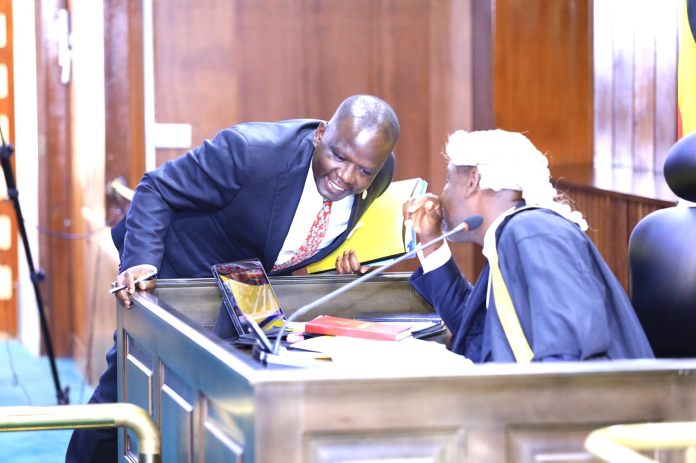
Parliament approves land sublease for Kabale University expansion

made the presentation, Health Minister, Dr. Ruth Aceng.

Parliament has approved a motion allowing Kabale Regional Referral Hospital to sublease five acres of land to Kabale University, clearing the way for the university to expand its Faculty of Medicine.

The Minister of Health, Ruth Aceng presented the proposal during the plenary sitting last Thursday.

Kabale University, a public institution, made the request for the land in August 2022.

The university aims to build new teaching and medical facilities, including specialized clinics, patient wards, lecture halls, and operating rooms.

Aceng said the move is a major boost for medical training and healthcare in southwestern Uganda noting that Kabale Regional Referral Hospital serves over 2.4 million people, including patients from Rwanda.

“This is more than just a land deal, it is an investment in better healthcare, stronger medical education and growth for the Kigezi sub-region and beyond,” Aceng said.

She noted that the expansion will help the university train more doctors and nurses for the region, addressing a critical shortage of healthcare workers in districts of Kabale, Rubanda, Kanungu, Ntungamo, Rukungiri, and Kisoro, all in southwestern Uganda.

Currently Kabale University’s Medical School operates out of run-down hospital building that is set for demolition.  Aceng emphasised that the sublease will allow the university to create a modern medical school and teaching hospital.

“This will improve training, enhance research, and bring better healthcare closer to the communities that need it most,” she said.

The Koboko Municipality Member of Parliament [MP], Charles Ayume said the motion was timely considering the state of the Medical school and its symbiotic relationship with the Regional Referral Hospital.

“A Medical school and hospital have a symbiotic relationship where they all benefit. The University does the teaching, but the hospital benefits from extra services of lecturers and students during their training,” said Ayume, adding that, “We had queried the type of doctors that will come from that dilapidated building”.

On her part, Tororo District Woman MP, Sarah Opendi asked fellow legislators to look into the status of regional referral hospitals across the country, saying most are performing way below the capacity of a regional referral hospital.

“Kabale Regional Referral Hospital is challenged in terms of space and infrastructure, it remains a 100 bed capacity hospital which is below the requirement of a regional referral hospital,” Opendi added.

She noted that most of the regional referral hospitals are understaffed between 25 to 30 percent staffing level, praying that it should be addressed in the next budget cycle.

Stories Continues after ad

2026 Elections: The most regionally represented presidential race in history

Gen. Museveni and Gen. Muntu hail from Western Region.

As Uganda gears up for the 2026 general elections, the political temperature is steadily rising not with noise and chaos this time, but with an intriguing, calculated alignment, each region has unleashed a flag bearer, signaling what may become Uganda’s most regionally balanced and ideologically competitive presidential race in decades.

This development is not coincidental but it is historic.

Central Region: Kyagulanyi’s People Power Still Roaring

Robert Kyagulanyi aka Bobi Wine hails from Buganda.

Robert Kyagulanyi Ssentamu, also known as Bobi Wine, who was once seen as a political novice, is now arguably the most formidable opposition figure in Uganda. Representing the National Unity Platform (NUP), his message of generational change, social justice, and anti-corruption continues to resonate deeply with the youth across the country, especially in the central region, his stronghold.

But Kyagulanyi’s appeal is no longer limited to Buganda. His relentless grassroots mobilization and consistent criticism of the Museveni regime have transformed him into a national brand. His recent tours in the North and East were well attended, a sign that his People Power movement is evolving into a truly national force. Whether the state machinery lets him campaign freely in 2026 remains a lingering question.

Northern Region: Jimmy Akena carries UPC’s legacy with calculated precision

UPC’s Jimmy Akena hails from the Lango-Northern Region.

Jimmy Akena, the son of former President Milton Obote and the current president of the Uganda People’s Congress (UPC), is eyeing a larger role than ever before. Long viewed as lukewarm, Akena has surprised observers by signaling a more confrontational tone and rebranding UPC into a party with Northern muscle and a hint of national relevance.

His leadership of Lira City and deep roots in the Lango sub-region give him a base. But Akena’s biggest challenge lies in uniting a historically fragmented North under one umbrella. With Acholi, West Nile, and Lango historically pulling in different political directions, it remains to be seen whether Akena’s appeal can transcend regional loyalties and match up against his late father’s legacy.

Western Region: Museveni clings on, but the winds are changing

President Yoweri Museveni, now in power for nearly four decades has confirmed he will seek re-election in 2026, representing the National Resistance Movement (NRM). His grip on the western region, particularly in Ankole, Kigezi, and parts of Tooro, remains significant. However, that grip is loosening.

The youth bulge, growing economic discontent, and widespread fatigue with prolonged rule are eating away at NRM’s base. Museveni is banking on infrastructure achievements, security, and the controversial parish development model to regain the people’s faith.

But even within the West, there are cracks, and one of the most significant comes from within the system itself.

Eastern Region: Nandala Mafabi steps forward as the reformist patriot

Nandala Mafabi, FDC’s presidential choice for the 2026 general elections, hails from Bugisu-Eastern Region.

Forum for Democratic Change (FDC) recently made headlines by endorsing Nathan Nandala Mafabi as its 2026 flagbearer after Patrick Amuriat stepped aside. A seasoned legislator from Budadiri West in the Bugisu sub-region, Nandala is known for his tough stance on corruption, economic discipline, and institutional reform.

Eastern Uganda has long been considered a swing region and Nandala’s candidacy could galvanize the East to assert itself politically. For years, Busoga and Bugisu have lacked a unifying candidate of national stature. Mafabi changes that dynamic. His technocratic background, combined with his no-nonsense political style could attract not just easterners, but also voters frustrated by both Museveni and Kyagulanyi.

Rwenzori and Greater Kigezi: Mugisha Muntu’s quiet thunder

Former army commander and Alliance for National Transformation (ANT) leader Gen. Mugisha Muntu remains an enigma in Ugandan politics. Often dismissed for being “too gentle,” Muntu has never veered from his core principles of institutional reform, accountability, and peaceful transition of power.

His strength lies in Kigezi and the Rwenzori sub-region especially among educated, middle-class voters and civil servants who find hope in his technocratic and policy-based approach. While his popularity has never hit Kyagulanyi or Museveni levels, he remains a critical player in coalition-building. Muntu may not win, but his support could tip the scales in a tight race.

What makes the 2026 election extraordinary is not just the number of candidates, it’s the regional clarity of their support and identity. Each region is betting on its son, each claiming a version of Uganda’s future.

This is a double-edged sword. On one hand, it shows that Uganda’s democracy is maturing; every region feels politically energized, represented, and ready to lead. On the other hand, it risks reinforcing ethnic and regional politics over national unity.

What remains to be seen is whether these candidates will exploit tribal affiliations or transcend them with issue-based campaigns.

Ugandans are increasingly aware of the stakes. A generational shift is palpable. The youth, which make up over 75% of the population, are restless. They want jobs, education, health services and leaders who speak their language.

Museveni represents stability, but to some, he also symbolizes stagnation. Kyagulanyi represents hope, but to critics, he’s inexperienced. Mafabi offers competence with over twenty years of experience as a Member of Parliament, but can he inspire mass emotion? Muntu has integrity but lacks the populist fire. Akena offers heritage, but will that translate into future power?

2026 is shaping up not just as an election, but as a referendum on the very soul of Uganda. Will the country vote for continuity or change? For regional loyalty or national unity? For charisma or competence?

The field is crowded, the ambitions are high and the electorate is more informed than ever before.

One thing is clear: this time, every region has a voice, a candidate, and a stake in the future.

Stories Continues after ad

Skilling Centres to launch new SACCO initiative

A new and more accountable SACCO initiative is being rolled out across Uganda’s Skilling Centres following financial mismanagement in earlier phases of the program.

Dr. Faith Katana Mirembe, Head of the Skilling the Girl and Boy Child program, announced an engagement held at the Mulago Skilling Centre.

Dr. Katana revealed that the earlier provision of startup funds, up to Shs1 million, for pioneers in 2017, had since been affected by rising student numbers and increasing budget constraints.

 “That’s why trainees no longer receive direct incentives,” she explained, although she affirmed that many graduates have successfully secured jobs.

Highlighting a major setback, Dr. Katana disclosed that a Shs200 million fund previously allocated to student SACCOs had been mismanaged, prompting a complete reset of the financial empowerment model.

“We are starting something very new and serious. The President has directed that SACCOs be created specifically for skilling students, and implementation is going to be immediate,” she said.

The new initiative, supported by the Microfinance Support Centre, includes training sessions on financial management and SACCO development. Students have already received lectures on how to utilize the funds responsibly, with the first sessions taking place at Mulago Skilling Centre.

SACCOs will now be established at six major centres: Wabigalo, Kigoowa, Mutundwe, Kikoni, Mulago, and Wandegeya. The goal is to empower trainees with practical financial tools to transition into sustainable employment and entrepreneurship.

Stories Continues after ad

NRM Tribunal to start supplementary hearing of disputed party primaries on Tuesday, 5

Lawyers listening to presentations at NRM headquarters before the commencement of the election disputes tribunal.

The National Resistance Movement (NRM) Election Disputes Tribunal has issued a formal notice announcing a supplementary hearing schedule for petitions challenging the outcomes of its recent party primary elections for parliamentary flag bearers.

The notice, dated July 31, 2025, and signed by Tribunal Chairperson John Musiime, outlines 45 separate petitions that will be heard on Tuesday, August 5, 2025, at the Tribunal headquarters located at Plot 30, Kyadondo Road, Nakasero in Kampala.

The cases involve a wide range of constituencies across the country, with petitioners contesting the conduct, results, and declarations made by the NRM Electoral Commission and other party officials in the party’s internal primaries.

“This notice serves as an official communication to all concerned parties. The hearing date and time for each petition is indicated alongside the petition details in the attached schedule. Parties must appear only on their allocated date and time,” Musiime stated.

Among the high-profile cases is PT/409/2025 involving Pius Wakabi, whose case is scheduled for hearing at 2:00 PM under Bugahya County. Others include PT/387/2025, where Omoding George Rotary is challenging Felix Olong in Dokolo South, and PT/388/2025, where Sheillah Princess Obia faces off with Mourine Osuru in Arua City, both set for 10:00 AM.

A number of constituencies such as Tororo North, Mbale, Nakaseke North, Kakumiro, Kyaka, and Bujumbura East feature multiple disputes, highlighting the intensity of the recently concluded primaries.

Notably, several cases are consolidated, such as PT/398/2025, PT/407/2025, and PT/401/2025, in which Amali Maureen, Sefulose Asiimwe Faith, and Akoth Angella challenge various respondents in Tororo North, all scheduled at 10:00 AM.

The Tribunal has urged all respondents who have not yet received copies of the petitions to collect them from the Tribunal Registry. Hearings will proceed strictly according to the provided schedule.

This development comes amid increasing pressure on the ruling party to ensure transparency, internal democracy and credible resolution of intra-party conflicts ahead of the 2026 general elections.

Stories Continues after ad

Kagwirawo launches 3-month ‘EYASE’ Promotion to reward Ugandan bettors with cars, bodas & cash

Kagwirawo, Uganda’s homegrown online betting platform, has today launched a three- month promo; on dubbed EYASE, where Ugandan bettors will stand a chance to win a brand-new Toyota Wish every month, a boda boda every week, and millions of shillings in instant bonuses just for placing bets on the platform.

The promotion is more than just prizes; it’s a bold statement of Kagwirawo’s commitment to giving back to its users and cementing its place as a proud Ugandan brand. The campaign launch, happening today at the company’s headquarters in Kansanga, is graced by the presence of top media personalities, influencers, and ambassadors.

“We’re excited to reward our loyal users in a way that reflects the heart and energy of this country,” said Rogers Mbalire, the Opera;ons manager, adding, “As a Ugandan-owned platform, this is our way of showing appreciation to our people while proving that homegrown solutions can deliver world-class experiences.”

How It Works

To participate, users simply need to:

• Visit www.kagwirawo.ug

• Register an account (or log in if already registered)

• Place a bet on any game (football, virtuals, casino, Aviator, etc.)

• Each bet counts as an entry to win

No minimum stake required. All draws will be held live, and winners contacted via 0326333050/0200401000.

Come bet, win, and drive your wish — EYASE with Kagwirawo!

Kagwirawo is a fully licensed and regulated online sports betting platform under Uganda’s

Lotteries and Gaming Regulatory Board.

Stories Continues after ad