Stanbic Bank
Stanbic Bank
16.7 C
Kampala
Stanbic Bank
Stanbic Bank
Home Blog Page 1262

Ugandans to have electricity as Karuma power project nears completion

Sinohydro Corporation Ltd, the Chinese firm undertaking the construction of the 600MV Karuma power dam, has revealed that the project is 95 percent complete. The project which commenced in 2013 is due for commissioning in December 2019, a development that should give Ugandans more electricity for domestic use and production.

The project has passed through great challenges before arriving to this completion stage. The constructing company had to slow down the work after having noticed in 2016 the appearance of cracks on the dam, which the company explained was caused by climatic conditions of the area.

However, the issue was resolved and construction work progressed as was planned. Upon completion, the Karuma hydroelectric power plant will be the largest in the African country, with a production capacity of 600 MW.

Karuma power dam is being financed by both the government of Uganda and Exim Bank of China. The government of Uganda is contributing 15 percent while China is financing the other 85 percent component.

The dam, which is built at Karuma Falls, on the Victoria Nile will also be the first underground power plant in East Africa. Turbine capacity Alstom, a company based in Saint-Ouen, in northern France supplied the six turbines that equip the Karuma hydroelectric power plant.

Each of the turbines has a generating capacity of 100 MW. The electricity produced by the plant will be evacuated from the Lira substation, which is being rehabilitated to support the 600 MW capacity. The kilowatt-hour (kWh) distributed in this way is expected to cost the Ugandan consumer US $0.049 during the first 10 years of the plant’s life.

Stories Continues after ad
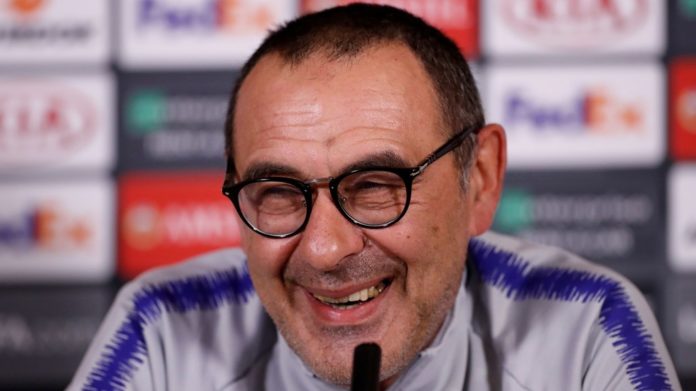
EC urged on early political campaigns as 2021 general elections come close

The Electoral Commission (EC) and such other institutions like the National Consultative Forum or IPOD should vigorously champion a review in Uganda’s political campaign laws to allow political parties to freely conduct campaigns throughout the electoral cycle, says Crispin Kaheru of Coalition for Electoral Democracy in Uganda (CCEDU).

Kaheru, the Coordinator of CCEDU says political campaigning is a day-to-day business and as such players should be allowed to sell their political agenda to the voters. “Political campaigning is political parties’ day-to-day business.  Political parties in other parts of the world actually campaign on an on-going basis to sell their political agenda, to influence public policy, to recruit members or even organise their grassroots structures,” he says.

The activist see no reason why campaigns for political parties should only be limited to only for months to the polling day. “There is no substantive reason why campaigns of political parties and formations should be limited to just about four (4) months to an election/polling day,” he says.

Kaheru gives an example of the United States where he says there is no set timeframes for political campaigns for parties or individuals who are interested in running for political office. “In the United Kingdom, they have a long and short campaign season,” he says.

Meanwhile, Kaheru in his comment on the EC’s claim that it is not aware of early political campaigns happening, despite President Yoweri Museveni’s ongoing countrywide tours, says the electoral body should allow for fair play for all political parties by reviewing legislative framework around campaigns.

“Therefore, rather than the EC expressing technical obliviousness about the on-going political campaign mood in the country; it should work to prompt the review of the legislative framework around campaigns to make it fairly permissible for all political parties to campaign through-out the electoral cycle,” he says.

Kaheru’s comments come at the time when political parties in the opposition are accusing Museveni of early campaigns yet for them are restricted by the law. Museveni’s party the National Resistance Movement (NRM) on the other hand argues that the president’s countrywide tours are meant for the sensitisation of the masses on how to fight poverty and create wealth.

EC’s mandate is to “organise and conduct regular, free and fair elections” in the country, in an efficient, professional and impartial manner as stipulated by Articles 60, 61 and 62 of the Constitution.

According to EC, The polling for Presidential, General Parliamentary and Local Government Councils for 2021 General Elections shall be between January 10 and February 8, 2021; hence setting a benchmark for all other electoral activities.

However, recently the EC urged those who have started early campaigns for electoral positions even though it fell short of mentioning Museveni whose current tours in the country have seen him being endorsed for 2021 presidential election by leaders in the regions he has visited.

“The Electoral Commission has noted with concern that a number of persons aspiring for various elective positions in the General Election, 2021 have started conducting public meetings supposedly to consult the electorate in preparation for their candidature in the 2021 Elections.

At the same time, some aspirants are organising campaign meetings and addressing rallies, putting up posters, distributing campaign materials and soliciting for votes contrary to the campaign period set out in the Electoral Roadmap issued by the Electoral Commission,” EC said in a statement.

“… at this moment in the electoral calendar, there are no persons nominated as candidates for Presidential, Parliamentary and Local Government Councils elections. All aspirants are therefore, urged to refrain from engaging in active campaigns for these elective positions,” the statement continued.

Elective Positions for 2021 are based on current number of administrative units and according to 2021 electoral roadmap 1,539,861 electoral positions are to be competed for compared to 1,354,355 posited competed for in 2016 by candidates from various poetical parties as well as independents.

EC says campaigns for 2021 general elections commence latest by the last week of July 2020. Nomination of candidates for Local Government Councils must have completed latest by third week of July 2020.

Stories Continues after ad
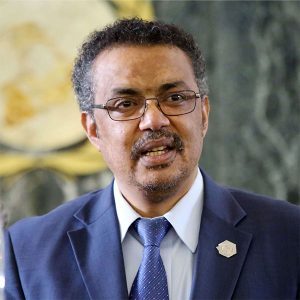
DPP drops extortion charges against ACP Siraje

WHAT NEXT: Siraje Bakaleke

The office of the Directorate of Public Prosecution (DPP) has withdrawn charges against, the suspended Assistant Commissioner of Police (ACP), Siraje Bakaleke and other suspects as it continues to trace Korean witness who doubles as the complainants in this matter.

In August 2018, charges of extortion and obtaining money by false pretense and kidnap with intent to confine charges were instituted and other nine charges against Bakaleke and eight other suspects at anti-corruption court Kololo. Bakaleke’s co-accused appeared before court and pleaded not guilty to the offences except him who decline to appear even after court a warrant arrest against him.

In October, Anti-Corruption Court Grade One Magistrate, Moses Nabende, issued a warrant of arrest for the troubled and suspended Kampala South Metropolitan police commander ACP Siraje Bakaleke. It was served through his lawyers of Senguka Robert and Nakachwa partners.

According to Senior Assistant DPP, Jane Okuo Kajuga, the hearing of the case has since failed to kick off due to absence of Korean witness. They are reported to have left the country and location of their where about has always been in vain.

“It is for the foregoing issue that the DPP has exercised his powers to withdraw charges. DPP continue to work with police and other partners to locate witness and secure their testimony without which charges cannot stand,” said Jane Okuo Kajuga, adding that charges will be reinstated once contact with the witnesses is established.

Korean nationals involved in the case were from a company known as McKinley Resource Company limited, dealing in minerals. They were arrested by ACP Bakaleke and accused of being terrorists and held in police custody and escorted to airport to board back.

Their funds worth US$425,000 were fraudulently withdrawn from their account. They also paid 30,000 USD to one of the accused to process their release from police cells. Therefore prosecution contends that the nine suspects conspired to forcefully steal money from the witnesses and force them back to Korea in a bid to facilitate and cover-up their criminal activities.

Bakaleke’s co-accused include; Lawyer Paul Wanyoto Mugoya, Nabeta Samuel Mulowooza, the Managing Director of Eye Power Engineering Company and police officers; Robert Munezero, Innocent Nuwagaba, Robert Ray Asiimwe, Junior Amanya, Babu Gastavas and Kenneth Zirintuusa.

Stories Continues after ad

Gen. Muhoozi extols retirees for distinguished service

Addressing retirees

UPDF Chief of Defence Forces Gen. David Muhoozi on Monday presided over the opening of pre- retirement training at Jinja Cantonment Gadaffi Barracks.

The purpose of the pre-retirement training is to prepare retirees for smooth transition to civilian life. UPDF leadership invites consultants and experienced technical personnel to give lectures of opportunity to officers and men who are retiring.

Gen Muhoozi,while speaking to retirees, commended them for offering distinguished service to the army and their country. He informed them that when you join the army you serve and retire honourably reminding them that before you retire, you go through a process.

He advised retirees to manage their time well bearing in mind that there are a lot of temptations in society outside military adding that, they should maintain high degree of discipline, be our good ambassadors, be organised and law abiding citizens.

He cautioned them against associating with unproductive peers “when you get a good peer, you will thrive” said Gen Muhoozi.

In attendance were Deputy CPA Brig Sam Kakuru, Brig Ceaser Bahwezi, Senior UPDF officers, junior officers and representatives from MODVA civilian component.

Stories Continues after ad

Express FC to release more players after contract negotiations fail

Badru Nsubuga (left) leaves Express

Six-time league champions, Express FC, have today released more players from their squad after failing to agree on new contracts.

Arthur Kiggundu, Badru Nsubuga and Mubaraka Nsubuga together with their representatives failed to consent to the contract extension offers provided by the club.

Badru Nsubuga and Kiggundu joined the club at the beginning of the 2018/19 season from Wembley FC and SC Villa respectively. They leave after spending one season at the Wankulukuku-based club.

Mubaraka Nsubuga has been at the club for two seasons joining from Wembley FC and helped the Red Eagles maintain their Uganda premier league status in 2018.

The trio join Mathias Muwanga, Tony Odur, Shafik Kakeeto, Ibrahim Kayiwa, Joel Male, Pius Mbidde, Charles Musoke and Isaac Mutanga who were earlier released as the Red Eagles continue their revamp ahead of next season.

The club’s administration has so far now released eleven players since the 2018/19 season ended.

They also engaged and brought sponsors onboard and currently; Betway, Equity Bank, Buganda Land Board and Uganda Breweries Limited, sponsor the team.

Express finished 10th on the sixteen team table and also were eliminated on the semi-finals of the Stanbic Uganda Cup.

Stories Continues after ad

Crime rate in Uganda slows by 5.2% – new report

President Museveni this morning visited the crime scene where the late Arua Municipality MP, Ibrahim Abiriga was killed.

The Uganda Police’s latest Annual Crime, Traffic and Road Safety Report for 2018 indicates that crime rate has decreased by 5.2 per cent, where 238,746 cases were registered compared to 252,065 cases registered in 2017.

The report shows that in 2018, 73,035 were registered, of these, 22,263 cases secured convictions, 1,248 cases were acquitted while 90,763 cases were still under inquiry by the end of the year.

The report was lunched by the Inspector General of Police (IGP) Martins Okoth Ochola, his deputy Brig. Sabiiti I Muzeyi and police fraternity at their headquarters in Naguru. It however cites an increase in homicide, sex related crimes, breakings, robbery, political or media crimes and narcotic cases.

The year 2008, saw unfortunate incidences in which Susan Magara and 15 others were kidnapped and Murdered, Killing of MP Abiriga Ibrahim, ASP Kirumira Muhammad and Dr. Gwaluka Ibrahim who were shot dead by organised gang of criminals. However it entails that some criminals involved in these acts have been arrested and committed to High Court for trial, save for the case of Hon. Abiriga Ibrahim.

Mr. Ochola appreciated President Museveni for strategic guidance towards the fight against crime and for the establishment of anti-crime infrastructure such as installation of CCTV cameras, finger printing of guns, recruitment of LDUs among others.

He applauded the vigilance of the population, in general, for their continued invaluable support to augment the efforts of the Police. “I also thank Police Management, Men and Women of the Uganda Police Force for their tireless efforts in making our country safe and secure.”

“I urge the public to desist from taking the law into their hands and instead hand over suspects to Police. Murder as a result of mob action increased by 5.5 per cent from the year 2017.” He said adding that in Fire and rescue department, there was a 7.3 per cent decrease in fire emergencies handled by Police, attributed to increased fire safety sensitization and public awareness campaigns throughout the year 2018. I still urge the public to desist from making false calls to Police about fire incidents.

“We shall continue with our road safety programs targeting major causes of accidents such as over speeding, drunk driving and incompetent drivers. Improving road safety is, ultimately, a joint effort between the community and the Police. Once again, I extend my appreciation to the public, JLOS institutions and all other partners for the complementary efforts in fighting crime,” he said.

He called on people to continue supporting Police to fulfill its mandate.

He appreciated Director CID and the CID management for the supervisory role they played in coming up with the 2018 Annual Crime Report My appreciation also goes to SSP Suwed Asuman, Ag CP Crime Data management and his team at CID Headquarters as well as all the UPF records personnel throughout the country that put this work together as we protect and serve Ugandans I once again call upon all Ugandans to keep up the spirit of joining hands with the Police in the fight against crime to ensure a crime free society.

Stories Continues after ad

Cranes depart for Abu Dhabi training camp ahead of 2019 Afcon

Vice captain Hassan Wasswa and captain Denis Onyango

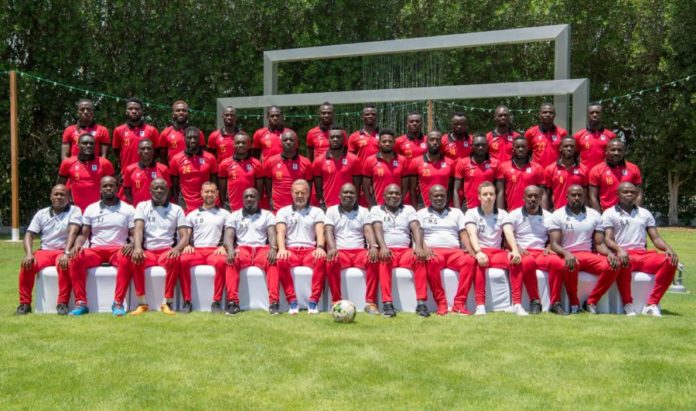
The Uganda Cranes contingent have headed to Abu Dhabi for a three-week residential camp ahead of the 2019 Africa Cup of Nations tournament in Egypt.

The team, including Captain Denis Onyango departed Entebbe International Airport in the early morning hours of Monday and were expected to have a brief stop-over in Cairo, Egypt.

The rest of the players will fly to Abu Dhabi later.

While in camp, Cranes will play friendly matches against a yet to be named opponent on June 9, 2019 and then with Ivory Coast on June 15, 2019 before flying to host city Cairo, Egypt.

The final 23 man squad to feature in the Total AFCON Finals in Egypt will be named immediately after the friendlies.

Uganda is in Group A alongside the hosts Egypt, Democratic Republic of Congo and Zimbabwe.

Traveled squad: Denis Onyango, Hassan Wasswa Mawanda, Joseph Ochaya, Timothy Awanyi, Godfrey Walusimbi, Patrick Kaddu, Mugabi Bevis, Muleme Isaac, Aucho Khalid, Taddeo Lwanga, Kyambadde Allan, Ibrahim Saddam Juma, Waisswa Moses, Murushid Juuko

Officials:

Leader of Delegation -Mr. Issa Magola

Head coach: Sebastien Desabre

Assistant coach: Mathias Lule

Goalkeeper coach: Fred Kajoba

Team Doctor: Dr. Ronald Kisolo

Physiotherapist: Dr. Ivan Ssewanyana

Media: Ahmed Hussein

Physical Fitness trainer: Jerome D’Antonio

Kit Managers: Lawrence Kizito and Ayub Balyejusa

Stories Continues after ad

Oil exploration: Two dimensional seismic data acquisition survey over the Ngassa block successfully completed

DCIM100MEDIADJI_0050.JPG

Oranto Petroleum Limited (OPL) has successfully completed a Two Dimensional (2D) seismic data acquisition survey over the Ngassa block in the Albertine Graben. OPL contracted IMC Geophysical Services Limited from the United Kingdom to undertake the survey, which commenced on April 15, 2019, and was completed on May 18, 2019.

“The survey involved the acquisition of 326 line kilometres of off shore (on Lake Albert) 2D seismic data over the Ngassa Contract Areas. The conclusion of this exercise represents an important step by the licensee in fulfilling its obligations for the first two-year exploration phase that runs from October 2017 to October 2019,” said Mr. Dozith Abeinomugisha, Director Exploration at the Petroleum Authority of Uganda (PAU).

The two stratigraphic licenses of Ngassa Deep Play and Ngassa Shallow Play Contract Areas were awarded to Oranto Petroleum Limited from Nigeria in October 2017 by the Minister of Energy and Mineral Development, for a period of four (4) years. This is the first time Uganda undertook stratigraphic licensing, where two licenses are issued vertically over the same block. This is to ensure that all potential oil and gas zones in the area are fully evaluated through implementation of the work programmes aproved by the Petroleum Authority of Uganda.

The Ngassa block lies on the eastern banks of Lake Albert, within the villages of Tonya A, Tonya B, Kijjangi, Mbegu, Kaiso and Kyehoro, in Hoima and Kikuube districts. The Ngassa block, which was initially part of Exploration Area 2 licensed to Tullow Uganda Operations Pty Limited, reverted to Government after the expiry of Tullow’s appraisal period. The block is covered by good quality 2D seismic data acquired between 2003 and 2008. A third of the block is covered by 3D seismic data.

Since the Ngassa prospect lies entirely under the lake, two deviated wells, Ngassa-1 and Ngassa-2 were drilled on land at the periphery of the main structure between 2007 and 2009, respectively, in order to access the reservoirs. Oil and gas shows were encountered by the two (2) wells; however, a large part of the prospect was untested. This implies that additional exploration work was required to fully assess the potential of the prospect.

“Oranto Petroleum Limited will now process and interpret the acquired data. The results will inform the subsequent activities during the next two year phase of the exploration period. We expect Oranto Petroleum Limited to revert to the PAU by October, 2019, with a detailed work programme for drilling at least one exploration well on Lake Albert within the next two years,” said Mr. Abeinomugisha.

The acquired data will be analysed together with the pre-existing 2D and 3D data to better define the North Eastern part of the Ngassa mega prospect. OPL has also undertaken other technical studies as part of the exploration work programme, including reprocessing of the existing seismic data, Amplitude versus Offset (AVO) and petrophysical studies over the Ngassa 1 and 2 wells to evaluate the quality of the reservoir horizons penetrated by these wells as well as studies related to a drilling solution on Lake Albert.

Mr. Abdul Byakagaba Bazara, the General Manager, OPL, described the exercise as a big success.

“We have received great support from Government, the local leaders and communities in the area where we are operating. The UPDF and Uganda Police have provided us with security throughout this exercise, which has been undertaken without incident,” he said.

A Joint Security Team that comprised the Uganda People’s Defence Forces (UPDF), Uganda Police Force (UPF) and the Internal Security Organisation (ISO) led by Brig. Michael Nyarwa, the Commandant of the UPDF Marine Unit, oversaw the security for the exercise.

“We secured the operations on land, water and air, and our team also worked closely with the local community for intelligence gathering,” said Brig. Nyarwa.

Mr. Ali Tinkamanyire, the LC3 Chairperson for Buseruka Subcounty in Hoima district said he was happy that the data acquisition survey provided employment opportunities.

“I thank Oranto Petroleum Limited for using labour from the local communities during this exercise and I hope, in the future, even more people benefit from the opportunities created by oil and gas activities,” he said. Mr. Tinkamanyire also called on the Government to ensure local content through OPL’s use of locally available food and other items, and skilling of the local manpower.

The PAU is mandated to monitor and regulate petroleum activities in the country; this includes approving the licensees’ work programmes and ensuring that these are undertaken in an efficient manner. The PAU’s regulatory role also includes monitoring of national content development in the oil and gas sector.

“Over 70% of the workforce employed during the survey were Ugandans. In addition, OPL has subcontracted Uganda firms to provide legal services, security services, camping, catering and general maintenance services”, Mr. Byakagaba added.

Prior to this exercise, thirty-two (32) seismic surveys had been undertaken in the Albertine Graben, resulting in the acquisition of approximately 7,000-line kilometres of 2D seismic data and approximately 2,000 square kilometres of 3D seismic data. 2D seismic data displays a slice of the earth while 3D seismic data displays a three dimensional model of the subsurface.

What is a seismic survey?

A seismic survey is a method, typically used during the exploration and appraisal phase of oil and gas operations. This method gives a clearer idea of the structures underneath the earth’s surface (subsurface). The method involves the use of energy produced by instruments such as a seismic vibrator (on land/ onshore) or an airgun (in water/ offshore) to generate waves that go through the earth’s layers and “bounce-back” from different rock layers. The reflected and refracted waves are recorded by receivers (geophones on land or hydrophones in water) to produce the first image of the subsurface.

This technique allows for interpretation of what may lie underneath the ground or seabed (oil, gas, water, faults, folds etc) without having to drill into the earth. The acquired data is used by companies to make decisions of a suitable location where to drill a well.

The onshore seismic operations usually use specialised trucks that carry a heavy plate that is vibrated to generate a seismic signal.

During a marine survey, the seismic vessel travels about five knots in a predetermined pattern and tows one or two sound sources to generate sound waves, and one or several long cables or “streamers,” containing hundreds of evenly-spaced hydrophones. The position of the vessel and equipment must be carefully controlled, using advanced navigation and acoustic systems, to ensure geological features are pinpointed accurately.

Each streamer can be up to 12km long and is towed 6 to 15m below the water surface to reduce the effect of ocean waves on the acquired data. In the most technically advanced seismic surveys, up to 12 streamers are towed at the same time, each about 50 to 150m apart. The seismic acoustic source array emits a sound following a particular configuration repeatedly as the seismic vessel moves along a straight ‘data acquisition’ line at a specific speed.

Seismic operations begin with a “soft-start”. This is the gradual increase of the sound level of the source on either onshore or offshore during the survey. The reason for this approach is to enable animals that are within the vicinity to move away to areas that are not affected by the noise of the source.

The difference between 2D and 3D seismic data acquisition is in the process of acquiring the data. For 2D seismic data acquisition, the source and receivers are placed on one-line direction, and what is therefore acquired is a slice of the earth seen from a side view showing the information directly under the receiver and source line.

For 3D seismic data acquisition, a number of sources and receivers are laid out in a grid form on the surface, intersecting each other, and achieving multiple data points. This enables achieving a three dimensional (3D) model of the subsurface.

Stories Continues after ad

Seven keys to exponential growth driven by the whole team

Martin Zwilling

By Martin Zwilling

Many startups and entrepreneurs I advise still default to growing their business via the traditional top-down, order-taking culture. I’m convinced that you can’t stay competitive that way with today’s customers, and today’s employees. It’s time to push decision making down into the organization –insisting that the people closest to the customer and the markets learn and make the decisions.

I saw strong validation for this approach in the classic book, “Sense & Respond,” by Jeff Gothelf and Josh Seiden. They argue that successful organizations spend more time building and maintaining a learning culture of listening to customers, enabling their team to make decisions, and creating new products continuously. Here are seven key elements of the culture we both espouse:

Accept that you don’t know all the answers – show humility. Anything you or your team knows about the market today may change tomorrow. Don’t demand or assume immediate and certain answers. Foster a culture of constant dialog with customers, experimentation, and multiple pivots required to stay competitive and responsive.

Give the team permission to fail, and learn as a result. Experiments are how we learn, but experiments, by nature, fail frequently. If failure is stigmatized, teams will take fewer and fewer risks, and your business will fall behind. Practice blameless post-mortems to honestly examine what went well, and what should not be continued.

Foster self-direction and alignment to a greater mission. If your mission is clear, and the organization is aligned around it, self-direction takes root and delivers superior solutions. Team members will want to take personal responsibility for quality, creativity, collaboration, and learning. You just provide the environment and support for success.

Promote the honest sharing of information – good or bad. Never shoot the messenger of bad news. Don’t forget to listen carefully to the total message before responding. Ask questions without undue emotion, and always focus on the positive or possible solutions. No one learns from no communication, or misrepresentation of data.

Practice a bias toward action – not analysis paralysis. Constant debates and re-analysis of data are the enemy in a fast-moving and competitive marketplace. A thriving process culture today assumes that you will be making many small decisions, seeking feedback, evaluating the evidence, and then deciding once again how to move forward.

Define customer value as the only path to business value. Customer empathy is required today to maintain a strong market position in the face of global competition. Everyone from the CEO to call-center representatives must have a sense of what your customers are trying to achieve, what’s getting in their way, and how you can help them.

Build a team culture of collaboration, diversity, and trust. The best learning teams are smaller, diverse, and work in short, iterative cycles. There is no time today for lengthy, sequential work with hand-offs between specialists. People with different points of view, who trust each other due to social ties, collaborate well to positive results.

With these culture elements, organizations today are emerging and thriving, based on their improved capacity to sense and respond instantly to customer and employee behaviors. The alternative is another Eastman Kodak, who failed to keep up with the transition from film to digital cameras, or another Blockbuster Video, overrun by Netflix and streaming videos on the Internet.

More successful examples include Facebook, which continues to change and lead today, despite assaults from Twitter, Instagram, and others; and Tesla Motors, still leading the electric car market, despite repeated initiatives from the major auto manufacturers and other upstarts. We will soon see if they can hold that lead in the coming era of totally autonomous vehicles.

These winners, and almost every successful new startup, have successfully established a learning culture that customers, as well as employees, are flocking toward. But a cultural transformation doesn’t happen by default; it must be led, even though employees and customers want to work in the new way. Are you an active agent of this change in your company, or a continuing obstacle?

The writer is a veteran startup mentor, executive, blogger, author, tech professional, professor, and investor. Published on Forbes, Entrepreneur, Inc, Huffington Post.

Stories Continues after ad

Rajiv Ruparelia comes second in motor rally debut

Mr Rajiv at Sisa

Rajiv Ruparelia, who is a new entrant in Uganda’s Motorsport, finished an impressive second in his debut rally after clocking a time of 10:44 in the Enduro Autocross Championship 2019 at Zion Estates in Ssisa.

He came behind experienced rally driver Ronald Ssebuguzi who won the race at a time 10:04 minutes. In third place was Jonas Kansiime who clocked 10:54 minutes.

The Son to city tycoon, Sudhir Ruparelia, received specialized training at the Rallystar Motorsport Academy in Johannesburg, South Africa.

Rajiv Ruparelia Rally Team nicknamed Double Trouble cruises in a VW Polo Proto imported from Poland was unveiled to the public at Speke Hotel’s Rock Bar and Grill. Rajiv is navigated by Ronnie Walia and managed by Dipu Ruparelia.

Rajiv and team will now focus attention to the upcoming Pearl of Africa rally under the Federation of Motor Sport in Uganda (FMU).

Results:

Seb 10:04

Rajiv 10:44

Jonas 10:54

Kalule 11:04

Daudi 11:13

Unissan 11:25

Edson 12:04

Kavuma 12:14

Lubega 12:17

Hakim 12:27

Busingye 12:41

Kayira 12:50

Bobo 13:25

Paddy 13:41

Mwaami 14:36

Tongo 16:44

Gensi 22:41

Stories Continues after ad