Stanbic Bank
Stanbic Bank
19.2 C
Kampala
Stanbic Bank
Stanbic Bank
Home Blog Page 138

Kenya’s Rigathi Gachagua resigns from ruling UDA party

Kenya’s former Deputy President Rigathi Gachagua.

Kenya’s former Deputy President Rigathi Gachagua has officially resigned from the ruling United Democratic Alliance (UDA) party, accusing the party of betraying its founding ideals and failing the Kenyan people.

In his resignation letter dated May 12, 2025 and addressed to both the party’s Secretary General and the Kenyan public, Gachagua declared his immediate departure, citing what he called the “most dangerous political moment” for the country.

“I have made this decision in knowledge of the ideals of the Party we believed in, and so were millions of Kenyans,” Gachagua wrote. “But now has turned out to be the most dangerous political moment for the people and the Republic of Kenya in retrogressive philosophy of unfit class to govern our Nation.”

Gachagua accused UDA of squandering a historic opportunity to transform Kenya. He referenced the party’s 2022 manifesto under the Kenya Kwanza Coalition, highlighting a broken covenant with the Kenyan people.

“Our United Democratic Alliance (UDA) party is founded on the ideology that the national aspirations – justice, peace, freedom, prosperity – that we pray for, as we sing our national anthem, is a covenant that binds us to political inclusion and economic empowerment of all Kenyans,” he noted. “It was a lie. No nation can be built on a litany of lies.”

Gachagua enumerated a series of failed promises under the UDA administration. He criticized the party for abandoning the Bottom-Up Economic Transformation Agenda, citing that even the much-publicized Hustler Fund has been reduced to an unsustainable business token.

“What business can Kshs. 500 start sustainably?” he questioned, adding that the five core sectors meant to anchor economic transformation in agriculture, MSMEs, housing, healthcare, and ICT — have become “a Centre of crime with no tangible gains to the people of Kenya.”

He decried the regime’s failure in agriculture, accusing it of failing to support farmers, allowing land grabbing and subjecting citizens to food insecurity. Housing promises, he said, had turned into “a sharp sword on the payslip of the Kenyan worker,” while youth employment efforts had disintegrated into lip service.

“The commitment was to ‘turn the housing challenge into an economic opportunity and employ over 100,000 young graduates from TVETs into the sector by building 250,000 houses every year.’ Unfortunately, this has become an individual business venture,” Gachagua stated.

He also accused the party of presiding over the collapse of the healthcare system, introducing a failed insurance scheme, and auctioning Kenyans to commercial institutions.

On matters of education, he said, “The UDA party is delivering a failed CBC curriculum, an incoherent and corrupt university funding model. No Kenyan child or parent is safe under this planned failure.”

He also condemned the regime’s treatment of women, saying, “The regime is only meting violence on women and abducting and killing their children while arbitrarily detaining others. School-going children including Secondary School Girls cannot be allowed to express themselves without being subjected to police brutality.”

He lamented the abandonment of the party’s social protection agenda, particularly the promises to Persons with Disabilities, senior citizens, and girls, adding, “UDA has left every Kenyan on their own and behind.”

Stories Continues after ad

First reading of controversial UPDF Amendment Bill set for tomorrow

Jacob Oboth Oboth, Minister of Defence and Veteran Affairs.

Parliament is set to table the Uganda People’s Defence Forces (UPDF) Amendment Bill, 2025 on Tuesday May 13. The Bill seeks to reintroduce the trial of civilians in military courts just months after the Supreme Court ruled the practice unconstitutional.

The bill will be presented on the floor of Parliament by the Minister of Defence and Veteran Affairs, Jacob Oboth Oboth.

In January 2025, the Supreme Court made a landmark ruling declaring that military courts lack the jurisdiction to try civilians. The court found that such trials violate the right to a fair hearing, enshrined in the Constitution, and ordered the immediate transfer of all civilian cases from the military to civilian courts. The decision was hailed by human rights groups as a victory for due process and judicial independence.

However, the UPDF Amendment Bill, 2025 aims to reverse this decision by providing exceptions under which civilians can again be prosecuted by military tribunals. According to the proposed legislation, civilians could face military trial for offenses such as unlawful possession of military weapons, espionage, and other acts deemed a direct threat to the operations or security of the UPDF.

The government argues that the Bill is necessary for national security and that some civilian offenses directly undermine the country’s military operations, making it appropriate for military courts to handle such matters. Officials claim that the proposed amendments will include safeguards to ensure that the rights of accused persons are protected, even in military proceedings.

But critics say the timing and content of the Bill suggest an attempt to undermine the authority of the Supreme Court and roll back hard-won civil liberties. Human rights organizations, including Amnesty International and Human Rights Watch, have raised alarm, warning that the amendment could be used to target government critics and suppress political dissent.

Opposition leaders are also wary. Past instances have seen figures like Dr. Kizza Besigye and other activists charged in military courts under questionable circumstances. Following the Supreme Court ruling, many of these cases were transferred to civilian courts, but the proposed Bill could potentially allow for their return to military jurisdiction.

Legal scholars and civil society groups have called on Parliament to reject the Bill, warning that it sets a dangerous precedent by circumventing the highest court’s ruling. They argue that any legal reform must prioritize respect for the Constitution and fundamental rights, particularly the right to a fair trial.

Stories Continues after ad

NRM’s Teso-Busoga debacle: Implications for 2026

(Teso), Rebecca Kadaga (Busoga) are set to tussle for 1st Female Vice Chairperson of the NRM party. Insert is the party chairman, Yoweri Museveni.

As the 2026 general elections draw near, tension and speculation dominate Uganda’s political atmosphere. Politicians and citizens alike brace for a contentious period as aspirants compete for parliamentary and ministerial seats; positioning themselves for the next presidential term. Historically, this pre-election seasons have always been turbulent, filled with shifting alliances, grassroots mobilization, and a heightened rhetoric.

Despite the opposition’s growing influence, the National Resistance Movement (NRM) continues to dominate the political landscape, maintaining its stronghold through strategic regional campaigns and local engagement at district level. Two critical regions in this upcoming electoral equation are non-other than: Busoga and Teso regions that have played a significant role in shaping the NRM’s past and potentially its future.

To understand the stakes, it’s important to examine the party’s key figures and historical dominance in these areas. Since the National Resistance Movement’s (NRM) ascension in 1986, the Busoga region welcomed the movement, in part due to the influence of Ms Rebecca Kadaga, the long-serving Woman Member of Parliament for Kamuli District and former Speaker of Parliament. A trailblazer for women’s rights, Kadaga began her parliamentary journey in 1989 and has remained one of the longest-serving and most influential politicians in Uganda to date.

Kadaga’s efforts went beyond legislative work as she played a pivotal role in the coronation of the current Kyabazinga of Busoga, an act that strengthened NRM’s cultural and political roots among the 4.4 million people within the sub-region. Her loyalty and service have earned her the title of the first female chairperson of the NRM, a position that was reportedly created specifically for her.

However, the tides of fortune have shifted. Kadaga’s once unshakable grip on influence amongst the top brass and echelons of the party has now waned. Largely due to internal party dynamics and her eventual replacement as Speaker by her then-deputy late Jacob Oulanyah and now Ms Anita Among. This transition marked a new chapter in Uganda’s legislative leadership and an internal power struggle that reflects the broader generational shift within the NRM.

Today, the current Speaker of Parliament Anita Among leads with a combination of discipline and populist appeal. Her leadership has resonated strongly in Teso, where she continues to champion development through education, infrastructure, and community funding. Among’s accessibility, combined with her candid and assertive demeanor, has earned her popularity both within the party and across Uganda.

The Teso region has emerged as a promising NRM stronghold, bolstered by a contingent of 30 to 35 Members of Parliament and prominent cabinet members such as Vice President Jessica Alupo (Katakwi), Minister of Foreign Affairs Jeje Odongo, and Minister of State for Education and Sports Peter Ogwang. In contrast, Busoga, despite its larger population, is seen as lagging in political ambition and mobilization. Teso, coupled with its population figures, comes in handy as Busoga grands towards NRM aren’t well grounded as seen by the inroads registered by opposition National Unity Platform (NUP).

As the old adage goes, “Better the devil you know than the angel you don’t.” The NRM must tread carefully as it strategizes for the 2026 elections. Its choice of ‘candidate’ to elevate within these two critical regions will significantly influence voter sentiment. Ms Kadaga, despite her diminished political clout, remains a symbol of party loyalty and continues to rally support for President Yoweri Kaguta Museveni. Meanwhile, Ms Among represents the party’s future—young, vocal, and deeply embedded in grassroots initiatives.

The political landscape ahead resembles a chessboard, where every move counts. The NRM must now decide whether to bet on its historical loyalists or invest in the rising stars who are redefining the party’s image. As Uganda approaches another turning point, one thing remains clear: in this game of power, the side that loses its queen often loses the match.

Stories Continues after ad

Police issue safety guidelines ahead of Uganda Martyrs’ Day celebrations

Uganda Police Force publicist Kituuma Rusoke.

The Uganda Police Force has issued a comprehensive advisory to ensure the safety and security of thousands of pilgrims expected to travel to Namugongo for the annual religious celebration.

Speaking ahead of the event, Uganda Police spokesperson Rusoke Kituuma emphasized that Martyrs’ Day is more than just a one-day observance.

“This day is not a single event. It involves a series of activities in the lead-up to the main celebration,” said Kituuma.

“Pilgrims travel on foot from various regions of Uganda and neighbouring countries to Namugongo Martyrs’ Shrine, often making stopovers at churches, schools, and community centres along the way.”

The pilgrimage attracts both local and international visitors, bringing with it a surge in economic activity around the shrines. Vendors sell food, religious items, offer accommodation, and provide transportation services. However, police warn that this environment can also draw criminal elements.

“Such a large gathering and the associated business opportunities can attract individuals with criminal intent,” Kituuma cautioned.

Police say the massive influx of people requires well-coordinated crowd control and public safety measures. Traffic congestion remains a top concern during the celebrations.

“We therefore urge motorists to exercise caution and consideration for other road users, while we also advise pilgrims to remain vigilant, particularly in heavy traffic,” he said.

“We shall have traffic diversions; therefore, road users are asked to be patient with these temporary inconveniences.”

Child safety is also a priority for law enforcement. In previous years, many children have been reported lost during the festivities.

“We usually have the risk of children getting lost in the crowds, so parents and guardians are advised this time round to be extra vigilant,” Kituuma urged.

Police further advised pilgrims to maintain communication with their groups and carry some emergency funds in case they get separated or stranded. Medical emergencies are also common during the long treks, and authorities encourage participants to carry identification documents for easier assistance.

Another growing concern is the presence of fraudsters and criminals who take advantage of the large, distracted crowds.

“We have always observed the presence of imposters, such as fake priests, conmen, and impersonators, as well as rowdy youths (Egali) who may target pilgrims for theft, mugging and other criminal activities,” he noted.

To ensure safety, Kituuma confirmed that police, in collaboration with other security agencies, have deployed robust security measures including regular patrols, surveillance systems, and medical response teams.

“Police in collaboration with other security agencies pledge to address these criminal activities decisively. Robust security measures are in place to ensure the security and safety of all participants.”

The Uganda Martyrs’ Day celebrations, held annually at the Namugongo Catholic and Anglican shrines, commemorate 45 Christians who were executed for their faith between 1885 and 1887 under the rule of Kabaka Mwanga II. 

Stories Continues after ad

Tayebwa calls for end to resource exploitation without local benefit

Deputy Speaker, Thomas Tayebwa.

The Deputy Speaker of Parliament, Thomas Tayebwa has called on African nations to take charge of their economic destiny by adding value to their natural resources and ending the cycle of poverty despite the continent’s abundant wealth.

Speaking during the closing ceremony of the 3rd African Regional Inter-Parliamentary Conference on Emerging Global Challenges at the Imperial Resort Beach Hotel in Entebbe on Sunday, Tayebwa questioned why Africa, rich in resources, continues to suffer from underdevelopment.

“From the rainforests of the Congo Basin to Nigeria’s oil fields, Ghana’s gold reserves, Tanzania’s rare earth minerals, and the cobalt riches of the Democratic Republic of Congo, Africa is abundantly endowed with natural resources. Yet, the continent remains mired in poverty,” he said.

“Why does a land so rich remain so poor? This was the central question I attempted to address.”

Tayebwa pointed out that although Africa holds 60% of the world’s arable land, the continent was severely affected by food shortages following the outbreak of war between Russia and Ukraine. He attributed this vulnerability to Africa’s continued reliance on exporting raw materials rather than developing local value chains.

“We earn little from our minerals because they are extracted and exported in raw form, without local value addition that could create jobs and wealth at home,” he explained.

In a bold appeal to his fellow legislators, Tayebwa urged them to move beyond the historical blame game and focus on shaping the continent’s economic future.

“I challenged my fellow parliamentarians: it’s time we stopped blaming colonialists more than half a century after independence. We may not be responsible for our past, but we are entirely responsible for our future. We can no longer hide behind the excuse of colonial history.”

He emphasized the need for unity, transparency, and committed leadership to achieve economic transformation, citing successful examples such as Botswana and Ghana, where effective mineral management has delivered real benefits.

Tayebwa also applauded President Yoweri Kaguta Museveni’s stance on mineral policy.

“I’m glad our President, Kaguta Museveni has made it clear that no minerals will leave Uganda in raw form. This will enable us as a country to get a fair share.”

He concluded by calling for resource revenues to be strictly allocated to critical services, particularly in mining communities.

“Next is to ensure that funds from these natural resources are ring-fenced for specific services, especially infrastructure development, schools, and health facilities starting with communities where these minerals are extracted.”

The conference brought together parliamentarians and policy experts from across the continent to deliberate on strategies to address Africa’s emerging global challenges, including climate change, geopolitical instability and sustainable development.

Stories Continues after ad

Europe Day 2025: Celebrating 75 years of unity, and a stronger EU–Uganda partnership

Head of EU delegation to Uganda Ambassador Jan Sadek hosted Europe Day celebrations at his residence. The guest of honour was Justice and Constitutional Affairs Minister, Nobert Mao.

The European Union Delegation to Uganda hosted Europe Day celebrations at the EU Residence in Kampala on Thursday evening, marking the 75th anniversary of the Schuman Declaration — the founding moment of what has become the world’s most successful peace project.

In his keynote remarks, EU Ambassador Jan Sadek underscored the enduring relevance of European values in today’s world and reaffirmed the EU’s commitment to democracy, rule of law, and human rights — both within Europe and globally.

He noted, however, that sadly around the world including sometimes within the EU, and Uganda as well, these values are under strain and said democratic backsliding, shrinking civic space, and assaults on freedom of expression are all too common. 

The Ambassador welcomed Uganda’s Minister of Justice and Constitutional Affairs, Hon. Norbert Mao, as Guest of Honour, and praised Uganda’s vibrant civil society, dynamic youth, and generous refugee response. At the same time, he raised concerns about recent human rights violations and called for a calm, inclusive lead-up to Uganda’s 2026 elections.

Justice Minister Norbert Mao delivered a significant address at the Europe Day celebrations and underscored the government’s commitment to democratic principles and the necessity of ensuring that all citizens are treated with dignity and fairness under the law.

The EU–Uganda partnership, Ambassador Sadek said, is growing stronger:

Trade reached a record €2 billion in 2024, with Uganda enjoying a positive trade balance;

EU foreign direct investment remains Uganda’s largest;

Team Europe is investing over €750 million annually in development cooperation, supporting green energy, public services, and value chains such as coffee and forestry.

As part of the Global Gateway strategy, Ambassador Sadek highlighted strategic investments in hydropower and infrastructure, while celebrating Uganda’s youth, Erasmus+ scholars, and the outgoing Youth Sounding Board.

In a lighter moment, guests enjoyed music, European cuisine, and a raffle draw for a Brussels Airlines return ticket to the EU capital. The evening ended with a toast to continued peace and prosperity for both the European Union and Uganda.

Europe Day 2025 marked not just a historic anniversary, but also a reaffirmation of shared values and a future-oriented EU–Uganda partnership. Next year’s celebration will coincide with 50 years of diplomatic relations between the EU and Uganda.

Europe Day Speech 2025

H E Mr Jan Sadek, Ambassador of the European Union to Uganda

EU Residence, Kampala, Uganda, 8 May 2025

INTRO

Excellencies, Ladies and gentlemen, I hope you are having a good time!

A very warm welcome to the 2025 Europe Day celebrations! We shall now start the official programme here under the European Union starry skies. Together with my wife Anna, and the entire Team at the EU Delegation, I am so glad to see you all in the Residence Garden.

It is an immense pleasure to welcome Honorable Norbert Mao, Minister of Justice and Constitutional Affairs, as our guest of honour on behalf of the Government of Uganda. He is here with his wife Beatrice – most welcome! I will return to the protocols later when I give my remarks.

First, I would like to highlight my colleagues, the EU Member States Ambassadors. Europe Day is really our day, to remind the world where we come from and what we stand for. On stage, in front of the 27 flags, we have the Ambassadors or their deputies from BE, DE, DK, FR, IE, IT, NL and SE. And the Heads of Office from AT and HU.

Together we are Team Europe! It is also a pleasure to have many EU Member States Honorary Consuls present tonight. The European Union belongs to all its members! Ambassadors, please stay on stage for the Anthems. And please note all the 27 flags also on our tall artists from Famous Friends Acrobatics!

And now I am proud to present Christ the King Catholic Church Choir. Now for the third time in our garden. They will perform the two anthems. We start with the Ugandan, “Oh Uganda, land of beauty”, by George Wilberforce Kakoma, followed by the EU one – “Ode to Joy” – by Ludwig van Beethoven. Please the garden is yours…!

ANTHEMS

Indeed beautiful, many thanks to the 15 men and women strong Choir, a round of applause please!

EUROPE DAY SPEECH

This year, we commemorate a particularly meaningful milestone: the 75th anniversary of the Schuman Declaration. On 9 May 1950, in the aftermath of unimaginable destruction, European nations began a bold experiment – not of conquest, but of cooperation.

From the French Minister Robert Schuman’s first idea, the European Union has grown into the world’s most successful peace project – a Union of 27 states built on shared values, common rules, and a promise never to go to war with each other again. Our integration – political, economic, and social – is proof that nations can choose dialogue over dominance, partnership over power.

In today’s turbulent geopolitical landscape, the EU remains strong and united, a global champion for values, democracy and freedom. These are not abstract ideals – they are the foundation of our Union, and the compass that guides both our internal action and our external partnerships.

Sadly, around the world – and yes, sometimes within our own Union – these values are under strain. Democratic backsliding, shrinking civic space, and assaults on freedom of expression are all too common.

We live in a time where global leadership is being redefined. In this shifting landscape, the world needs a European Union that is reliable, predictable, and principled.

We continue to stand firmly with Ukraine. The illegal invasion by Russia – a colonial war in 21st-century clothing – is a stark reminder of why Europe must remain united and vigilant. The Ukrainian flag here is a symbol of Ukraine’s future inside the EU. And our efforts extend beyond Europe as we strive for peace in Gaza, Sudan and elsewhere.

We are a Union that promotes multilateralism, rule of law, and human rights. We are not afraid to speak the truth – even when it is uncomfortable.

This is true also here in Uganda. Over the past months, we have followed developments with concern. We have observed extrajudicial actions by security forces; arbitrary detentions and degrading treatment of political opponents and journalists; and an alarming militarisation of the political sphere. The use of military force against civilians, with apparent impunity, contradicts the principles of the rule of law.

We welcome those official voices in Uganda, including Justice Minister Mao and Chairperson Wangadya of the Uganda Human Rights Commission, have spoken out against such intimidation. We value the independence of the Judiciary and we call on all actors to ensure a calm, inclusive and credible process ahead of the elections in early 2026. The Ugandan people deserve no less.

Excellencies, Honourables, Distinguished Guests, Friends of Europe,

Our partnership with Uganda is broad, deep, and growing stronger. EU-Ugandan trade reached a record 2 billion Euro or 8 Trillion Ugandan Schilling last year – with a trade surplus of EUR 500 million in Uganda’s favour. Ugandan exports to the EU have tripled since we began our regular Business Forums in 2020, and rose by 60% last year alone. That is a remarkable trend. And it shows that partnership pays off!

Thanks to our predictable and tariff-free arrangement, Uganda enjoys full access to the EU market – in sharp contrast to some other partners, where tariffs apply and large trade deficits persist. A balanced and rules-based trade relationship is in everyone’s interest – and the best way to ensure shared prosperity.

Also, the EU remains Uganda’s largest source of foreign direct investment, accounting for nearly half of foreign direct investment inflows. Our companies – many of you are here tonight – believe in Uganda’s potential – in its people, in its markets, and in its future.

Through Team Europe and the Global Gateway, we are investing in Uganda’s green transition – including over 170 million Euro to rehabilitate the Nalubaale and Kiira hydropower dams, through our grants, and loans from the European Investment Bank – EIB – and the French Development Agency. The EIB also has a promising pipeline of other strategic energy and infrastructure projects under consideration.

We are proud of our Forest Partnership, showcased at the exhibition by the entrance. Through our Forest Programme, we are fighting deforestation, and protecting Uganda’s precious ecosystems. Tonight, every guest will leave with a seedling of an indigenous tree. Please take it home and plant it – and let it be a living reminder of our common commitment to a greener planet!

Young people are central to our work. Later this month, we will launch Season 2 of our Youth Sounding Board. But before that, a big thank you to the outgoing members of Season 1. You have raised the voices of young Ugandans, online and offline, and we are proud of your work!

Let me also thank our partners in Uganda’s vibrant civil society and our friends in the media fraternity – you are the voices that help society grow stronger. Next week, we will award the EU Human Rights Defenders Award – a moment to recognise courage and dignity in defence of fundamental rights. In this context, let me again condemn the Anti-Homosexuality Act, it violates human rights and harms Uganda’s image and economy.

Ladies and gentlemen,

Uganda remains an important regional player in a complex neighbourhood. The EU recognises Uganda’s contribution to regional stability – through its deployments, including in the DRC and Somalia. The EU is a partner for peace and security!

Uganda’s generosity in hosting refugees remains an example to the world. Through our humanitarian branch ECHO, we are proud to support Uganda’s response, with humanitarian aid, but we also promote livelihoods and resilience. Together with ECHO, I have visited refugee settlements this year, and I am impressed how the increasing influx from the neighbouring countries is managed. We know resources are tight – but we remain committed.

The EU is investing in many other areas too, including the coffee value chain, tourism, and responsible mining. In our largest Team Europe Initiative, we support social services – family planning, education, water and sanitation, and gender equality. All together, Team Europe delivers over 700 million Euro in development assistance to Uganda every year. I could go on forever, but it is time to give the floor to our guest of honour, so I refer you to the overview of our partnership that you can get from the brochure that you will receive on your way out.

Finally, it takes two to tango… so let me thank all our partners, the Government of Uganda, political parties, the private sector, civil society, the culture sphere, the media and implementing partners in all corners of this country – for your engagement and contribution to our partnership. We look forward to continuing working with you all!

I now ask our guest of honour, Honourable Mao to take the floor!

SPEECH OF THE GUEST OF HONOUR

Excellencies, Honorables, Ladies and gentlemen,

Before I release you, I would like to send one of you to Brussels, courtesy of Brussels Airlines, so I hope you have put your business card in the vase. If you have not, you have ten seconds to do so!

Meanwhile, I want to thank all our generous sponsors, starting with our main sponsor, Stanbic Bank Uganda! We enjoy your excellent services every day! And tonight, also your generosity!

I am sure you are enjoying the food and the drinks, and let me here appreciate Nile Breweries and Kakira Spirits, for offering us the best beer and drinks in Uganda. Warm thanks to Carrefour – Majid Al Futtaim Group, and to Mediteraneo Restaurant, to Gorilla Highlands Coffee, Great Lakes Coffee, and Lavazza, and to Equator Chocolate, and Fiber Foods, for contributing to the delicacies here tonight. And also, Fairventures Worldwide and Executive Events for their contributions! Thanks indeed to Sheraton for the beautiful cake that we will share later tonight!

I also want to thank the European Investment Bank and ECHO for their contributions and my friends the European Ambassadors who have contributed Belgian beer, Irish Baileys and Danish/Ugandan Chocolate – very kind of you!

Thanks again to the choir. And finally, let me thank my talented team at the EU Delegation. Thanks to you, the EU has built a strong presence in Uganda. Anna and I thank you and the Residence Team and the staff from many other EU Member States residences who are working here tonight, for all your efforts to create this beautiful Europe Day reception!

And now I greet Rita Macedo from Brussels Airlines, who has generously donated one return ticket to the EU’s capital – Brussels. I will ask Honourable Mao to draw a business card and read the name. Rita will hand over the ticket to the winner. Congratulations! And thanks to Brussels Airlines.

Let us now celebrate this evening with music, laughter, food and drinks and meaningful conversation. And don’t miss to greet our most steadfast European leader of the evening – a life-size cardboard President Ursula von der Leyen. She may not sign autographs – but she’s always up for a selfie!

Also try our selfie mirror and get a memory from tonight. Please visit our exhibition on the forestry and coffee sectors. If you need more energy, why don’t you visit our pool bar and get a beer or an espresso martini.

Welcome back next year – and then we will mark 50 years of diplomatic relations between the EU and Uganda!

Please enjoy the evening, while the DJ plays our new EU-Uganda Amapiano Anthem! Long Live the EU-Uganda Partnership!

Stories Continues after ad

Cardinal Robert Prevost elected first American pope

The new pope is Robert Prevost, who will be known as Pope Leo XIV.

Cardinal Robert Prevost has been elected the new pope. He has taken the name Pope Leo XIV

Cardinal Robert Prevost is aged 70 years.

Cardinal Robert Provost is from the state of Chicago, he is the first U.S. pope. The decision came on the second day of voting.

A crowd of clergy and staff members at Chicago’s Catholic Theological Union erupted in a joyful cheer as newly elected Pope Leo walked out onto the Vatican balcony on Thursday, some four decades after he graduated from the South Side school. 

It was an “explosion of excitement and cheers that went up in the room … many of us were just simply incredulous and just couldn’t even find words to express our delight, our pride,” said Sister Barbara Reid, the president of the theology school. 

Reid said the room fell into prayer for Pope Leo, who graduated from the school in 1982 with a masters degree. 

“We are just immensely grateful for the extraordinary service he has given to the church for so many years,” he said. 

Reid described him as a warm, perceptive person, who is able to listen to people from all walks of life. 

“He’s a person who inspires confidence and trust,” she said. As the new leader of the 1.4-billion-member Catholic Church, Pope Leo XIV faces many challenges.

Among the pressing issues are a widening gap in Vatican finances and church attendance sliding in many Western countries. Doctrinal debates over issues such as ordaining women as clergy and LGBTQ Catholic inclusion portend the coming divisions.

The Vatican’s financial crisis was one of Pope Francis’ last headaches.

Three days before his hospitalisation in February, he ordered the creation of a new high-level commission to encourage donations to the Vatican, which is facing a budget shortfall and growing liabilities for its pension fund.

Although the Vatican has not published a full budget report since 2022, the last set of accounts, approved in mid-2024, included an 83-million-euro ($94-million) shortfall, two sources told Reuters.

The shortfall in the pension fund was estimated to total some 631 million euros by the Vatican’s finance tsar in 2022. There has been no official update to this figure, but several insiders told Reuters they believe it has ballooned.

In terms of doctrinal disputes, Francis created two commissions to consider ordaining women as deacons, who are ministers like priests but cannot celebrate Mass. One of the commissions has not yet completed its work.

Francis also allowed for priests to bless same-sex couples, on a case-by-case basis.

His moves drew criticism from conservative Catholics, including a few cardinals, who feared he was watering down the faith.

Victims’ advocates have also said the next leader of the Catholic Church needs to put tackling the issue of clerical sex abuse at the heart of their papacy.

Stories Continues after ad

Minister Ssebugwawo unveils solar M7 to expand energy access to promote digital inclusion in rural Uganda

Minister Ssebugwawo and other official at the launch of M7 solar.

The Minister of State for ICT, Joyce Nabbosa Ssebugwawo, has officially launched Solar M7, a mobile and affordable solar kit designed to bring clean energy and digital inclusion to rural households in Uganda.

Speaking during a media-only briefing, Ssebugwawo explained that the initiative is part of the government’s ongoing efforts to ensure no Ugandan is left behind in the digital era.

She stated that access to electricity remains one of the biggest challenges in remote areas, especially for women, children, and the elderly, who often live without safe lighting or a way to charge essential devices.

She said Solar M7 was developed as a direct response to this challenge offering a compact, easy-to-use solar home system that anyone can operate without technical assistance. The kit is designed for mobility, affordability, and reliability, and is especially suited for off-grid communities.

Ms Ssebugwawo emphasized that the launch marks the beginning of a broader campaign to promote digital inclusion and social equity through energy access. She revealed that as part of the first phase, over 1,000 Solar M7 kits will be distributed free of charge to women in rural areas.

She described these women as “the light of their communities” and said they deserve to live and serve with dignity, safety, and access to opportunity. The Minister noted that energy access is not only a basic need but a foundation for health, education, and economic empowerment.

The Solar M7 campaign is aligned with the Uganda National Electrification Plan and directly supports the President’s agenda of ensuring universal access to electricity as a key driver of development.

She called on development partners, donors, and the private sector to support the initiative so that, together, we can ensure no home remains in darkness, no child misses out on education due to lack of light, and no mother gives birth in unsafe conditions.

With Solar M7, she said, the government is not only delivering energy but also delivering hope, dignity, and opportunity to every corner of Uganda.

Stories Continues after ad

Younger rapper Felista mourns Rajiv: ‘I had vowed to invite him to my graduation’

Young rapper, Faith Nanyanzi, popularly known as Felista Di Superstar and Late Rajiv.

Ugandan young rapper, Faith Nanyanzi, popularly known as Felista Di Superstar has joined the nation in mourning the late Rajiv Ruparelia, son to city tycoon Sudhir Ruparelia expressing personal sorrow over a promise she never got to fulfill.

In a heartfelt tribute, Felista revealed that she had long planned to invite Rajiv to celebrate one of her most important milestones, her graduation. Sadly, his sudden death has robbed her of that opportunity.

“I had made a vow to myself to invite Dr. Rajiv on my graduation day but it never came to pass, leaving me feeling deeply saddened,” she wrote. “RIP General.”

Felista, known for her lyrical agility and confident stage presence, has previously credited Rajiv for supporting young talent and playing a key role in her educational journey. His passing represents not only a national loss but also a deeply personal one for the rising artist.

Felista also expressed profound appreciation for the late Rajiv Ruparelia, founder of the Ruparelia Foundation for sponsoring her primary education.

Faith studied at Kampala Parents’ School under the Foundation’s sponsorship where she achieved an impressive second-grade score of 13 aggregates. She attributed her academic opportunity to Dr. Rajiv’s generosity, highlighting that her talent opened doors that would have otherwise remained closed.

“One will say Felista has not yet gained from the music industry just because I don’t have a car, good home and so forth… But to me, I have so far gained a lot from this industry. I managed to complete my primary level for free in one of the best schools in Uganda—that is Kampala Parents’ School. Thanks to The Ruparelia Foundation and Mr. Rajiv for making it happen,” she shared.

Her journey of academic achievement didn’t end there. Thanks to her rapping talent, Felista also secured a full bursary for secondary school at Kisaasi College School, covering S1 to S6.

“If I sum up all the costs, I am pretty sure my dad couldn’t afford them because they are too heavy for him. Thanks, Allah, for my talent and my fans,” she added, extending appreciation to her late mentor Latif Ssebagala Sengendo.

Through her tribute and testimony, Felista Di Superstar paints a picture of Rajiv not just as a benefactor, but as a transformative figure in her life and the lives of many young Ugandans.

Stories Continues after ad

MTNUganda launches nationwide network upgrade to boost digital experience

Sylvia Mulinge, Chief Executive Officer of MTN Uganda.

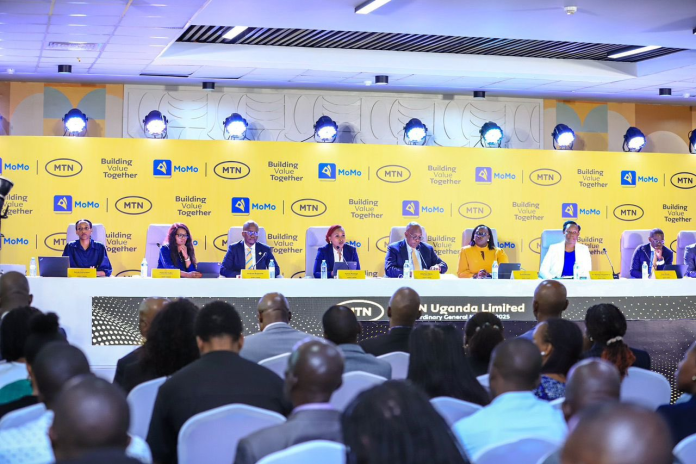
MTN Uganda is rolling out an ambitious nationwide network upgrade aimed at enhancing voice, data, and mobile money services, ensuring customers enjoy a more seamless and superior digital experience.

The three-month initiative, which runs through July 2025, is a key pillar of the company’s broader strategy to strengthen digital connectivity and elevate customer satisfaction across the country.

Sylvia Mulinge, Chief Executive Officer of MTN Uganda, underscored that the upgrade goes beyond technical enhancements—it’s about empowering everyday life.

“This upgrade is about transforming the daily digital experiences of millions of Ugandans. From students streaming lectures to entrepreneurs managing mobile transactions, our enhanced network will enable every individual to reach their full potential. Together, our network is unstoppable,” Mulinge said.

The upgrade is being implemented in phases across the country, with the Greater Central region receiving the most extensive improvements at 35%, followed by the West (19%), Southwest (15%), North (12%), East (9%), and Central (9%).

This targeted rollout is designed to boost coverage, reliability, and capacity in both densely populated and underserved areas.To minimize disruption, most upgrade work is scheduled during late-night hours.

However, MTN has advised customers to expect occasional temporary service interruptions as enhancements are carried out.

The primary goal of this initiative is to improve the reliability, speed, and clarity of MTN’s core services—including voice calls, high-speed data, mobile money transactions, and enterprise solutions under MTN Business.

“At MTN Uganda, our customers are always at the heart of what we do,” said Mackinnon Kabarole, Acting Chief Marketing Officer at MTN Uganda. “This upgrade aligns perfectly with our ambition to be a leading force in digital solutions for Africa’s growth. We are confident that our customers will feel the positive impact of these improvements.

”Kabarole also expressed gratitude for customers’ patience and continued loyalty, emphasizing MTN’s dedication to delivering a robust, future-ready network.

“We are working diligently to build a faster, smarter network that drives business, supports dreams, and connects Uganda like never before,” he added.

Customers in need of support during the upgrade period are encouraged to contact MTN Uganda’s Customer Experience team via the toll-free line 100 or on X (@mtnug).

The company with now more than 22 million subscribers has also reminded its customers to stay alert to fraud, noting that official MTN calls only originate from 0312120000.

For regulatory issues, customers may reach out to the Uganda Communications Commission at 0800222777.This network upgrade forms part of MTN Uganda’s long-term commitment to delivering on its Ambition 2025 strategy, reaffirming the company’s vision that, “Together, our network is unstoppable.

Stories Continues after ad