PRINCIPAL INVESTIGATOR: Associate Professor Charles Masembe
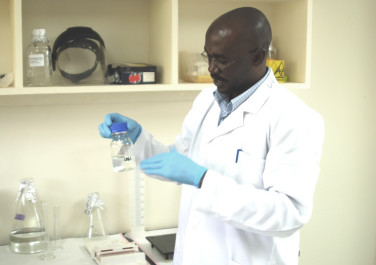
Through its competitive research grants the African Union has awarded a research grant worth over US$ 1.2m to the College of Natural Sciences (CoNAS) of Makerere University to implement a three-year research project to be carried out by a consortium of scientists, aimed at curbing the African Swine Fever.
Makerere’ University’s Associate Professor Charles Masembefrom the Department of Zoology, Entomology and Fisheries Sciences is the Principal Investigator, and the Project dubbed ‘Developing innovative and sustainable approaches to prevent the spread of African Swine Fever (ASF) in Africa (ASF-RESIST)’ will be implemented in Uganda, Nigeria, and the United Kingdom.
CoNAS at Makerere University will partner with the MRC – University of Glasgow Centre for Virus Research (Scotland, UK); the National Veterinary Research Institute (Nigeria); Biosciences eastern and central Africa – BecA-ILRI Hub (Kenya); National Veterinary Institute, (Sweden), and the Regional Universities Forum for Capacity Building in Agriculture (RUFORUM).
The project was developed at a write-shop facilitated by RUFORUM under the auspices of the Platform for African-European Partnerships for Agricultural Research and Development (PAEPARD), and will determine the phenotypic and genotypic features of pigs that survive ASF outbreaks, develop a community-based participatory biosecurity approach to control ASF outbreaks and evaluate ASF rapid diagnostics for use in resource constrained settings and also determine the full genome characteristics of circulating ASF strains.
African Swine Fever is a highly contagious hemorrhagic disease that is a major constraint to pig production and the pork industry in many countries in sub-Saharan Africa, periodically killing 90–100% of affected animals, and has neither treatment nor vaccine.
The disease is characterized by high fever, loss of appetite, haemorrhages in the skin and internal organs causing death in 2-10 days on average. Scientists say it a real threat to an industry that has become very attractive as a means of food, income and employment. Pigs constitute one of the small stocks that are considered “walking banks” in the local communities.
Smallholder pig keeping is a good opportunity for the predominantly rural African population to raise money quickly. Pigs grow to maturity in a short time (8-12 months) and are raised successfully on food waste and other inexpensive fodder. They can be sold with relative ease, including at markets in urban areas.
The project is focused on unlocking the ASF challenge among smallholder pig farmers and enhance productivity. Efforts will be made to leverage on collaborative support from on-going efforts in the pig value chain including the community action research project at Gulu University supported by RUFORUM as well as undertakings by the International Livestock Research Institute (ILRI).
Singer Douglas Mayanja aka Weasel has sacked his manager Geoffrey Kyagambiddwa aka Chagga.
The two disagreed after the latter ‘forced’ Weasel to go and perform in Busia, yet he claimed to still be mourning his friend and singing partner Moses Sekibogo aka Mowzey Radio, who passed on February 1.
According to Weasel, Chagga should apologise before any consideration can be made.
But sources say Chagga has released a song titled ‘Nsasira’ which many say is an indirect sign of apology.
Vice President Edward Sekandi with Bulamu Health officials Prof. Richard Chandler (R) and co-founder Gerald Atwiine. All Photos/Watson
The Bulamu Health International has provided solace and relief to thousands of vulnerable and sick villagers living in poverty and unable to meet many basic requirements such as healthcare and nutrition.
However, by offering free medical care/aid on a wide scale to so many patients living in remote areas such as Arua, Sheema and Mbale, Bulamu Health International has managed to save countless lives. And, by introducing initiatives such as the Angel Programme and Village Health Teams the organization has ensured that critical cases are handled and patients monitored respectively, with the ultimate goal being the provision of free medical care for the average Ugandan.
Like all organizations, Bulamu Health International is run on a set of principles and standards that all staff members, both old and new, must adhere to. Principally, the organization is guided by the ideology: ‘The right of every human being to free medical care.’
However, while that may be a rallying factor for staff, the spirit of charity and compassion brings together all those involved in its activities. Indeed, despite the challenges faced by the beneficiaries, a visit to the Bulamu Health camp brings a smile and hope to the multitudes who flock the centre, a place where hope, love and joy are kept alive!
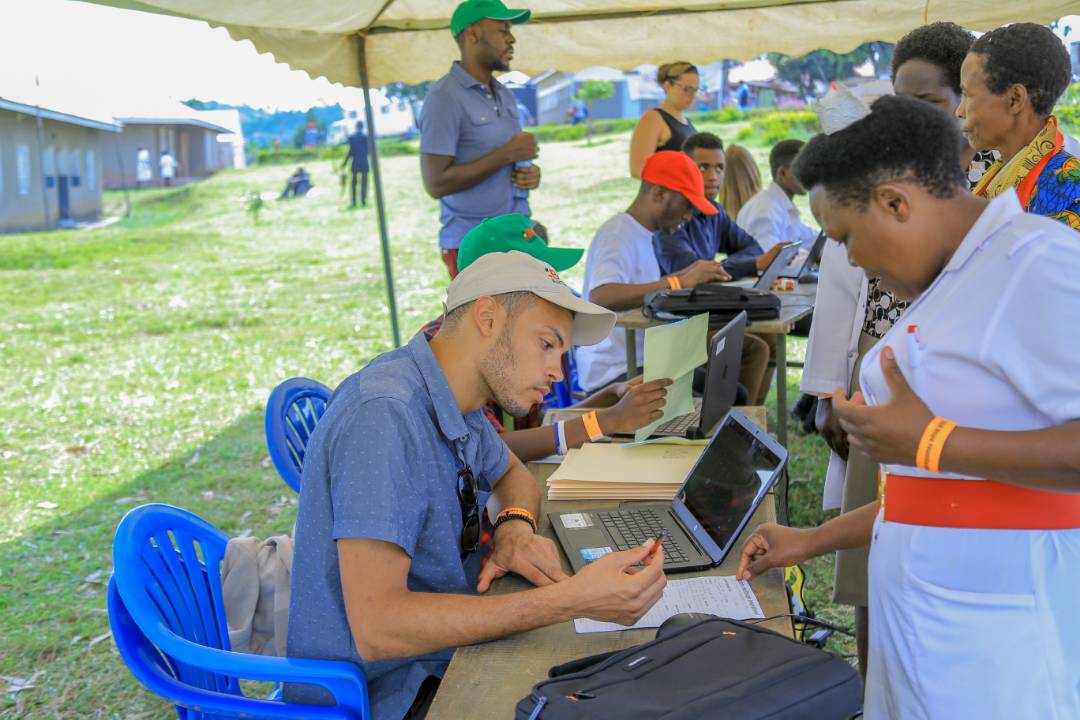
In most Ugandan communities when something is free, expect many to show up by the thousands, more so if the offer lasts for only one week! And against such a background, the just-concluded Health Camp in Sheema the Bulamu team attended to more than 7000 patients over five days; a daily undertaking of about 1500 patients.
Such a feat would be unable to pull of with meager resources but given the resolve of the medical personnel, non-medics such as volunteers and well-wishers were also at the ready with a helping hand.
So, in order to internalize the charity works of Bulamu Health International, earlier last year EagleOnline caught up with co-founder Gerald Atwiine, who said there was need for Ugandans to give to the less privileged.
We sought out these kind hearts and asked about what drives them to be part of such a great cause.
Justine Musiime- Physiotherapist/Gym-instructor/Director, Siima Nursery and Primary School
A volunteer, Justine Musiime strongly believes in the need for action for health and equity in order to reduce the inequalities in health, especially when dealing with disadvantaged groups. When she isn’t in the field volunteering Ms. Musiime is actively promoting healthcare initiatives by collaborating with specific individuals and organizations.
“When I saw Bulamu doing something like this I needed to take part. I have been working here as a supervisor and I have gotten to meet a lot of people that I wouldn’t otherwise meet as well as working in fields I wouldn’t have been or even experiences like witnessing a baby being born. The staff and patients are also usually co-operative,” Ms. Musiime says.
She encourages the unemployed and youths to look for opportunities to volunteer.
“Bulamu gives many youths a platform to learn new sets of skills like leadership training, people management and communication skills and also how to apply them in the field,” she adds.
Victor Walugembe -Software Engineer
Working with the Bulamu Information Technology (IT) department for two years now, Victor Walugembe said he is thrilled by volunteering.
“My second camp was actually the best experience I had in this organization. Yes, some people are harsh and indifferent to our program but it is always an overall great experience. I like to help people and therefore look for ways in which I can do it and I definitely found it here at Bulamu,” Mr. Walugembe said.
He says that volunteering has had a great impact on his life, even allowing him to learn new skills including how to keep the body in perfect health and also ensuring a clean environment.
And, despite knowing the advantages of being able to put food on the table by having money, Mr. Walugembe believes volunteering is still important.
“I know everyone needs money but I urge people to spare at least a day or two to volunteer; it doesn’t kill to give back; we all need to work and get money but volunteering is a really healthy experience,” he says.
Dr. Tumushabe Mutungi – Resident, Toronto University-Senior Registrar, Obstetrics and Gynecology
“I come from a place (Canada) where women’s medical care is very accessible and yet where I was born that is not the case. Therefore, I have decided to use the little I know to help by applying the best use of my skills,” Dr. Tumushabe-Mutungi says.
When she isn’t studying, Tumushabe volunteers both in Uganda and Kenya and in the process learns new skills. She also strongly believes that there should be enhanced training of physicians to become specialists in all aspects of medicine.
“Bulamu is doing great work by reaching out to a lot of people and if you are in a position to help, you should and you will also benefit,” she said.
According to Dr. Tumushabe-Mutungi, Bulamu Health International should implement long-term sustainable programmes in the remote areas in order to develop the communities.
Dr. Justine Nabukeera – Rubaga Hospital
Dr. Justine Nabukeera has been working as a volunteer with Bulamu Health International for two years, and says the organization has helped her improve on ethics, communication and social skills among many other aspects of life.
“Working as a volunteer gives you an opportunity to serve a lot of people with different backgrounds. This would not be the case if you were stationed in one place where you can’t be able to meet or even extend help to such people,” Dr. Nabukeera says.
She adds: “Volunteering can affect us positively in all aspects that is why citizens should put time aside for voluntary work; it builds you as a person and you also feel happy when you see a smile one someone’s face.”
Dr. Wesley Twinomujuni aka Waxy
As a doctor Twinomujuni credits Bulamu Health International for its efforts in improving health care in Uganda. He says that since people now know and value the Bulamu, the organization should consider setting a hospital to run alongside the health camps.
“The camps are limited to just one week and therefore inaccessible by patients from other districts,” Dr. Twinomujuni says, adding that the organization has helped him improve his skills as a Doctor.
“I have encountered different diseases that we study about and you will discover that diseases that are dominant in Northern Uganda are not the ones threatening the western regions of the country. So you learn how to manage these various diseases as a doctor,” Dr. Twinomujuni says.
Apart from advancing his career, Dr. Twinomujuni also says he has learnt other skills like, networking, communication and giving back to the community.
“Giving back to the community is not for everyone but there is a feeling (of satisfaction) you get like when you treat a patient and they get better,” he says and encourages other people to have a heart to serve.
Rachael Nantege -Pharmacist
“I love helping people and this is my second year. I have learnt good leadership skills and how to handle people of various origins,” Ms. Nantege says.
She believes that there should be patient follow-ups, especially for those with chronic illnesses, and also calls for more volunteers to join the noble cause.
“Not everyone is involved but they should in order to improve healthcare in Uganda. You look at the people at these camps and you can tell that some of them have been waiting for the arrival of the camp,” she adds.
Jordan Cowan – Peace Corps Volunteer, Public Health (USA)
Volunteer Jordan Cowan (foreground) with other Bulamu co-volunteers
Despite partnering with a local NGO (Hope Again) as a medic in Kyenjojo, Cowan, a strong advocate of reusable pads also called ‘Rumps’, finds time to join the Bulamu family, where he volunteers and teaches many young school girls on the efficiency and convenience of reusable pads. After attending four camps, Cowan values the work of Bulamu and the free treatment that many usually miss due to high costs.
“I want to show people that it is okay to help others and I would also like to see Bulamu partner with other local organisations in order to bring a lot more support and services during these camps,” Cowan says.
Farouk Opondo Mario Jr – Administration Assistant – Bulamu
Farouk Opondo has been with the program right from the start and explains that through Bulamu, many Ugandans get free medical care at provided by the organization. Although he is involved in wholesale trading and real estate, Farouk Opondo strongly believes you don’t need to get paid to help or work with the less privileged.
“ You don’t always have to look at the pay or benefits that you will get out of any venture but sometimes it requires you to take a leap of faith: look at me, I started volunteering here at Bulamu without any pay or allowances but now I am part of the administration,” Farouk Opondo says.
Veronice Nakisekka says she has a heart for the less privileged people, making her travel to different areas of Uganda with her team in an effort to make the country a better place. She strongly encourages other Ugandans, especially the youth to come on board since it is a very fulfilling experience. “It feels good when help someone else and being a part of such an organization: I feel like I’m doing something to change the world when people meet you and thank you,” Ms. Nakisekka says. Jordan Mujuni – Student, Makerere University Business School (MUBS)
A university student, Jordan Mujuni feels that the undertaking by Bulamu Health International is a noble cause and urges Ugandans to come together and help those in need.
“Ugandans who are more privileged should come out and get on their knees in order to help those that are in need or helpless since these are our family members and fellow citizens,” Mr. Mujuni, a supervisor at the Bulamu organization, says.
According to Mujuni, he has worked with different kinds of people and this in turn has helped him learn how to manage/handle people as well as tolerance.
“One word for the youth is that they should not be proud and get involved in more charitable organizations for at the end of the day you get blessed,” Mr. Mujuni says.
People take medicine to live, not to die. But now it seems in Uganda, many people are at the risk of dying because of taking some medicines which are fake and abundantly available in the market.
The fake products can be classified into two categories: Counterfeit products and Pass-off products.
Counterfeiting is a kind of duplication where even the original manufacturer can at times not be able to distinguish between a genuine and a fake product. These fake products bear the identical name of the original product. The packaging, graphics, colour pattern, design and even same name and address is almost the same as that the genuine manufacturer. A pass-off product, on the other hand, is one that comes with a few minor changes from the original product.
Fake Medicines are also known as ‘counterfeit’, ‘duplicate’, ‘sub-standard’ or spurious. Counterfeiting literally means copying or imitating and this has been practiced for as many years as the world has existed. Counterfeiting of money is its oldest form and has been around almost since coins were invented.
However, in modern times, counterfeiting is most often associated with the imitation of major brand consumer goods, and the more the demand for a product, the more counterfeits that are manufactured.
Needless to say, scores of people all over the world take poor quality medicine, containing less than desired doses of medicine and even completely fake medicine containing no medicine at all, and millions of those who consume these concoctions die or suffer from medical complications.
This, therefore, calls for enhanced tests to be carried out by the National Drugs Authority (NDA), in respect to all the drugs that are being used by the different pharmacies and hospitals in the country.
Indeed, much as the Authority has tried its best, the government should facilitate them financially to enable NDA effectively carry out its mandate.
That noted, experts in the medical field believe that the problem is on the rise and that more criminals are turning to pharmaceuticals for a simple reason: low risk and high reward.
They also note that penalties for those dealing in counterfeit drugs are relatively weak compared to those trading in narcotics and human trafficking.
I therefore urge the National Drug Authority and the Ministry of Health to come to Ugandans’ rescue by testing all the drugs that are being sold by the pharmacies.
A photo montage of BoU Governor Emmanuel Tumusiime Mutebile, businessman Sudhir Ruparelia and Crane Bank
Shareholders of the Crane Bank (in receivership) have joined the battle and threatened to sue the Bank of Uganda and some individuals for selling off their financial institution to the DFCU Bank without taking into consideration their interests.
‘Bank of Uganda is (also) going to face legal liability from shareholders for the fraud perpetrated in this transaction against them. Bank of Uganda’s immunity under the Financial Institutions Act, does not cover fraud. Because there is fraud against the shareholders, bank of Uganda, Bank of Uganda’s employees and legal advisors involved in the fraud shall also face ruinous civil and criminal liability,’ a 4-page leaked document drawn by the shareholders indicates.
In the document, the shareholders say that among other miscreant acts, Crane Bank (CBL) was sold off by the central bank for a paltry Shs200 billion yet its value at the time of takeover by BoU was Shs1.3 trillion, to their detriment.
Further, in reference to the January 25, 2017 Agreement between BoU and DFCU Bank in respect to the acquisition of CBL, the shareholders emphasise that the BoU also undervalued the listed leases of the Crane Bank, set at a paltry Shs10 billion by PriceWaterHouseCoopers.
‘The Agreement does not list assets (outside branches) that DFCU was taking over. The Agreement does not itemize the list of assets acquired (save for the leases). This is very strange given that CBL’s total assets were worth Shs1.3 trillion at the time of BoU’s takeover of the Bank, but the listed leases in the agreement were given an undervalued book value of only 10 billion by BoU’s accountants, PWC. How can this agreement covering assets only itemise Shs10 billion only worth of assets?’ the shareholders aver in the document, indicating that they are intent on suing the BoU, its legal advisors and employees, specifically pointing out the former Executive Director of Bank Supervision Justin Bagyenda, who were reportedly involved in the transaction.
‘The Agreement does not state the amounts of money to be paid by DFCU as a net purchase price. What kind of sale agreement doesn’t state a purchase price?’ the leaked document by the shareholders indicates in part, adding: ‘The Agreement does not state payment terms for monies DFCU was supposed to pay to BoU. How can an agreement not state terms?’
Further, in the listed litany of reported breaches the shareholders say were carried out by the receiver, the Bank of Uganda, in respect to the agreement with DFCU Bank, they accused the central bank of acting contrary to the Financial Institutions Act, more so in a transaction that involved a public institution (BoU) and a publicly listed financial institution (Crane Bank).
Citing Recital B on page 3 of the Agreement, the shareholders also fault BoU for negotiating for the benefit of the depositors and creditors, ignoring the shareholders.
‘This is wrong because the Receiver is also obliged by law to cater for the interests of the shareholders of CBL’, the statement indicates in part. The sales agreement that was signed by BoU governor, Mutebile, BoU secretary, Juma Kisaame, Managing Director of DFCU and William Sekabembe, the Executive Director DFCU. In this transaction, CBL was left out and now they are contesting the agreement because they were never part of it.
The shareholders also take swipe at the BoU and DFCU bank, accusing them of unilaterally taking over the properties/leases of Meera Investment Limited (MIL) with consent.
‘Both BoU and DFCU Bank were aware when they were entering into this Agreement that they could not transfer the leases from CBL to DFCU without the knowledge or written consent of the Owner (Meera Investments Limited). Nevertheless, they went ahead to purport to transfer them on the understanding that BoU would try to procure the Freehold ownership and sell the same to DFCU within two years’, the shareholders indicate.
Recently, Crane Management Services, a real estate company that lets out properties on behalf of Meera Investments Limited, demanded over Shs4 billion from the DFCU Bank as rent arrears accruing from 13 properties, some with multiple units, which were being rented by Crane Bank, now in receivership.
In the plaint filed by Messrs. Magna Advocates dated February 15, the Bank of Uganda was also dragged into the picture for transferring the assets and liabilities managed by Crane Management Services including the 13 properties to DFCU Bank on January 25, 2017, in error.
‘On the 25th day of January 2017, the Bank of Uganda as a Receiver represented that it had transferred the assets and liabilities of Crane Bank Limited to the Defendant (DFCU Bank)’, Magna Advocates averred, adding that the latter also acknowledged acquiring the properties now under contestation.
The various rent obligations claimed by the plaintiff, all in one-year pre-paid contract in the period between March 2016 and July 2021 and now being demanded are US$385, 728.54 (approx. Shs1.15 billion) and Shs 2, 998, 558, 624, and for Plot 9 Market Street (Crane Bank branch and ATM); Plot 1-13 Jinja Road (Crane Bank branch); Plot 47 Republic Road Mbale (branch); Speke Hotel (ATM); Plot 9 Cooper Road (Crane Plaza/branch) and Plot 20 Kampala Road (branch).
Other rental arrears being demanded include those for apartments on Bombo Road, Kira Road, William Street, Market Street and Nkrumah Road; Plot 28 Luwum Street, and eight staff apartments on Snay Bin Amir Street and several flats on Plot 22/24/26 on Kampala Road.
According to the plaint, the DFCU Bank, as acknowledgment that it had taken over tenancy from Crane Bank, made a series of payments among them that of US $81, 408 and Shs219, 210, 728 to Crane Management Services.
Other payments made include that of Shs410, 303, 436 for utilities; US $531.000; US $362, 524 and US $168, 476.
‘Subsequently, by a letter dated 4th May 2017, Bank of Uganda as the receiver of Crane Bank Limited (in receivership) informed the plaintiff as the duly letting agent of Meera Investments Ltd that BOU in its capacity as the receiver had transferred the right to and benefit of the pre-paid rent in respect of some of the suit properties formerly occupied by Crane Bank Ltd (in receivership) and managed by the Plaintiff to the Defendant as at the 25th of January 2017’, the plaint by Magna Advocates stated in part.
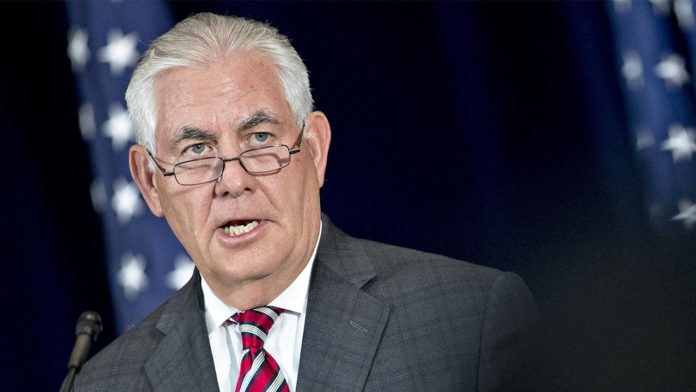
Just over a year in office President Trump has fired Secretary of State Rex Tillerson and nominated CIA Director Mike Pompeo to replace him as the nation’s top diplomat, orchestrating a major change to his national security team amid delicate negotiations with North Korea, White House officials said Tuesday.
Trump last Friday asked Tillerson to step aside, and the embattled diplomat cut short his trip to Africa on Monday to return to Washington.
Pompeo will replace him at the State Department, and Gina Haspel — the deputy director at the CIA — will succeed him at the CIA, becoming the first woman to run the spy agency, if confirmed.
In a statement, Trump praised both Pompeo and Haspel.
“I am proud to nominate the Director of the Central Intelligence Agency, Mike Pompeo, to be our new Secretary of State,” Trump said. “Mike graduated first in his class at West Point, served with distinction in the U.S. Army, and graduated with Honors from Harvard Law School. He went on to serve in the U.S. House of Representatives with a proven record of working across the aisle.”
The president continued, “Gina Haspel, the Deputy Director of the CIA, will be nominated to replace Director Pompeo and she will be the CIA’s first-ever female director, a historic milestone. Mike and Gina have worked together for more than a year, and have developed a great mutual respect.”
Trump also had words of praise for Tillerson: “Finally, I want to thank Rex Tillerson for his service. A great deal has been accomplished over the last fourteen months, and I wish him and his family well.”
The president — who has long clashed will Tillerson, who he believes is “too establishment” in his thinking — felt it was important to make the change now, as he prepares for talks with North Korean leader Kim Jong Un, as well as upcoming trade negotiations, three White House officials said.
“I am deeply grateful to President Trump for permitting me to serve as Director of the Central Intelligence Agency and for this opportunity to serve as Secretary of State,” Pompeo said in a statement. “His leadership has made America safer and I look forward to representing him and the American people to the rest of the world to further America’s prosperity. Serving alongside the great men and women of the CIA, the most dedicated and talented public servants I have encountered, has been one of the great honors of my life.”
Haspel in a statement also said she was excited for her promotion. “After 30 years as an officer of the Central Intelligence Agency, it has been my honor to serve as its Deputy Director alongside Mike Pompeo for the past year,” she said. “I am grateful to President Trump for the opportunity, and humbled by his confidence in me, to be nominated to be the next Director of the Central Intelligence Agency.”
As part of commemorating the International Women’s Day, the Uganda Securities Exchange (USE) joined 65 other Stock Exchanges globally to ring the bell in a bid to advocate for gender equality in the sector.
The ‘Ring the Bell’ for gender equality campaign is aimed at highlighting the steps that the sector is taking in advancing gender equality in the workplace, marketplace and within the community.
This year, the Securities Exchange held a forum under the theme ‘Women’s Role in Finance and Investment’ aimed at highlighting how women in Uganda can join the finance sector.
The event was supported by a global partnership between the Sustainable Stock Exchanges (SSE) Initiative, UN Global Compact, IFC, UN Women, Women in EFT’s and the World Federation of Stock Exchanges.
Speaking during the event, the Capital Markets Authority (CMA) Chief Executive Officer Keith Kalyegira noted that the number of women in the boards of the listed companies is disproportionately lower than that of men.
According to Kalyegira, Uganda Clays has three women out of 10 board members; BAT has one woman out of 8 board members; Bank of Baroda has no woman on the board, New Vision has three women out of 11 (chairperson is a woman); Umeme has two women out of 11 board members, while DFCU has one out of 6 board members.
He also pointed out that there are only three women Chief Financial Officer’s out of 20 in the local financial institutions and only three CEO’s of financial institutions out of the 24 licensed banks.
On his part USE CEO Paul Bwiso, said the ring the bell for gender inclusion forum is aimed at promoting women’s needs and goals in the financial markets.
“We have to take a deliberate effort to ensure gender inclusion, the policies we pass with our policy makers that is the CMA,” noted Bwiso “We not only have to pass reporting regulations and requirements for gender inclusion, we will need to introduce products that women would be interested in such as for the rural women so that they also invest in the stock exchange,” he said.
According to Bwiso, the USE gender inclusion stands at 48% women and 52% men. However, the board only has a 13% women representation which account for only one woman on the board “We will work towards improving that as an objective” notes Bwiso
“We do know women save a lot, decisions on investments, savings and expenditure at the family level are done by women so based on this if we promote women’s needs and requirements we are bake to see more investments into the stock market because it is an avenue for investment and index would move up because of sustained investments that can grow, noted Bwiso.
“As the Exchange, this bell ringing ceremony creates awareness of the pivotal role the private sector can play in advancing gender equality to achieve the UN’s Sustainable Development Goal Five,” Bwiso said.
He added: “It is essential for the companies to develop and improve policies on remuneration, gender representation, sexual harassment prevention, family leave and flexible work in order to support both women and men but to also improve terms of employment and champion equal opportunities within the organizations.”
General Manager for Total Exploration and Production Adewale Fayemi and Ernest Rubondo the Executive Director of Petroleum Authority of Uganda
Total Exploration and Production Company and GIZ International are to train over 200 Ugandan welders staying in areas where the 1445 kilometer crude oil pipeline will traverse to Tanga in Tanzania.
Speaking at the launch of the training, Total Exploration and Production Uganda General Manager Adewale Fayemi said his company intends to develop a domestic pool of internationally certified welders in a period of 24 weeks at a zero cost.
Officials of Total and GIZ at the launch of the welders’ training
“With well-established training centres in Buliisa district, Lwengo and among other centres, the training will be conducted by two Ugandan companies, Q-Training as the assessment and skilling Centre (TASC) and E360 group Ltd with recorded experience in the industry for over 10 years,” Adewale said at Golden Tulip Hotel.
According to Mr. Adewale, beneficiaries will be trained in line with the industry standards that include among others health, safety and environment training.
Total Exploration and Production Company is one of the few companies that were awarded contracts in 2012 to explore oil in the nine fields in Albertine region.
Uganda is estimated to have 2.5 billion barrels of oil.
Gender Minister Janat Mukwaya (front R) Speaker Rebecca Kadaga (C), Amb. Adonia Ayebare and Gender Ministry Permanent Secretary, Pius Bigirimana (back R) at the UN women assembly in New York on Monday, March 12,
The Minister for Gender, Labour and Social Development, Janat Balunzi Mukwaya has called for enhanced women’s financial empowerment through among others, the institution of affirmative action measures for women to benefit from a fixed percentage of the tenders for the supply of goods and services in public procurement.
Mukwaya noted that women and girls form a larger portion of the population whose activities have a bearing on economic production, care and support to families as well as community management, and argued that their economic empowerment would greatly contribute to sustainable development.
She made the observation while delivering a statement at the opening of the 62nd session of the Commission on the Status of Women (CSW) taking place at the United Nations (UN) headquarters in New York.
The international assembly is held every year to discuss progress and chart new strategies for achieving gender equality and the empowerment of women especially in alignment with the 2030 global agenda for Sustainable Development.
The conference that runs from 12th – 23rd March, 2018, is being attended by representatives of UN Member States, UN entities, and accredited non-governmental organizations (NGOs) from all regions of the world.
It’s being held under the theme: ‘Challenges and Opportunities in Achieving Gender Equality and The Empowerment of Rural Women and Girls’.
Other members of the Uganda delegation include the Speaker of Parliament Rebecca Kadaga, the Gender Ministry’s Permanent Secretary, Pius Bigirimana, and Uganda’s Permanent Representative at the UN, Ambassador Adonia Ayebare, who are representing Uganda.
The minister said the Government of Uganda had made tremendous strides in improving the environment within which rural women and girls live and operate.
She noted that as Uganda’s overarching planning framework, the National Development Plan is aligned to the 2030 global development agenda and ensures that no one is left behind.
Mukwaya said policy and legal reforms had been undertaken in the land sector to guarantee women rights to access, utilization and ownership of land.
She also enumerated investments in agricultural production, expansion of road and communication infrastructure, enhancing human capital development, the quality of education, health and all social services plus exploration in the Energy and Minerals as among those spurring economic growth and transformation of the society.
“These investments have generated concrete results especially increased access to safe water for rural communities, Health services, immunization coverage and antenatal care for pregnant women, and deliveries attended to by a skilled health worker have been brought closer and all improved the quality of services over the last 5 years.” She revealed.
“We have attained gender parity in school enrollment at primary school level and 47% for girls at Secondary Education level. Women participation in leadership at all levels has increased to more than critical mass of the global standard set in Beijing.” She added.
She hinted that improvement and expansion of the national, feeder and community road networks has provided the population in rural areas with access to markets and other services while more people in rural areas are being connected to the national electricity grid, use solar energy and improved cooking stoves.
The minister noted that in an effort to economically empower women, government two years ago initiated the Uganda Women Entrepreneurship Programme (UWEP), which has to date provided funding to over 44,000 women to invest in projects that generate income.
“Similarly, the Youth Livelihood Programme has since 2015, reached over 74,140 female youth (45%) as beneficiaries with skills training and capital for business enterprises.” She said.
She called for enhanced dialogue with women and girls to capture their needs from lived experience in policy formulation, planning and programming.
“They want to see themselves being consulted on issues that affect them and working closely with all stakeholders to effect the required actions.”
Mukwaya also recommended that all forms of Gender Based Violence (GBV) including child marriage, Female Genital Mutilation (FGM) be addressed through strategies for prevention and response that bring on board men and boys as behavioral change agents and advocates.
“Let’s also Support women and girls to attain education, life skills and literacy including financial literacy as a spring board for holistic development,” she added.
Meanwhile, Uganda is scheduled to hold a side event on Thursday, 15th March, 2018 focusing on transforming the lives of rural women and girls through gender and equity budgeting.
The Uganda Gender Policy of 1997 revised in 2007 identifies gender as a cross cutting concern and mandates all actors (state and non-state actors) to take appropriate actions to address gender inequalities within their mandate. Within this framework, gender mainstreaming is the main strategy to ensure that all MDAs institutionalise gender in policy formulation, planning and budgeting.
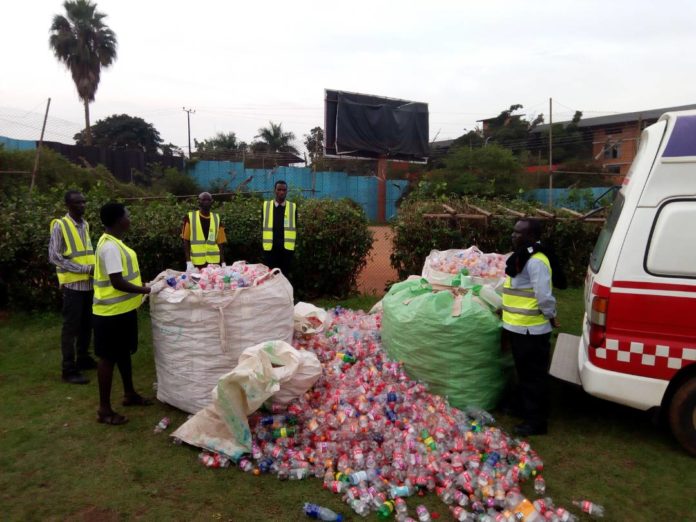
Plastic Collection at the Lugogo Oval during the World Cup Trophy Tour in Uganda
Over 5310 plastic bottles weighing about 177 kilogrammes was collected from Lugogo Cricket Oval after the just-concluded Uganda leg of the World Cup Trophy Tour.
Plastic Recycling Industries, a subsidiary of Coca-Cola Beverages Africa (CCBA) Uganda collected the plastic waste March 6, 2018 at the World Cup Trophy viewing session.
A lady collecting plastic bottles in Lugogo
This, at an average of 30 bottles per kilogramme, translates into 5310 bottles which links to about the same number of Ugandans who attended the Trophy Tour viewing and perhaps got an opportunity to take a picture with the most coveted sports icon.
Meanwhile, according to CCBA, it targets a percentage collection of 40 by 2019.
‘The philosophy behind Plastic Recycling Industries (PRI) is to take plastic waste out of the environment, reduce it, and re-use it as valuable products. While doing so, we not only protect the environment, but also create jobs for youth and women from underprivileged backgrounds who have found a livelihood in waste collection,’ the company notes.
The Coca-Cola Company announced recently the new packaging strategy and recommitted a ‘World Without Waste’, where the company committed to collect and recycle a bottle or can for every one it sells by 2030.
“At Coca-Cola Beverages Africa Uganda, we are cognizant of the fact that for a Country to have a successful recycling program, it takes collective effort of several stakeholders. On this note, I would like to appreciate our partners KCCA and Masaka Recycling Initiative in walking with us on this journey. Through PRI, we are ready to work with KCCA to put collection points at all public concerts and events going forward,” Conrad Van Niekerk, Managing Director Coca-Cola Beverages Africa Uganda, said.
Niekerk commended his team of 8 led by Farouk Balabyeki, for a job well-done.
“As well, I would like to commend the team from PRI which includes Betty Kirabo, Absalom Adutu, Peter Olwenyi, Akello Angala, Sharon Biyinzika, Yuda Mukama, Annet Kwagala under the supervision of Farouk Balabyeki. These employees not only experienced the magical magnificence of the Trophy, but also exhibited the company`s commitment to disposing plastic waste responsibly,” he added.
Commenting about the culture of waste collection and disposal, PRI Collection Officer Balabyeki said: “One of the biggest challenges we face today is the belief that somebody else will clean up after us. We are continuing to disseminate information about disposing plastic responsibly. We did it at Lugogo and we shall always do it.”