Stanbic Bank
Stanbic Bank
27.3 C
Kampala
Stanbic Bank
Stanbic Bank
Home Blog Page 163

Uganda reaffirms commitment to ESAAMLG agenda

President Yoweri Kaguta Museveni has reiterated Uganda’s unwavering commitment to supporting regional and global efforts aimed at fostering a safer and more transparent financial system.

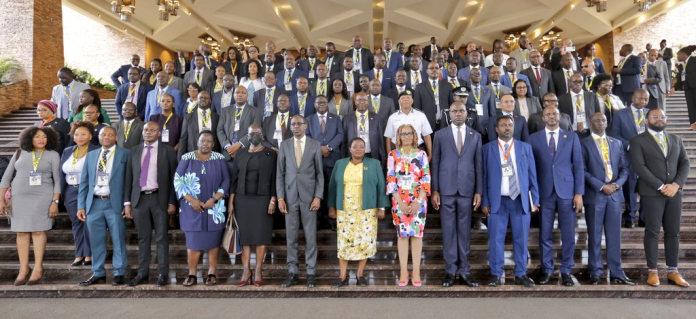
In a message delivered by Prime Minister Robinah Nabbanja at the official opening of the 49th Eastern and Southern Africa Anti-Money Laundering Group (ESAAMLG) Taskforce of Senior Officials Meeting at Speke Resort, the President emphasized the need to prioritize information sharing, capacity building, and policy harmonization to enhance the region’s ability to detect, prevent, and prosecute money laundering and terrorism financing.

He also commended ESAAMLG for its role in Uganda’s successful removal from the Financial Action Task Force (FATF) grey list in 2024.

“Money laundering, terrorism financing, and the proliferation of weapons of mass destruction are not just financial crimes; they pose direct threats to our national security, economic stability, and development,” the President noted.

Minister of State for General Duties Henry Musasizi, representing Finance Minister Matia Kasaija, highlighted Uganda’s deliberate steps to strengthen its anti-money laundering and counter-terrorism financing legal, regulatory, and operational frameworks. He noted that Uganda has embraced a risk-based approach to supervision.

Meanwhile, Permanent Secretary and Secretary to the Treasury (PSST) Ramathan Ggoobi, who led Uganda’s delegation, underscored the evolving challenges in the fight against financial crimes.

He pointed out the misuse of emerging technologies, cross-border illicit financial flows, and lingering vulnerabilities within existing anti-money laundering frameworks, calling for a more unified, strategic, and adaptive response.

Stories Continues after ad

Uganda to host 11th Africa Regional Forum on sustainable development at Speke Resort

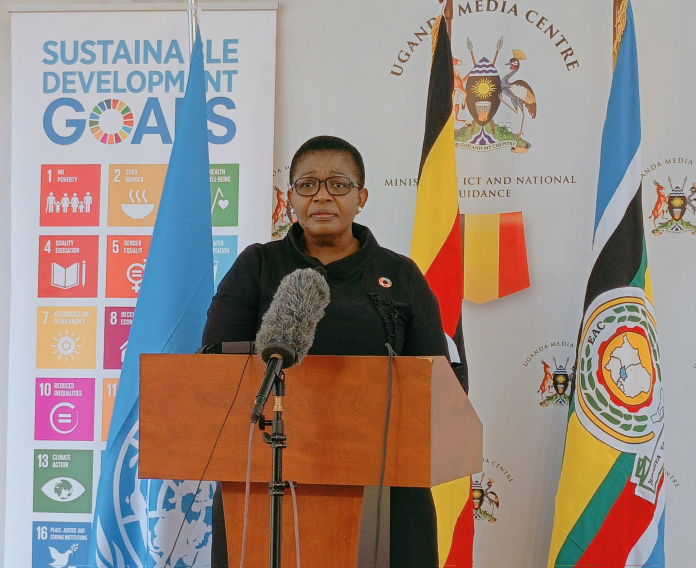
Minister of General Duties, Justine Lumumba is addressing the Press

Uganda is set to host the 11th session of the Africa Regional Forum on Sustainable Development (ARFSD-11) from April 6 to April 11, 2025, at the Speke Resort Convention Centre, Munyonyo, Kampala.

The high-level event, organized by the Government of Uganda in collaboration with the United Nations Economic Commission for Africa (ECA) and other key partners, will bring together about 2,000 delegates, including Heads of State and Government, policymakers, business leaders, civil society representatives, youth leaders, and development partners to assess Africa’s progress in achieving the Sustainable Development Goals (SDGs) and Agenda 2063.

The forum’s main segment will run from April 9 to April 11, 2025, featuring a presidential dialogue, high-level panel discussions, plenary roundtable panels, and parallel meetings. President Yoweri Kaguta Museveni is expected to officiate the opening session.

With the theme “Driving job creation and economic growth through sustainable, inclusive, science and evidence-based solutions for the 2030 Agenda and Agenda 2063”, the forum will focus on SDGs under review in 2025, including Good Health and Well-being, Gender Equality, Decent Work and Economic Growth, Life Below Water, and Partnerships for the Goals.

Minister of General Duties in the Office of the Prime Minister, Justine Kasule Lumumba, highlighted the forum’s significance:

“This landmark event will bring together about 2,000 high-level delegates, including Heads of State and Government, former Heads of State and Government, policymakers, business leaders, civil society representatives, development partners, youth leaders, academia, media among others to assess Africa’s progress toward achieving the SDGs and Agenda 2063.”

A key outcome of the forum will be the Kampala Declaration, a document outlining policy options, recommendations, and consensus priorities aimed at accelerating economic growth and job creation across Africa. These resolutions will serve as Africa’s collective input to the 2025 High-Level Political Forum and the Second World Summit on Social Development.

UN Resident Coordinator in Uganda, H.E. Leonard Zulu, emphasized Uganda’s growing role in regional sustainability efforts:

“The selection of Uganda as the host country underscores its commitment to advancing sustainable development and regional economic transformation. The forum will serve as an opportunity for Uganda to showcase its leadership in implementing SDG-aligned policies, fostering public-private partnerships, and championing innovative, data-driven solutions for job creation and inclusive growth.”

Meanwhile, ECA Executive Secretary Mr. Claver Gatete noted that ARFSD-11 is an opportunity for Africa to address its $402 billion annual financing gap and accelerate progress toward middle-income status:

“ARFSD-11 is a moment to scale up what works, close our continent’s 402-billion-dollar annual financing gap, and unlock the full potential of Africa’s people, especially our women and youth. It is also an opportunity for Africa to sharpen its ambitions so that by 2044, all countries can attain middle-income status.”

With Uganda hosting this crucial forum, organizers are encouraging all stakeholders—governments, businesses, and civil society—to participate actively in shaping Africa’s sustainable future.

Stories Continues after ad

Malaria vaccine program targets 1.1 million children

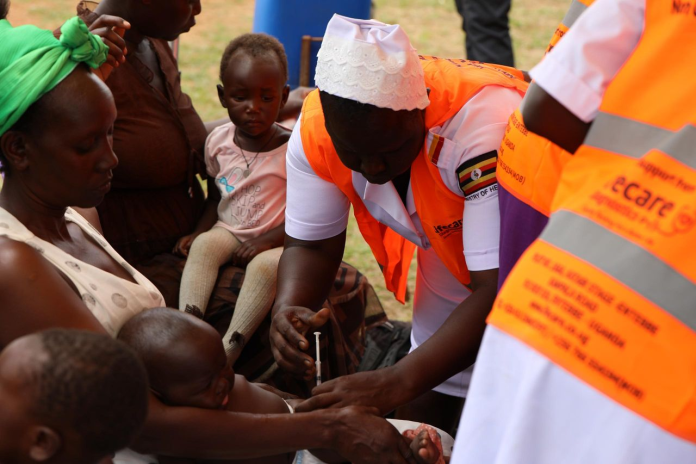
Uganda has launched a malaria vaccine program targeting to protect 1.1 million children under the age of two from the deadly disease.

The initiative integrates the R21/Matrix-M malaria vaccine into the country’s routine immunization schedule. The vaccine will be administered free of charge in 107 high-risk districts.

Malaria remains one of the leading causes of illness and death in Uganda, particularly among young children. According to the Ministry of Health, malaria accounts for 30-50% of outpatient clinic attendances, 15-20% of admissions and up to 20% of in-patient deaths.

The vaccine will be given in four doses at 6, 7, 8 and 18 months. Over 2.2 million doses have been distributed across the target districts.

“The introduction of the malaria vaccine is a game-changer in our fight against this disease,” said Dr. Jane Ruth Aceng, Minister of Health.

She added, “We are committed to ensuring that all eligible children receive the vaccine and are protected against malaria.”

Uganda becomes the 19th African country to introduce the malaria vaccine into its national immunization program.

The program aims to reduce the economic burden of malaria on families and the healthcare system. According to the Ministry of Health, the vaccine is expected to save families approximately 15,000 Ugandan shillings ($4) per case.

Stories Continues after ad

Sexual Violence in the Urban Informal Sector: Are Existing Laws Failing Women?

By Benson Muhindo
When we talk about sexual violence in the workplace, what’s the first thing that comes to mind? A boss assaulting their employee? A colleague harassing a fellow worker? But have you ever thought about the harassment that market vendors, street hawkers, female conductors, and other women in the informal sector endure daily? The vulgar language, the body shaming, the inappropriate touches, the unsolicited advances, these are all forms of sexual harassment that women in informal workspaces face regularly as they try to earn a living.
The question is, what laws exist to address this? How many safe spaces are available for these women to report such abuses? Many of them do not even know how to reject, dismiss or report these abuses without facing backlash, whether emotional, financial or physical. Perhaps the most troubling aspect of this crisis is the silence surrounding it. Even when sexual violence is acknowledged, discussions often focus on formal workplaces, leaving workers in the informal sector out of the conversation.
Do Uganda’s Laws Offer Protection?
Uganda has made some strides in tackling gender-based violence and sexual violence. Laws such as the Penal Code Act, the Employment Act (2006), and the Anti-Sexual Harassment Regulations (2012) provide some level of protection. However, these laws & their implementation primarily gravitate towards formal workplaces, leaving a significant gap when it comes to informal workers.
The Employment Act (2006) defines sexual harassment and outlines the obligations of employers in formal workplaces to prevent and address it. However, for workers in the informal sector who do not have a defined employer-employee relationship, these protections are practically non-existent. The Anti-Sexual Harassment Regulations (2012) apply to structured workplaces with at least 25 employees, further excluding millions of women who work in informal spaces such as markets, streets, and homes.
The Penal Code Act criminalizes acts of sexual violence, including assault and harassment, but enforcement remains a challenge. Many victims in the informal sector fear reporting cases due to social stigma, lack of awareness, and the possibility of losing their source of income. Without clear enforcement mechanisms tailored for the informal economy, these laws remain largely ineffective in protecting vulnerable women.
The Way Forward
We need to take deliberate steps to ensure that the workers in the informal sector are protected from sexual harassment. This can be achieved through:
1.        Expanding the scope and implementing of existing laws to explicitly cover workers in the informal sector and outline clear penalties for perpetrators.

2.       Conducting awareness campaigns to educate informal workers about their rights and equip them with strategies to respond to harassment.

At Reach A Hand Uganda (RAHU), we are committed to ensuring that all women, regardless of their workplace, can live and work with dignity and safety. Through the Right Here Right Now Project, together with partners in the Right Here Right Now Coalition, we actively engage various stakeholders to address critical issues affecting women in the districts of implementation which are Fortportal, Kabarole, Kasese & Kampala.
Our initiatives including Intergenerational Dialogues, Focus Group Discussions, and policy advocacy engagements, provide platforms for meaningful conversations, knowledge-sharing, and action-driven solutions. Additionally, we are pushing for stronger protections, better policies, and a safer working & living environment for all.
Muhindo is Country Director, Reach A Hand Uganda

Stories Continues after ad

Private sector performance improves in March

Ugandan currency

Strong demand conditions drove growth in input buying, as firms stocked up amid anticipation of more upturns in activity later in the year, slightly lifting the monthly Stanbic Purchasing Managers’ Index (PMI).
The headline Stanbic PMI rose to 52.9 during March, up from 52.6 in February. The latest data indicated back-to-back improvements in the health of the Ugandan private sector for the second month running. There were also further increases in output, new orders and employment.
Christopher Legilisho, Economist at Stanbic Bank said, “The March PMI for Uganda confirmed a private sector with still sound consumer demand aiding growth in output, new orders, employment, and inventories. All sectors surveyed displayed broad-based growth in activity on average in Quarter One (Q1) 2025. Further, firms remained optimistic about the economic outlook, foreseeing sustained consumer demand over the coming year.”
The monthly survey is compiled by S&P Global from responses to questionnaires sent to about 400 purchasing managers. The sectors covered by the survey include agriculture, mining, manufacturing, construction, wholesale, retail and services.
It is a weighted average of the following five indices: New Orders (30%), Output (25%), Employment (20%), Suppliers’ Delivery Times (15%) and Stocks of Purchases (10%). Readings above 50.0 signal an improvement in business conditions on the previous month, while readings below 50.0 show deterioration.
New business received by Ugandan companies increased again, as panelists highlighted new customer acquisitions and favourable demand conditions.  However, inflationary pressures persisted as higher purchase and staff costs drove up overall input prices. Accommodative demand conditions enabled firms to continue raising their output charges.
Legilisho said, “Rising input costs kept prices under pressure in March. Pricing strains were felt by firms as utility bills, shipping fees and commodity prices went up, while staff costs and output prices increased for a further month. Promising economic conditions allowed firms to pass on costs to consumers. The March PMI implies a sustained improvement in economic conditions in the private sector.”
In line with a broad-based upturn in new orders, the five monitored sectors also recorded greater business activity at the end of the first quarter. Business confidence in the outlook for output over the coming 12 months remained upbeat in March.  Optimism was reportedly underpinned by hopes of further improvements to the sales environment and new client wins.
Subsequently, firms raised their staffing levels to accommodate greater new order inflows and anticipated growth in output in the coming months. All five monitored sectors registered higher staffing levels, with some respondents mentioning this was largely due to the hiring of temporary workers.
Nonetheless, increased capacity following job creation enabled firms to deplete their backlogs of work for a third month running in March.
At the same time, Ugandan businesses stated that higher utility, raw material and staffing costs led to a broader rise in operating expenses in March. Purchase prices and wage bills rose again on the month.
In response to higher costs, companies raised their output charges for the seventh month running. An upbeat sales environment enabled firms to pass on greater input prices to clients.
In line with a rise in new orders, Ugandan firms expanded their input buying and sought to build safety stocks. There was a fresh increase in pre-production inventories during March, aided by a further improvement in suppliers’ delivery times.

Stories Continues after ad

Public warned against fake AI on billionaire Sudhir Ruparelia

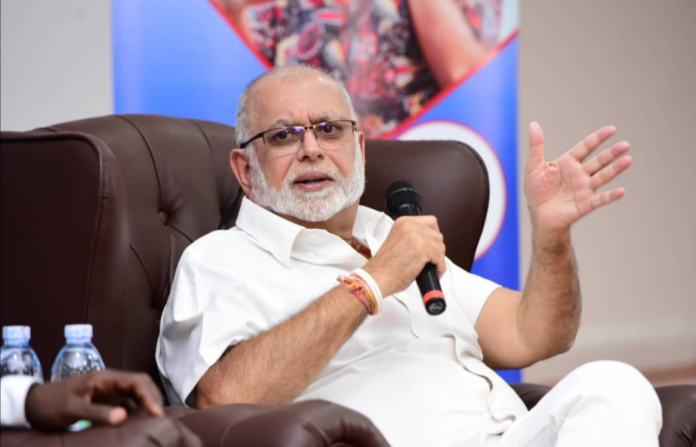
Tycoon Sudhir Ruparelia.

The public is warned against fake Artificial Intelligence AI generated content on billionaire Sudhir Ruparelia.

The scam that endorses a fraudulent business deal reportedly by Sudhir was exposed after the East African billionaire denied ever endorsing such a deal.

“It is a scam and AI generated. Let the public ignore it” the billionaire told Eagle Online.

The scam is the latest by fraudsters, which targets people if high reputation and companies. Previously, it has widely been used against politicians as the latest technology gains grounds but now shows scammers are abusing the app.

Why Sudhir

He is East African number one billionaire based on his individual investment as per Forbs rankings.

Sudhir further tops Uganda tax payers list on rent tax and has top of the range hotels like Commonwealth Resort Munyonyo and Kabira Country -Club that is being expanded and will soon open as East African biggest recreational centre among others.

He is a consular of the Republic of Nepal in Uganda.

Stories Continues after ad

NIRA to kick off mass renewal of National IDs this month

The National Identification and Registration Authority (NIRA) will kick off the nationwide renewal and enrolment of individuals for National IDs this month (April). The process, which will run over the next several months, marks a key step in ensuring that every Ugandan citizen has access to proper identification.

Angella Bukirwa, the Manager of Human Resources at NIRA, revealed: “We are officially opening the renewal and enrollment process to the public,” she announces with confidence. This announcement is not just a formality; it’s the beginning of a mass mobilization effort aimed at reaching as many citizens as possible, particularly those who need to renew their expired IDs.

The mass renewal and enrollment service comes with an important distinction; it is entirely free for those renewing their IDs.

“This initiative ensures that this right is accessible to all, without the burden of financial barriers.” This marks a departure from previous initiatives where individuals had to pay fees for basic services, making the mass renewal process even more significant for Ugandans who may have previously been unable to afford the costs,” she noted.

While the renewal process is free, there are specific fees for services like lost, damaged, or altered IDs.

According to Bukirwa, these fees are laid out in the law and can also be found on the NIRA website for transparency. For those who have lost their IDs, the fee is UGX 50,000. If an ID is damaged, the fee increases to UGX 200,000, and if there is a need to change particulars, such as a name or address, the same fee applies. Payments for these services must be made at the bank, and a receipt is required as proof of payment.

As the government works to ensure inclusion in the National ID renewal, NIRA is taking an innovative approach by reaching out directly to local communities.

“This time, we are reaching out to the parishes for the first 10 months of this exercise,” Bukirwa explains.

This strategy ensures that even individuals in the most remote areas are given the opportunity to renew their IDs without having to travel to distant offices. NIRA’s offices will remain open beyond the initial outreach period, ensuring continued access to services for anyone who misses the initial window.

A key part of the success of this initiative is the more than 10,000 trained registration assistants NIRA has recruited. These assistants, who have been specially trained for the mass renewal exercise, are prepared to handle the large volume of people expected at registration centers. Their presence at local parishes will help streamline and accelerate the process, ensuring that the ID renewal is efficient and accessible for everyone.

As NIRA embarks on this journey to improve national identification, it is clear that the initiative is not just about renewing IDs—it’s about empowering Ugandans by giving them the tools for participation in both social and economic life. With proper identification, citizens are better positioned to access a variety of services, from voting and healthcare to opening bank accounts and applying for jobs. By removing financial barriers and reaching out directly to communities, NIRA is ensuring that the benefits of national identification are within reach for all Ugandans.

As the process unfolds, the people of Uganda stand to gain more than just a new ID card—they stand to gain greater inclusion in their country’s civic and economic life, thanks to NIRA’s ambitious, people-focused initiative. The mass renewal of National IDs is not just an administrative task; it is a vital step in advancing the rights and opportunities of every Ugandan citizen.

Stories Continues after ad

Vinka, Fik Fameica to Headline MUBS Cultural Gala

Singers Fik Fameica and Vinka are set to light up the Makerere University Business School (MUBS) Cultural Gala on April 4, 2025 at the university grounds.
Under the theme “Rooted in Tradition and Growing Towards Sustainability,” the gala will feature a variety of cultural showcases, including traditional dance, art, fashion competitions, and storytelling. At the end of the day, the winning team will walk away with a prize.
Moses Amanya, the 27th President of MUBS, expressed his excitement about this year’s event and praised Coca-Cola, the main sponsor, for its support.
“I am glad to report that what we have witnessed at the launch has never happened before at the university,” Amanya said.
“Each and every one of us here can bear witness that culture defines our identity. Culture, tribe, or family is not something we choose—it is God-given, and that is why we embrace it with all our hearts and minds,” he added.
He urged students to take pride in their heritage.
“As we prepare for the event, we should feel proud of who we are. If you are called upon to represent your tribe, do it with all your heart.”
Amanya also highlighted the diversity of MUBS, which hosts students from Uganda and other African countries, including South Sudan, Kenya, Tanzania, and Burundi.
“I want us to look at this event as something precious that happens once a year, but also recognize that this year’s gala is going to be different,” he remarked.
Macklin Kukundakwe, Head of Trade and Marketing at Coca-Cola and a MUBS alumnus, emphasized the company’s commitment to celebrating Uganda’s rich cultural diversity.
“Uganda has over 56 tribes, and we celebrate culture—whether you’re from the East, North, West, or Central. We believe in empowering the next generation by celebrating creativity, talent, and fashion,” Kukundakwe said.
She highlighted Coca-Cola’s support for young people through music, dance, fashion, and storytelling.
“As we dive deeper into this year’s event, we promise real magic. There will be interactive experience zones where attendees can engage with the brand in fun and exciting ways.”
Kukundakwe also assured students of an unforgettable experience.
“Expect high-energy performances! There’s an incredible lineup of artists, DJs, and we are proud to be part of this year’s Cultural Gala.”

Stories Continues after ad

Equity Group Reports Kshs 60.7 Billion Profits Before Tax

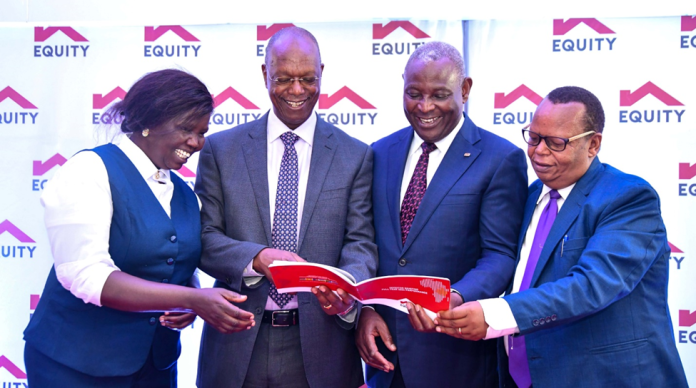
Sally Jepkorir, a Shareholder, Equity Group Chairman, Prof. Isaac Macharia, Equity Group Managing Director and CEO, Dr. James Mwangi and Daniel Kimotho, a Shareholder, during the Full Year 2024 Investor Briefing event.

Equity Group Holdings Plc continues to deliver solid financial results, underpinned by the Group’s strategic focus on diversification, innovation, and regional expansion. With strong liquidity, capital buffers, and robust regional businesses, the Group is poised to maintain its leadership position in the region and continue driving sustainable growth.

In Summary;
– Proposed dividend per share of Kshs 4.25, a payout ratio of 34.5%
– Earnings per share increased by 11% to Kshs 12.3
Asset quality improves by 100 basis points from Q1 2024 to Q4 2024.
– Profits after tax grew by 12% to Kshs 48.8 billion.
Regional operations contribute 49% of total assets and 54% of profit before tax.

While releasing the full year 2024 results, Dr. James Mwangi, Equity Group Holdings Plc Managing Director, and CEO said, “We are proud of the resilience demonstrated by the Group amidst a challenging global economic landscape. Our financial strength gives us the flexibility to seize opportunities as the regional economy presents diversified levers for growth. The Group’s liquidity and capital position remains strong, positioning us to better support our customers in the years ahead.”

In FY 2024, Equity Group Holdings Plc achieved a Profit After Tax (PAT) of Kshs 48.8 billion, reinforcing the continued success of the Group’s diversified business model and prudent financial management. The Group’s Profit Before Tax (PBT) grew by 17% to Kshs 60.7 billion, while Earnings Per Share (EPS) rose by 11% to Kshs 12.3, signifying the Group’s robust financial performance.

The Group’s total deposits grew to reach Kshs 1.4 trillion with the customer base growing to 21.6 million, showcasing the scale and reach of the deposit franchise. The Group’s liquidity position remains strong, with cash and cash equivalents rising by 19% to Kshs 345 billion, while investment securities grew to Kshs 512 billion, contributing to an overall liquidity ratio of 57%. This positions the Group to effectively underpin the Groups’ Africa Recovery and Resilience Plan (ARRP), a private sector led development plan championed by Equity aimed at catalyzing, capacitating, connecting, and financing enterprises and households across Africa. Beyond providing financial and technological tools, it empowers individuals, businesses, and communities through a clear framework for development, by building capabilities and mitigating risks, enabling them to leverage these tools effectively and efficiently to achieve their social, environmental, and economic ambitions.

The ARRP aspires to drive long-term transformation across the continent, relying on the support and active participation of diverse stakeholders. Strategic partnerships with Development Finance Institutions (DFIs), global implementation partners, and social institutions have been instrumental in delivering a wide range of social and commercial outcomes with lasting, sustainable results. As part of these efforts, the Group has also partnered with AfDB, Microsoft and Mastercard Corporation to digitize 10 million farming customers under the Community Pass initiative for the delivery of the MADE Alliance, further enhancing financial inclusion and digital accessibility across Africa; and with the World Food Programme to further capacitate small-holder farmers into agribusiness. The Group demonstrated commitment to its shareholders by proposing a dividend of Kshs 4.25 per share,a payout ratio of 34.5%, reinforcing its track record of delivering value to its shareholders. This is supported by a return on equity (ROE) of 21.5% and a return on assets (ROA) of 2.8%, both of which are well above industry averages.

Equity Group has adopted a tri-engine approach, integrating commercial, social, and sustainability priorities to foster sustainable economic growth and create meaningful societal impact. The Group continues to build on its legacy of resilience, strong governance, long track record of execution, self-disruption, agility, and scalability of its business model to thrive in the different markets it operates in. It has continued to grow the value it creates for its customers and stakeholders, becoming a regional systemic financial services provider in position one or two in three of the six markets it operates in, Kenya, DRC, and Rwanda. The Group’s strategic focus on regional expansion and product diversification continues to drive growth with the Group’s regional subsidiaries contributing49% of total assets, 48% of total loans and 54%of profit before tax, further diversifying the revenue base. The Kenya subsidiary, while still a major contributor, accounted for 46% of total revenue. Equity Bank Rwanda revenue grew YoY by 36%, Tanzania by 20% and DRC by 9% while PAT for Equity Bank Rwanda grew by 30% YoY, Tanzania by 107%, Uganda 186% and DRC by 29%, signaling increasing contributions from regional operations. Equity Bank Kenya has in the past six months cut its base lending rate three times sending a clear signal of its intent to grow its loan book as the Kenya’s economy shows signs of recovery. The lowering of interest rates will reduce the cost of borrowing, offering businesses access to more affordable credit while for households it means increased disposable income thus stimulating consumer spending.

Due to the global operating environment characterized by unprecedented geopolitical shifts, the Group’s defensive and prudent approach to risk management was evident in its loan loss provisions, which amounted to Kshs 20.2 billion. The Non-Performing Loan (NPL) ratio remained below industry average at 12.2%, significantly lower than the 16.4% published industry average. NPL coverage stands at 71%, reinforcing the Group’s strong asset quality.

The Life Assurance business continues to register impressive performance with YoY Profit before tax growing by 58% to Kshs 1.5 billion from Kshs 934 million. Further, the robust strategy for investment of policyholder funds resulted in a gross declared return of 13.5%, signaling Equity’s Group capabilities to provide value to the over 14 million policies issued since inception in March 2022.

With an eye on long-term value creation, the Group’s acquisition of a general insurance license, in addition to its existing life assurance license, marked an exciting milestone. This move enhances the Group’s ability to offer a comprehensive suite of insurance solutions ensuring that customers across all segments; corporate, SME, and retail, can access integrated solutions that protect their life, health, and wealth.

“As we continue to expand our financial services ecosystem, our Bancassurance unit remains a vital component of our growth strategy. The 6% increase in premium collections, despite the current market challenges, underscores the unit’s potential. To unlock further growth, we invested heavily in the unit’s repositioning, focusing on talent development, digital transformation, and process enhancements. This medium-to long-term strategy will allow us to deliver a more integrated, customer-centric experience, where insurance is a key layer in our customers’ overall financial well-being. Encouragingly, our insurance premium financing solution has seen a significant 50% increase in uptake, reflecting our dedication to supporting customers through uncertain times as they prioritize protecting their health, life and assets,” said Dr. Mwangi.

As part of its ongoing transformation, Equity Group has continued to invest in technology, infrastructure, and diversification. The Group has modernized its digital channels, which now process 86% of all transactions, enabling customers to access a seamless, digital first experience. Furthermore, ONE Equity, the Group’s integrated digital platform, allows customers to access a wide range of products and services under a single umbrella, enhancing cross-selling and customer engagement.

The value of business processed through Equity Mobile YoY increased by 67% from Kshs 1.895 trillion to Kshs 3.174 trillion while Equity Online for business (EazzyBiz) increased by 21% from Kshs 3.165 trillion to Kshs 3.841 trillion and the interoperable Pay With Equity (PWE) for merchants increased by 14% from Kshs 1.884 trillion to Kshs 2.149 trillion, ATM increased by 21% from Kshs 398.6 billion to Kshs 481.4 billion as customers and Kenyans embraced the newly introduced Cash Deposit Machines to ease the pain for businesses looking to access their cash after banking hours while Branches are evolving to be more SME, large enterprises and corporates focused, with transaction volumes increasing by 21% from Kshs 4.176 trillion to Kshs 5.046 trillion.

Brand Finance ranked the Bank as the 2nd strongest banking brand in the world in 2024 and as the most valuable brand in East and Central Africa its value rising to USD 450 million (KES 64 billion). In all franchise segments, Equity Bank has been a front runner, emerging as the best bank in several categories according to Think Business Banking awards. The Bank earned top honors, including recognition as the Best Bank, Best in Digital Banking, Best in Trade Financing, Best in Agriculture and Livestock financing, Best in Product Innovation, and Best in SME Banking, among others. Equity Group’s insurance arm was also celebrated as the Best Insurance Provider, while its investment services were recognized for excellence in Wealth Management. These accolades reflect Equity Bank’s unwavering commitment to excellence, innovation, and leadership across diverse financial services, solidifying its position as a market leader.

The Equity Leaders Program (ELP) continues to make a significant impact, with 113 scholars having received full scholarships to pursue university education in top global universities. The program has already produced over 970 global scholars on full scholarship distributed across various sectors, having attended 233 different universities in 37 countries and 6 continents. 204 scholars have attended the Ivy League universities, contributing to the region’s human capital development. The ELP program recently admitted a new cohort of 750 scholars into the pre-university internship program, bringing the total number of ELP scholars supported by the Group to date to 29,515. Cumulatively, the program has facilitated 9,700 paid internships and provided opportunities for 3,979 TVET scholars.

The Group remains a leader in climate action, having planted over 35 million trees and extended more than USD 200 million in climate finance to support climate resilience initiatives. In promoting the clean energy transition, Equity Group Foundation has championed the distribution of 466,975 clean energy products to households and institutions. Equity’s commitment to sustainability is further highlighted by its focus on nature restoration and its adoption of the Taskforce for Nature Finance Disclosure (TNFD) and African Natural Capital Alliance (ANCA) frameworks. International Finance Corporation, IFC, ranked the Group the global leader with the highest number of climate related transactions among 258 institutions worldwide.

In promoting economic empowerment, 2,477,358 women and youth received training in financial education with 634,059 MSMEs receiving capacity building in entrepreneurship. Under the Young Africa Works Program, Kshs 340.8B has been disbursed to 323,303 MSMEs.

The Group’s social protection programs have reached 5.79 million individuals, with Kshs 164.2B disbursed via cash transfers. In health, the Equity Afya Clinics have cumulatively recorded 3,343,889 patient visits across 132 outpatient medical centers. This holistic approach underscores Equity Group’s commitment to fostering sustainable development and improving livelihoods across the region.

Dr. Mwangi concluded “Equity Group remains committed to driving positive change. Our focus on financial inclusion, regional expansion, and sustainable growth will enable us to continue being a catalyst for economic empowerment and resilience across Africa. As we move forward, we remain optimistic about the future and will continue to leverage our strengths to create long-term value and impact for our customers and shareholders.”

Stories Continues after ad

Arthur Mugyenyi appointed as new ISO Boss

President Yoweri Kaguta Museveni has appointed Arthur Mugyenyi as the new Director General of the Internal Security Organization (ISO), filling the position left vacant after the death of Brig. Gen. Charles Oluka earlier this year.

In a statement issued by the Presidential Press Unit (PPU) on April 1, 2025, the government confirmed Mugyenyi’s appointment, saying:

“The Presidential Press Unit (PPU) wishes to inform the general public that His Excellency the President of the Republic of Uganda, Gen. (Rtd) Yoweri Kaguta Museveni has appointed Mr. Arthur Mugyenyi as the new Director General of the Internal Security Organization (ISO).”

The position became vacant following Oluka’s passing on January 29, 2025.

Alongside this appointment, President Museveni also named Tony Kinyera Apecu as the new Deputy Director General of ISO. Apecu replaces Col. Emma Katabazi, who has been reassigned as a Deputy Ambassador.

“The President has also appointed Mr. Tony Kinyera Apecu as Deputy Director General of ISO, replacing Col. Emma Katabazi, who has been appointed Deputy Ambassador,” the statement added.

The Internal Security Organization is a crucial intelligence agency tasked with handling internal security matters, counterintelligence, and maintaining national stability.

These appointments are seen as part of the government’s efforts to reinforce Uganda’s intelligence and security framework.

Stories Continues after ad