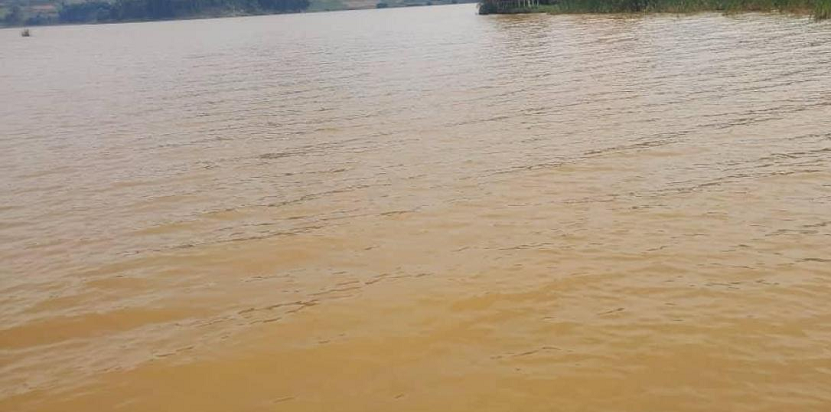
The government has unveiled urgent interventions to restore Lake Bunyonyi following sudden pollution which has left the waters brownish, foul-smelling and covered with oily films and white cream.
Presenting a statement to Parliament, the Minister of State for Environment, Beatrice Atim Anywar said investigations by the Ministry of Water and Environment confirmed that the lake’s ecosystem is under serious threat from runoff, siltation, poor waste management and unregulated human activity.

“Over the last few weeks, Lake Bunyonyi has suddenly turned brownish and begun emitting a strong foul odour, with an oily film and white cream floating on the water. This poses a serious risk to aquatic life and the lake’s potential as a source of safe water,” Anywar told MPs.
According to the ministry’s rapid assessment, the current state of the lake is a result of multiple factors. These include lake turnover triggered by extreme weather, runoff from farms and settlements on the surrounding steep slopes, stone quarrying, and iron ore mining in the catchment.
“The degraded shorelines of the lake have worsened the situation, allowing direct surface runoff into the water body and accelerating siltation,” she explained.

The Minister further highlighted poor waste management from markets, car washing bays, and businesses around the lake as key contributors to declining water quality.
“Oxygen concentrations in the lake are low and this poses a serious threat to the lake’s ecosystem,” she said.
She noted the government has announced a package of measures to curb pollution and restore the ecological balance of the lake.
“We are scaling up protection of the catchment around Lake Bunyonyi to prevent soil erosion and agricultural runoff. This will involve promoting sustainable farming practices, constructing soil and water harvesting structures, bench terraces, and massive tree planting,” Anywar said.
The National Water and Sewerage Corporation (NWSC) has already enhanced water treatment by improving filtration and chlorination processes to ensure safe supply despite the high turbidity.
Government also pledged to collaborate with local governments and communities to improve sanitation and waste management facilities, especially at Harutindo Landing Site market, and to provide alternative income sources for upstream communities as an incentive for environmental protection.
“By implementing these measures, the ecological balance of Lake Bunyonyi shall be restored, ensuring its sustainability for both aquatic life and the local communities,” Anywar assured Parliament.
The Minister said her ministry will continue monitoring the lake and carrying out further scientific research to guide long-term interventions.
“We are committed to working with stakeholders and local leaders to ensure Lake Bunyonyi is preserved for generations to come,” she added.
Lake Bunyonyi, located in south-western Uganda, is one of the country’s most scenic tourist attractions and a vital resource for surrounding communities. However, its rapid degradation now threatens both livelihoods and biodiversity.