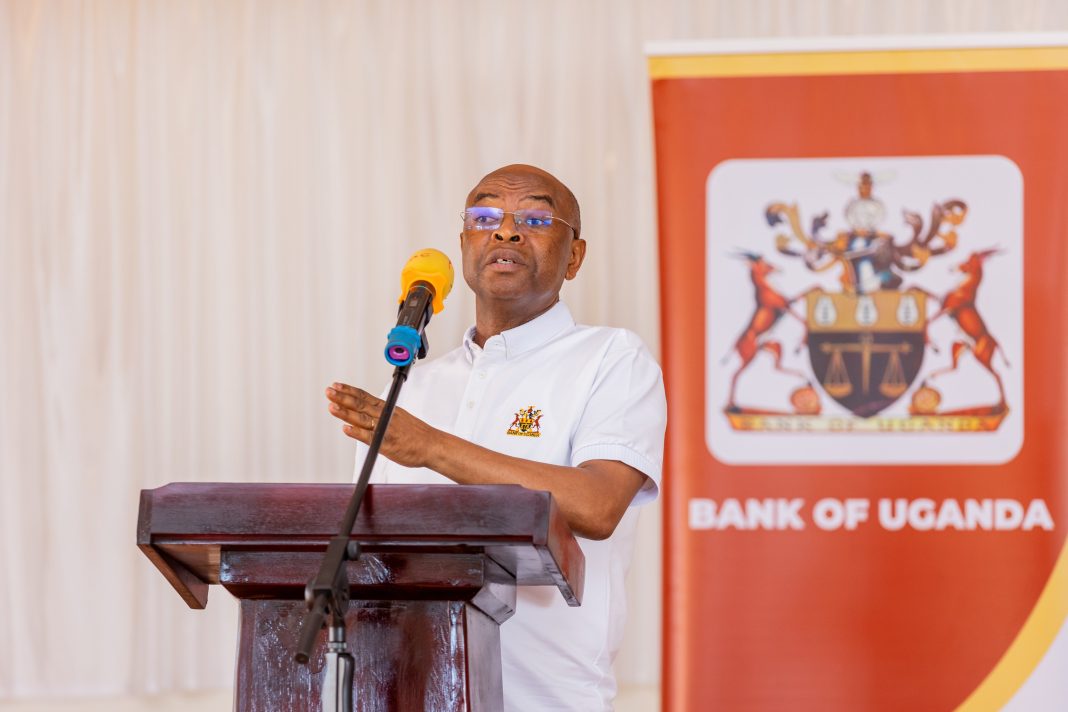
Deputy Governor Prof. Augustus Nuwagaba has urged governments and global institutions to act swiftly in mobilising sustainable financing to secure the economic future of developing nations and warned that without meaningful reforms, global development ambitions may remain out of reach.
Prof. Nuwagaba noted that many developing countries are caught in a web of growing debt and shrinking fiscal space, leaving them unable to invest adequately in critical sectors such as health, education, infrastructure and climate resilience.

“Financing for development is not a policy option, it is a necessity,” he said.
He noted,“If we are to realise the Sustainable Development Goals, we must transform the global financial architecture and mobilise resources that genuinely meet the needs of developing economies.”
The Deputy Governor called for innovative financing mechanisms, including debt for development swaps and blended finance models, to help ease the debt burden and channel resources into development priorities.

He explained that through debt-for-development swaps, governments can convert portions of their sovereign debt into funding for agreed-upon national projects such as schools, hospitals, and climate resilience programmes. Similarly, blended finance can leverage public and philanthropic capital to attract private investment into sustainable ventures.
“These models can transform debt obligations into opportunities for development,” Prof. Nuwagaba said.
He added, “They redirect resources toward building stronger, more resilient communities.”
His remarks follow the 4th International Conference on Financing for Development, held in Seville, Spain, where world leaders endorsed the Seville Commitment, a framework to bridge the estimated $4 trillion annual financing gap for developing economies.
The commitment calls for reforms to the international financial system, including the introduction of a Debt Pause Clause for temporary relief during crises, expanded lending capacity for multilateral development banks and stronger domestic resource mobilisation.
Prof. Nuwagaba emphasised that such measures are vital for establishing fairer and more inclusive financial systems capable of driving sustainable development across Africa and the global south.
He also underscored the private sector’s pivotal role in advancing sustainability by integrating Environmental, Social and Governance (ESG) principles into investment and business practices.
“When private capital aligns with sustainability goals, it becomes a powerful driver of progress,” he noted, adding that global taxation initiatives such as carbon or financial transaction taxes could also help fund development programmes.
Prof. Nuwagaba further called on international institutions to provide long-term financing and technical assistance to nations working toward climate adaptation and inclusive growth.
“Investing in sustainable growth isn’t just ethical, it is economically smart,” he said.
He also rallied governments, civil society and global partners to work in unison toward financing systems that directly support the Sustainable Development Goals.
“Together, we can reform global finance and mobilise the resources needed for a sustainable and equitable future,” he said.
He added,“This is both our opportunity and our shared responsibility.”