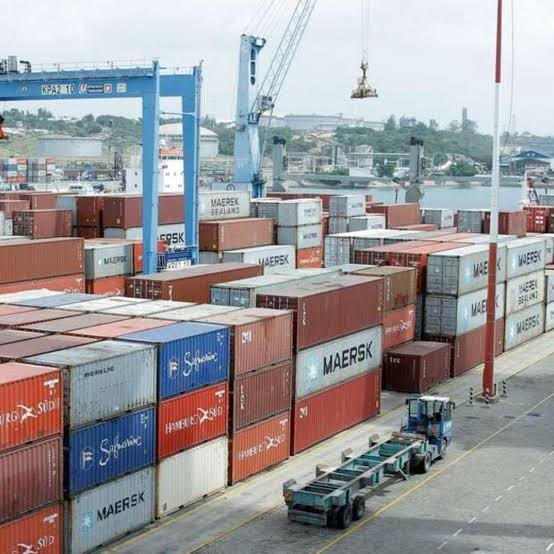
The East African Community (EAC) has posted a remarkable rise in international merchandise trade during the second quarter of 2025, thus demonstrating the region’s growing strength and competitiveness in global commerce.
According to the latest EAC Quarterly Statistics Bulletin, total trade climbed by 28.4 percent to $38.2 billion (about Shs146 trillion), up from $29.7 billion (about Shs113 trillion) in the same period last year. This impressive performance was mainly fueled by exports, which jumped 40.5 percent to $18.6 billion (about Shs71 trillion), reflecting increased global demand for EAC products.

Imports grew at a slower pace, rising 18.8 percent to $19.6 billion (about Shs75 trillion). Consequently, the region’s trade deficit narrowed sharply from $3.2 billion (about Shs12 trillion) to just $0.9 billion (about Shs3.4 trillion), marking a significant improvement in the balance of trade.
Trade with other African countries expanded by 42.9 percent to $9.3 billion (about Shs35 trillion), accounting for nearly a quarter of total trade. Intra-EAC trade alone grew by 24.5 percent to $4.6 billion (about Shs17.6 trillion), showing steady progress toward deeper regional integration.
The bloc also strengthened its commercial ties with COMESA and SADC, which contributed 9.9 percent and 15.2 percent, respectively, to the overall trade portfolio.

Exports were largely supported by demand from China, the United Arab Emirates, South Africa, Hong Kong, and Singapore, which together absorbed 62.8 percent of total exports—up from 40.1 percent a year ago. Malaysia and South Africa posted the highest quarter-on-quarter growth rates in EAC exports.
The top five export commodities; copper, precious stones and metals, coffee and tea, mineral fuels, and ores; accounted for nearly 80 percent of the region’s total exports, up from 77.2 percent in the same period last year, underscoring the EAC’s growing specialization in high-value goods.
China remained the region’s leading import partner, supplying goods worth $4.7 billion (about Shs18 trillion) or 24.2 percent of total imports. The UAE, India, South Africa, and Japan also featured prominently, jointly contributing over half of the region’s total import bill.
Key imports included petroleum products worth US$4.1 billion (about Shs15.6 trillion), machinery valued at $1.8 billion (about Shs6.8 trillion), vehicles worth $1.5 billion (about Shs5.9 trillion), and precious metals worth another $1.5 billion (about Shs5.9 trillion), alongside plastics and iron and steel products—reflecting ongoing investments in infrastructure and industrial development.
The Bulletin notes that short-term interest rates increased across most EAC Partner States during the quarter, except in Kenya, where the 91-day Treasury bill rate dropped by 70 basis points to 8.2 percent. Uganda and Burundi posted the highest Treasury bill rates at 11.2 and 8.6 percent, respectively.
Lending rates fell in Kenya and Tanzania but rose in Uganda by 140 basis points. Deposit rates remained stable or declined in most countries except Tanzania, which recorded a 70-basis-point increase. South Sudan registered the widest interest rate spread at 13.7 percent, while Tanzania maintained the narrowest at 6.5 percent.
“The EAC money supply (M3) grew by 19.1 percent year-on-year in Q2 2025, driven mainly by a 19.2 percent rise in credit to the private sector,” the Bulletin reveals, signaling continued monetary expansion across the region.
Overall, the EAC’s trade performance highlights a vibrant and resilient regional economy. The combination of rising exports, a narrowing trade deficit, and expanding intra-African trade reflects strong progress toward economic integration and sustainable growth across Partner States.