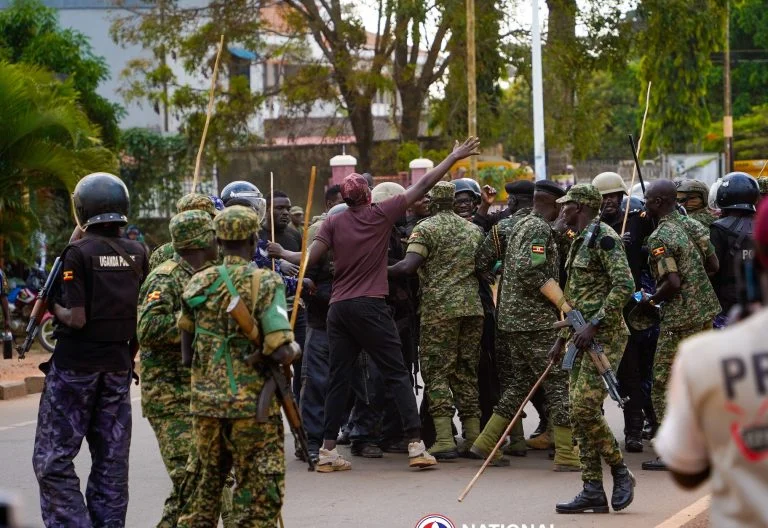
Across Uganda, from the streets of Kawempe to the busy centres of Gulu, Fort Portal, Jinja, and Kayunga, a familiar pattern has marked several opposition campaign activities. Roads have been sealed off, military vehicles have appeared suddenly, police officers have fired teargas or used batons, and at times soldiers have joined operations that ended with injuries and arrests.
This exclusive reconstruction examines what is publicly known about these deployments and what remains unanswered about who actually directs these actions.

A trail of clashes across the campaign map
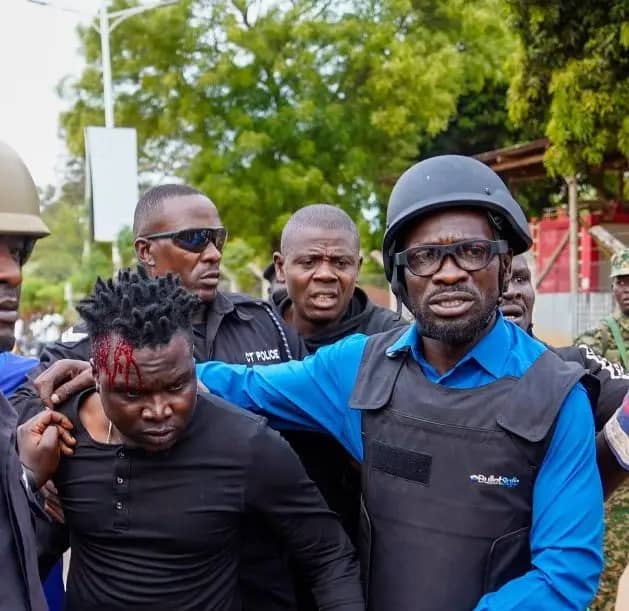
In the northern city of Gulu, the National Unity Platform (NUP) presidential candidate, Robert Kyagulanyi alias Bobi Wine, was pushed back by uniformed and plain-clothed security personnel during a chaotic confrontation that left several civilians hurt. Video from the scene showed heavily armed officers driving crowds away and striking some of those who attempted to follow the motorcade.
Kawempe in Kampala has witnessed repeated standoffs throughout recent campaigns. Journalists have been beaten, supporters have been arrested, and military units have occasionally joined police in dispersing gatherings. Residents say the force used often escalated without warning, especially during moments when crowds attempted to escort Robert Kyagulanyi, as was the case earlier this year during the by-elections for Member of Parliament Elias Nalukoola.

Similar scenes were reported in Fort Portal, where security teams blocked roads leading to planned rallies. Vehicles carrying campaign equipment were stopped at checkpoints, and some events were postponed because police insisted the meetings did not meet the conditions set for public gatherings.
In Jinja and surrounding areas, sound systems and stage equipment were impounded, and several organisers said they arrived at their venues only to find officers occupying the space. Kayunga has also seen several instances where roads were sealed off, and supporters kept away from campaign venues.
These incidents form a pattern observed across many districts where opposition candidates have attempted to reach supporters.
What the police and the military have publicly said
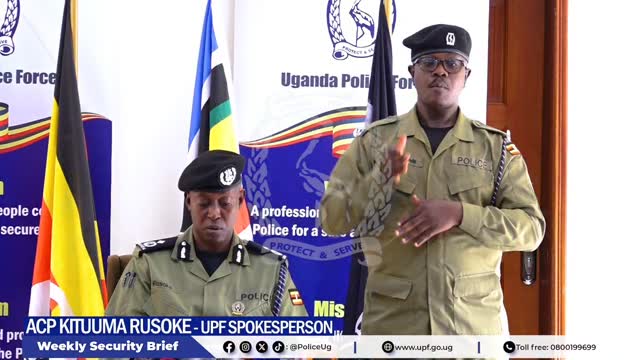
Security agencies consistently defend their actions as enforcement of the law. Police statements issued after several of the confrontations have accused candidates and their teams of holding unlawful processions or violating agreed campaign guidelines. Officers maintain that the interventions were aimed at preventing disorder and ensuring public safety.
After the violent episode in Gulu, police announced that an internal inquiry would be conducted and described the images of officers beating civilians as regrettable. They promised disciplinary action if the investigation confirmed wrongdoing.
In certain cases, including an earlier campaign clash in Kawempe, the army issued public apologies acknowledging that soldiers who took part acted outside acceptable standards. Military officials stated that such behaviour did not reflect the rules of engagement expected of their personnel.
Despite these statements, neither institution has publicly revealed detailed operational orders or the full chain of command responsible for deployments during political events.
What is missing in the public record
While extensive footage shows officers confronting opposition supporters, no publicly available document confirms that a specific political authority instructed police or soldiers to block or assault candidates—the official explanations only reference enforcement of regulations and controlling crowds.
There are no released internal memos, deployment directives, or recorded instructions showing a senior political figure commanding security agencies to use violence against a particular candidate. This absence of documentation makes it impossible to conclusively identify any single individual as the source of these orders.
A pattern rooted in previous election cycles
Uganda’s security responses during elections have long been a subject of scrutiny. In the 2021 presidential race, rights organisations documented widespread use of force, mass arrests, and disruptions of opposition activities. The events of that year established a pattern that still influences present-day operations. The similarity between those past crackdowns and the more recent ones suggests continuity in the way security agencies respond to political competition.
Accounts from the ground
Victims, journalists, and supporters have consistently described seeing both police and soldiers actively participating in confrontations. Some report being beaten while others recount seeing plain-clothed individuals armed with sticks operating alongside uniformed officers. In some incidents, officers are seen standing aside as unidentified groups assault supporters.
Police have sometimes blamed violence on disorderly crowds or on criminal groups mingling with supporters. In other moments, they have admitted that officers may have used more force than necessary but insisted that their overall objective remains maintaining order.
Why the search for the real command remains unresolved
Three factors complicate efforts to identify who truly issues operational instructions during campaign crackdowns.
The first is operational discretion. Local commanders often decide on immediate actions during fast moving situations and these decisions rarely appear in written form.
The second is the lack of prior communications. Without internal deployment circulars, radio communication logs or authenticated recordings, journalists cannot point to a direct instruction from a senior political office.
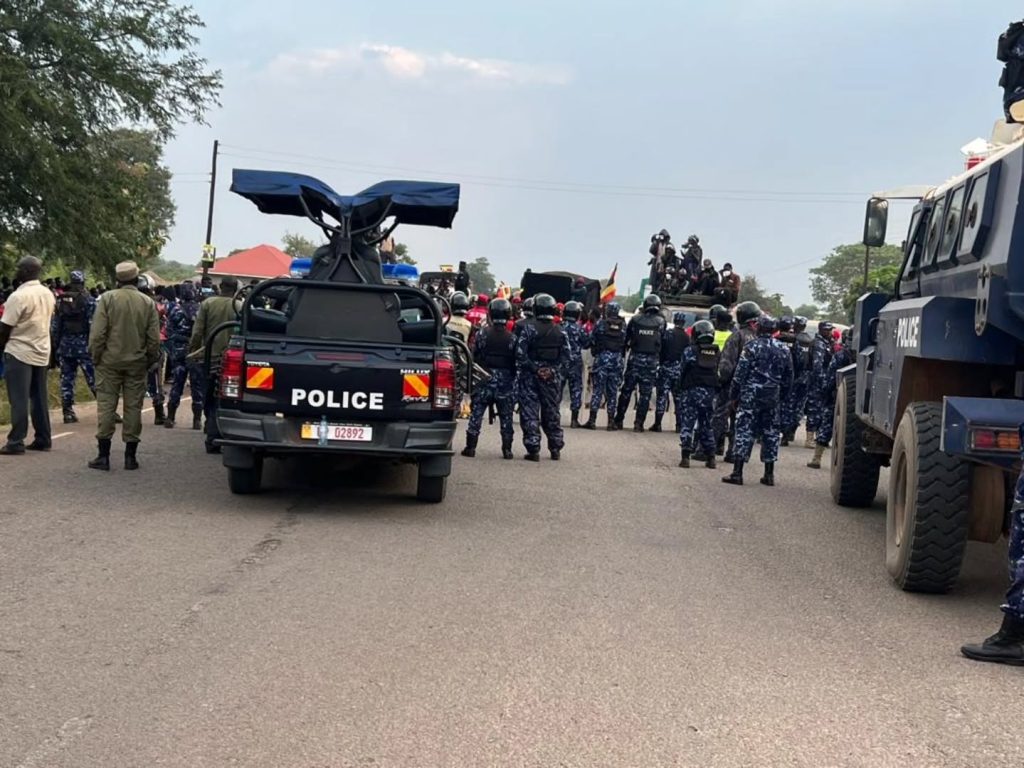
The third is conflicting official messaging. While government agencies cite enforcement of the law, the scale and coordination of security deployments across many districts raise questions that remain unanswered.
What is needed to establish responsibility?
For investigators to determine who actually commands these operations, several records would be crucial. These include radio communication logs from police and army command centres, internal deployment files, written or verbal instructions issued by top security offices and sworn testimony from officers who were on the ground.
Until such information becomes public, the country is left with a clear picture of what happened but an incomplete understanding of who ordered it.
Final picture
There is no doubt that opposition presidential campaigns across Uganda have repeatedly faced roadblocks, violent dispersals, and heavy security presence. The police and military continue to justify these actions as enforcement of the law and crowd management. Victims and witnesses continue to describe brutal confrontations. But the key question remains unanswered. The public record still does not contain direct proof of who issued the command for the blockages and beatings. Without access to internal security communications, the true source of these decisions remains shrouded in secrecy.