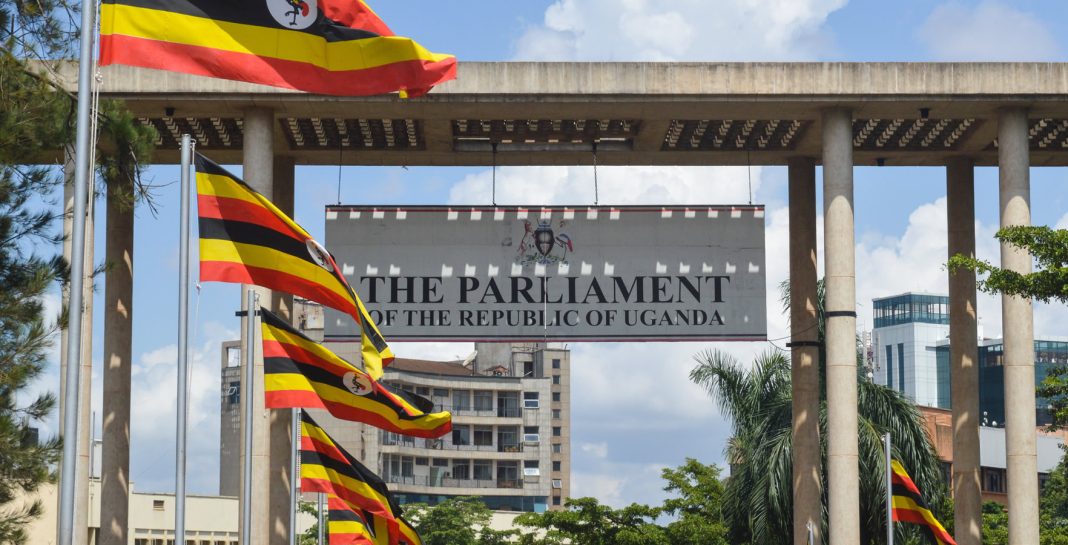
Parliament is set to return tomorrow (Tuesday) for a special sitting that is expected to put additional strain on Uganda’s public finances, with legislators being asked to endorse a new borrowing amounting to more than Shs2.17 trillion.
The December 16 session comes amid growing unease over the state’s heavy dependence on debt to fund both infrastructure projects and recurrent needs. The concerns are still fresh following Parliament’s recent approval of Shs8.1 trillion in supplementary allocations for the 2025/26 financial year.

In a notice issued to Members of Parliament, the Clerk to Parliament, Mr. Adolf Mwesige Kasija, stated that the House will convene at 2:00 p.m. to receive the National Budget Framework Paper for FY 2026/27 to 2030/31, which outlines the government’s priorities and spending plans over the medium term.
According to the Order Paper, proceedings will begin with the presentation of the Tax Expenditure Report covering July to September 2025. MPs will also consider a proposal to waive outstanding tax obligations owed by NewPlan Limited before turning to three major financing requests submitted by the Ministry of Finance.
One motion seeks approval to pre-finance the design and construction of the 87-kilometre Kayunga–Bbaale–Galiraya Road, earmarked for upgrading from gravel to a paved standard. Another asks Parliament to approve a $162 million loan, equivalent to about Shs579.2 billion, from the Korea Export-Import Bank to support the Makerere University Improvement Project, which targets infrastructure modernisation and expansion of academic facilities.

The largest financing proposal involves external borrowing of EUR 385 million, approximately $448 million or Shs1.595 trillion, from Rand Merchant Bank and other lenders to support broader infrastructure and development programs in the 2025/26 budget. Combined, the three facilities total $610 million, or Shs2.172 trillion.
Beyond financing matters, MPs are also expected to debate the Energy Efficiency and Conservation Bill, 2024, which is scheduled for its second and third readings, introducing a legislative element to a sitting largely focused on fiscal decisions.
The planned borrowing has revived arguments raised during recent supplementary budget debates, where opposition legislators warned that Uganda could be sliding into a pattern of fiscal indiscipline. Kira Municipality MP and Shadow Finance Minister Ibrahim Ssemujju Nganda said repeated supplementary expenditures, often financed through loans, have pushed the revised 2025/26 budget to Shs78 trillion.
He further warned that with Shs32 trillion already earmarked for borrowing to finance the approved budget, the government’s return to both domestic and external markets would intensify pressure on public debt.
Concerns have also emerged over the pace at which approved loans are implemented. Bugiri Municipality MP and JEEMA president Asuman Basalirwa questioned the government’s capacity to finalise loan agreements promptly, citing a $20 million facility from the Arab Bank for Economic Development in Africa approved in September 2025 that remains unsigned despite further commitments.
Defending the government’s position, State Minister for Finance (General Duties) Henry Musasizi said the Public Finance Management Act permits supplementary spending beyond the 3% limit once Parliament grants approval. He added that funding sources had been clearly disclosed in line with the House’s Rules of Procedure.
Nevertheless, the Auditor General has consistently cautioned that frequent supplementary budgets weaken fiscal planning and discipline. In his 2023 report, he described the trend as increasingly inefficient, noting that many requests are presented without adequate engagement with programme managers.
As of June 2025, Uganda’s public debt stood at Shs116.2 trillion, or about $32.3 billion, representing a 26.2% rise from the previous year. Domestic debt accounted for Shs60.3 trillion, while external obligations reached Shs55.9 trillion, pushing the debt-to-GDP ratio to 51.3%.