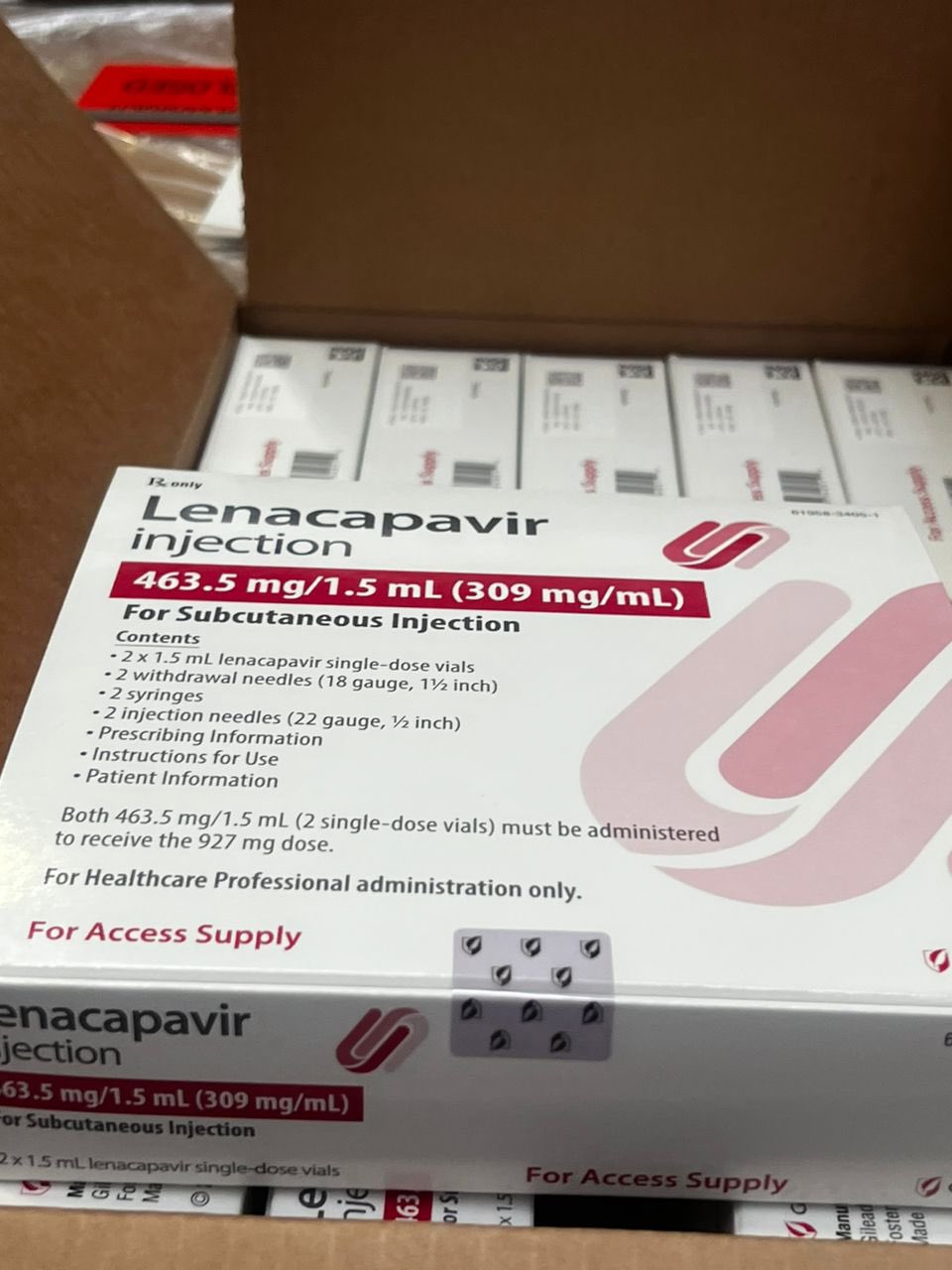
Uganda has received its first shipment of 19,200 doses of Lenacapavir, a long acting injectable drug for HIV prevention in order to boost the country’s fight against new infections.
The Ministry of Health confirmed that the consignment was delivered with support from the Global Fund and will be deployed to districts with the highest HIV burden beginning March 2026.

In a statement, the ministry revealed that the medicine is designed for people at substantial risk of acquiring HIV and is administered only twice a year.
“The drug is administered every six months to prevent HIV among persons at substantial risk of infection. Distribution to high burden and high incidence districts will commence in March 2026,” the Ministry of Health said.
The arrival of Lenacapavir follows its approval in January by the National Drug Authority after a review of safety and efficacy data. The injectable is manufactured by Gilead Sciences and has been described by health experts as a transformative option in HIV prevention because it removes the need for daily oral pills.

The development came months after the United States Food and Drug Administration cleared the medicine for HIV prevention, marking a significant scientific milestone in global efforts to end AIDS by 2030.
Globally, Gilead Sciences announced a United States list price of 28,218 dollars per person per year, which is about Shs101.5 million.
However, recent findings published in The Lancet HIV indicate that generic versions could be produced at a fraction of the cost, estimated at between 35 dollars and 46 dollars per person annually, equivalent to roughly 12,500 to 16,500 Uganda shillings. The study further suggests that if five to ten million people access the drug within the first year of rollout, production costs could fall to about 25 dollars, nearly 90,000 Uganda shillings per person per year.
Reacting to the global approval of the drug, Winnie Byanyima, Executive Director of UNAIDS said that Lenacapavir is a breakthrough in HIV prevention.
“This is a breakthrough moment. Lenacapavir is the result of decades of public investment, scientific excellence, and the contributions of trial participants and communities,” she said.
Byanyima, however, cautioned that affordability will determine whether the innovation translates into impact.
“This medicine could be the tool we need to bring new infections under control, but only if it is priced affordably and made available to everyone who could benefit. Research has shown production costs as low as 25 dollars per person per year within a year of rollout. It is beyond comprehension how 28,218 dollars can be justified. If this game-changing medicine remains unaffordable, it will change nothing,” she said.
The introduction of the twice-yearly injectable offers renewed hope for populations that struggle with adherence to daily oral pre-exposure prophylaxis, and could significantly accelerate Uganda’s progress toward reducing new HIV infections.