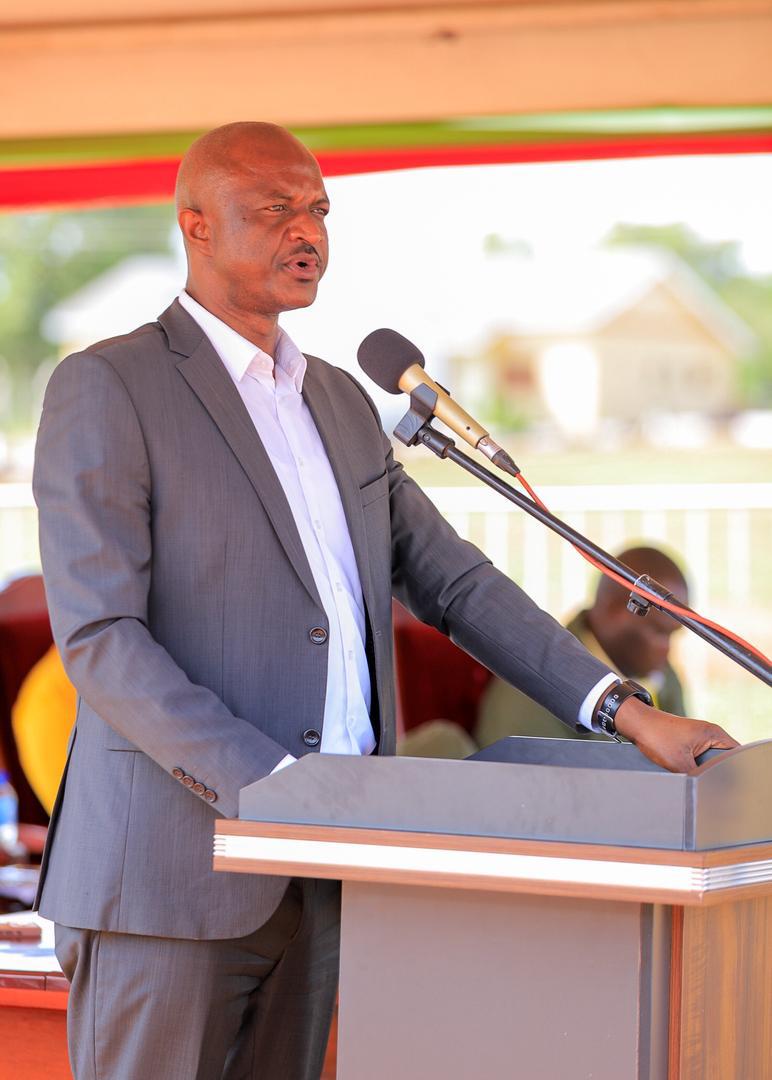
The Permanent Secretary and Secretary to the Treasury, Ramathan Ggoobi, has called on political leaders to take a more active and responsible role in driving Uganda’s socio-economic transformation, urging them to prioritise accountability and effective implementation of development programmes.
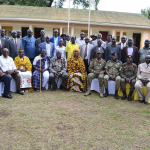
Speaking during the Leaders’ Retreat for the current and incoming National Resistance Movement parliamentary caucuses at National Leadership Institute last Friday, Ggoobi cautioned leaders against engaging in what he described as “budget games,” instead encouraging them to strengthen existing legal frameworks to accelerate national progress.

“Prioritise, consolidate, or even enhance infrastructure development as well as other enablers of the tenfold. Enhance public scrutiny over development projects and set an example of incorruptibility to other Ugandans,” Ggoobi said.
The retreat, held under the theme The Political Economy of Musevenomics, Infrastructure as the strategic enabler, and the role of Parliament, focused on aligning political leadership with Uganda’s long-term economic ambitions.
Ggoobi emphasised that political leaders must ensure that every household in their constituencies is actively engaged in wealth creation activities, describing this as critical to achieving inclusive growth.

He underscored the central role of infrastructure in economic transformation, noting that Uganda has made significant investments over the past decade.
“Infrastructure is the bone marrow of the economy,” he said.
He added that since 2015, Uganda has borrowed about $20.07 billion, approximately Shs75 trillion, from external lenders to finance development programmes.
He explained that about 80 percent of these funds, equivalent to 16.06 billion dollars, were channelled into infrastructure projects including roads and bridges, energy, railways, airports and water transport.
Ggoobi further revealed that, in addition to external borrowing, the government has invested 31.54 trillion shillings from domestically mobilised revenue into infrastructure development over the past ten years.
He pointed to notable progress in the sector, saying the length of paved national roads has more than doubled from 3,121 kilometres in the 2012/13 financial year to 6,850 kilometres in the 2024/25 financial year. Electricity generation capacity has also grown significantly, rising from 595 megawatts in 2010/11 to 2,050 megawatts.
Looking ahead, Ggoobi said the government has further increased allocations in the 2026/27 financial year, with Shs8.8 trillion earmarked for roads and Shs2.1 trillion for electricity.
“The size of the economy has rapidly expanded to $68.4 billion from $9.8 billion in 2005/06. That is sevenfold growth in 20 years,” he said.
He urged leaders to match these investments with strong oversight and integrity to ensure that Uganda fully realises the benefits of its development agenda.