A new centre for ideological training, historical preservation and policy research is being built in Kyankwanzi, offering a glimpse into how Uganda intends to shape future leaders through structured political education and Pan-African scholarship.
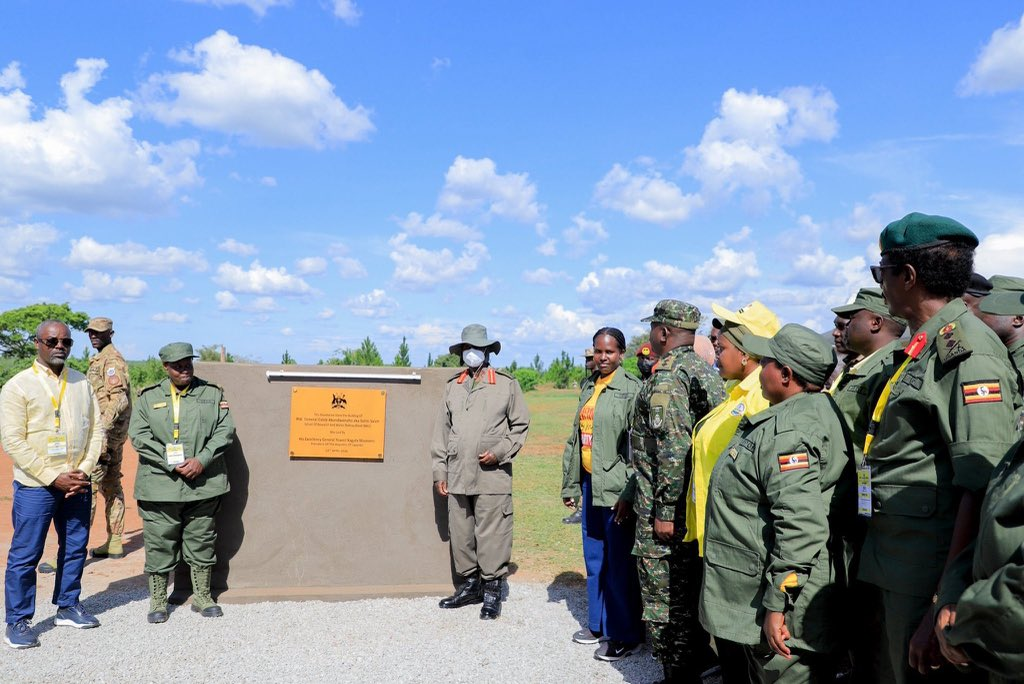
The Gen. (Rtd) Caleb Akandwanaho, commonly known as Salim Saleh School of Research, commissioned yesterday by President Yoweri Kaguta Museveni at the National Leadership Institute Kyankwanzi, is a purpose-built complex designed to anchor ideological clarity, leadership discipline and intellectual inquiry within Uganda’s governance system.

The project also features the Walter Rodney Block, named after Pan-African scholar Walter Rodney, reinforcing its continental outlook.
At its core, the school brings together modern learning facilities and historical consciousness. A state-of-the-art multimedia auditorium forms the centerpiece, built to host high-level lectures, leadership retreats and international conferences. Complementing this are digital studios equipped for live broadcasting, virtual classrooms and content production, allowing the institute to extend its reach to both local and global audiences.
The facility is also being developed as a repository of Uganda’s liberation history, with curated archives, documentation centres and learning spaces dedicated to chronicling the country’s political journey from pre-independence struggles to modern statehood. These elements are intended to ground trainees in the ideological foundations of the state while connecting them to broader African liberation movements.

According to the Director of the institute, Okei Rukogota, the school is designed to go beyond conventional academic training and instead serve as a platform for shaping thought and policy direction.
“This complex will promote African culture and provide a forum for ideological struggle, complete with a modern multimedia auditorium and studios for both physical and online engagement,” he said.
Rukogota added that the institution will also host structured programmes on governance, socio-economic transformation and what he described as “Musevenomics,” linking theory to practical development models implemented across the country.
“It will be an arena for Musevenomics studies and will honour Gen. Saleh’s contribution from mobilization during the war to the practical implementation of economic transformation programmes such as SACCOs and community development initiatives,” he noted.
Beyond lecture halls and studios, the school serves as a meeting place for policymakers, researchers, and political actors to discuss issues such as regional integration, private-sector development, and service delivery across key sectors, including agriculture, health, infrastructure, and digital innovation.
At the commissioning of the project, President Museveni used the occasion to reflect on Gen. Saleh’s legacy, tracing his journey from a teenage recruit in the liberation struggle to a key figure in post-war economic initiatives.
“People like Saleh should act as good examples to you young people to show you what patriotism means and how what you do can help your country,” Museveni said.
“After the war, he became very much involved in wealth creation. He is now busy with development, working with others in areas like coffee and playing a very active role in the north,” he added, pointing to initiatives in areas such as Kapeka.
The President also used the platform to deliver a firm message on accountability, warning leaders against corruption and urging Members of Parliament to uphold integrity in public service.
“The corrupt are now in danger and will be dealt with. You cannot underestimate us. You will see what will happen,” he said.
“You in Parliament are now on the frontline. You should not accept bribes. If you have problems, come and tell us, but don’t take bribes,” he added.
On the continental agenda, Museveni reiterated the importance of unity and market integration, paying tribute to leaders such as Julius Nyerere and Benjamin Mkapa for advancing regional cooperation.
“We cannot achieve prosperity with fragmented markets, policies and infrastructure. The whole of the East African Community should move towards full integration,” he said.
Meanwhile, the Head of Public Service and Secretary to Cabinet, Lucy Nakyobe, emphasized the central role of patriotism in public service.
“Without patriotism, Uganda cannot achieve its development goals. All public servants must love their country and serve with commitment,” she said.
With its new modern technology, historical archives, and ideological training spaces, the Gen. Salim Saleh School of Research signals a deliberate effort to institutionalize political education and anchor leadership development within Uganda’s historical experience and future ambitions.