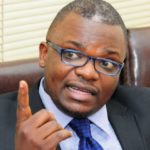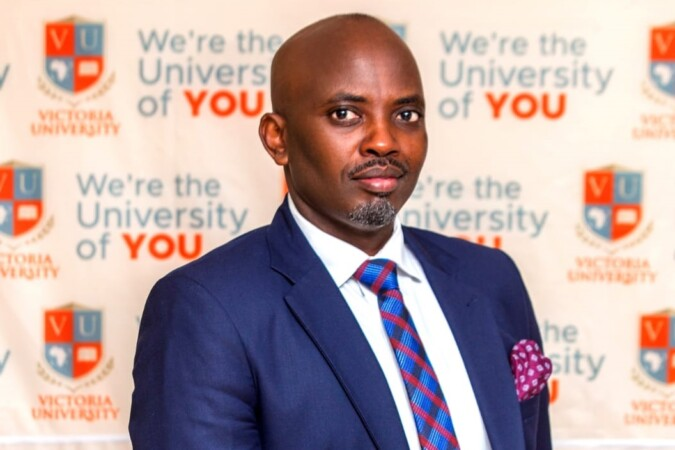
The appointment of Dr. Lawrence Muganga and entrepreneur Calvin Echodu to senior government positions has reignited a constitutional debate that has lingered in Uganda for more than a decade. Can a Ugandan who holds dual citizenship legally serve as a minister?
What began as routine scrutiny of President Yoweri Museveni’s latest appointments has rapidly evolved into an argument over constitutional supremacy, parliamentary powers, and the extent to which legislation can limit the rights of Ugandan citizens who also hold nationality in another country.

At the centre of the debate is Article 15(7) of the Constitution, which provides that:
“Parliament shall, by law, prescribe the offices of State which a person who holds the citizenship of another country in addition to the citizenship of Uganda is not qualified to hold.”
Acting on that constitutional provision, Parliament enacted amendments to the Uganda Citizenship and Immigration Control Act in 2009. The law’s Fifth Schedule lists several offices that holders of dual citizenship are barred from occupying.

Among the offices listed are President, Vice President, Prime Minister, Cabinet Ministers and other Ministers, Inspector General of Government, Inspector General of Police, senior military commanders, and heads of intelligence agencies.
The provision has now returned to the spotlight following Museveni’s latest appointments, some of which have been hailed as an effort to bring fresh expertise from academia, diplomacy and the private sector into government.
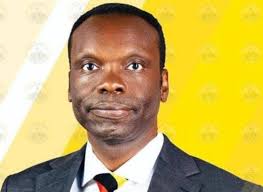
Dr. Lawrence Muganga, one of Uganda’s most prominent education reform advocates and Vice Chancellor of Victoria University, was appointed State Minister for Internal Affairs. Muganga has built a reputation as a champion of innovation, technology-driven learning, and higher education reforms, making his appointment one of the most talked-about selections in the new administration. It is alleged that he holds the nationality of three countries: Uganda, Rwanda, and Canada.
Businessman and political mobiliser Calvin Echodu was appointed State Minister for Investment and Privatisation. Echodu, who has previously sought senior leadership positions within the ruling National Resistance Movement, is widely known for his involvement in business, technology, and youth empowerment initiatives. It is claimed that he has origins in Kenya, while others claim he holds an American passport due to the fact that he is married to an American wife.
While questions have been raised regarding the citizenship status of some of the appointees, a growing number of legal commentators argue that the controversy misses the central constitutional question.
Their argument is rooted in the Constitution itself.
Article 113 of the Constitution outlines the qualifications for appointment as a minister and requires that a minister be appointed from among Members of Parliament or persons qualified to be elected Members of Parliament.
Supporters of the appointments contend that the Constitution requires only that a minister be a citizen of Uganda and nowhere expressly states that a Ugandan who holds another nationality is disqualified from serving in Cabinet.
They further point to Article 2 of the Constitution, which establishes constitutional supremacy.
“This Constitution is the supreme law of Uganda and shall have binding force on all authorities and persons throughout Uganda,” the law provides.
The same article adds that any law or custom that is inconsistent with the Constitution shall, to the extent of the inconsistency, be void.
According to this school of thought, Parliament may regulate dual citizenship under Article 15(7), but it cannot introduce qualifications for ministers that effectively contradict or override qualifications already prescribed by the Constitution.
Some constitutional scholars have also invoked the doctrine of harmonious interpretation, a principle requiring courts and public authorities to interpret constitutional provisions as a coherent whole rather than relying on isolated sections.
Under this interpretation, Uganda’s recognition of dual citizenship and the constitutional qualifications for ministers should be read together in a manner that gives effect to both provisions without unnecessarily excluding citizens from public service.
Others, however, maintain that Parliament acted within its constitutional mandate when it enacted the Citizenship and Immigration Control Act and that the restrictions remain legally enforceable unless they are amended by Parliament or overturned by the Constitutional Court.
The competing interpretations have transformed what would ordinarily have been a straightforward vetting exercise into one of the most significant constitutional debates surrounding public appointments in recent years.
Beyond the legal arguments, supporters of the appointments say Museveni’s choices reflect an effort to broaden representation in government by bringing in accomplished Ugandans from different professional backgrounds.
Muganga represents the education sector; Echodu embodies a younger generation of entrepreneurs increasingly seeking to influence public policy and national development.
The debate is no longer simply about four individuals. It has become a conversation about citizenship, constitutional interpretation, and the role of Ugandans living and working across the globe in shaping the country’s future.
As Parliament prepares to vet the nominees, attention will focus not only on their qualifications and experience but also on the unresolved legal questions surrounding dual citizenship and eligibility for high public office.
Whether the issue remains a political argument or ultimately finds its way before the courts, one thing is clear: Museveni’s latest appointments have reopened a constitutional debate that Uganda has yet to settle conclusively.