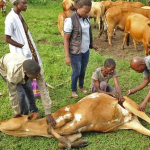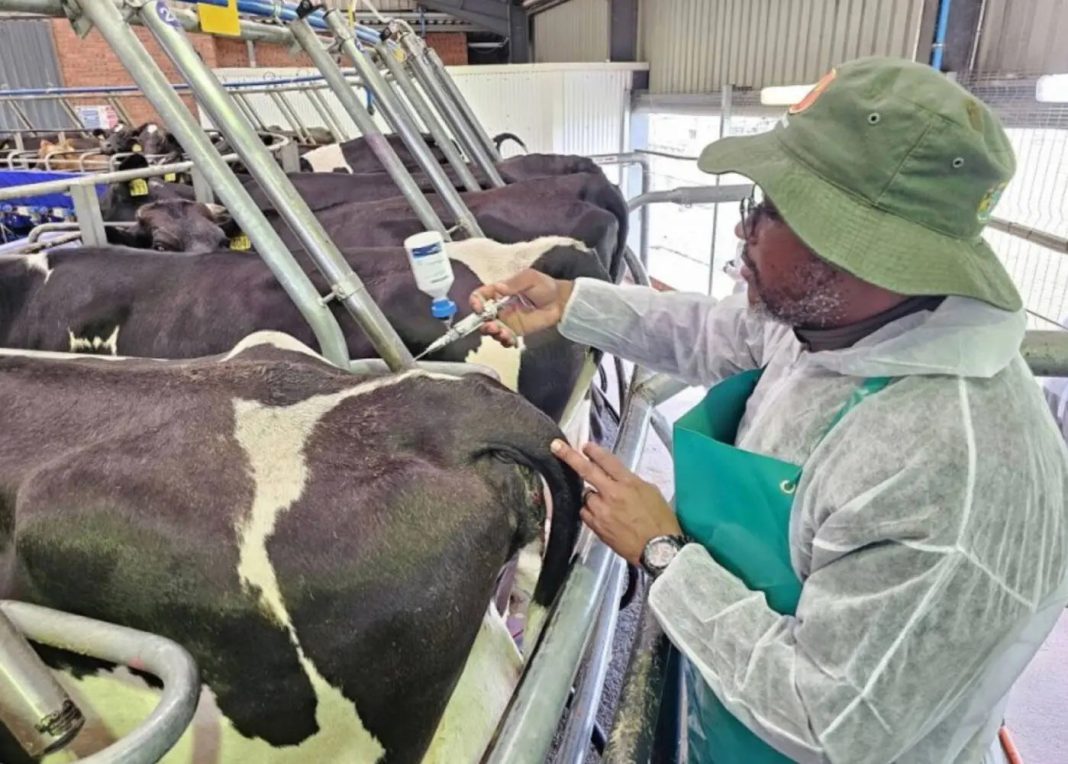
The government has announced a new strategy to combat the persistent threat of Foot-and-Mouth Disease (FMD), making livestock vaccination compulsory every six months under a cost-sharing arrangement designed to strengthen disease control and safeguard Uganda’s livestock industry.
The new policy, unveiled by State Minister for Agriculture, Animal Industry and Fisheries Bright Rwamirama Kanyontore at the Uganda Media Centre in Kampala, marks a big shift in the country’s approach to managing one of the most economically damaging livestock diseases.

Rwamirama emphasized that the success of the programme will largely depend on the active involvement of livestock farmers, local authorities and private sector actors.
“The fight against Foot and Mouth Disease cannot be won by Government alone; it requires collective effort from all stakeholders,” Rwamirama said.
Foot-and-Mouth Disease is a highly infectious viral disease that affects cloven-hoofed animals, including cattle, goats, sheep and pigs. While the disease rarely causes death among mature animals, its economic consequences are severe, often resulting in reduced milk production, lower livestock productivity and prolonged quarantines that disrupt livestock trade and farmers’ livelihoods.

Under the new framework, every susceptible animal will be required to receive vaccination twice a year. Farmers will contribute Shs8,000 per vaccine dose for cattle and pigs, and Shs4,000 for goats and sheep. Government will continue shouldering the costs of vaccine procurement, storage, transportation, distribution and disease surveillance.
According to the Agriculture Ministry, the revised approach seeks to establish a sustainable financing mechanism after previous fully government-funded vaccination campaigns struggled to achieve adequate coverage needed for herd immunity.
“The Government carefully reviewed available options and concluded that sustainable control requires predictable financing and full participation of farmers,” the minister explained.
Implementation of the programme is already underway across major livestock-producing regions. By June 12, 2026, authorities had registered more than 20,000 farmers and enrolled approximately 3.5 million animals into a national livestock vaccination database.
To support the exercise, government has procured 53.6 million doses of quadrivalent vaccines capable of protecting animals against the four most prevalent FMD strains circulating within the region. The country’s cold-chain infrastructure has also been expanded through the establishment of 53 solar-powered district vaccine storage centres.
The vaccination campaign will be backed by a digital management system that will handle farmer registration, payment processing, and vaccination records. Every livestock farmer will be assigned a Unique Farmer Identifier to facilitate monitoring and traceability.
The new system will also link vaccination status to animal movement controls. Authorities say only animals that have received the required vaccinations will qualify for official movement permits and access to formal livestock markets.
Government believes the digital platform will enhance transparency, minimize fraudulent practices and improve monitoring of disease-control interventions across the country.
The reforms come in the wake of widespread FMD outbreaks recorded between 2023 and mid-2024, which led to lengthy quarantines in several districts, particularly within Uganda’s cattle corridor, causing significant losses to farmers and disrupting livestock-related businesses.
Strengthening disease prevention measures is critical for protecting one of Uganda’s most valuable agricultural sectors. Livestock products continue to play an important role in the country’s export earnings, with dairy exports alone generating approximately Shs285 million in 2024.
With growing demand for Ugandan livestock products in regional and international markets, the consistent vaccination and stronger disease surveillance will be key to improving productivity, protecting household incomes and expanding export opportunities.