Parliament has questioned the government’s proposal to waive Shs16.84 billion in taxes owed by three entities, with legislators demanding greater transparency and fairness in the country’s tax waiver regime.
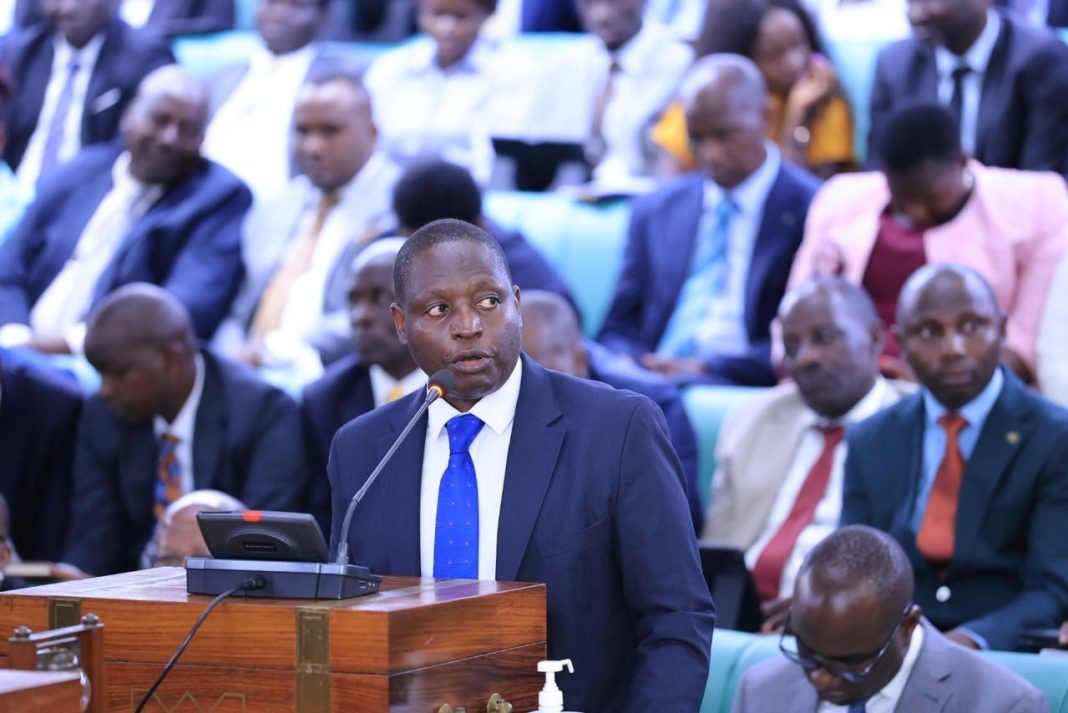
The proposal, presented by Finance Minister Henry Musasizi during a recent plenary sitting, seeks parliamentary approval to write off tax liabilities owed by the Uganda Printing and Publishing Corporation (UPPC), K-Roma Limited and Ankole Western University.

If approved, UPPC would receive the largest waiver of Shs13.95 billion, while K-Roma Limited would benefit from Shs1.86 billion. Ankole Western University is seeking a waiver of Shs1.03 billion in Pay As You Earn (PAYE) tax arrears.
The request, however, sparked concern among Members of Parliament, who questioned how beneficiaries of tax waivers are identified and whether the process is accessible to all eligible taxpayers.
Patrick Nsamba, the Kassanda North MP, said the current system appears opaque and risks creating the perception that tax waivers are reserved for a privileged few.

“It is important that we have a broader discussion on tax waivers so that the public knows who qualifies and what procedures are followed. It should not appear to be a privilege for a select few,” Nsamba said.
Kalungu West MP Joseph Ssewungu also challenged the Ministry of Finance to explain the criteria used in selecting companies and institutions whose requests are brought before Parliament.
“We would like to know what procedure the minister uses to determine those who qualify to come before Parliament,” Ssewungu said.
Responding to the concerns, Musasizi acknowledged growing public interest in the tax waiver system and pledged to present Parliament with a comprehensive explanation of the legal framework, administrative procedures and eligibility criteria governing the granting of tax relief.
“We want to achieve transparency in the way we do things. I want a businessman from Kassanda, who does not know any of us, to access our systems and qualify for a waiver in the same way as someone who may have connections or recommendations,” Musasizi said.
Deputy Speaker Thomas Tayebwa welcomed the minister’s commitment, saying a transparent and predictable tax waiver system would strengthen public confidence in the country’s tax administration.
The debate comes as the government intensifies efforts to increase domestic revenue collection to finance public services while reducing dependence on borrowing. At the same time, questions continue to be raised about the growing cost of tax incentives to the national treasury.
According to the Ministry of Finance’s Tax Expenditure Report for the 2023/24 financial year, Uganda forewent an estimated Shs3.61 trillion through tax exemptions, incentives, deductions and waivers. The report shows that tax expenditures have increased from Shs2.47 trillion in the 2019/20 financial year to Shs3.61 trillion in 2023/24, accounting for about 13 per cent of total tax revenue collected during the period.
The Finance Ministry maintains that tax waivers are intended to promote investment, preserve strategic enterprises and support sectors critical to Uganda’s economic development. However, economists have repeatedly warned that unless carefully targeted, such incentives can erode the country’s tax base without delivering the expected economic returns.
Parliament is also expected to consider other tax waiver applications that lapsed with the dissolution of the 11th Parliament, including a proposal to write off about Shs18.86 billion owed by New Plan Limited, alongside applications from Fresh Cuts Uganda Limited and Innovations for Poverty Action, a move likely to fuel further debate over the effectiveness and accountability of Uganda’s tax incentive policy.