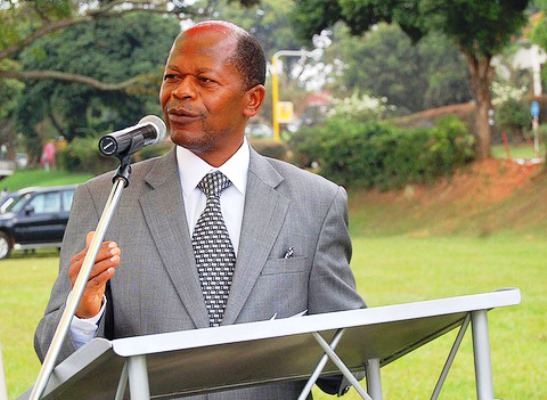
The government has reaffirmed its commitment to progressively improve teachers’ salaries while warning that teachers who neglect their duties will face accountability measures.
The Acting Minister of Education and Sports, Dr. John C. Muyingo, said the government recognises the importance of better remuneration in improving the status, motivation, and dignity of the teaching profession.

“Teacher salary enhancement will continue to be implemented in a phased manner. The current Financial Year 2026/27 approved budget provides for salary enhancement for primary teachers and arts teachers in secondary schools, among other public officers, as part of the wider phased public-sector pay reform,” Muyingo said.
He made the remarks in a statement issued on Monday, October 5, 2026, as Uganda joined the rest of the world to commemorate World Teachers’ Day under the UNESCO theme, “Standing with teachers: 60 years of protecting the profession, advancing its status and shaping our futures.”
Muyingo said the government considers investment in teachers an investment in Uganda’s human capital and future, noting that teachers continue to work amid large classes, limited instructional resources, changing technologies, evolving curricula and rising expectations.

“Government recognises the importance of your remuneration and remains committed to progressively improving it,” he said.
He, however, called on teachers to reciprocate the government’s investment through professionalism, commitment, integrity, effective teaching and responsible service to learners and communities.
The minister said the government is also rationalising teacher training institutions to improve the use of resources and strengthen the quality, relevance, and efficiency of teacher preparation.
He said the rationalisation is not simply aimed at reducing the number of institutions but at creating a better coordinated and adequately resourced teacher education system capable of producing teachers with the skills required by Uganda’s changing education sector.
The government is also implementing a competence-based approach to education, which places greater emphasis on what learners can do with the knowledge, skills, attitudes, and values they acquire rather than what they can reproduce in examinations.
Muyingo said the new approach requires teachers to facilitate learning, develop critical thinking and problem-solving skills, integrate technology, assess competencies and create classrooms where learners actively participate.
“This transition therefore requires corresponding investment in teacher preparation and continuous professional development,” he said.
The minister also highlighted the establishment of the Uganda National Institute for Teacher Education (UNITE), which is expected to strengthen initial teacher education and continuous professional development.
He said the government is committed to providing UNITE with the resources, institutional capacity and professional leadership required to fulfil its mandate.
The Ministry of Education and Sports is also in the process of establishing a National Teacher Council, which Muyingo said will help strengthen professional standards, recognition, accountability and the overall status of teaching as a profession.
At the same time, the government is strengthening monitoring of teachers through the Teacher Effectiveness and Learner Achievement (TELA) initiative, which focuses on teachers’ attendance and time spent on teaching.
Muyingo said TELA is intended not only as an accountability mechanism but also as a management tool for identifying gaps, sharing best practices and improving learning outcomes at school and local government levels.
“TELA is not intended simply to punish teachers. Its purpose is to strengthen accountability at school level, identify gaps, best practices and ensure improved learning outcomes,” he said.
He directed the Directorate of Education Standards, together with local governments and other relevant structures, to support teachers and schools that are underperforming.
According to Muyingo, teachers whose poor performance is caused by inadequate skills should receive professional support and targeted development, while those whose failure results from negligence, absenteeism or failure to fulfil their professional responsibilities should face appropriate accountability measures.
“We cannot invest in teachers and then accept persistent failure to deliver the education that our children deserve,” he said.
Muyingo also warned that teachers must prepare for a changing education environment shaped by digital technologies, artificial intelligence, climate change, migration, displacement and increasingly diverse learner needs.
He said technology may provide new tools and opportunities for learning but cannot replace teachers because their role extends beyond delivering information to guiding, inspiring, mentoring, assessing and counselling learners.
“Technology will never replace the teacher. Technology can provide tools, information and new possibilities for learning. It cannot replace the teacher’s responsibility to guide, inspire, mentor, assess, counsel and model the values that hold our society together,” he said.
The minister said the government would continue working with education institutions, teacher organisations, development partners, and other stakeholders to equip teachers to respond to the emerging challenges.
He urged teachers to uphold professional ethics, respect learners, attend to duty, prepare adequately, use instructional time effectively and put learners’ interests at the centre of their work.
“To every teacher, I say: your work matters; your profession matters; and Uganda’s future depends, in no small measure, on the quality of the work you do today,” Muyingo said.
He also recognised teachers who recorded attendance of at least 95 per cent in the first and second terms of 2026, saying their performance demonstrated commitment to the profession.