Stanbic Bank
Stanbic Bank
17.7 C
Kampala
Stanbic Bank
Stanbic Bank
Home Blog Page 100

Gov’t raises Shs4.4tn from securities in May

The Government of Uganda raised a total of Shs4,429.4 billion through the sale of Treasury Bills and Bonds in May 2025, according to the latest Performance of the Economy Report released by the Ministry of Finance.

Of this amount, Shs755.5 billion was mobilized from short-term Treasury Bills (T-Bills), while a much larger portion—Shs3,673.8 billion—came from long-term Treasury Bonds (T-Bonds). This significant level of borrowing highlights the government’s increasing dependence on domestic debt markets to fund its growing expenditure needs.

According to the Ministry of Finance, Shs2,421.4 billion of the raised funds were used to refinance maturing domestic debt, while Shs2,008.0 billion was allocated to financing other components of the national budget, including infrastructure, health, and education. This approach of refinancing, also known as debt rollover, allows the government to manage debt obligations sustainably by replacing maturing debt with fresh borrowing, thus avoiding payment defaults.

The report further noted that interest rates on government securities rose during the month, a trend attributed to heightened domestic borrowing requirements and increased competition for investor funds. Yields on the 91-day and 364-day Treasury Bills climbed to 12.1% and 15.4%, respectively, up from 9.5% and 15.1% in April. In contrast, the 182-day T-Bill yield fell slightly for the fourth consecutive month, dropping from 12.8% to 12.7%. All Treasury Bill auctions were oversubscribed, with an average bid-to-cover ratio of 1.5, indicating strong investor appetite, particularly for short-term government securities.

To raise additional funds, the government reopened previously issued 3-year, 10-year, and 20-year Treasury Bonds on the primary market. Yields on these reopened bonds increased to 16.5% (3-year), 17.5% (10-year), and 17.9% (20-year), up from 16.2%, 17.1%, and 17.5% respectively.

Yields also rose in private placements, where bonds are sold directly to selected investors outside public auctions. These stood at 16.5% for 3-year, 16.7% for 5-year, 17.5% for 10-year, 17.7% for 15-year, and 18.2% for 20-year tenors. All these rates were higher than those recorded in the previous month, reinforcing the upward trend in domestic borrowing costs.

Uganda has increasingly turned to domestic debt to plug fiscal gaps, especially amid declining donor support and inconsistent external financing. While the domestic market offers a faster route to financing, rising yields suggest increased borrowing costs. This could potentially limit credit availability for the private sector and exert pressure on future government budgets.

The upward shift in interest rates also reflects investor sentiment, possibly influenced by inflation expectations or concerns about fiscal risk. As the new fiscal year begins in July, the government’s challenge will be balancing its borrowing needs against the backdrop of macroeconomic stability.

Stories Continues after ad

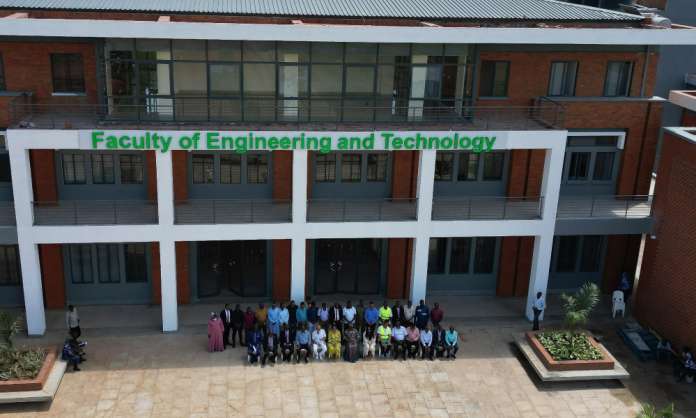
Sudhir’s Vcon Construction completes IUIU’s Engineering faculty in record time

Opening ceremony of the newly constructed Faculty of Engineering and Technology at IUIU.

Prominent businessman and property magnate Sudhir Ruparelia has commended the timely completion of the new Faculty of Engineering and Technology, along with a 500-bed hostel, at the Islamic University in Uganda (IUIU), Mbale Main Campus in Eastern Uganda.

The milestone marks a major step in strengthening Uganda’s higher education infrastructure and is part of a $13.5 million project financed by the Islamic Development Bank (IsDB), guaranteed by the Ugandan government.

Speaking at the handover ceremony, Sudhir, who chairs VCON Construction Ltd the company contracted to undertake the works applauded IUIU for entrusting his team with the landmark assignment.

“I first thank IUIU for awarding us this contract to construct,” he said. “It was built in record time. When we walked here in 2003, it was a bush and there was nothing. But it was cleared up and leveled before construction started.”

Sudhir also emphasized the personal and national value of the project, especially in the field of education. “I’m also in education, so I have a special soft spot for education facilities,” he said.

He added, “This is a good addition to Eastern Uganda. It will add value and attract more and more students to the university.”

The new faculty will introduce professional programs in civil, mechanical, electrical and computer engineering.

According to the IUIU Rector Assoc. Prof. Ismail Simbwa Gyagenda, the institution worked closely with Symbion Consulting Group to complete the project in less than two years. He added that the first intake of students is expected by August 2026, pending accreditation.

“This infrastructure takes us closer to that vision of a world-class university,” said Dr. Gyagenda.

He added, “We’re positioning IUIU as a regional hub for scientific and technological innovation, already attracting students from over 25 countries.”

The contract to construct the facilities was signed at IUIU’s Kampala campus and followed a competitive bidding process in 2023. Present at the signing were Sudhir Ruparelia, late Rajiv Ruparelia, and other VCON representatives, along with top officials from IUIU and consultants from Symbion Uganda Ltd.

Ambassador Nusura Tiperu, Uganda’s envoy to Turkiye, who graced the handover, praised the project for aligning with Uganda’s development priorities. “Commissioning this Engineering and Technology block fulfils one of the government’s core focus areas—‘ATMs’: Agriculture, Technology & Innovation, and Mining,” she said.

The facility, which includes state-of-the-art classrooms and laboratories, is set to be officially commissioned by President Yoweri Museveni later this year.

IUIU’s master plans span over 300 acres including future faculties of law, medicine, hospitality, a stadium, a shopping complex, and green belts. Partnerships with Turkish institutions aim to boost lecturer training and tourism‑sector support, positioning the university as a regional hub for industrial innovation and job creation.

Stories Continues after ad

Why is the sensible regulation of offshore rates in Africa so important?

The GSTA summit in Nairobi provided an opportunity to raise important issues. It brought together regulators, government leaders, payment service providers, and gambling operators from across the continent. PawaTech’s Director of Public Relations, Gabriel Opoku-Asare, spoke at the summit about the global issue of tax revenue losses resulting from offshore betting platforms. According to forecasts, these losses could exceed $11 billion by 2029. This is precisely why balanced and sensible regulation is needed.

The summit, held from June 2 to 5, was a crucial forum for stakeholders in the iGaming ecosystem. The most critical issue to be addressed was the protection of the online gaming sector in Africa.

In his speech, Opoku-Asare drew particular attention to the fact that unlicensed offshore operators promoting themselves online pose a significant threat. He also proposed solutions that could protect African consumers and the region’s economy. He noted that revenue leaks are not theoretical—they mean clinics that will not be built, schools that will not be funded, and delays in infrastructure development.

PawaTech data clearly shows that Africa loses hundreds of millions of dollars every year through unlicensed offshore sites. These operators do not pay local taxes, do not create jobs, and do not reinvest anything in the economy. Instead, they extract profits from the African economy. If appropriate measures are not taken, the total loss is expected to reach $11 billion by 2029.

Opoku-Asare’s statement focused on the issue of sewage. This refers to the share of the rates that onshore operators pay to the budget. If the leakage is high, tax revenues will be higher, and gambling methods will become safer. Ultimately, the level of local reinvestment is expected to increase. However, low leakage will make the market more vulnerable, as it will be exploited by offshore sites, which are not regulated.

At the same time, there are few technological security measures in place, such as a VPN or IP blocking. These should be accompanied by competent regulatory and tax policies. If everything is done correctly, the legal market will become much more attractive than the black market.

Opoku-Asare cites excessive taxation as the main problem. This problem falls squarely on the shoulders of legal operators. The speaker explained that visible taxes for players and deposit fees are the factor that pushes people to choose offshore gambling operators.

According to experts, the Indian experience could be used to solve this problem. India has long suffered from issues with offshore gambling sites that attracted local youth with innovative games such as Plinko. This game became extremely popular in India — there were even information sites offering selections of online platforms with Plinko. However, the government decided to reduce taxes on online casinos, which led to an outflow of the population to offshore establishments and stabilized tax revenues to the budget.

Experts at a forum in Nairobi called for the Indian experience to be leveraged in reducing levies on legal operators. For example, a 1% deposit tax eats up to 10% of an operator’s total revenue, while a 4% commission can drain it by up to 40%. As a result, legal operations become simply unviable. Additionally, the region is also known for not withholding taxes on winnings, which encourages players to place bets abroad.

Even with these challenges, PawaTech has contributed over $100 million in taxes across the continent. It also reaffirms its commitment to operating in well-regulated markets. Opoku-Asare supports the call for more sensible regulation. He cited a study by H2 Gambling Capital, recently published in iGaming Africa, which states that the African iGaming sector could reach a size of $22 billion by 2029. However, there is a condition for this, which is that 90% of betting activity must be conducted through licensed operators. At the same time, the same study warns that tax rates exceeding 30% of gross gambling revenue will not only render the market inefficient but also unprofitable. The optimal tax range is 15-25%.

To achieve these goals, taxes should be levied on operators rather than players, and taxes should be based on income rather than transactions.

Stories Continues after ad

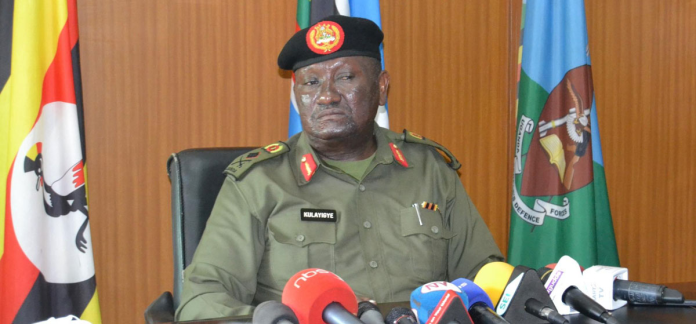
UPDF dismisses fake recruitment claims for medical professionals

The Uganda People’s Defence Forces (UPDF) has issued a warning to the public against false information circulating on social media alleging that the army is recruiting medical professionals.

In a statement released by Brig. Gen. Felix Kulayigye, Director of Defence Public Information, the UPDF described the claims as completely baseless and urged the public to disregard them.

“The Uganda Peoples’ Defence Forces (UPDF) wishes to inform the general public that all information circulating on social media platforms alleging the recruitment of medical professionals by the UPDF is entirely false and should be disregarded,” Kulayigye stated.

He clarified that the UPDF follows a strict and transparent process for recruitment and does not conduct such activities through informal or unofficial channels.

“The UPDF does not solicit or accept applications through unofficial channels or social media platforms,” he emphasized. “Any recruitment processes will be officially announced through authorized UPDF communication channels, including our official website and verified social media accounts.”

The UPDF called on the public to remain vigilant and report any suspicious content that may be intended to mislead or defraud unsuspecting citizens.

“The public is advised to exercise caution and verify information through official UPDF channels before accepting it as true. We urge everyone to be vigilant and report any suspicious or false information to the relevant authorities.”

Brig. Gen. Kulayigye thanks Ugandans for their continued cooperation and trust in the country’s armed forces.

“We appreciate your understanding and cooperation in this matter,” he said.

Stories Continues after ad

ULS President Ssemakadde rejects appointment to law reform committee, accuses judiciary of tyranny & misconduct

Chief Justice Alfonse Chigamoy Owiny-Dollo, ULS President Isaac Ssemakadde at the past event.

The Uganda Law Society (ULS) President, Isaac Ssemakadde has rejected his appointment to the Judiciary’s Law Reform Committee, describing the offer as “seemingly beneficial” but ultimately compromised by the Judiciary’s current crisis of credibility, integrity and independence.

In a letter addressed to Chief Justice Alfonse Chigamoy Owiny-Dollo, Ssemakadde declined the appointment citing five detailed reasons, including judicial intolerance to criticism, unresolved misconduct by senior judges and the weaponization of contempt laws.

“I acknowledge receipt of the Instrument of Appointment dated May 19, 2025, wherein you appointed me as a Member of the Law Reform Committee. I refuse the appointment for the following reasons,” the letter reads.

Ssemakadde argued that a credible Law Reform Committee must be grounded in principles of accountability and transparency, yet the current judicial leadership had fallen short on both counts. He referenced Uganda’s legal tradition of respecting public criticism of courts as exemplified by past Constitutional Court rulings.

“The Judiciary’s transformative power of interpretation and application of the Constitution should foster an environment where all criticism of the courts and judicial officers, like other public bodies and public officials, is freely expressed and dispassionately considered,” Ssemakadde wrote.

He further accused the Chief Justice of ignoring an earlier letter from the ULS’s Rule of Law Committee, dated January 16, 2025, which had raised concerns about ongoing attacks on the Bar and suggested dialogue to salvage relations. The response Ssemakadde noted was a television appearance where the Chief Justice asked lawyers to “return home” without addressing the underlying issues.

“Had you been serious about declaring the Bar welcome in ‘your home,’ you should have spoken out in condemnation of such attacks, not remained silent or joined the mob,” he charged.

Ssemakadde reserved his strongest criticism for the ongoing contempt of court charges against him, resulting from a February 14, 2025 committal order by Justice Musa Ssekaana over a social media post.

“I am compelled to reject this appointment, though seemingly beneficial, due to your provocation of Judge Ssekaana’s egregious judicial misconduct, which now hinders my participation in the Law Reform Committee,” he declared.

Describing the committal order as “manifestly void,” Ssemakadde said it has left him in “indefinite exile” and called for its immediate expungement.

He argued that contempt of court laws, particularly those targeting so-called “scandalizing the judiciary”, must be reformed as they have evolved into “a blunt instrument of judicial tyranny.”

“This colonial-era law has become a blunt instrument of judicial tyranny that unjustly restricts freedom of expression, a fundamental right in a free and democratic society,” he warned.

Citing the 2021 “Cost of Corruption” report by the Inspectorate of Government, Ssemakadde noted that Uganda’s courts received Shs763 billion in bribes—43% of the Judiciary’s entire 2019 budget.

“Ugandan court users paid a staggering Shs763 billion in bribes… in a country where systemic issues like lengthy procedures and lack of transparency persist,” he wrote.

He added, “Instead of demanding apologies, Mr. Chief Justice, focus on ensuring fair, transparent and speedy hearings, particularly for critics of judicial officers and political opponents of the regime.”

The ULS President also criticized Uganda’s Court of Appeal for failing to dispose of cases in time, specifically highlighting the case of Kivumbi v. Kivumbi, which has been pending since 2020.

“This issue lies at the heart of our Executive Order RNB No 3 of 2024. It was a protest vote of no confidence in the judiciary’s institutional leadership,” he reminded.

Reiterating his earlier decision from December 16, 2024, Ssemakadde noted that ULS Vice President Mr. Anthony Asiimwe had been nominated to represent ULS in all judiciary committees, including the Law Reform Committee.

“I have full confidence in his abilities to contribute to the noble endeavor of law reform in Uganda. And so, I unapologetically decline the appointment,” he made a stand. 

Stories Continues after ad

Premier League 2025/26 fixtures released as Liverpool start on Friday night before Man Utd vs Arsenal

The 2025/26 Premier League season is now less than two months away, with all 20 top-flight sides set to discover when they will be taking each other on over the course of the campaign

Liverpool head into the campaign as defending champions, having stormed to the title in their first year under Arne Slot and will kick-off the season against Bournemouth at Anfield. The Reds are not resting on their laurels and have launched a major recruitment drive, with Jeremie Frimpong already having arrived, while Florian Wirtz and Milos Kerkez are set to follow.

Mikel Arteta’s Arsenal finished as runners-up for a third successive year last term and the Spaniard knows it’s title or bust this season – they begin with a heavyweight clash against Manchester United. Manchester City will be looking to get back on top, while the Red Devils, after last season’s debacle, will be hoping to climb the table, likewise Tottenham.

At the other end of the table, Leeds, Burnley and Sunderland are all set to be battling to earn survival in their first year back in the big time. It could be difficult for the trio, who earned promotion from the Championship. The Whites take on Everton on the first Monday night clash of the season.

There will once again be no Christmas Eve fixtures played this year. While the festive schedule will still be in full swing there will be slightly more respite for Premier League stars over Christmas and New Year.

No two rounds will take place within 60 hours of each other with the final dates and times on today’s list likely to change nearer the time.

Mohamed Salah could miss seven key games in Liverpool’s Premier League 2025-26 season – including a huge date with title rivals Arsenal.

Salah enjoyed a stunning campaign last year as the Reds stormed to the Premier League title.

But he will head off to the Africa Cup of Nations with Egypt in December – and could miss a sizeable chuck of the season if they do well in the tournament.

There are plenty of big games on the opening weekend, but what about during the run-in?

One game that immediately stands out is Manchester United’s home game with Liverpool on 2 May.

Could that have major title implications for one team – or maybe even both?

The newly promoted Clarets have a horrendous looking start to the season and will face Tottenham, Manchester United, Liverpool, Nottingham Forest, Manchester City and Aston Villa in their first seven fixtures.

Stories Continues after ad

Uganda’s economy posts strong growth amid rising exports and inflation challenges

Kikuubo business hub down-town Kampala.

Uganda’s economy continues to exhibit strong resilience and growth, according to the May 2025 Performance of the Economy Report, released by the Ministry of Finance, Planning, and Economic Development.

The report outlines key developments across the real, financial, external, and fiscal sectors, offering a comprehensive overview of the country’s economic direction.

Uganda’s economy expanded to Shs226,344 billion in the financial year 2024/25, recording a real GDP growth rate of 6.3 percent, up from 6.1 percent in 2023/24. This growth was largely driven by rising aggregate demand, increased investment, and a significant boost in exports. Government initiatives aimed at fostering private sector development also played a pivotal role.

All three major sectors of the economy [agriculture, industry, and services] recorded growth, with agriculture leading at 6.6 percent, according to the report. Business confidence remained high, as reflected in the Business Tendency Index [BTI], which stood at 59.02 in May 2025. “This reflects optimistic sentiment among private sector players, particularly in agriculture and wholesale trade, driven by strong demand and increased order volumes,” the report noted.

Headline inflation rose to 3.8 percent in May 2025, up from 3.5 percent in April, while core inflation increased to 4.2 percent, driven by rising prices of key consumer staples such as beef, maize flour, and matooke [cooking bananas]. However, the report indicates that Energy, Fuel, and Utilities [EFU] inflation recorded deflation of -0.9 percent, reflecting falling fuel prices, which helped to moderate broader inflationary pressures.

The Ugandan Shilling appreciated by 0.4 percent against the US Dollar in May 2025, supported by strong inflows from coffee exports, remittances, and portfolio investments.

Lending rates on Shilling-denominated credit fell to 16.64 percent in April, particularly benefiting low-risk corporate borrowers. Meanwhile, private sector credit rose by 0.8 percent, reaching Shs26,380.26 billion. “Increased lending was noted in the agriculture, manufacturing, and transport sectors, underlining their growing significance to the economy,” the report stated.

The report highlights a substantial year-on-year increase in Uganda’s export earnings, which rose by 72.1 percent to reach $1,110.05 million in April 2025. Coffee exports stood out, increasing by 153.1 percent, owing to higher global prices and increased volumes. The Middle East remained Uganda’s top export destination, accounting for 35.7 percent of total exports, followed by the East African Community [EAC] at 24.4 percent.

Despite a 30.4 percent rise in imports, Uganda’s trade deficit narrowed significantly—from USD 303.91 million in April 2024 to $126.85 million in April 2025—thanks to robust export growth.

Government fiscal operations in May 2025 resulted in a deficit of Shs3,148.80 billion, exceeding the planned figure of Shs2,372.09 billion. “While tax revenue targets were achieved, non-tax revenues and external grants underperformed,” the report noted. “Expenditures exceeded projections, primarily due to increased grants to local governments and development initiatives supported by the World Bank.”

Within the EAC region, Uganda’s annual inflation in May matched Kenya’s at 3.8 percent. The Ugandan Shilling, according to the report, appreciated against the US Dollar, contrasting with weakening trends in several neighbouring currencies. Uganda’s trade deficit with EAC partner states narrowed to $127.05 million, supported by increased regional exports.

Overall, the report concludes that Uganda’s economic outlook remains positive, characterised by solid GDP growth, expanding export earnings, and a stable financial sector. However, it cautions that persistent fiscal challenges and inflationary pressures require careful and sustained government management to ensure continued growth.

“The private sector, particularly in agriculture, manufacturing, and trade, is well-positioned to capitalise on improved access to credit and buoyant market conditions. Increased lending to these sectors has been a key driver of recent economic momentum, offering a solid foundation for future growth,” the report states.

Stories Continues after ad

MTN Uganda invests Shs41b to boost network and expand rural access

MTN Uganda, the nation’s largest telecom operator, is expanding its network infrastructure in a push to bridge the digital divide and extend internet access to underserved rural areas.

In 2024, the company invested Shs418 billion ($110 million) in network enhancements. These efforts increased 4G LTE coverage from 85.1% to 87.9% of the population. Notably, 5G coverage, previously almost non-existent, now reaches 15.3% of Ugandans. MTN’s fiber optic network also grew by 47%, reaching a total of 17,774 kilometers.

Bayobab Uganda, MTN’s digital infrastructure arm, recently completed a 260-kilometer fiber line from Kampala to Malaba, utilizing the Uganda Railway corridor. This $4 million route connects Uganda to Kenya’s Mombasa landing stations, which serve as crucial access points for international undersea cables. The strategy of aligning telecom infrastructure with transport corridors aims to bolster East Africa’s digital and commercial integration.

This investment is part of a larger network upgrade that will continue through July 2025, focusing on improving voice, data, and mobile money services. The rollout prioritizes the Greater Central region before expanding to northern, eastern, and southwestern Uganda.

MTN is also extending its reach directly into homes with its WakaNet service, which uses fixed LTE and fiber. A new 5G-powered “Home” initiative will further expand high-speed wireless broadband to urban and peri-urban households that may not have fiber access.

“These initiatives aim to transform the digital experience for millions of Ugandans,” said Thomas Motlepa, Chief Technical and Information Officer at MTN Uganda.

He added that this transformation aligns with the company’s “Ambition 2025” strategy, which prioritizes digital inclusion.

The expansion comes as internet usage in Uganda continues to climb.

According to the Uganda Communications Commission Market report, the number of fixed internet users surpassed 106,000 by the end of the fourth quarter of 2024, with mobile internet users exceeding 19.5 million. The growing market has intensified competition among providers.

MTN Uganda’s investment is also expected to yield broader benefits, including increased productivity, improved public services, and a potential reduction in Uganda’s rural-urban divide.

Stories Continues after ad

Equity Bank Uganda named main partner for African Nations Cup UK 2025

Equity Bank Uganda has been officially unveiled as the Main Partner for the highly anticipated African Nations Cup UK (ANCUK) 2025—a vibrant two-day celebration of African football, culture, and unity set to take place on June 21 and 22, 2025, at the Bobby Moore Sports Hub in Parsloes Park, Dagenham, London.

Touted as the largest celebration of African heritage in the diaspora, ANCUK 2025 will bring together more than a dozen national football teams, cultural showcases, and exhibitions that aim to uplift and connect African communities abroad. The event is designed not only to spotlight athletic talent but also to elevate African excellence on a global platform.

Equity Bank Uganda’s partnership underscores its pan-African vision and commitment to empowering communities across and beyond the continent. With a strong presence in East and Central Africa, the bank continues to champion financial inclusion and economic empowerment.

Through its diaspora banking services, cross-border solutions, and investment platforms, Equity Bank is helping to bridge the gap between African aspirations and global opportunity.

During the tournament, Equity Bank Uganda will actively engage with the African diaspora in the UK, offering personalized financial advice and services tailored to their unique needs.

The bank aims to strengthen economic ties between Ugandans living abroad and their communities back home by promoting remittance solutions, investment channels, and entrepreneurship support.

The tournament will feature intense competition in two divisions. The Open Age category includes teams from Uganda, Tanzania, Zambia, South Africa, DR Congo, Kenya, Nigeria, Somalia, Zimbabwe, and Ghana. Meanwhile, the Under-18 division will showcase emerging talent from Tanzania, Morocco, and South Africa—reflecting the tournament’s dual commitment to legacy and future stars of African football.

Beyond the pitch, ANCUK 2025 promises a vibrant cultural festival featuring live music, fashion exhibitions, traditional cuisines, and captivating performances. For Equity Bank Uganda and the wider African diaspora, the event stands as a powerful testament to the resilience, talent, and unity of Africans worldwide.

Stories Continues after ad

Gov’t allocates Shs814Bn to boost science and innovation in FY2025/26

The government through the ministry of Finance has allocated Shs 814.2 billion to science, technology and innovation (STI) in the 2025/26 financial year budget with an aim to drive industrialisation, job creation and high-tech exports.

During the national budget speech delivered by Finance Minister Matia Kasaija on June 12 at Kololo Independence Grounds, the government emphasized that STI including ICT and the creative industry has been identified as a key driver in Uganda’s journey toward becoming a knowledge-based economy.

“STI provides an important avenue for the country to develop high-tech exports and add new sources of growth and jobs,” Kasaija said.

Among the notable achievements in the previous fiscal year was the completion and operationalization of the Kiira vehicle plant in Jinja. The plant now produces both electric and diesel buses, with 41 buses already assembled 29 of which are electric and can travel up to 500 kilometers on a full charge. The plant has signed a letter of intent to export 3,700 electric buses to West Africa and is projected to create over 14,000 jobs both directly and indirectly.

The government has also advanced its pharmaceutical innovation agenda, particularly in vaccine development and drug manufacturing. Dei BioPharma in Matugga, which has received a cumulative public investment of Shs 724 billion, has begun producing a range of generic medicines including tablets, powders, and antifungal drugs. The facility is now licensed by the National Drug Authority. Efforts are underway to develop vaccines for diseases such as Crimean-Congo haemorrhagic fever and Rift Valley fever. Additionally, the Alfasan vaccine plant has been accredited to manufacture anti-tick vaccines.

Research and innovation at public universities have received increased support. At Makerere University, scientists developed a PCR testing kit that has been used in over 2 million COVID-19 tests at half the cost of imported alternatives, saving the country an estimated USD 37 million. Gulu University also contributed by developing rapid test kits for detecting cassava and sweet potato diseases.

The government has further invested in agro-industrial innovation, including the development of a coffee processing plant in Ntungamo. This plant will soon begin producing instant, roast, and ground coffee for local consumption and export. The initiative is part of efforts to promote value addition in Uganda’s leading export commodity.

In the 2025/26 fiscal year, the STI budget will prioritize scaling up vaccine research and production, supporting electric vehicle manufacturing, and advancing the development of industrial and digital technologies. Other key areas include investments in diagnostics, therapeutics, and ICT solutions, as well as the commercialization of scientific innovations and support for the creative industries. The government will also strengthen partnerships between academia and industry to ensure that research outcomes are translated into market-ready products aligned with national priorities.

The government aims to accelerate economic growth through industrialisation, commercial agriculture, digital transformation, and value addition.

Minister Kasaija noted that the STI agenda aligns with Uganda’s Vision 2040 and the upcoming Fourth National Development Plan (NDP IV), which places knowledge-driven growth at its center.

The government maintains that science-led development will be critical in creating jobs, achieving self-sufficiency in health and food systems, and building globally competitive industries.

Stories Continues after ad