Stanbic Bank
Stanbic Bank
21.5 C
Kampala
Stanbic Bank
Stanbic Bank
Home Blog Page 115

I shall be president of Uganda after my father – Gen. Muhoozi

Chief of Defence Forces, Gen. Muhoozi Kainerugaba.

Chief of Defence Forces (CDF), Gen. Muhoozi Kainerugaba has reignited political debate after declaring that he will become the next president of Uganda following his father President Yoweri Kaguta Museveni.

“In the name of Jesus Christ my God, I shall be President of this country after my father!” Muhoozi posted on his official X (formerly Twitter) account.

This is not the first time the First Son and military chief has voiced his political intentions. In a series of past tweets, Muhoozi has repeatedly hinted at his desire to lead Uganda.

“I will be President of Uganda after my father. Those fighting the truth will be very disappointed!!!” he tweeted in 2022.

 And on another occasion, “Fortune favours the sons of God! I will be President of Uganda one day.” At one point, he even engaged his followers directly, saying, “Let those who want me to be president after my father retweet and like. If you convince me, I will do it.”

His controversial statements have fueled speculation that Muhoozi is preparing to succeed his father who has ruled Uganda since 1986. Although Museveni has not publicly anointed a successor, Muhoozi’s steady rise in both military and political circles and his growing online presence have cemented him as a central figure in this position.

In the military sector, Muhoozi is a man of his word as he has severally warned individuals or groups with corrupt motives to reform or leave the UPDF.

 “Any individual or group with selfish interests such as corruption, misappropriation of resources, or mismanagement of whatever kind should reform immediately, or better still leave our cherished UPDF before they are found,” General Kainerugaba once warned.

In a related move, the Ugandan military accused European Union diplomats of subversive activity, a shift that many interpreted as a coordinated defense of Muhoozi’s increasingly confrontational political style.

Whether Muhoozi formally launches a presidential campaign remains to be seen, but what is clear is that his message is calculated, consistent and increasingly hard to ignore.

Stories Continues after ad

Dott Services take on city as KCCA constructs 24 roads

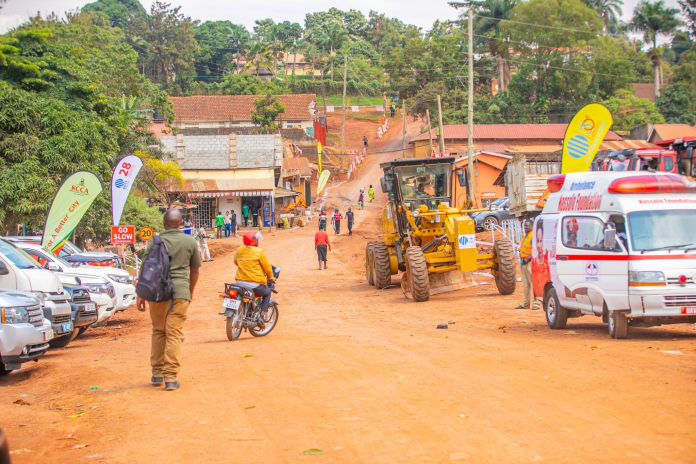
One the roads lined up for construction.

The Dott Services Limited, a local construction firm has embarked on a massive project to upgrade and reconstruct 24 roads in Kampala City. This initiative is part of the government’s broader effort to modernize infrastructure within the Kampala Capital City metropolitan area.

The Minister for Kampala Capital City and Metropolitan Affairs, Hajjat Minsa Kabanda praised the government’s commitment to funding road construction in the city and recognized Dott Services as one of the key contractors selected to undertake the work.

“I thank the government of Uganda for the funding. I thank Dott Services, the construction company, for starting the work early. I have no doubt they will perform very well. I also urge them to kindly perform and deliver as per the contract,” said Hajjat Kabanda.

She made these remarks during the commissioning of the upgrading of Kabaka Lake Road to bitumen standards on Friday—one of the 24 roads set for reconstruction under the project.

The overall project will cover 14.65 kilometers and is expected to be completed within three years.

The roads to be upgraded include:

Kabaka’s Lake Road, Button Street Link, Bukoto Street, Wilson Road, Wilson Street, Market Street, Mengo–Kisenyi Link Road, Erisa–Nkoyoyo Road, Central Kisenyi Lane, Market Service Lane, Market Square, Dastur Street, Church Road, Naava Road, Church Lane II, Kyejwe Road, Lower Kololo Terrace, Golf Course Road, Nsamba Road, St. Stephen Hospital Ring Road, St. Barnabas Road, Kalinabiri Road, and Mapeera Road.

Most of these roads have long been in a poor state, negatively affecting trade, transport, and the overall quality of life in the city.

Hajjat Kabanda noted that this project differs from previous ones because the designs allow for flexibility and can be adjusted based on feedback from residents, ensuring that infrastructure better serves the needs of city dwellers.

Ms. Sharifah Buzeki, Executive Director of Kampala Capital City Authority (KCCA), also hailed the project and noted that the government has invested heavily in road infrastructure this year.

“We have the contractors, Dott Services, and MBW Consulting Limited is the supervisor of this project. We have urged them to work on the road in time. We have hope that in a few years, Kampala will be different,” Buzeki said.

Kampala Lord Mayor, Mr. Erias Lukwago, welcomed the development and emphasized the importance of local content in public infrastructure projects.

“In the previous projects, there was barely any local content. Most of the projects went to foreigners. We should have local content in these new projects,” Lukwago stated, adding that he appreciated the increased government funding for road construction in the city centre.

In this financial year alone, the government has raised the infrastructure budget to Shs550 billion—an increase Mr. Lukwago described as a significant milestone.

Dott Services is among the few local firms awarded contracts under the new city development push. The company has previously completed road projects in Ishaka–Kagamba, Ttinyi–Nakalama, Rwenkunye–Apach, and various regional areas across the country.

Stories Continues after ad

Uganda receives first tranche of Shs170B from World Bank for industrial financing under INVITE project 

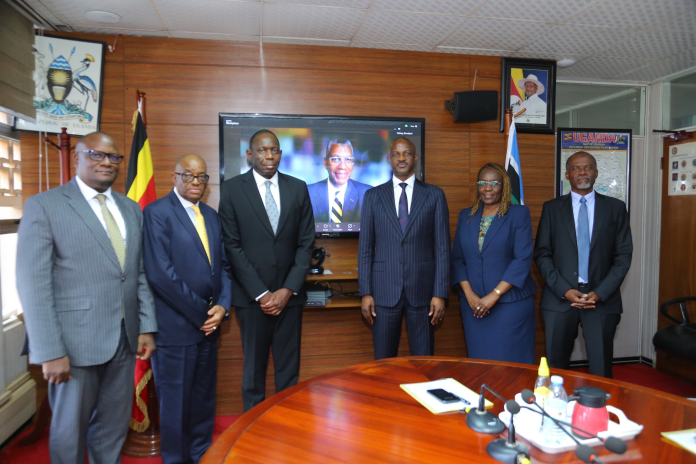
The Investment Committee, which oversees the INVITE include the Ministry of Finance, Planning and Economic Development (MoFPED), represented by Permanent Secretary and Secretary to the Treasury, Ramathan Ggoobi and the Bank of Uganda, represented by Governor Dr. Michael Atingi-Ego among others.

The Government of Uganda has received the first tranche of Shs170 billion as part of the Shs800 billion World Bank financing under the Investment for Industrial Transformation and Employment (INVITE) Trust. This milestone marks a major step forward in boosting Uganda’s manufacturing and export value chains.

The Investment Committee, which oversees the INVITE Trust met on Tuesday, July 15, and briefed key stakeholders including the Ministry of Finance, Planning and Economic Development (MoFPED), represented by Permanent Secretary and Secretary to the Treasury, Ramathan Ggoobi and the Bank of Uganda, represented by Governor Dr. Michael Atingi-Ego. The meeting confirmed that all conditions precedent to disbursement had been fulfilled, paving the way for the release of the initial Shs170 billion.

“This first tranche will be deployed towards the operationalization of a Working Capital facility through eligible Financial Institutions,” the statement reads.

The INVITE Trust is a special-purpose vehicle established to facilitate development financing for Uganda’s manufacturing and export sectors. The project is aligned with Uganda’s Tenfold Growth Strategy and aims to enhance access to affordable finance, particularly for private sector enterprises. The program is projected to create over 200,000 private sector jobs while increasing incomes and economic opportunities—especially in refugee host communities.

The total value of the INVITE Project is Shs800 billion, with Shs642 billion allocated specifically for lending to the private sector through four financing facilities: Working Capital; Receivables Financing or Invoice Purchasing; Credit Guarantee and Patient Capital in local currency. An additional Shs158 billion, managed by the Private Sector Foundation Uganda (PSFU), will support Business Development Services for enterprises involved in manufacturing and export.

Speaking at the event, Mr. Ramathan Ggoobi applauded the progress of the initiative and emphasized its significance.

“The Government is determined to increase access to affordable finance. I commend the Investment Committee for the recent onboarding of KPMG as Trust Manager and look forward to the full operationalization of all the financing facilities,” Ggoobi said.

Bank of Uganda Governor, Dr. Atingi-Ego, also reaffirmed support for the initiative, noting its broader economic potential.

He said, “This is a long-term game-changer for Uganda’s financing landscape. The success of the INVITE Trust will have far-reaching implications for economic transformation.”

He also underscored the critical custodial role the Bank of Uganda plays in the functioning of the Trust.

The INVITE Trust is a Government of Uganda initiative financed by the World Bank and other development partners including the Netherlands, United States, and others.

The Investment for Industrial Transformation and Employment (INVITE) Project is designed to provide affordable finance and support to private sector enterprises in Uganda’s manufacturing and export sectors.

Stories Continues after ad

Gov’t handovers brand new vehicles to cultural leaders ahead of elections

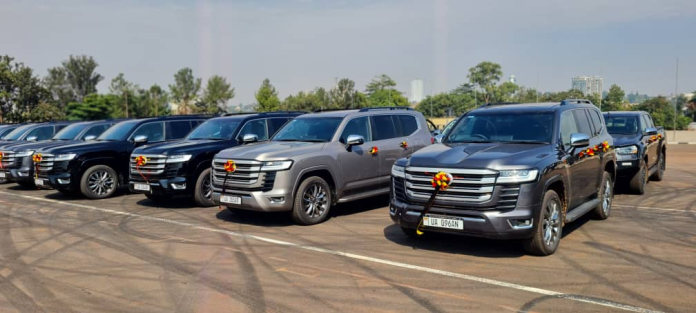
The government through the Ministry of Gender, Labour and Social Development has officially handed over brand new vehicles to Uganda’s gazetted cultural leaders to empower them in mobilising their communities for social and economic transformation.

Speaking at the handover ceremony, Vice President Jessica Alupo presided over the handover of vehicles to Uganda’s gazetted cultural leaders, an initiative aimed at enhancing their capacity to mobilise communities for peace, unity, and socio-economic transformation.

The event marks a significant milestone in strengthening the partnership between government and cultural institutions.

Alupo acknowledged the pivotal role cultural leaders play in preserving Uganda’s heritage, promoting social cohesion, and supporting government development programmes.

She encouraged cultural leaders to continue fostering peace and unity within their communities and to actively support government efforts ahead of the upcoming 2026 elections.

However, this comes ahead of the a political and election season where the incumbent is a candidate. It is seen as a mobilization strategy for the traditional leaders themselves.

Reading a message from President Museveni, the Vice President highlighted the President’s recognition of the restoration of cultural institutions as an acknowledgement of the foresight of Uganda’s ancestors.

These ancestors united numerous clans into kingdoms such as Buganda, Bunyoro, and Ankole, fostering cooperation and reducing conflict, thereby laying the foundation for Uganda’s enduring peace and stability.

President Museveni’s message further emphasised the importance of cultural institutions as custodians of Uganda’s rich languages, customs, and traditions, which are vital to national identity and unity.

The government remains committed to protecting cultural heritage sites and promoting cultural tourism as part of its broader development agenda.

The President also praised cultural leaders as key partners in mobilising citizens for social and economic development, applauding their contributions to education, health, and household income improvements.

The vehicles handed over are intended to facilitate their mobility, enabling them to reach all parts of their kingdoms and support government initiatives such as the Parish Development Model (PDM) and Emyooga wealth creation programmes.

Vice President Alupo congratulated the cultural leaders on receiving the vehicles and wished them continued success in their efforts to foster national unity and drive sustainable development.

Gender Ministry Permanent Secretary Mr. Aggrey Kibenge noted that the provision of these vehicles demonstrates the Government’s deep respect for Uganda’s rich cultural heritage and traditions.

Sources at the ministry told Eagle Online that Buganda Kingdom, the largest of the recognised institutions didn’t get the vehicle as it demanded that money meant for the vehicle be channelled to the kingdom because the Kabaka doesn’t receive gifts people who aren’t his subjects.

“Cultural institutions have long been a cornerstone of moral guidance, dispute resolution, and cultural preservation. As Uganda continues on its development path, these institutions remain crucial partners in promoting peace, cultural identity, and community mobilisation for transformation,” he said.

Mr. Kibenge thanked His Excellency the President for his unwavering support to the ministry’s programmes and appreciated the Vice President for sparing time to grace the occasion, despite her busy schedule on the eve of primary elections.

He further advised cultural leaders to ensure proper servicing and maintenance of their vehicles at authorised Toyota Uganda service centres to guarantee longer lifespan and reliable service.

“May today mark the beginning of deeper trust and collaboration between Government and cultural institutions, so that together we steer our country towards its envisioned future,” he concluded.

Stories Continues after ad

Uganda to host inaugural Africa Triple Elimination Conference at Speke Resort Munyonyo

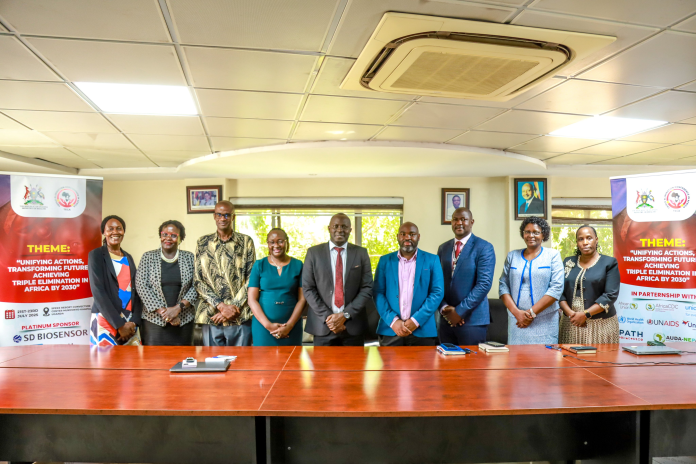
First Edition of the Africa Triple Elimination Conference 2025 at Speke Resort Munyonyo.

Uganda is set to host the First Edition of the Africa Triple Elimination Conference 2025 at Speke Resort Munyonyo, under the theme “Unifying Action, Transforming Futures: Achieving Triple Elimination in Africa by 2030” from 21-23rd of July, 2025. 

This landmark event will bring together high-level stakeholders, health experts, policymakers, advocates and community leaders to forge a collective path towards the elimination of HIV, Hepatitis B and Syphilis across the continent.

The conference is jointly organized by the African Union Commission, Ministry of Health of Uganda, Africa CDC, WHO, UNAIDS, UNICEF, AUDA-NEPAD, PATH, Clinton Health Access Initiative, and the National Organisation for People Living with Hepatitis B, among others.

 Kenneth Kabagambe, Executive Director of the National Organisation for People Living with Hepatitis B who is spearheading the organization of the conference said that this groundbreaking event is dedicated to accelerating efforts to eliminate HIV, Hepatitis B, and Syphilis in Africa.  

He added, “It is a unique opportunity to catalyze solutions, share best practices, and build impactful collaborations that will shape the future of public health in Africa.”

The conference comes at a time when Africa continues to bear the heaviest burden of these diseases.

Dr. Robert Mutumba, a leading health expert from Uganda’s Ministry of Health, highlighted the scale of the challenge, “Globally, 41 million people live with HIV—over half of them in Africa. About 254 million people have Hepatitis B, and 65 million live with chronic infections, with Africa disproportionately affected. Eight million adults globally are infected with Syphilis, and the burden remains high in African nations.”

Dr. Ronny Bahatungire, Acting Commissioner of Clinical Services at the Ministry of Health, noted Uganda’s continued progress in the fight against these infections noting, Since 2002, Uganda has made remarkable strides through the introduction of the Hepatitis B vaccine and, more recently, the local production of first-line Hepatitis B medicines—a bold step toward self-reliance.”

Bahatungire said, “The conference will raise awareness on Hepatitis B, its transmission, prevention, and treatment while promoting testing, vaccination, outreach, and service integration.”

Jotham Mubangizi from UNAIDS emphasized the urgency of eliminating mother-to-child HIV transmission saying, “We’ve come a long way in reducing HIV transmission from mother to child, but we must do more. Every one of the 4,700 new child infections is preventable. With the science we have, these numbers are unacceptable.”

Uganda is close to reaching the global target of eliminating mother-to-child HIV transmission, currently performing at 6%, just slightly above the <5% benchmark.

The Triple Elimination strategy aims not just to address the individual diseases, but also to promote integrated approaches that tackle their root causes and intersecting risk factors.

“HIV, Hepatitis B, and Syphilis are among the leading causes of preventable infant illness and death, especially in low-income countries,” Dr. Mutumba noted.

He added, “The elimination of vertical transmission of these diseases aligns with global health goals and WHO’s vision of ending preventable disease as a public health threat.”

The conference also underscores the importance of regional collaboration. By bringing African nations together to share strategies and lessons, the event will ensure more effective use of resources and foster a united continental health response.

As the host nation, Uganda once again positions itself as a continental leader in public health, demonstrating commitment to tackling long-standing disease burdens and promoting equity in healthcare.

Stories Continues after ad

RAHU holds third BNN Summit, rallies young people to harness their voices to influence a better future

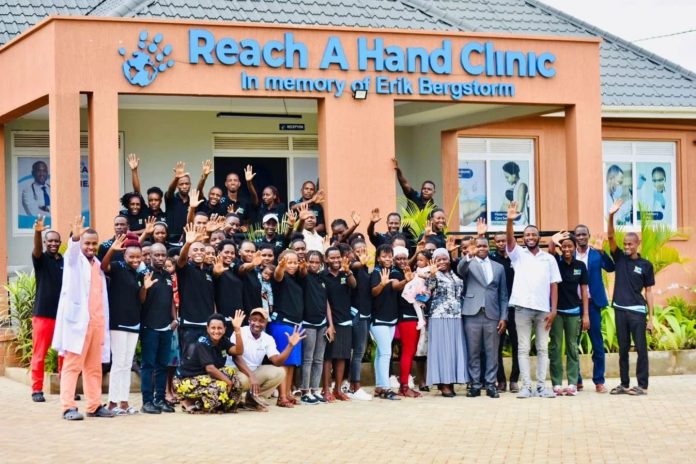
Kampala – Reach A Hand Uganda (RAHU) has hosted the third Billi Now Now (BNN) Summit, an annual event under the Billi Now Now movement.

The summit was held at Reach A Head Headquarters in Lungujja for two days – 10th between July 10-July 11, 2025 under the theme: ‘’Our Voices. Our Power. Our Future’’. It was held in partnership with GN Trybe.

Billi Now Now (BNN) is a youth-led movement empowering over 1 billion BRAVE young people (B!LL!s) to take charge of their lives, health, and future. Working hand in hand with this mission is GN Trybe, a youth-centred behavioral change communication initiative designed to respond to the evolving challenges young people face today. Through bold and innovative strategies, it raises awareness and reduces Sexual and Reproductive Health (SRH) risks—barriers that often limit access to quality education, mental well-being, and the ability to lead healthy, empowered lives.

The 2025 BNN summit addressed topical youth issues, including economic empowerment, the role of media in promoting youth issues, healthy relationships, safeguarding, technology-facilitated gender-based violence, youth and civic space, among others.

It attracted more than 300 youth delegates from Uganda, Kenya, Rwanda, South Sudan, Ethiopia, Senegal, Benin, Peru and Burkina Faso to have conversations about Africa reclaiming its identity, leveraging the power of youth voices to drive meaningful change.

Part of the activities that took place during the summit was the unveiling of the inaugural Impact Forge cohort. The programme is an aspect of RAHU’s youth empowerment efforts to provide support for youth-led and youth-founded organisations.

The initiative provides a year-long mentorship, capacity building, and access to resources to ensure that the participants succeed and thrive. The cohort comprises 15 participants across various industries such as agriculture, climate change, youth livelihood, education and social behavioural change.

Speaking at the BNN summit, Humphrey Nabimanya, Chief Executive Officer of Reach A Hand Uganda, remarked: “Billi Now Now has produced a generation of changemakers who are now advocating for the youth of today and tomorrow.”

Mariam Nalukuma, Head of Corporate Affairs at the Insurance Regulatory Authority, spoke about the importance of economic empowerment through financial literacy.

“One of the biggest challenges we face in Africa is unemployment,” she said. “Across the world, young people are carrying the burden of securing the future. In today’s world, financial literacy is critical for financial resilience. Insurance is one of the key tools for financial protection. Even those without formal employment can take advantage of affordable insurance packages to secure their future against unforeseen circumstances such as untimely death or accidents.”

Dr Ruth Grace Kakoba, a gynaecologist and content creator, highlighted how media can either be healing or harmful, depending on how it is used.

She pointed to emerging social media trends, such as the hashtag #TeenMom, where young girls who become pregnant at 18 portray teenage motherhood as trendy or glamorous.

“These trends can be misleading,” she said. “They often ignore the serious health risks and long-term effects of teenage pregnancy on a young girl’s body and future.”

She emphasised the importance of responsible media content that educates rather than glamorises, warning that unchecked trends can normalise harmful behaviour among youth.

Herbert Mugumya, Chief of Staff at the International Rescue Committee, challenged traditional notions of masculinity during his address. He explained that being a man is largely a social construct, shaped by upbringing, societal expectations, and reproductive roles.

“What defines a man is not wealth or dominance, but responsibility and emotional maturity,” Mugumya said.

He further critiqued outdated beliefs that discourage men from expressing vulnerability, such as the idea that a man should not cry, not even at a burial.

“Traditional masculinity, which associates manhood with stoicism and power, can be harmful. Real strength lies in emotional openness, care for family, and responsible living,” he added.

About Reach A Hand Uganda

Reach A Hand Uganda is a youth-led non-profit organisation dedicated to empowering young people in Uganda through advocacy, awareness campaigns, and community engagement, focusing on key issues affecting youth, including sexual and reproductive health and rights (SRHR), education, mental health, gender equality, and economic empowerment.

Stories Continues after ad

Taxi driver arrested over viral Tiktok stunt showing a man seated on top drinking beer

The photo of man who was arrested for seating 'dangerously' on top of the taxi.

The Uganda Police have arrested the driver of a passenger taxi featured in a widely circulated TikTok video that showed a man seated dangerously on a wooden chair atop a moving taxi drinking beer in Nsambya, Kampala.

The vehicle bearing registration number UAZ 910B was impounded after being tracked using CCTV footage. The reckless stunt captured and shared online has drawn widespread condemnation from both the public and authorities.

The Superintendent of Police Michael Kananura confirmed the arrest of the suspect and the charges he now faces.

“We confirm the arrest of the driver of a taxi registration number UAZ 910B, following the circulation of a trending TikTok video showing a man dangerously seated on a wooden chair placed atop the said vehicle,” SP Kananura stated.

He revealed, “The incident occurred in Nsambya, in an area where there was no active traffic deployment at the time. Upon discovering the video, police utilized CCTV footage to trace the vehicle, which was subsequently impounded.”

He added that the driver and conductor are now in custody and have been charged with carrying a person in a dangerous manner, in violation of Section 117 (1) and (3) of the Traffic and Road Safety Act (CAP. 347).

Preliminary investigations revealed that the individual seen on top of the vehicle is a TikTok content creator who allegedly paid UGX 20,000 to the driver and conductor to facilitate the stunt.

“Efforts are ongoing to locate and apprehend the TikTok content creator, who will also be charged under the same section of the law for consenting to be carried in a dangerous manner,” Kananura said.

Speaking on the same incident, Kampala Metropolitan Deputy Police Spokesperson Luke Owoyesigyire emphasized the severity of the offense.

“We managed to trace the vehicle carrying someone on top of its bed. It was impounded, and the driver was charged with carrying a passenger in a dangerous position,” Owoyesigyire confirmed.

Owoyesigyire added, “However, the passenger has not yet been traced, but efforts to locate him are ongoing.”

He cautioned the public against engaging in life-threatening behavior under the pretense of content creation.

He noted, “This is very dangerous, lads. We understand that the TikToker paid the driver 20,000 shillings for that stunt.”

Authorities have reiterated that all suspects will be arraigned in court at an appropriate time to answer to the charges.

Kananura further warned, “We strongly condemn such reckless behavior, which endangers road safety under the guise of comedy or content creation. We urge members of the public to exercise responsibility and caution at all times, no life should be put at risk for the sake of entertainment.”

He added, “Let us all work together to prioritize safety on our roads.”

The Uganda Police continue to monitor social media platforms and use surveillance tools to curb unlawful and dangerous conduct, especially stunts that pose risks to public safety.

Stories Continues after ad

Finance Ministry releases Shs17.1t for First Quarter of FY 2025/2026 as Shs6.93t go for debt servicing

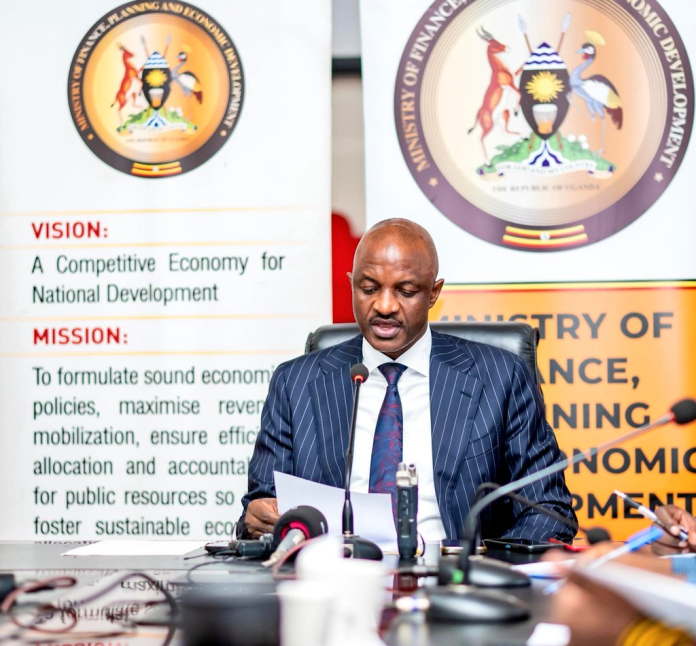
PSST, Ramathan Ggoobi.

The Ministry of Finance, Planning and Economic Development has issued expenditure limits totalling Shs17.18 trillion to kick‑start implementation of the national budget for the first quarter (July–September) of the 2025/26 financial year.

The funds, announced by Permanent Secretary and Secretary to the Treasury Ramathan Ggoobi represent 23.7 percent of the approved Shs72.38 trillion budget and are earmarked to accelerate the government’s Ten‑Fold Growth Strategy, centred on Agro‑industrialisation, Tourism, Mineral‑based industry and Science, technology and innovation (ATMS).

“This year’s budget is deliberately crafted to fast‑track the Ten‑Fold Growth Strategy,” Mr Ggoobi said while releasing the quarter‑one limits.

He added, “Our goal is to deliver better services to Ugandans at the lowest possible cost while stimulating high‑impact sectors that can multiply jobs and exports.”

Where the Money Is Going

Wages and Salaries: Shs2.26 trillion will go to meet government payroll obligations, while Shs482.76 billion is set aside for pensions and gratuities.

Debt and Treasury Operations: The single‑biggest share, Shs6.93 trillion, will service public debt and manage treasury operations.

Non‑Wage Recurrent Spending: Ministries, departments and agencies (MDAs) receive Shs4.50 trillion for day‑to‑day operations, including Shs249.38 billion for Parliament and Shs468.72 billion for the Electoral Commission.

Development Projects: Government‑funded development projects get Shs692.9 billion, while externally‑financed projects such as Karuma hydropower and rural electrification—receive Shs2.72 trillion.

Local Revenue Retentions: Agencies allowed to retain their own income, such as the Uganda Wildlife Authority and Uganda National Oil Company, will manage Shs82.17 billion this quarter.

Driving ATMS Growth

Within the ATMS pillars, the Finance Ministry released: Agro‑industrialisation: Shs215.28 billion, including Shs152.86 billion for development projects and Shs62.41 billion for agricultural research and programme operations.

Tourism Development: Shs20.5 billion to brand Uganda, enforce hospitality standards and market key attractions.

Mineral‑Based Industry & Oil and Gas: Shs26 billion split between the Ministry of Energy and the Petroleum Authority to progress strategic mineral and petroleum projects.

Science, Technology & Innovation: Shs139.13 billion, of which Shs83.3 billion supports national innovation initiatives and Shs33 billion funds creatives under the Ministry of Gender.

“We are backing sectors with the greatest multiplier effect—agriculture, tourism, minerals and innovation—because that is where the ten‑fold growth will come from,” Mr Ggoobi emphasised.

Enabling Sectors

Security and Governance: Defence leads with Shs719.12 billion, followed by the Police (Shs130.73 billion) and State House (Shs108.38 billion).

Infrastructure: The Works and Transport ministry gets Shs1.08 trillion, of which Shs942.9 billion will clear contractor bills, while Energy receives Shs420.76 billion for rural electrification, transmission lines and Karuma completion.

Kampala Capital City Authority: Shs148.32 billion will fund ongoing road and drainage upgrades.

Human Capital Development

Education, health and social protection together command more than Shs1 trillion this quarter. Highlights include:

Education: Shs143.75 billion to the Ministry of Education and Shs157.73 billion to public universities and tertiary institutions.

Health: Shs262.88 billion to the Ministry of Health for infrastructure and vaccine‑related projects, plus Shs173.96 billion for National Medical Stores to procure essential drugs.

Social Protection: Shs 118.23 billion for the Ministry of Gender, including funding for the Social Assistance Grants for Empowerment (SAGE).

Specialised Institutes: Uganda Cancer Institute and Uganda Heart Institute share Shs80.18 billion, while regional referral hospitals, Mulago and Butabika receive Shs40.99 billion.

Local Governments: Shs382.03 billion supports district operations and priority projects.

Security

Under security, Ministry of Defense and Veteran Affairs, Shs719.12 billion; Uganda Police Force, Shs130.73 billion; State House, Shs108.38 billion; Uganda Prisons Service, Shs87.15 billion; Office of the President – Shs111.4 billion; ISO, Shs39.2 billion and ESO, Shs86.9 billion.

Mr Ggoobi reminded accounting officers of strict financial management rules: “Salaries, pensions and gratuities must be paid by the 28th of every month; no contracts should be signed without a verified budget; and all payments must be executed in Uganda shillings.”

He added, “We will not tolerate fresh domestic arrears. Pay service providers on time, and convene finance committees to agree quarter‑one priorities before allocating funds.”

With the first‑quarter resources now on the table, ministries, agencies and local governments are expected to begin procurement, settle outstanding obligations and roll out development projects in line with the approved budget.

The Finance Ministry estimates that Shs43.4 trillion after setting aside debt repayments and arrears—remains genuinely available for programme implementation during the year, underscoring the need for fiscal discipline to achieve Uganda’s ambitious growth targets.

Stories Continues after ad

Equity Bank crowned best regional bank in East Africa at the African Banker awards 2025

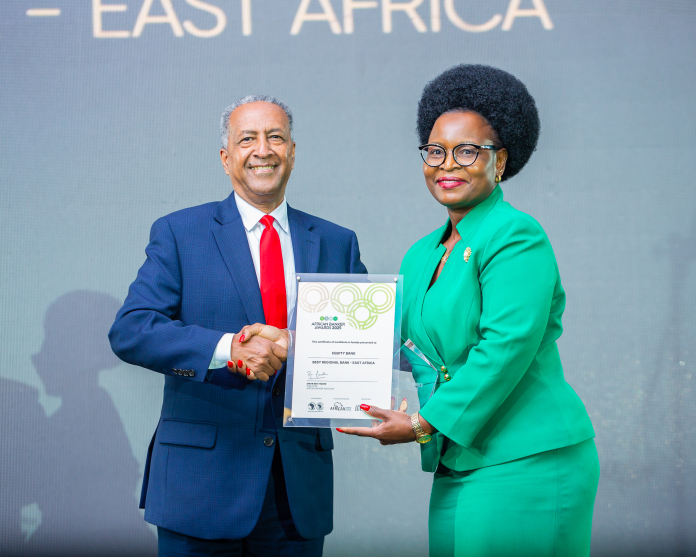
Mr Zemedeneh Negatu, Chairman of the Washington, DC-based capital investment fund, Fairfax Africa Fund, LLC (Left) hands over an award for Best Regional Bank - East Africa to Equity Bank Kenya Head of Women and Youth Banking, Dr. Silpah Owich (Right) at the 2025 African Banker Awards held in Abidjan, Côte d’Ivoire.

Equity Bank has been named Best Regional Bank in East Africa at the 2025 African Banker Awards held in Abidjan, Côte d’Ivoire. This prestigious award highlights the Bank’s significant role in deepening financial inclusion, empowering communities, and promoting sustainable economic development across East Africa.

Equity Bank’s recognition is a reflection of its impactful presence across the region, driven by a purpose-led approach, customer-centric innovation, and strong support for small and medium-sized enterprises (SMEs). The award affirms the growing influence of regional financial institutions in shaping the continent’s economic future.

Equity Group Managing Director and CEO, Dr. James Mwangi said “We are deeply honoured by this recognition. This award is a testament to our commitment to delivering transformative financial services that empower individuals, businesses, and communities across East and Central Africa. It validates our regional expansion model and is aligned with our Africa Recovery and Resilience Plan, which seeks to build inclusive, sustainable, and resilient economies across the continent by supporting sectors that drive growth particularly agriculture, manufacturing, mining and natural resources, MSMEs, health, education, and clean energy.”

The African Banker Awards, now in their 19th year, celebrate excellence and innovation in African banking. Supported by the African Development Bank and partners such as the African Guarantee Fund, the awards recognize institutions and leaders that have significantly contributed to the continent’s financial sector over the past year.

Speaking during the ceremony, Omar Ben Yedder, Chair of the Awards Committee, emphasized the pivotal role of African financial institutions: “Thomas Sankara once said, the ones who feed you, rule you.” In today’s context, we might say, ‘The ones who finance you, empower you’. Strong African-owned banks are critical to scaling development and banks like Equity are at the forefront of that mission.”

“Equity created its reputation by disrupting and democratizing banking to achieve financial inclusion. Under the Africa Recovery and Resilience Plan, the Group has pivoted to drive development financing for Africa’s socio-economic transformation through trade and investments by the private sector, with national governments providing the enabling environment and stable macroeconomic climate necessary for wealth creation,” added Dr. Mwangi.

Equity Group operates in six African markets Kenya, Uganda, Rwanda, Tanzania, South Sudan, and the Democratic Republic of the Congo (DRC) with a representative office in Ethiopia, serving over 22 million customers. Through its integrated financial services and commitment to shared prosperity, Equity continues to lead as a catalyst for regional transformation.

About Equity Group Holdings Plc  

Equity Group Holdings Plc. is a Pan-African financial services holding company listed at the Nairobi Securities Exchange, Uganda Securities Exchange, and Rwanda Stock Exchange. The Group has banking subsidiaries in Kenya, DRC, Rwanda, Uganda, Tanzania, South Sudan, and a Commercial Representative Office in Ethiopia. It has other subsidiaries in investment banking, insurance, telecom, fintech and social impact investments. Equity Group is the largest integrated financial services firm in the region with a market capitalization of $1.37 Billion.

The Group has an asset base of $13.5 Billion, a customer base of 22.4 million supported by a footprint of 402 branches, 85,827 Agents, over 1.1 million Pay with Equity (PWE) merchants, 37,825 Point-of-Sale (POS) Merchants, 896 ATMs and an extensive adoption of digital banking channel.

The Bank’s strong brand recognition, solid liquidity buffers and resilient funding profile, established domestic franchise and extensive adoption of digital and alternative distribution channels have earned it the honor of being the Second Strongest Financial Brand on Earth in 2024 by Brand Finance. It was also ranked the strongest bank in Africa and 10th most valuable banking brand in Africa, with a Brand Strength Index (BSI) of 92.5 out of 100 and a brand ranking score of AAA+, the highest rating that a brand can attain.

Stories Continues after ad
Over 100,000 renewed national IDs ready for pickup –NIRA

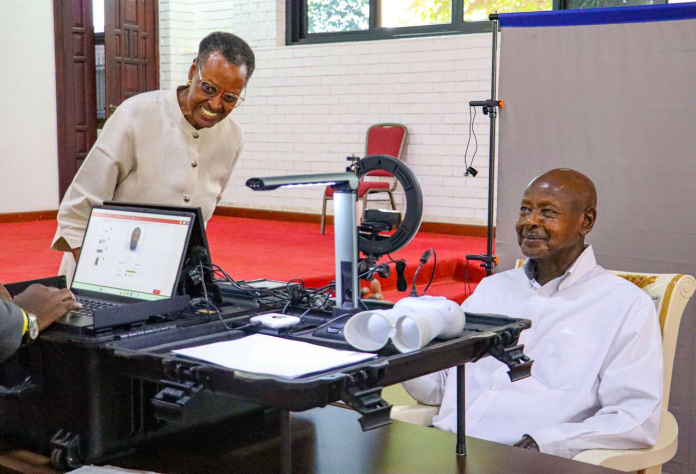
President Museveni and First Lady, Janet Museveni after renewing their National IDs.

The National Identification and Registration Authority (NIRA) has confirmed that the first batch of upgraded national identity cards is now ready for collection by Ugandans who applied for renewals. This announcement comes as the nationwide mass enrolment and renewal exercise, which began on May 27, 2025, continues across the country.

Speaking on Monday, NIRA Registrar Claire Ollama stated that roughly 100,000 new national ID cards have been printed and dispatched to various district offices.

“We, however, ask Ugandans to be patient as more people will receive notifications on where to pick their national ID cards,” Ollama said.

She clarified that individuals should pick up their new IDs from the same stations where their biometric data was originally captured.

The new national IDs boast several advanced security features to combat counterfeiting. These include Multiple Laser Images (MLI), which embed various images visible at different angles, and a Machine-Readable Zone (MRZ) for quick, machine-based data verification, similar to passports. The cards also incorporate a two-dimensional barcode for quick data retrieval via smartphones or specialized scanners, and will soon integrate iris biometrics as an additional identification layer. Made from durable polycarbonate material, these IDs are designed for a 10-year validity period.

This release is a key part of NIRA’s broader effort to modernize Uganda’s national identity system. The ongoing enrolment campaign aims to renew some 15.8 million expiring ID cards and register 17.2 million new applicants, including those turning 16 or previously unregistered. While initial registration and renewals remain free, fees apply for changing particulars or replacing lost IDs.

Stories Continues after ad