Stanbic Bank
Stanbic Bank
17.3 C
Kampala
Stanbic Bank
Stanbic Bank
Home Blog Page 28

Uganda and China Exim Bank seal strategic deal to drive tenfold economic growth

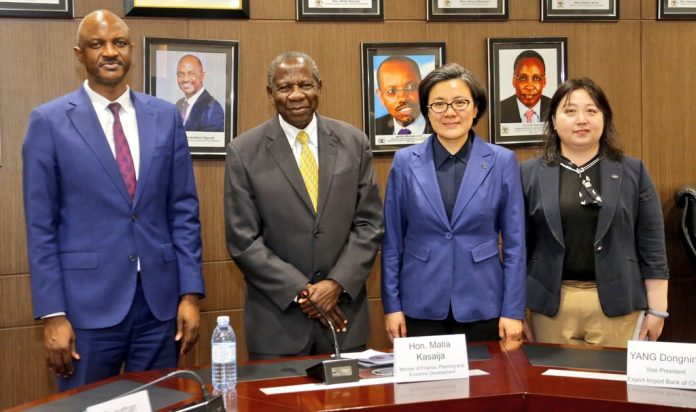
Finance Minister Matia Kasaija and a delegation from the Chinese lender led by Vice President Yang Dongning, who are in the country to strengthen bilateral cooperation and support Uganda’s long-term economic transformation.

Uganda has deepened its economic ties with the Export-Import Bank of China following high-level talks aimed at accelerating the country’s industrialisation and unlocking tenfold economic growth.

The meeting, held in Kampala, brought together Finance Minister Matia Kasaija and a delegation from the Chinese lender led by Vice President Yang Dongning, who are in the country to strengthen bilateral cooperation and support Uganda’s long-term economic transformation.

Kasaija said Uganda’s next phase of development will be anchored on the government’s ATMS strategy, with a strong focus on agro-industrialisation, export expansion and value addition across key sectors. These include traditional cash crops such as coffee, cotton and tea, as well as emerging industries in oil and gas, tourism, and science, technology and innovation.

He noted that Uganda is repositioning its economy to benefit from China’s zero-tariff policy by shifting away from the export of raw materials towards processing, manufacturing and higher-value exports targeting global markets.

Accompanied by Permanent Secretary and Secretary to the Treasury Ramathan Ggoobi, Kasaija expressed appreciation to the Government of China for its sustained technical and financial support across sectors such as transport, energy and health.

In a move expected to boost investment inflows, China EXIM Bank committed to supporting the organisation of a “Uganda Day” in China, a platform that will showcase Uganda’s investment opportunities, link local enterprises to Chinese manufacturers and financiers, and attract potential investors.

Officials said the initiative will form part of a broader strategy to strengthen commercial diplomacy, deepen private sector partnerships and position Uganda as a preferred investment destination on the continent.

Both parties also agreed to scale up support for the development of industrial parks, with emphasis on improving access to land, utilities and logistics infrastructure to enhance productivity and attract large-scale investments.

China EXIM Bank reaffirmed its commitment to Uganda’s growth agenda through a modern and diversified financing framework, including trade finance for exporters and importers, blended financing models, equity investments, and syndicated funding arrangements tailored to strategic projects.

Kasaija underscored the need for flexible financing structures to fast-track priority investments, while both sides highlighted the importance of strengthening technical and vocational education to equip the workforce with skills needed to sustain industrial expansion and meet investor demands.

Stories Continues after ad

Health Ministry warns public on counterfeit drugs and self-medication ahead of Pharma expo

Ms. Sarah Taratwebirwe, a senior pharmacist, Ministry of Health.

The Ministry of Health Uganda has warned the public about the increasing presence of counterfeit and substandard medicines on the Ugandan market, which are a threat to public health.

Speaking on behalf of the Ministry, Ms.Sarah Taratwebirwe, a senior pharmacist, said many Ugandans struggle to distinguish between genuine and fake pharmaceutical products. She explained that while some medicines are smuggled into the country and may appear effective, others are substandard and do not meet the required safety standards.

To address the problem, the government is strengthening enforcement through the National Drug Authority, which has stepped up testing and inspections at border points, private pharmacies and public health facilities.

“We are committed to ensuring that the medicines available to Ugandans are both safe and effective,” Ms. Taratwebirwe said, adding that cracking down on illegal supply chains remains a key priority.

The Ministry also warned against the dangers of self medication, linking the practice to rising cases of drug resistance. Ms Taratwebirwe noted that many people treat illnesses such as malaria, cough and flu without proper diagnosis, often misusing antibiotics.

“Many people do not see the immediate danger. By taking the wrong drug or treating the wrong illness, you risk developing resistance. Eventually, these life saving medicines may no longer work,” she cautioned.

Health officials are now encouraging a test and treat approach, urging the public to seek guidance from qualified medical professionals before taking medication. While some minor conditions can be managed with over the counter drugs, the Ministry emphasizes that proper diagnosis is essential for effective treatment.

Meanwhile, Uganda will host the Uganda Pharma and Healthcare Expo & Dialogue 2026 from March 26 to 28 at the UMA Show Grounds Multipurpose Hall in Lugogo under the theme strengthening access quality and sustainability in healthcare for all.

The expo will bring together global pharmaceutical companies, local manufacturers and digital health innovators to discuss ways of strengthening supply chains, promoting local drug manufacturing and improving healthcare delivery.

The Ministry has invited healthcare professionals, investors and development partners to participate in the event as part of efforts to build a stronger and more self sufficient health sector.

Stories Continues after ad

High Court denies bail to SSP Nixon Agasirwe in Kagezi murder case

SSP Nixon Agasirwe.

March 19, 2026 —Kampala, Uganda- The High Court Criminal Division has denied bail to Senior Superintendent of Police Nixon Agasirwe, who is facing charges in connection with the 2015 murder of former Assistant Director of Public Prosecutions Joan Kagezi.


In a ruling delivered on Thursday, Isaac Muwata dismissed Agasirwe’s application for mandatory bail, in which he argued that his prolonged detention beyond 180 days without trial infringed on his constitutional right to a fair hearing.
Justice Muwata noted that the Office of the Director of Public Prosecutions had already fulfilled its legal obligation by filing an indictment and summary of evidence on December 16, 2025, within the constitutional timeframe.
“The purpose of the 180-day threshold is to prevent the State from holding citizens indefinitely without formalizing the charge for trial,” Muwata ruled.
“By filing the Indictment and Summary of Evidence, the State has met its obligation, and the mandatory grounds for bail have been overtaken by the committal proceedings.”
The court further expressed concern that Agasirwe, given his senior rank in the police at the time of the alleged offence, could interfere with investigations if released. The judge observed that many of the officers involved in the case were previously his juniors, raising the risk of witness interference.
Additionally, the court held that the seriousness of the charges increases the likelihood that the accused could abscond if granted bail.
Agasirwe was arrested in May 2025 following testimony by Daniel Kisekka, who implicated him as the financier of the assassination. Kisekka was subsequently convicted and sentenced to 35 years in prison after pleading guilty to participating in Kagezi’s killing.
Joan Kagezi was fatally shot on March 30, 2015, in Kiwatule, a suburb of Kampala.
Four other suspects—Kibuuka John, Nasur Abdullah Mugonole, John Masajjage, and Semujju Abdul Noor, also known as Minana—remain on remand as investigations and trial preparations continue.

Stories Continues after ad

No more begging: ULS denounces Museveni’s Shs5b pledge

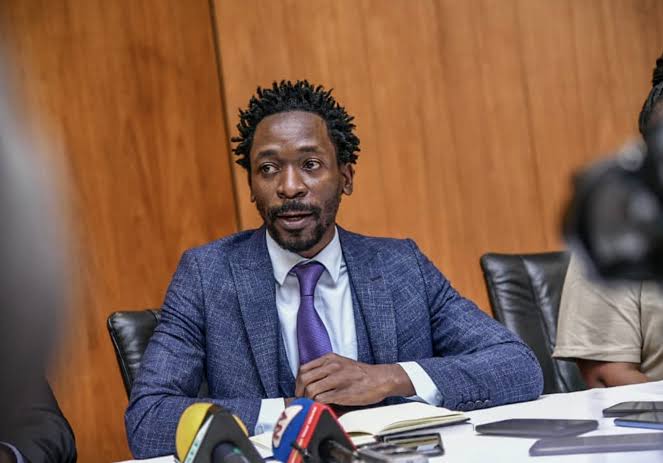
ULS President Isaac Ssemakadde.

The Uganda Law Society has cut ties with any financial engagements involving President Yoweri Kaguta Museveni Tibuhaburwa and rejected the Shs5 billion pledge. The body declared the pledge threatens the independence of the legal profession.

In an executive order issued by the ULS House in Kololo on March 19, 2026, the Society announced the decision to distance itself from the pledge made by the President in 2018 for the construction of its headquarters, a commitment that remains unfulfilled.

ULS President Isaac Ssemakadde said the move is intended to safeguard the integrity of the Bar and restore public confidence in the legal profession’s autonomy.

“The Uganda Law Society has a solemn duty to uphold the rule of law and safeguard the independence of the Bar from undue influence, including financial inducements that compromise its autonomy,” Ssemakadde stated.

He noted that continued reliance on pledges from the executive undermines the profession’s ability to hold power accountable, adding that the decision marks a turning point in how the Society engages with the state.

The Society sharply criticised the unfulfilled presidential pledge, describing it as symbolic of broader governance concerns.

“The Shs5 billion pledge remains unfulfilled to this day, serving as a stark reminder of unkept commitments and selective generosity,” Ssemakadde said, adding that the situation reflects deeper issues in public financial management.

He further pointed to what he termed as excessive government spending, arguing that it contrasts sharply with the failure to honour commitments to institutions like the ULS.

“This pledge stands in sharp contrast to ballooning State House expenditures, including vast allocations to classified items and supplementary budgets, underscoring a pattern of fiscal irresponsibility and prioritisation of patronage over public welfare,” he said.

The ULS leadership also raised concerns about the broader political environment, linking financial dependence to challenges in democratic governance.

“The wastefulness displayed during recent general elections further exemplifies the misuse of public resources to entrench power, with excessive spending on security crackdowns and electoral manipulation that undermined democratic processes,” Ssemakadde noted.

As part of the directive, the Society has terminated all efforts to pursue or engage with the presidential pledge and revoked mandates of any envoys previously assigned to follow up on the funds. It also reaffirmed its commitment to institutional independence, warning against any form of political or financial coercion.

“The independence of the Bar is paramount to the administration of justice and the protection of constitutional rights. Any reliance on governmental largesse risks eroding this independence and diminishing the profession’s role as a bulwark against executive overreach,” he said.

Ssemakadde highlighted that the near completion of ULS House has instead been achieved through member contributions, describing it as a testament to self-reliance within the profession.

“The ULS House has reached near completion through the unwavering contributions and disciplined leadership of its members, exemplifying probity and collective resolve,” he said.

Looking ahead, the Society says it will redirect its focus toward legal and institutional reforms aimed at strengthening sustainable income streams for lawyers and the institution.

“This reform agenda constitutes the true path to long term independence, rendering any form of governmental begging obsolete and unnecessary,”Ssemakadde added.

The executive order took immediate effect and will remain in force unless amended.

Stories Continues after ad

World Bank ban PwC in Kenya, Rwanda and Mauritius for 21 months over procurement fraud

The World Bank Group has announced a 21 month suspension of three PricewaterhouseCoopers affiliated firms in East Africa after investigations uncovered collusive practices and misrepresentation in a major regional energy project.

The affected firms in Kenya, Rwanda and Mauritius were found to have breached procurement rules under the Eastern Africa Power Integration Program, specifically in relation to the Ethiopian Electricity Highway Project. The project is a key component of efforts to strengthen electricity supply in Kenya while enabling Ethiopia to export surplus power across the region.

According to details released by the World Bank on March 18, 2026, the misconduct dates back to 2019 when the firms allegedly accessed confidential bidding information through improper channels. This information was then used to influence the outcome of contract awards, undermining fair competition.

Investigators also established that the firms submitted inaccurate information about the availability and qualifications of key experts proposed for the assignment. In addition, some subcontracting arrangements were not fully disclosed during both the tendering and implementation phases, raising further concerns about transparency and compliance.

The sanctions follow a negotiated settlement in which the firms acknowledged wrongdoing and agreed to corrective measures. During the 21 month period, the firms and any entities under their control will not be eligible to participate in projects financed by the World Bank.

The institution noted that the penalty reflects both the gravity of the violations and the firms’ level of cooperation during the investigation. It cited remedial actions already undertaken, including strengthening internal controls, enhancing compliance systems and rolling out staff training on ethical standards. The firms had also voluntarily stepped back from bidding on World Bank funded contracts while the matter was under review.

As part of the agreement, the firms are required to implement and maintain a comprehensive integrity compliance programme that meets World Bank standards before they can regain eligibility to participate in future projects.

PwC Africa Limited, which coordinates the network across the continent, was not directly sanctioned but took part in the resolution framework to reinforce oversight and ensure consistent compliance across its member firms.

The World Bank said the action underscores its determination to protect development financing from abuse and to uphold strict standards of accountability in all projects it supports.

The development adds to increasing oversight of large scale infrastructure programmes in East Africa, where financiers are tightening enforcement to safeguard public resources and maintain confidence in cross border investments.

Stories Continues after ad

Speke Resort Munyonyo hosts landmark launch of African Rangelands and Pastoralists Women Charter

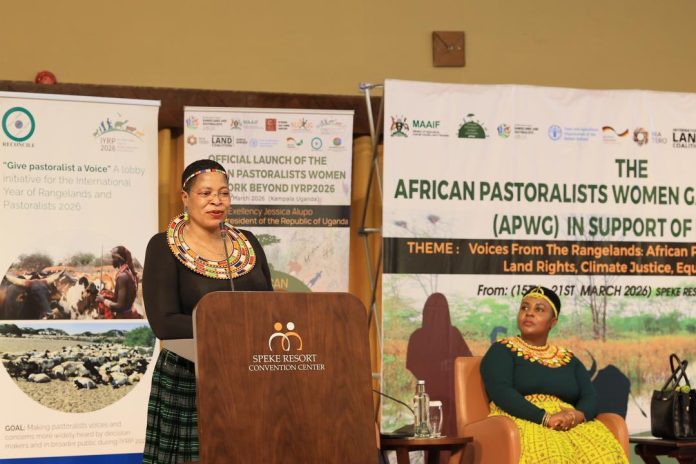
Speaker of Parliament, Anita Among.

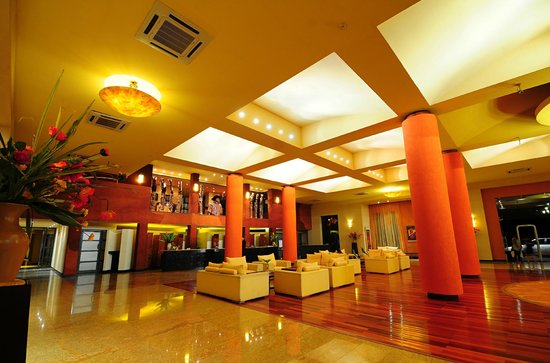
Speke Resort Munyonyo has hosted the official launch of the African Rangelands and Pastoralists Women Charter, an event aimed at advancing the role of women in pastoral communities across the continent.

Presiding over the event, the Speaker of Parliament, Anita Among emphasized the significance of the gathering, which also marked the closing of the African Pastoralists Women Gathering that attracted over 200 participants from across Africa, including grassroots pastoralist women, government officials, civil society actors and development partners.

“It is with great honour and gratitude that I preside over both the closing of this historic gathering and the official launch of the African Rangelands and Pastoralists Women Charter,” Among said.

She noted that discussions on pastoralism have often overlooked the critical contribution of women, despite their central role in sustaining livelihoods.

“Oftentimes, discussions of rangelands and pastoralism in Africa focus mainly on men, yet the story is incomplete without women. I commend the organisers for highlighting the central indivisible role of women in pastoralism,” she said.

Among stressed that any meaningful efforts to improve the condition of pastoralists must fully recognise women’s contributions in areas such as animal care, food production, household resilience, and peacebuilding.

“I want to inform you that I am a pastoralist woman myself. I have cattle, so the issues of pastoralist women are pertinent to me,” she added.

The Speaker conveyed greetings from President Yoweri Kaguta Museveni, noting his support for the gathering and ongoing government efforts to strengthen pastoralism.

“I bring you fraternal greetings from His Excellency the President, who has blessed this gathering and expressed his full support,” she said.

Among highlighted government interventions aimed at improving pastoral livelihoods, including policy frameworks such as the National Land Policy and the National Climate Change Act 2021, as well as security measures like the disarmament process in the Karamoja sub-region.

“Today, unlike previous years, incidences of livestock theft have significantly reduced, while various government-led interventions are underway to diversify household livelihoods through irrigation and skilling,” she said.

She further underscored the importance of unity among African nations in addressing shared challenges affecting rangelands, invoking the spirit of Ubuntu.

“The future of Africa requires such unity in the spirit of ‘Ubuntu’. I therefore recognise the participation of representatives from Benin, Cameroon, Kenya, South Sudan, Tanzania, and Uganda,” Among noted.

Uganda’s rangelands, which cover about 44 percent of the country’s total land area and support more than 6.6 million people, were highlighted as critical to the nation’s economy and food systems, stretching across the cattle corridor from the north-east to the south-west.

Despite their importance, Among acknowledged persistent challenges affecting pastoral communities, including land fragmentation, climate change, limited veterinary services, and weak institutional support systems.

“Women and children disproportionately bear the brunt of these challenges, facing increased workloads and reduced educational opportunities. Urgent, inclusive, and sustainable interventions are essential,” she said.

She called for concrete outcomes from the gathering, particularly in strengthening women’s leadership, securing land rights, enhancing climate resilience, and recognising pastoral mobility as a fundamental right.

“As the Government of Uganda, we pledge to continue creating an enabling environment for pastoralism and rangelands to flourish, strengthen the rights of pastoral communities especially women, and mitigate the effects of climate change,” Among affirmed.

The newly launched charter will amplify the voices of pastoralist women and ensure their inclusion in decision-making processes that shape policies and interventions affecting rangelands across Africa.

Stories Continues after ad

Empty demands as Court dismisses Dr Gukiina’s land claims against tycoon Sudhir’s Speke Hotel

The High Court in Kampala has dismissed a long-standing land dispute filed by Dr Peter Musoke Gukiina against businessman Sudhir Ruparelia and Speke Hotel 1996 Limited and ruled that the doctor has no legal claim over the contested land in Kongero, Wakiso District.

In a detailed judgment, Justice P. Basaza-Wasswa held that Dr Gukiina failed to prove any lawful or bona fide occupancy rights beyond his registered Plot 50. 

The court found his case weakened by inconsistencies, a disorganized evidentiary record and attempts to stretch claims beyond what was expressly contained in written agreements.

The dispute revolved around land comprised in Busiro Block 443. While Dr Gukiina lawfully owns Plot 50, he sought to assert rights over adjacent plots numbered 49, 52, 74 and 76, which are registered under Speke Hotel 1996 Limited.

He argued that he acquired kibanja interests on the land between the late 1980s and early 1990s and had since developed it with plantations and structures. He further accused the defendants of trespass, unlawful eviction and destruction of property.

However, the court found that all agreements presented by Dr Gukiina clearly limited his interests to Plot 50.

“The wording in each of the agreements is plain and unambiguous. The plaintiff purchased bibanja that were all situate only on Plot 50 and not on any other plot,” Justice Basaza-Wasswa ruled.

The judge rejected attempts to rely on oral testimony to expand the claim, emphasizing that such assertions could not override clear written agreements. 

The court also faulted the plaintiff for failing to call key witnesses, including original land sellers, noting that this omission significantly weakened his case.

Further inconsistencies were identified in Dr Gukiina’s earlier legal actions, where his claims had been confined to boundary disputes involving Plot 50 and Plot 75. 

The court ruled that he could not subsequently broaden his claims to cover additional land without credible evidence.

“His claim is rejected. He does not qualify to be a lawful occupant, nor a bona fide occupant,” the judge stated.

Despite dismissing the main claims, the court established that a portion of Speke Hotel’s perimeter wall had encroached onto Plot 50 by approximately 0.08 acres, amounting to limited trespass.

Instead of ordering demolition, the court awarded Shs66.4 million as compensation for the encroached land and an additional Shs15 million in general damages for inconvenience. The total sum is to attract interest at 10 percent per annum until full payment.

Each party was ordered to bear its own legal costs.

The ruling confirmed Speke Hotel 1996 Limited’s ownership of the disputed plots while underscoring the decisive role of clear documentation and coherent evidence in land litigation. 

The case had taken more than two decades, which reveals the enduring complexities surrounding kibanja rights and overlapping claims within the land tenure system.

Stories Continues after ad

UGANDA: Arrest Warrant Issued for Opposition Activist Who Disappeared After Police Bond

By Musigwa Alex
March 18, 2026

A Ugandan opposition activist has been declared wanted by police after a warrant of arrest was issued on March 14, 2026 intensifying efforts to locate her months after she disappeared following release on police bond. Esther Makumbi a community leader affiliated with the National Unity Platform (NUP) is now at the center of an escalating case that is drawing renewed scrutiny over the treatment of political dissent in Uganda.

Makumbi widely known in her community as “Mama Clove” had established herself as a grassroots mobiliser working with vulnerable families while actively supporting opposition activities linked to Robert Kyagulanyi Ssentamu. Her visibility in both community leadership and political mobilisation is believed to have placed her under the attention of security operatives during the country’s tense pre-election period.

She was arrested on November 24, 2025 shortly after attending a political rally in Kampala’s Kawempe North constituency an area known for strong opposition support. Witness accounts indicate that multiple supporters were rounded up in what appeared to be a coordinated security operation immediately following the event. Makumbi was later transferred to Kawempe Police Station where she was detained before being released on police bond on November 26, 2025 with instructions to report back on December 9. She never returned.

Her failure to comply with bond conditions has now formally escalated into a legal pursuit with the March 14, 2026 arrest warrant marking a turning point in the case. Authorities consider her a fugitive and efforts to trace her whereabouts are believed to be ongoing, although no official statement has clarified the extent of the operation or whether the case has been formally presented before court.

Accounts linked to Makumbi allege that her detention was preceded by a period of unofficial custody in an undisclosed location where she was reportedly subjected to physical abuse and intense pressure to renounce her political allegiance and align with the ruling establishment. These claims which remain unaddressed publicly by authorities mirror broader allegations frequently raised by rights observers regarding the handling of opposition figures in Uganda.

Sources familiar with the situation have also pointed to emerging concerns among security circles about possible links between Makumbi’s case and networks previously associated with Waiswa Mufumbiro. While no formal charges or official statements have established such a connection individuals close to the investigation suggest that her name surfaced in discussions tied to that case raising further interest from authorities. Analysts caution however that these claims remain unverified and could reflect broader patterns of suspicion often surrounding opposition figures rather than confirmed involvement.

Following her release Makumbi is believed to have gone into hiding amid fears of re arrest and continued intimidation. Sources close to her suggest that threats persisted even after her release creating an environment in which returning to police was seen as a serious personal risk. By early 2026 several individuals involved in opposition mobilisation had reportedly withdrawn from public visibility citing similar concerns.

Her case now highlights the increasingly narrow space in which opposition activism operates in Uganda, where arrests, short-term detention and legal uncertainty often intersect. Analysts note that many such cases never proceed through formal prosecution instead unfolding through a pattern of pressure, surveillance and repeated targeting.

As of the time of publication Makumbi’s whereabouts remain unknown. Police continue to seek her under the active warrant while her supporters maintain that she is in hiding out of fear for her safety. Members of the public have been urged to report any information regarding her whereabouts to the nearest police station.

Stories Continues after ad

Uganda to host 32nd ARSO General Assembly at Speke Resort Munyonyo

Uganda National Bureau of Standards (UNBS) has announced that Uganda will host the 32nd General Assembly of the African Organisation for Standardisation (ARSO) at Speke Resort Munyonyo from June 15 to 19, 2026.

The meeting is aimed at bringing together standards experts, policymakers and private sector leaders from across Africa.

The high-level continental meeting will be held under the theme “Standards enabling Intra-Africa Trade under the AfCFTA –ARSO Quality Mark Working for You,” and is expected to focus on how harmonised standards can boost trade among African countries under the African Continental Free Trade Area (AfCFTA).

In a statement, UNBS invited stakeholders to participate in the assembly, noting that the event will provide a key platform for collaboration on quality infrastructure and trade facilitation across the continent.

“Join us at the 32nd ARSO General Assembly 2026 as we collaborate to foster trade, promote quality standards, and unlock Africa’s economic potential through standards,” the bureau said.

According to UNBS, the assembly will attract ARSO member states, national standards bodies, African Union institutions, regional economic communities, international standards organisations, conformity assessment bodies, development partners, and private sector representatives from across Africa.

The gathering will discuss ways to strengthen the adoption of common standards that can ease cross-border trade and improve the competitiveness of African products in both regional and global markets.

“The theme highlights the critical role of standards in facilitating intra-African trade and ensuring that African products meet globally recognised quality benchmarks,” the bureau noted.

ARSO, the continental standards organisation established to harmonise standards across Africa, works closely with national standards bodies such as UNBS to develop common guidelines that support trade, consumer protection, and industrial development.

Hosting the event positions Uganda at the centre of continental discussions on quality assurance, product certification and standards harmonisation, areas considered essential for the success of the AfCFTA, which aims to create the world’s largest free trade area by number of participating countries.

UNBS said the assembly at Speke Resort Munyonyo will also feature technical meetings, policy discussions and networking sessions aimed at strengthening cooperation among African standards institutions.

“The ARSO General Assembly provides an important opportunity for stakeholders to share knowledge, strengthen partnerships, and advance the use of standards as a tool for economic transformation across Africa,” the statement added.

The annual ARSO gathering rotates among member states and is regarded as one of Africa’s most important forums for shaping the future of standardisation, quality infrastructure, and trade integration on the continent.

Stories Continues after ad

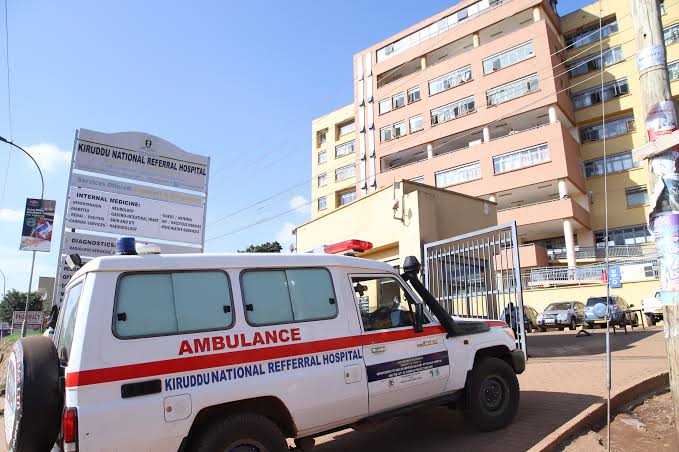
Kiruddu Referral awaits Museveni’s official guidance on proposed downgrade to district hospital 

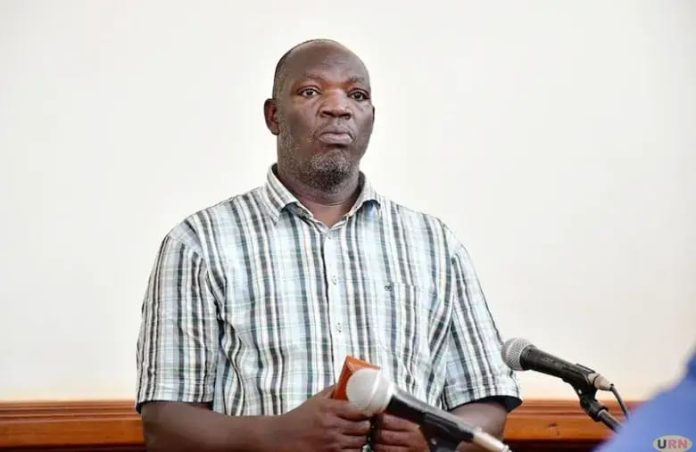
The Executive Director of Kiruddu National Referral Hospital, Dr. Charles Kabugo has revealed that the facility is waiting for formal communication regarding a proposal by President Yoweri Museveni to downgrade it to a district hospital.

Dr. Kabugo made the remarks while appearing before Parliament’s Public Accounts Committee, where he led a delegation from the hospital to respond to queries raised in the 2024/25 Auditor General’s report.

“This was a pronouncement during our campaigns and we waited for an official communication to get to us. We have consulted the Minister of Health to guide us on how we should plan our new structure, whether we should plan now based on the fact that we are going to be downgraded or to be maintained as a national referral hospital,”Dr. Kabugo explained.

He added that although there have been verbal assurances, no official directive has been issued.

“Verbally, we have been told that we are going to maintain the same course like we are right now, but there is no written communication to that effect. Yes, they have told us to keep the course,” he said.

His remarks followed questions from Members of Parliament, including Gorreth Namugga (Mawogola South) and Fredrick Angura (Tororo South), who sought clarity on the hospital’s status after the President’s pronouncement.

During his Parish Development Model tours in Kampala in July 2025, President Museveni expressed dissatisfaction with the Ministry of Health’s decision to elevate Kiruddu and Kawempe hospitals to national referral status. 

He argued that the move deviated from the original plan of establishing the facilities to decongest Mulago National Referral Hospital and serve nearby communities.

Namugga pressed Dr. Kabugo to explain the possible reasons behind the President’s position, questioning whether the nature of services offered at Kiruddu justified its referral status.

In response, Dr. Kabugo attributed the development to public expectations and misconceptions about the hospital’s scope of services.

“So, when the community noticed that Government was constructing the hospital, they were excited thinking that they were going to get a complete hospital within their community. Now you are telling them that, no, for us, we don’t handle maternity, so that angered the community a bit,” he said.

He explained that at the time of its establishment, the Ministry of Health designated Kiruddu Hospital to handle internal medicine and plastic surgery cases, while maternity and paediatric services were assigned to Kawempe Hospital.

“So, when they were meeting the President in Kawempe, it came up, they raised the issue, said, yes, thank you for giving us this hospital, it is assisting us, it is doing all this. But our women are not delivering there. So, the origin was not the scope of services. It was more of; we want it expanded to offer more,” he added.

Dr. Kabugo, however, acknowledged the practical challenges of expanding services at the facility, citing space limitations.

“But the truth is, it is difficult for you to divide a 200-bed capacity hospital in Kampala and provide everything. Otherwise, you are going to have three or four beds per speciality, which doesn’t make sense,” he said.

The uncertainty surrounding the hospital’s status continues to raise concerns over planning and service delivery as the institution awaits formal guidance from the government.

Stories Continues after ad