Stanbic Bank
Stanbic Bank
24.3 C
Kampala
Stanbic Bank
Stanbic Bank
Home Blog Page 41

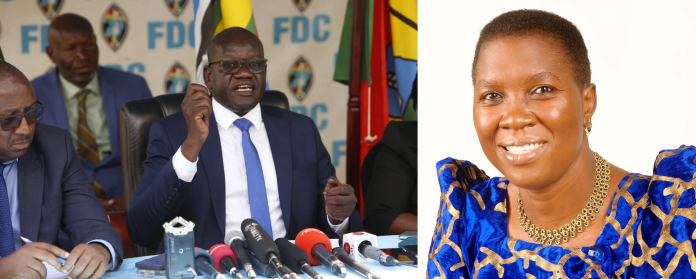
FDC’s Amuriat slams Musumba for hypocrisy over Besigye democracy award

Forum for Democratic Change (FDC) President Patrick Oboi Amuriat has lashed out at former FDC vice president Salaamu Musumba and accused her of hypocrisy and bitterness over his receipt of an international democracy award on behalf of the incarcerated Dr. Kizza Besigye.

Amuriat said Musumba, who left FDC, had no moral standing to criticize him for receiving the Nana Akufo African Democracy Award, which was bestowed upon Dr. Besigye by former Ghanaian President Nana Addo Dankwa Akufo-Addo during the Democracy Union of Africa (DUA) Forum in Nairobi, Kenya.

“Hon. Salaamu Musumba has shamelessly always attended DUA activities across Africa and IDU events in Washington, DC as an FDC invitee even after she abandoned FDC. We have restrained ourselves from exposing her, but she has abused the goodwill given to her by attacking our leaders,” Amuriat stated.

Amuriat clarified that he did not seek the honor of receiving the award, emphasizing that DUA officials chose him as the most senior FDC member present at the event.

“I did not solicit to receive this particular award, but was chosen to do so. I believe it was because I was the most senior leader from FDC in attendance, and therefore had no reason to turn down the request of the DUA board,” Amuriat said.

He added that his participation was purely in honor of Dr. Besigye’s contribution to democracy and human rights, not for personal or political gain.

“I was not seeking to earn any political capital in accepting the award on behalf of Dr. Besigye. I also do not believe there was any political capital to gain from accepting this award,” he said.

Amuriat also dismissed suggestions of animosity between him and Dr. Besigye, insisting that their relationship remains grounded in mutual respect despite past political differences.

“I have worked very closely with Dr. Besigye for over 20 years, including coordinating his field activities during the 2016 presidential elections,” he said.

He added, “We once lay beside each other on a bare floor at Nagalama Police Station for 13 days while waiting to be charged with suspected murder.”

He explained that his recent absence from visiting Dr. Besigye in prison was not due to personal hostility but to avoid escalating tensions caused by individuals spreading malicious propaganda against him.

“My not visiting Dr. Besigye in prison is largely because of the hate campaign the people around him have leveled against me. They have even claimed I could be a danger to him, which is completely wrong. My motivation for staying away has been to maintain peace and not create more trouble for him,” he explained.

Amuriat praised Besigye as the enduring symbol of Uganda’s liberation struggle and condemned attempts to belittle his legacy.

“Without any shade of doubt, Dr. Besigye remains the number one driving force in the bid for the freedom of Ugandans. It is incomprehensible that some individuals would trivialize his decades-long struggle by labeling him as part of an inconsequential political group,” he said.

He revealed that he plans to seek an audience with Dr. Besigye soon to personally deliver the award, which could not be presented to him in prison.

“In the next few days, I will be seeking an audience with Dr. Besigye, if he grants me. Since his award can’t be allowed in prison, I will be handing it to Wafula Oguttu, who has remained level-headed amidst all this political noise,” Amuriat said.

Amuriat reaffirmed that FDC remains Uganda’s only party fully subscribed to the International Democracy Union (IDU), a global alliance of center-right political parties.

“Unless under specific arrangements, anyone from Uganda attending DUA activities does so as a member of FDC or DP. It is also true that FDC is the only party in Uganda that is fully subscribed to the IDU,” he noted.

The award recognized Dr. Kizza Besigye’s outstanding sacrifice in advancing democracy and good governance in Uganda and across Africa.

Stories Continues after ad

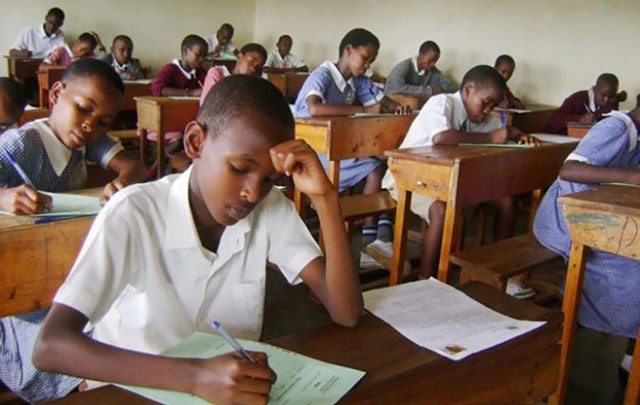
Over 800,000 candidates to sit for the 2025 PLE across 16,000 centers nationwide

Primary seven candidates sitting for Primary Living Exams.

A total of 817,885 candidates are set to sit for the 2025 Primary Leaving Examinations (PLE) which officially commence today, Friday, October 31, with the briefing of candidates across the country.

Announcing the development, Dan N. Odongo, the Executive Director of the Uganda National Examinations Board (UNEB), said this year’s candidature marks an increase from 797,444 candidates in 2024, representing a 2.5 percent rise. He explained that the examinations will be conducted under the theme “Embracing security and holistic assessment of learners in a dynamic environment.”

“The 2025 Primary Leaving Examination officially commences today with the briefing of candidates at their respective schools and sitting centers. Like the UCE examination currently underway, the PLE will also be conducted under the same theme, emphasizing the need for safety and comprehensive evaluation of learners,” Odongo said.

Odongo expressed appreciation to the Uganda National Teachers Union (UNATU) for calling off their industrial action, noting that their participation was crucial to ensure professionalism during the conduct of the examinations.

“The PLE is the first national examination in the lives of our children, and its results go a long way in shaping their educational future. Our failure to support the learners at this critical stage would have impacted them in a devastating manner that would have weighed heavily on our collective conscience for a long time,” he said.

Out of the total candidates, 389,529 (48%) are male, while 428,356 (52%) are female. Odongo revealed that 522,039 candidates, representing 64 percent, are funded under the Universal Primary Education (UPE) program, while 295,846 (36%) are privately sponsored. Among them are 61 inmates from Upper Prison School, Luzira — 7 female and 54 male, who will also sit for the national exams.

Odongo further revealed that 3,644 candidates with special needs will receive the necessary assistance and special arrangements during the examination.

“The Board has made the necessary arrangements to provide all Special Needs Education (SNE) candidates with the required support,” he said.

He added, “We have prepared braille question papers for 33 blind candidates, large print papers for 620 learners with low vision, and sign language interpreters for 300 deaf candidates. Another 1,318 learners with dyslexia and severe physical impairments will be supported by transcribers, and all SNE candidates will have an extra 45 minutes for each paper.”

He noted that 1,505 support personnel have been deployed to assist learners with special needs and urged scouts and invigilators to be sensitive to their circumstances.

Odongo announced that 59,890 field personnel have been deployed across the country to ensure a smooth and secure examination process. These include 160 district monitors, 13,841 scouts, 12,260 chief invigilators, 33,105 invigilators and 524 security personnel.

“The field management of the PLE is a joint effort between UNEB and the local governments. Chief Administrative Officers should process and release funds promptly, oversee the distribution of examination materials, and clamp down on malpractice. I commend those CAOs who took firm action against head teachers who promoted malpractice in previous examinations. This courageous act must continue,” he said.

Odongo cautioned all persons against engaging in examination malpractice, warning that UNEB and security agencies are on high alert.

“The Board strongly warns all persons contemplating involvement in any form of examination malpractice that they will be dealt with in accordance with the UNEB Act,” he said.

He added, “There are individuals who have set up social media platforms to collect money in exchange for fake PLE papers. Some have been arrested, while others are on the run. Anyone found circulating or selling fake papers faces up to ten years’ imprisonment or a fine of forty million shillings, or both.”

He added that invigilators or scouts who negligently allow malpractice to occur will also be prosecuted and may face five years in prison or a fine of twenty million shillings.

The UNEB boss also noted that some schools have been found registering secondary students to impersonate PLE candidates in order to falsify results.

“Our security team has arrested head teachers and directors of some schools for this practice. For example, Salama Education Centre Primary School in Kagadi district had five such students, and Kasasa Primary School in Hoima had 15. Any other institutions found involved will lose their examination center status,” he said.

Odongo urged head teachers to personally brief candidates and emphasize discipline, honesty, and punctuality during the examination period.

“Candidates should be informed that they are expected to write their answers in blue or black ink, not pencil except for drawings,” he said.

He added, “They should arrive at the examination center at least 30 minutes before the start of each paper, and those who arrive more than 15 minutes late will not be allowed in. After the briefing, there must be no more teaching or coaching.”

He encouraged the learners to have confidence and trust in their preparation.

“Please remain calm, confident, and follow the instructions. The questions are drawn from what you have studied over the years. Anyone trying to give you assistance during the course of the examination will cause the cancellation of your results. We pray for God’s blessing upon you, and call upon parents, teachers, and religious leaders to continue praying for you,” Odongo said. 

Stories Continues after ad

Tayebwa urges Finnish firms to invest in coffee value addition in Uganda

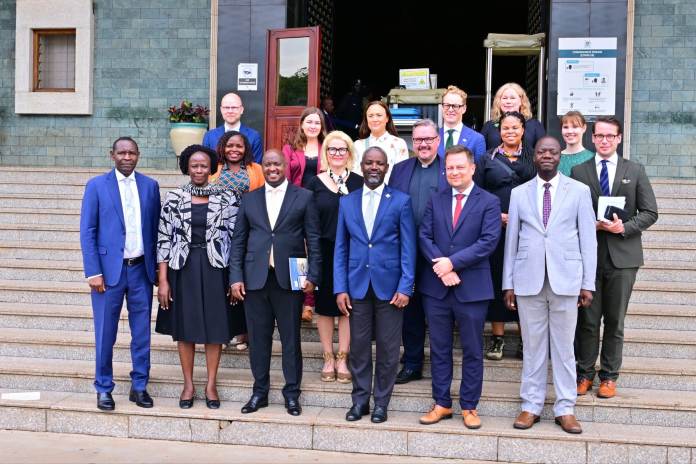
Deputy Speaker, Thomas Tayebwa, meeting Members of the Commerce Committee of the Parliament of Finland.

The Deputy Speaker of Parliament, Thomas Tayebwa, has urged Finnish companies to channel investments into coffee value addition, saying this is the surest way to help Uganda and other African producers tap into the lucrative global coffee market.

Meeting with Members of the Commerce Committee of the Parliament of Finland, Tayebwa highlighted the imbalance in global coffee earnings, noting that coffee-producing countries receive only a fraction of the industry’s vast revenues.

“I want to encourage companies from Finland to come and add value to Ugandan coffee; Africa’s largest coffee exporter,” Tayebwa said.

Citing recent global trade estimates, Tayebwa revealed that the coffee industry generates about $452 billion annually. Yet of that amount, only $25 billion goes to producing countries, and Africa collectively earns a mere $3 billion.

“It means that all the coffee produced here, in Brazil, Vietnam and elsewhere, brings only US$25 billion to producers, while countries that do not grow even one coffee tree take the lion’s share,” Tayebwa said, calling the trend a clear case of economic injustice.

The Deputy Speaker said he is using his continental role as the President of the Organization of African, Caribbean and Pacific States (OACPS) Parliamentary Assembly and Co-President of the OACPS–European Union Joint Parliamentary Assembly, to push for fairer trade terms, including tax reductions on coffee exported to the EU.

“I challenged European leaders during our last meeting. I told them that why should you impose heavy levies on coffee from Uganda, where it is produced, and yet waive taxes on coffee in Europe?” he said.

Tayebwa shared his surprise from a recent trip to Milan, Italy, where he found a kilogramme of coffee imported from Uganda being sold at €45, far above the local retail price of roughly €3.

On their part, the visiting Finnish lawmakers applauded Uganda’s refugee-friendly policies and its spirit of hospitality, saying the country has become a global model in humanitarian response.

“We are very impressed with the work you do on refugees. You offset a big burden,” said Vilhelm Junnila, Chairperson of Finland’s Committee on Commerce.

“We are equally impressed with the friendly relationship between our countries, for I know we import coffee from Uganda and export paper materials in return,” he added.

Junnila led a seven-member delegation that has been in Uganda for a week, benchmarking on parliamentary best practices. They were accompanied by representatives from Finn Church Aid, a Finnish humanitarian organisation.

Stories Continues after ad

Rushenyi’s Kabasharira optimistic about second term bid

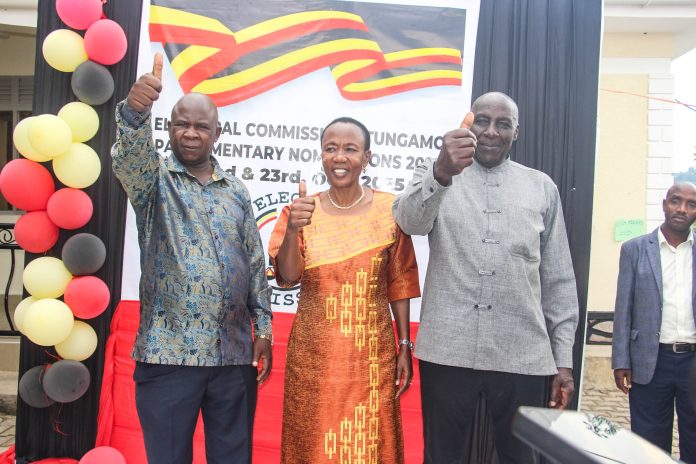
Kabasharira and her campaign team after nomination (Photo by Davidson Ndyabahika)

Rushenyi County MP Naome Kabasharira on Wednesday launched her re-election bid with a pledge to protect and expand the “New Era” reforms that helped deliver unity and service-driven politics in the constituency. She was nominated to seek a second term on the ruling National Resistance Movement (NRM) ticket, setting the stage for the 2026 race.

Kabasharira, accompanied by her core campaign team, was duly nominated by Ntungamo District Returning Officer Latif Ngonzi. Addressing supporters shortly after, she framed her candidacy as a people-centered mandate built on accountability, consultation, and shared progress, values she says define Rushenyi’s politics today.

“This nomination is not my victory; it is our victory,” she said. “When Rushenyi called for action, I showed up. When you needed a voice, I raised it. When you demanded results, we delivered. But our journey is not finished. The work continues.”

The campaign team emphasized that the “New Era”, the philosophy that rallied Rushenyi behind Kabasharira in 2021, remains the engine of her second-term bid. Rooted in accountability, consultation, and inclusive leadership, the movement has focused on a leader who listens, returns to the people, and jointly sets priorities with them. Supporters say it is this approach that has replaced political friction with cooperation and service-driven development.

The nomination event also served to reinforce support for the wider NRM government. A local party official and lawyer, Justus Karuhanga, contextualized her re-election bid within the larger party framework, emphasizing a shift in political operations.

“As New Era… we set out to achieve certain goals, the first being unifying our people and doing away with camps and divisions. She has been instrumental in delivering that as our leader,” Karuhanga stated, stressing a key pillar of her political identity

In Rushenyi, Hon. Kabasharira’s supporters point to tangible gains in service delivery. They cite the upgrading of Rushooka and Rubaare Health Centre IVs and the successful lobbying for fully operational emergency ambulances as evidence of an MP focused on results, not rhetoric.

Dominic Tumwesigye Kadenge, a certified tax advisor and Rotarian, from Kayonza Subcounty in Rushenyi said the progress reflects a deliberate shift toward collective effort and party-based development. “It is important that we leave behind individual-merit politics and embrace a merit-based party system, this is what it truly means,” he said, framing Kabasharira’s record as part of a structured and unified agenda of the Rushenyi New Era.

Kadenge noted that the improvements are visible on the ground. “If you visit Rushooka Health Centre IV, you will see the organization, the ambulance, and how it has helped everyone. I believe this is the only fully operational ambulance in the regionthe rest are just vehicles,” he said.

Kabasharira, who previously sparked national debate with her call to trim Uganda’s 557-member Parliament—arguing that “we are too many for the country”—now turns her energy back to Rushenyi’s voters. With a consolidated base and a message rooted in continuity and shared progress, she enters the race as the frontrunner for another five-year term.

On nomination day, she unveiled a second-term agenda aligned with the NRM’s 2026–2031 manifesto, “Protecting the Gains and Securing the Future.” Her plan centers on expanding household incomes, strengthening health services, improving roads and water systems, boosting education and youth employment, and extending electricity while empowering women and safeguarding families.

“I will represent you boldly and truthfully,” she said, promising to lobby aggressively for services and defend public funds “without compromise.”

The event also underscored Kabasharira’s tight alignment with the wider NRM agenda. Justus Karuhanga used the moment to rally support for President Yoweri Museveni, urging voters to look beyond short-term frustrations and focus on long-term solutions.

“Yes, unemployment is still a challenge, but anger alone is not a solution,” he said. “Being angry and voting for another angry person without a plan does not change anything. There is a plan.” He pointed to new programs, including a university–unemployed youth fund to be set up in every district, and reminded residents to turn up for the President’s visit in November.With nominations behind her, Kabasharira now takes her case directly to the electorate. Leaning on her first-term record, a unity message, and a defined development agenda, she is asking Rushenyi to grant her a second mandate to “build Rushenyi together

Stories Continues after ad

CECAFA U17 AFCON zonal qualifiers 2025: FUFA unveils new squad for Ethiopia tournament

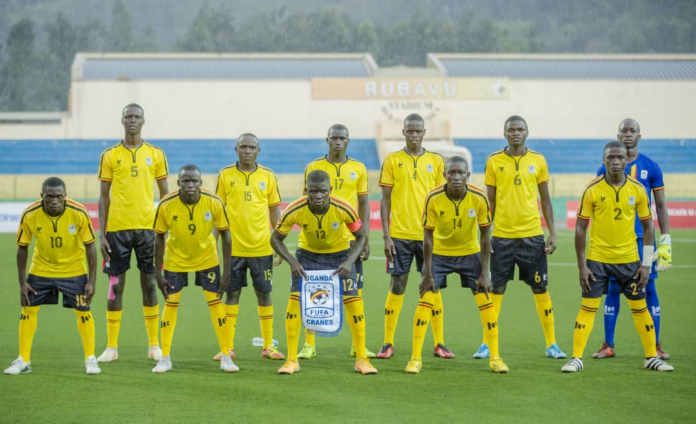
The Football Federation of Uganda (FUFA) has announced a new squad for the upcoming CECAFA U17 AFCON Zonal Qualifiers, which will determine the teams that qualify for next year’s AFCON U17 and potentially the FIFA World Cup.

FUFA has prioritized youth football development since 2013, implementing various programmes such as the Juniors League, youth football coach education and participation in international competitions. This commitment has yielded results, with Uganda’s U17 team currently in Dubai for advanced preparations after qualifying to the FIFA World Cup U17 2025 for the first time in the country’s history.

The selected players have undergone MRI tests and will report to the residential camp today at the FUFA Technical Centre Njeru.

The team will begin preparations ahead of the tournament, scheduled to start on 15th November 2025, in Ethiopia.

This new team, led by Coach Laryea Kingston and five former national team players comprises talented young players from various clubs. Kingston will be assisted by coaches Steven Bengo and Sadam Juma, goalkeeping Coach Yasin Mugabi and Team Manager Joram Katende.

The U17 Cubs are determined to make a strong impression in the qualifiers and secure a spot in the AFCON U17 finals.

The provisional squad

Goalkeepers: Akisam Ndaye (Rays of Grace), Muhammad Masabo (Volf Academy), Adrian Ssemugera (Solitilo B. Stars JT), Richard Mukisa (NEC JT)

Defenders: Musa Matovu Musisi (NEC FC JT), Frank Katongole (St. Julian High School), Elisa Mukisa (St. Julian High School), Enock Mwesigwa (Volf Academy), Abulhafie Ukasha Jjemba (JCCA FC JT), Mudawakali Sumaku (Bukedea CS), Eze Kombi (Amus College), Hilala Agiga (Amus College), Musa Ssuuna (Amus College), Ibrahim Waita (Buddo SS), Trevor Mubiru (Vipers SC JT)

Midfielders: Joseph Langol (Lugazi FC JT), Eric Isabirye (Rays of Grace), Brian Olwa (Edgars Youth Academy), Bob Jerica Atendele (Edgars Youth Academy), Ismail Fahad (KCCA FC JT), Habert Cherotim (Bukedea CS), Henry Muhoozi (Amus College), Roy Olala (Buddo SS), Ashiraf Kyakuwa (Vipers SC JT), Owen Mukisa (Vipers SC JT), Victors Kahinda (Express FC)

Forwards: Shakur Ngobi (Vipers SC JT), Nicholas Kawooya (Buddo SS), Geofrey Wasswa Ssenfuka (Bukedea Comprehensive School), Lorian Kisakye Lwesibawa (St. Julian High School), Ibrahim Ali Nangalama (NEC FC JT).

Stories Continues after ad

High Court dismisses NUP application over political party funding exclusion

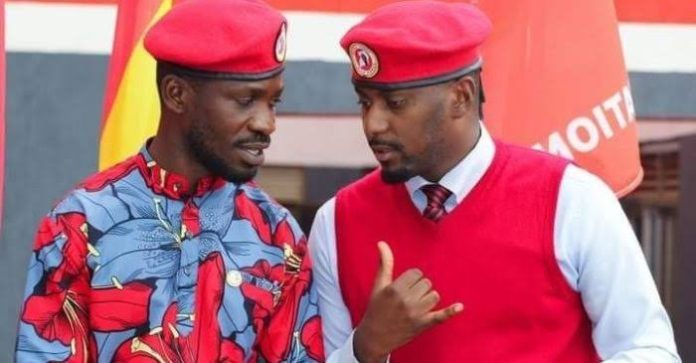
NUP Principal Robert Kyagulanyi aka Bobi Wine and party Secretary General Louis Rubongoya.

The High Court in Kampala has dismissed an application filed by the National Unity Platform (NUP) seeking a temporary injunction to restrain the government from excluding it from receiving statutory political party funding.

The ruling, delivered by Justice Collins Acellam on October 29, 2025 followed NUP’s application against the Attorney General and the Electoral Commission, in which the party sought to block the implementation of a directive by the Minister of Justice and Constitutional Affairs issued on August 25, 2025.

The directive required the Electoral Commission to exclude NUP from the list of political parties eligible for statutory funding until it joined the Inter-Party Organisation for Dialogue (IPOD) in line with the Political Parties and Organisations (Amendment) Act, 2025.

“This is an application brought on motion under Sections 37 and 41 of the Judicature Act and Section 98 of the Civil Procedure Act seeking an interim order restraining the respondents from enforcing the Minister’s directive that excludes the applicant from receiving political party funds,” Justice Acellam noted.

In its argument, NUP through its Secretary General David Lewis Rubongoya insisted that the directive was unlawful and unfair, as it sought to deny the party access to funding it is entitled to as a registered political entity. The party also argued that it was in the process of joining IPOD and should therefore not be excluded.

However, Justice Acellam sided with the respondents, noting that the statutory disbursement of funds to political parties had already been executed by the Electoral Commission by the time NUP filed its application.

“An order cannot be issued against a statutory disbursement that has already been affected, therefore making this matter moot. The only remedy would be solved in the main suit,” Justice Acellam ruled.

The judge further agreed with the Attorney General’s position that the Electoral Commission’s actions were lawful, as Section 2 of the Political Parties and Organisations (Amendment) Act, 2025 provides that public resources can only be given to political parties that are members of IPOD and actively participate in its activities.

“In which case, the applicant is not a member of the said organisation (IPOD) and has at all times disassociated itself from it and its activities,” the judge observed.

The Judge, “It will be unjust and unfair for this Honourable Court to issue such an order as it would disrupt the operationalisation of the law to the benefit of the political parties that are already members of IPOD.”

Justice Acellam noted that the NUP’s application lacked merit since there was no imminent threat or irreparable damage posed to the party.

“Accordingly, the application for an interim order lacks merits as there is no status quo to maintain and no imminent threat is posed to the applicant,” he stated.

The court dismissed the application with costs to the respondents.

Stories Continues after ad

Finance Ministry seeks parliament’s approval to waive Shs1.3 billion VAT debt for Uganda Cooperative Alliance

The Ministry of Finance has asked Parliament to approve the waiver of a Value Added Tax (VAT) debt worth Shs1,313,376,467 owed by the Uganda Cooperative Alliance (UCA), citing severe financial difficulties resulting from the fraudulent sale of the organization’s prime properties.

The proposal was tabled before Parliament on October 29, 2025, by Henry Musasizi, the Minister of State for Finance (General Duties), who argued that the request is in line with Section 43(1) of the Tax Procedures Code Act, Cap 343, which empowers the Minister of Finance to waive taxes for any taxpayer, subject to Parliament’s approval.

“Section 43(2) of the Tax Procedures Code Act Cap 343 provides that where a taxpayer’s case is referred to the Minister by URA and the Minister is satisfied that the tax due cannot be effectively recovered, the Minister shall, with the approval of Parliament, remit in whole or part the submission that the tax due as highlighted above cannot be effectively recovered,” said Minister Musasizi.

The Ministry defended its decision by referencing a letter dated July 18, 2025, from John Musinguzi, the Commissioner General of the Uganda Revenue Authority (URA), recommending a full waiver of the VAT arrears owed by UCA due to the organization’s financial hardship.

“As at 16th July 2025, UCA’s tax obligation stood at a principal VAT of UGX672,527,403, which attracted an interest amounting to UGX640,849,064—bringing the total to UGX1,313,376,467,” wrote Musinguzi.

He added, “In light of our earlier communication, we recommend a waiver of Uganda Cooperative Alliance’s VAT arrears amounting to Shs1,313,376,467 in accordance with Section 43(1) and (2) of the Tax Procedures Code Act 2014, as amended, on grounds of financial hardship.”

The Uganda Cooperative Alliance, a body that unites and represents cooperative societies across the country, has in recent years faced financial distress following the alleged fraudulent sale of its prime assets, which crippled its operations.

The waiver is expected to ease the Alliance’s financial burden and help it regain stability as a key institution in promoting cooperative growth and rural economic empowerment.

Stories Continues after ad

Museveni launches public-private plan for Kidepo airport, tourism growth

NRM Candidate, Yoweri Museveni, campaigning in Kidepo.

President Yoweri Museveni has unveiled a public-private partnership aimed at transforming the remote Karamoja subregion through the construction of the Kidepo International Airport. The project, comparable in scale to Entebbe International Airport, is a strategic economic move designed to unlock the high-end tourism potential of the adjacent Kidepo Valley National Park.

The core business model centers on attracting wealthy international tourists by drastically improving accessibility. The airport will be developed and financed by private investors, who are also expected to construct and operate high-value hotels and related tourism infrastructure in the area. This approach aims to minimize the government’s financial outlay while maximizing foreign direct investment and tourism revenue.

Museveni framed the wildlife in Kidepo as an economic asset, comparing it to a spectator sport that draws paying customers. This high-value, low-volume tourism strategy is intended to be a robust, sustainable revenue generator for the nation and a source of local employment.

The airport project is positioned within the context of a wider regional economic development plan. Other concurrent initiatives highlighted by the president demonstrate a focus on providing foundational support for business and industrial growth.

The government is prioritizing significant upgrades to electricity and road networks, including the Moroto-Kaabong road, aimed at improving connectivity for commerce and trade.

Industrialization is also key, as evidenced by the inspection of the Yaobai International Holding Cement Uganda–SMC Ltd. factory, which will produce 12,000 tonnes of clinker daily. This project underscores the commitment to developing a robust construction industry and creating local employment opportunities.

Ongoing government programs, such as the Parish Development Model and Emyooga Savings and Credit Cooperative Organizations, are injecting billions of shillings directly into grassroots enterprises to foster household income and promote economic self-reliance.

In the agricultural sector, water development projects, including dams and valley tanks, are intended to support an expansion of commercial agriculture and livestock production. This is a key element of the “Four-Acre Model” promoted for household wealth creation.

The Kidepo International Airport is a pivotal investment intended to serve as a gateway for international capital and high-spending tourists, thereby acting as a powerful catalyst for the economic transformation of the Karamoja subregion.

Stories Continues after ad

Uganda’s coffee exports surge 59% in September 2025

Uganda’s coffee exports recorded an impressive 59 percent year-on-year increase in September, driven by a robust crop yield, according to the Ministry of Agriculture, Animal Industry and Fisheries (MAAIF).

In total, Uganda, Africa’s largest coffee exporter, shipped 844,949 60-kilogramme bags of coffee during the month, up from 532,212 bags exported in the same period last year.

The ministry attributed the growth to improved coffee production, with particularly strong harvests reported in the Central and Eastern regions, where Robusta and Arabica are grown respectively by smallholder farmers, some of whom are members of coffee cooperatives.

In addition, the ministry projects that coffee production will rise by 15 percent in the crop year commencing in October. Coffee remains one of Uganda’s key sources of foreign exchange, contributing significantly to the national economy.

Meanwhile, coffee exports for the twelve months [Coffee Year 2024/2025] totalled 8.2 million bags worth $2.3 billion [approximately Shs8.1 trillion], compared to 6.4 million bags worth $1.4 billion (Shs4.9 trillion) in the previous year [Coffee Year 2023/2024]. This represents an increase of 29.6 percent in quantity and 64.1 percent in value, respectively.

Uganda’s coffee exports are projected to reach 850,000 60-kilogramme bags in October 2025, as the main harvest season begins in some parts of the Central and Eastern regions.

World coffee production for 2025/26 is forecast to be 4.3 million bags higher than the previous year, reaching a record 178.7 million bags. This growth is attributed to continued recovery in Vietnam and Indonesia, as well as record output in Ethiopia.

Global coffee bean exports are projected to rise by 700,000 bags to 122.3 million, as gains from Vietnam, Ethiopia, and Indonesia more than offset losses from Brazil and Colombia. Global consumption is forecast at 169.4 million bags, while ending inventories are expected to remain tight at 22.8 million bags, according to the United States Department of Agriculture’s Coffee: World Markets and Trade report (June 2025).

Stories Continues after ad

Equity Bank, Water.org partners to expand access to clean water and sanitation

Kampala, Oct 29, 2025: Stakeholders from government, development agencies, and the private sector gathered at the Protea Hotel in Kampala to witness the launch of a partnership between Equity Bank Uganda and Water.org, a collaboration set to accelerate access to clean water and improved sanitation across the country.

Speaking at the event, Equity Bank Uganda Director Public Sector and Social Investment, Catherine Psomgen, described the partnership as “a bold step in our journey to transform lives and livelihoods through inclusive and sustainable financial solutions.”

She highlighted that the initiative builds on successful collaboration that began in 2011 between Water.org and Equity Bank Kenya, which pioneered innovative financing models such as the Maji Loan and Jamii Safi Loan, helping thousands of households and communities gain access to safe water and better sanitation. Building on that regional success, a 2023 assessment identified Uganda as a country with significant unmet demand for water and sanitation financing.

“The partnership therefore seeks to introduce affordable and accessible financial products tailored for the water, sanitation, and Hygiene (WASH) sector, an effort that aligns with Sustainable Development Goal 6 (Clean Water and Sanitation) and SDG 13 (Climate Action),” said Ms Psomgen.

Through the collaboration, Equity Bank Uganda will deploy its EquiGreen Loan portfolio to finance water and sanitation initiatives for households, micro, small, and medium enterprises and community-based organisations. The program also includes capacity building for bank staff, technical assistance from Water.org, and data-driven impact monitoring to ensure measurable social outcomes.

“Access to clean water is not just a basic need, it is a foundation for health, productivity, and economic empowerment,” said Ms Psomgen. “Through partnership, we are not only financing water and sanitation, but we are also financing dignity, health, and opportunity.”

In his remarks, Water.org Africa Regional Director Francis Musinguzi noted that “water is not only a social service but a primary factor for development. There is no project you can run that is not linked to water.” He underscored the importance of local partnerships and self-driven investments, noting,  “68% of Ugandans don’t have access to clean water, and to reduce this gap, we require about Shs10 trillion every year. And that is why Water.org sought the partnership of a financial institution to help in financing solutions.”

Musinguzi highlighted that sustainable financing, digital innovation, and strong ecosystems are key to expanding water networks and creating lasting impact.

Dr Callist Tindimugaya, Commissioner for Water Resources at the Ministry of Water, commended the initiative, sharing that the government is developing a water investment program aimed at expanding water and sanitation access nationwide. “Partnerships like this are key to ensuring that every Ugandan family can access safe water and dignified sanitation, a shared vision with the government,” said Dr Tindimugaya.

Meanwhile, Yunia Musazi, Executive Director of UWASANET, lauded the partnership as a model for sustainable financing in the WASH sector, adding that Uganda loses an estimated Shs6 trillion annually due to inadequate water and sanitation services.

Stories Continues after ad