Stanbic Bank
Stanbic Bank
18.9 C
Kampala
Stanbic Bank
Stanbic Bank
Home Blog Page 53

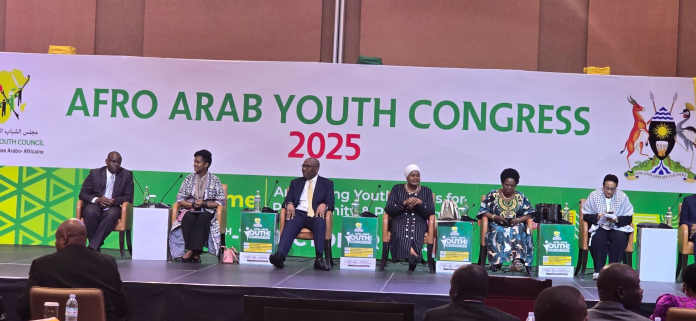
Afro-Arab Youth Congress 2025 opens at Speke Resort Munyonyo

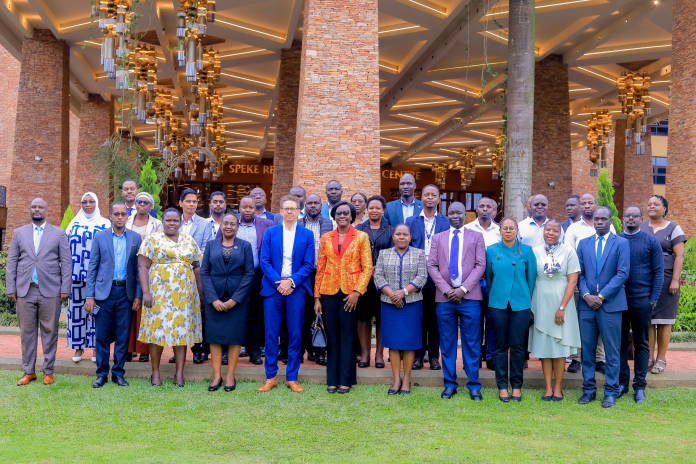
The panelist and host representatives were led by 3rd Deputy Prime Minister Lukia Nakadama, ex-PM, Ruhakana Rukunda, Ministers Balaam Barugahara, and Betty Amongi.

The 2025 Afro-Arab Youth Congress has officially opened at Speke Resort Munyonyo, bringing together thousands of young leaders, policymakers, and innovators from across Africa and the Arab world. The event, hosted under the theme “Amplifying Youth Voices for Peace, Unity, and Prosperity,” aims to strengthen Afro-Arab cooperation while empowering youth to lead in peacebuilding, innovation, and sustainable development.

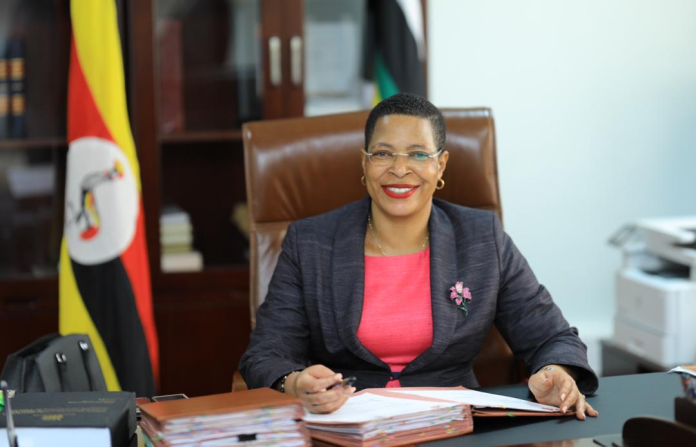
Representing President Yoweri Kaguta Museveni, the Third Deputy Prime Minister and Minister Without Portfolio, Rukia Nakadama, commended the Ministry of Gender, Labour and Social Development and the Afro-Arab Youth Council for successfully hosting the conference in Uganda.

“Bringing all these young people together for a common cause is not an easy task, yet they have successfully done so. On behalf of His Excellency, I warmly welcome you all to Uganda and to this year’s Afro-Arab Youth Conference. We are truly honored to host such a distinguished gathering of young leaders, thinkers, and change-makers from across Africa and the Arab world,” Nakadama said.

She emphasized that the congress provides a unique opportunity for intercultural understanding, collaboration, and the building of networks that will advance shared goals of peace and prosperity.

“In a world that is increasingly complex, your presence here today is both a symbol and a commitment to solidarity and a shared destiny,” she added.

She further noted, “The Afro-Arab Youth Council stands upon a strong foundation—a reminder that our shared commonalities are powerful enough to unite us.”

Highlighting the intertwined cultural and linguistic ties between Africa and the Arab world, Nakadama illustrated how Kiswahili reflects this fusion.

“In Kiswahili, the first ten numbers demonstrate the blend of Arabic and Bantu languages—moja, mbili, tatu, nne, tano from the Bantu dialect, and sita, saba, nane, tisa from Arabic,” she noted.

She added, “This linguistic connection is a simple yet powerful reminder that our histories have long been intertwined.”

She called on the youth to embrace ideological clarity, unity, and purpose in shaping their collective destiny.

“The future is not shaped by chance, but by the clarity of your ideology and the strength of your conviction. We encourage all youth to promote an ideology of shared interests and unity rather than division,” she said.

Adding to the discussions, the Minister of Gender, Labour and Social Development, Hon. Dr. Jane Ruth Aceng, underscored the central role of young people in Uganda’s development agenda.

“I want to state that, for us in the Ministry of Gender, Labour and Social Development, His Excellency the President of Uganda guided us to focus on youth because, statistically, young people now constitute over 73% of Uganda’s population. Therefore, youth are a key priority for both the Ministry of Gender and the Government of Uganda, Aceng said. ”

She explained that President Museveni approved Uganda to host the headquarters of the Afro-Arab Youth Council, reaffirming the country’s commitment to youth empowerment and global cooperation.

 “When the Secretary General of the Afro-Arab Youth Council approached us with a request to establish the Council’s headquarters in Uganda, His Excellency the President did not hesitate. He approved it and instructed the Ministry of Foreign Affairs and our Ministry to ensure that the Council remains based here,” she revealed.

Aceng highlighted that Uganda’s youth programs are designed to address poverty, the root cause of instability, through economic empowerment.

“We have several initiatives including the Youth Livelihood Program, the Youth Venture Capital Fund that provides affordable financing and capital, and youth skilling programs,” she said. “At the rural level, we also implement the Parish Development Model, where the youth are allocated 30 percent of the funding.”

She added that inclusion in governance is another key pillar of Uganda’s youth policy.

“In Parliament, we have five representatives dedicated to the youth. This demonstrates that in Uganda, young people are not just the leaders of tomorrow; they are part of the current generation shaping the national agenda and influencing government decision-making,” she emphasized.

Aceng further urged the youth to embrace tolerance, coexistence, and Pan-Africanism as guiding values for peace and unity.

“We must first see ourselves as human beings before anything else,” she noted.

She added, “Without coexistence and tolerance, we cannot promote peace and unity. Pan-Africanism, coexistence, and patriotism remain key pillars of our approach to youth development.”

Minister of State for Youth and Children Affairs, Hon. Balaam Barugahara, highlighted Uganda’s continued commitment to harnessing the potential of young people through innovation and technology.

He said, “This lecture highlights the various programs being implemented to harness the potential of young people, including ICT innovation, preparing youth for the digital economy, nurturing start-ups, and enhancing innovation capacity. It also emphasizes the establishment of the National Youth Council, which is fully funded by the Government of Uganda.”

Barugahara reaffirmed that Uganda views young people as assets, not problems.

“These initiatives reaffirm Uganda’s belief that youth are not a problem to be solved, but rather a solution to national and global challenges,” he stated.

He noted that Uganda continues to lead in advancing youth cooperation and inclusion at regional and global levels within the East African Community and beyond.

“We are harmonizing youth policies, promoting cross-border innovation, and enhancing mobility. At the African Union, Uganda aligns with Agenda 2063 and the Africa Youth Charter to ensure meaningful youth participation in governance, climate action, and peacebuilding,” he added.

Barugahara revealed that Uganda remains honored to host the Afro-Arab Youth Council, symbolizing South–South cooperation and solidarity.

 “The council was recently gifted 50 acres of land in Akaukalo, along Entebbe Road, a landmark step toward establishing a center of excellence for Afro-Arab youth cooperation,” he announced.

He invited applause for President Museveni for his generous donation and called on all partners to contribute toward the realization of the Afro-Arab Youth Headquarters.

“The government also commends the Council for launching a fundraising campaign to build the Afro-Arab Headquarters—a hub for innovation, leadership development, and intercultural collaboration,” Barugahara said.

He added, “All partners, including governments, development agencies, ambassadors, and private sector players, are called upon to invest in this vision and make it a reality.”

As part of the international addresses, Sadine Omutoni, youth representative from Rwanda commended Uganda for its hospitality and leadership in promoting youth empowerment.

“It is an honor to attend the Afro-Arab Youth Congress 2025 under a theme that resonates deeply with Rwanda’s transformation journey,” she said.

She added, “After the 1994 genocide against the Tutsi that claimed over one million lives, young people worked with elders to save their country, reunite the people, and restore hope under the leadership of President Paul Kagame.”

She emphasized that Rwandan youth have become architects of national unity, leading reconciliation efforts and fostering peace through initiatives such as the Ndumunya Rwanda campaign—meaning “I am Rwandan.”

 “Through youth-led dialogues in schools, universities, and communities, the spirit of unity beyond ethnicity or background is promoted, turning a painful legacy into a foundation of national strength,” she explained.

The minister further highlighted that across Africa and the Arab world, youth are driving innovation in entrepreneurship, technology, agriculture, and creative industries. She noted that programs like Youth Connect Africa, active in over 37 countries, are helping young people access funding, mentorship, and global networks.

“Rwanda’s continued investment in education, skills development, and digital literacy affirms a key truth: the future belongs to the youth, but only if they are empowered today,” she concluded.

The Afro-Arab Youth Congress continues throughout the week, with President Museveni expected to preside over the closing ceremony.


Stories Continues after ad

JEEMA to Bobi Wine: Why endorse NRM’s Kadaga and fight fellow ‘opposition’ leader

Musician turned politician Robert Kyagulanyi aka Bobi Wine, on an earlier political campaign with Bugiri Municipality legislator Asuman Basalirwa, whom he says shouldn't be voted back.

The Justice Forum (JEEMA) has hit back at National Unity Platform (NUP) principal and presidential candidate Robert Kyagulanyi Ssentamu, also known as Bobi Wine for urging voters in Bugiri Municipality to reject incumbent MP and JEEMA leader, Asuman Basalirwa.

In a statement issued on Tuesday, October 7, 2025, JEEMA expressed “grave concern” over what it termed as inconsistency and double standards from Kyagulanyi, accusing him of undermining opposition unity at a critical time.

 “Recently, presidential candidate Robert Kyagulanyi Ssentamu advised voters in Bugiri Municipality to consider replacing incumbent MP and JEEMA party president Hon. Asuman Basalirwa, citing alleged betrayal of the People Power cause,” the statement reads in part.

The party said it was disturbed by the remarks, especially coming from someone who has previously called for a united opposition.

 “JEEMA notes with grave concern the inconsistencies emanating from supposed friendly forces, particularly at this critical juncture when Ugandans expect a united opposition front,” the party added.

The rift between Kyagulanyi and Basalirwa arises from the controversial Anti-Homosexuality Act which Basalirwa spearheaded and successfully tabled in Parliament in 2023. While Bobi Wine publicly supported the Bill as a reflection of “Ugandan cultural values,” he later distanced himself from Basalirwa politically, accusing him of betraying the People Power movement’s cause and aligning too closely with the establishment.

Additionally, JEEMA’s Basalirwa in 2023, sent direct remarks to Kyagulanyi regarding his comments on BBC, expressing disappointment over his claims that the Anti-Homosexuality Bill was used by the government to target him personally. The party stressed that the law, championed by Basalirwa was aligned with JEEMA’s principles and supported by MPs, including some from NUP who risked political backlash to defend cultural and religious values. JEEMA called on Kyagulanyi to retract his accusations and promote respect and cooperation among opposition leaders.

JEEMA, however, insists that Basalirwa remains a committed opposition leader whose legislative decisions were guided by the will of the people rather than political opportunism.

In its statement, JEEMA questioned Kyagulanyi’s decision to endorse regime-aligned politicians like the First Deputy Prime Minister and NRM’s Rebecca Kadaga while attacking a fellow opposition MP.

“We find it contradictory for Mr. Kyagulanyi to praise and endorse regime members like Right Hon. Rebecca Kadaga while calling for the replacement of a fellow opposition leader,” the statement reads.

JEEMA questioned, “Will this time the endorsement of Hon. Kadaga of NRM deliver Busoga to opposition? Will the undermining of the formidable Hon. Basalirwa strengthen the opposition?”

The party’s spokesperson, Dr. Swaib Kaggwa Nsereko, who signed the statement, cautioned opposition parties against “external distractions” and called for renewed unity to challenge the ruling National Resistance Movement (NRM).

“JEEMA urges opposition forces to stay united and avoid external distractions. We appreciate the support Ugandans have accorded our candidates and thank Bugiri Municipality voters for their commitment to Hon. Basalirwa Asuman,” Nsereko said in the statement.

The clash also arises from the differences within the cooperation under the Interparty Organisation for Dialogue (IPOD) where JEEMA is a registered member of IPOD, a platform that NUP exited in 2021, accusing it of being a tool for government manipulation. However, with NUP now reportedly considering rejoining to access IPOD funding is seen as a renewed political friction between the two camps.

Stories Continues after ad

BoU Report: Gov’t spent Shs193.7b on printing new currency notes in 2025

The fifty-thousand-shilling note.

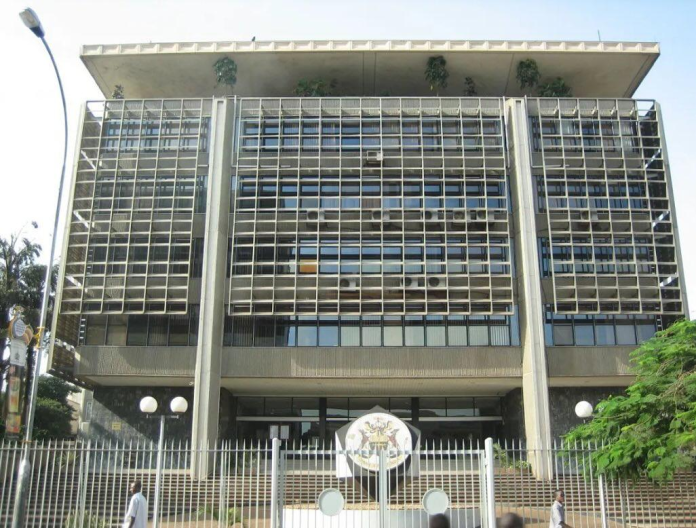
The government spent Shs193.757 billion to print new currency notes in 2025, rising from Shs174.209 billion spent in 2024, according to the latest Bank of Uganda (BoU) Integrated Annual Report for the year ended June 30, 2025.

The report authored and released by the Central Bank this on Monday 6th, details the institution’s operational and financial performance, including key expenditures, payments, and staff costs.

The report reveals that the cost of printing banknotes increased during the financial year, reflecting the continued demand for high-quality currency and the replacement of worn-out notes in circulation.

In the same financial year, the Central Bank spent Shs9.803 billion to mint coins, slightly lower than the Shs13.299 billion spent in 2024. The Bank attributed the reduction to efficiency improvements in coin production and supply chain management.

“The Bank continues to ensure that there is an adequate and clean supply of currency in the economy while managing production and distribution costs efficiently,” the report states.

The Bank of Uganda further reported that currency in circulation grew to Shs8.98 trillion by June 2025, up from Shs8.2 trillion the previous year, driven by increased economic activity and seasonal cash demand.

The report also highlights a sharp rise in employee-related expenses, noting that the Central Bank spent Shs239.210 billion on staff salaries, wages, and allowances in 2025—up from Shs192.263 billion in 2024.

According to the Bank, “the increase in staff costs was mainly due to salary adjustments, recruitment of specialized staff, and implementation of employee welfare and capacity-building programs.”

The Integrated Annual Report, which has been presented to the Minister of Finance, Planning, and Economic Development for onward transmission to Parliament, is prepared in accordance with Section 49(1) of the Bank of Uganda Act.

It further shows that the Central Bank’s total operating expenses rose moderately, consistent with its expanded operations in monetary policy, supervision, payment systems modernization, and financial stability initiatives.

In its conclusion, the report underscores the Bank’s commitment to transparency and prudent management of public resources, noting that *“every shilling spent supports the Bank’s mandate to maintain price stability and ensure a sound, resilient financial system for Uganda’s sustainable growth.”*

Meanwhile, the report also discloses that the Bank of Uganda extended loans amounting to Shs3.798 billion to its top Executive Management during the financial year 2025. The loans were issued at interest rates ranging between 0 and 3 percent and are repayable within 20 years, in line with the Bank’s policy.

“The advances are given at preferential rates ranging from 0 percent to 3 percent as determined by the Board of Directors. The loans are payable for periods between one and twenty years,” the report states.

The Bank earned Shs43 million in interest on these loans, up from Shs37 million the previous year, according to the report.

Stories Continues after ad

Bank of Uganda reports rise in expenses and loan adjustments for FY 2024/25

The Bank of Uganda’s Integrated Annual Report for the 2024/25 financial year shows that operating expenses and loan adjustments rose slightly as the institution navigated currency costs, loan provisions, and payments to staff and contractors.

According to the report, “annual operating expenditure increased by 6 percent from Shs621 billion in 2023/24 to Shs660 billion in 2024/25.”

The increase was mainly due to higher employee costs, currency production expenses, and general administrative payments.

Employee benefits accounted for Shs286.6 billion, up from Shs230.2 billion the previous year, covering salaries, pensions, medical care, and staff training. General and administrative costs also grew to Shs102.7 billion, driven by expenses on communication, travel, software maintenance, and public awareness activities.

“Currency costs rose to Shs212.6 billion, compared to Shs203.1 billion in the previous year,” the report notes, pointing to higher spending on banknote printing and coin minting. The central bank also spent Shs26.2 billion on financial and professional charges, including legal fees, consultancy, and reserve management costs.

Despite the higher spending, the Bank’s total expenditure remained 3 percent below its approved budget of Shs706 billion. The cost-to-income ratio stood at 44 percent, up from 40 percent in 2023/24, but within the strategic target of 75 percent.

The report further reveals that the Bank adjusted its loan portfolio, particularly loans and advances to government, which fell sharply to Shs1.79 trillion from Shs8.55 trillion. This followed the conversion of Shs7.78 trillion in government obligations into a 10-year bond.

The central bank also provided loans and advances to its staff amounting to Shs114 billion, up from Shs100 billion the previous year, while loans to executive management stood at Shs3.8 billion.

On the liability side, “accounts payable and other creditors totaled Shs242.9 billion, compared to Shs262 billion in the previous year,” reflecting payments related to suppliers, financial institutions, and pension obligations.

The report adds that the Bank made repayments of Shs28.2 billion in legal settlements and other provisions during the year. No dividend was declared to the government for the second year in a row.

Despite recording a net surplus of Shs658.9 billion down from Shs1.14 trillion in the previous year, the Bank remains financially sound, with total assets rising by 21.5 percent to Shs31.9 trillion and equity increasing to Shs6.2 trillion.

“The Bank continues to operate within its financial means, ensuring effective management of costs, loans, and payments while fulfilling its mandate to maintain monetary and financial stability,” the report reveals. 

Stories Continues after ad

Uganda to host 15th edition Inter-Parliamentary games in December

Asuman Basalirwa, Chairperson of the Parliament Sports Club.

Uganda will host the 15th Edition of the East African Community [EAC] Inter-Parliamentary Games from December 5-15, 2025, an activity designed to strengthen regional integration, cooperation, and unity among Partner States.

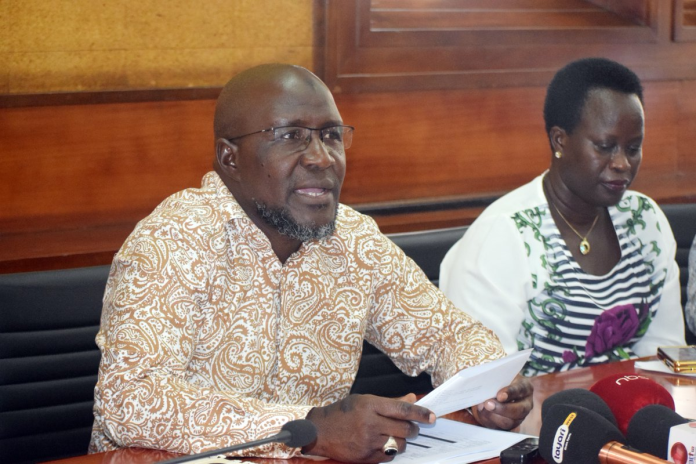
Addressing the media yesterday, the Chairperson of the Parliament Sports Club, Asuman Basalirwa, said that the games are not merely a sporting competition but a vital platform for fostering mutual understanding and collaboration among legislators and parliamentary staff across the EAC region.

“People complain that EAC is only known to the people at the top and that the common man does not know its relevance. We will use the games to sensitise the nation on the beauty of integration,” said Basalirwa.

Basalirwa, who is the Bugiri Municipality Member of Parliament, explained that the sports event, now a permanent fixture on the East African Legislative Assembly [EALA] calendar, has become a key driver of the integration agenda by promoting people-to-people connections and nurturing the spirit of East African unity.

The initiative is anchored in Article 49 [2][a] of the Treaty for the Establishment of the EAC, which calls for enhanced engagement between EALA and national parliaments.

He added that the games offer an opportunity to promote healthy living among citizens through sports and physical activity.

“There are many diseases we shall avoid if we embrace physical exercises. We hope that when citizens come and watch their representatives active in various games, they will be motivated to emulate the practice,” Basalirwa said.

According to Basalirwa, Uganda stands to benefit economically from hosting the tournament with the influx of legislators and officials from all nine EAC member states expected to boost tourism and trade by generating over US$ 1 million in revenue.

Santa Alum Ogwang, the Oyam District Woman Member of Parliament who is the manager of the Parliamentary Sports Team called on the media to use the event to highlight the achievements and benefits of regional integration.

She also encouraged Ugandan entrepreneurs to take advantage of the games to showcase and market their businesses.

The EAC Inter-Parliamentary Games were first introduced by EALA in 2001 as a way of popularising and sensitising citizens about the integration process. They were later institutionalised in 2009 through a resolution by the EAC Bureau of Speakers.

Initially, Burundi had been selected to host the 2025 edition in Bujumbura but withdrew in May 2025 due to national elections scheduled during the same period.

Parliamentary sports teams from Uganda, EALA, Kenya, Rwanda, the Democratic Republic of Congo, Somalia, Tanzania, and South Sudan are expected to participate in games like football, netball, basketball, volleyball, athletics, tug of war, golf, and darts.

Stories Continues after ad

Equity Bank Uganda to plant 60,000 trees across Bugisu Sub-region

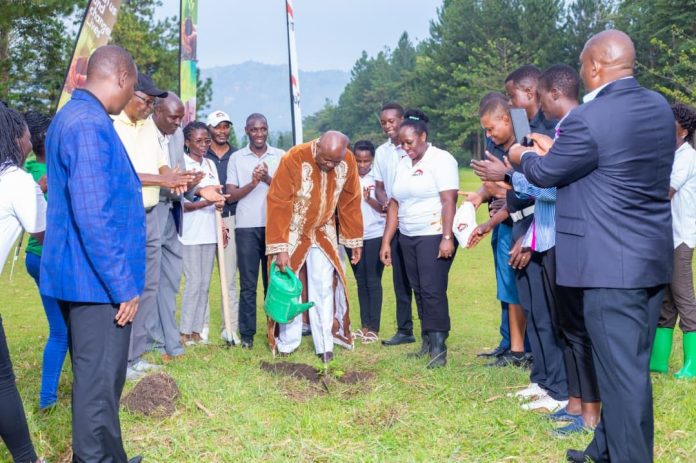
Umukuka wa Bugisu, Jude Mudoma, plants a tree with Equity Bank staff

Equity Bank Uganda, in partnership with the Umukuka wa Bugisu, Jude Mudoma, the cultural leader of the Bamasaba, and the Gro Foundation, has launched a major tree-planting initiative aimed at decarbonizing dumpsites and promoting environmental conservation in the Bugisu subregion.

The bank has set aside Shs60 Million to plant 60,000 trees across the Bugisu sub-region by the end of 2026

The project, covering eight acres around the major dumping site in Mbale city, will see the planting of trees that will act as natural carbon sinks, helping to keep the city green, safe, and resilient to climate change impacts. The initiative also aims to prevent disasters similar to those experienced at Kiteezi landfill in Kampala.

Under the collaboration, Equity Bank will provide Shs60 Million in financing while Gro Foundation, a nonprofit organisation focused on reforestation, will offer technical expertise to ensure that native tree species are planted, nurtured and monitored for long term sustainability.

The tree-planting exercise was officially launched on Saturday by the Umukuka, during celebrations marking his two years as Chief Elder of Bugisu.

By end of 2026, the partners target to plant 60,000 trees across the region.

Speaking at the event, Virginia Ssemakula, Equity Bank’s Manager for Energy, Environment and Climate Change, said the bank’s commitment goes beyond traditional banking.

“At Equity, we believe it is our responsibility to go beyond banking. That’s why we are heavily invested in energy and environmental initiatives,” she said.

She added, “We are investing in healthier communities and a more sustainable future, reflecting our vision of growing not only financial prosperity but also environmental resilience.”

Lydia Apeduno, the Mbale City Council Composite Manager, noted that trees planted around the landfills would help reduce carbon emissions.

“Dumping sites often emit gases such as carbon dioxide. These trees will help in carbon reduction and also act as demarcations to prevent encroachment,” she said.

The program will also support the people of Bugisu in achieving agricultural and socio-economic transformation, while helping to mitigate recurring mudslides in the region.

Trees are expected to improve soil health, conserve water, and strengthen farm resilience against climate change, while providing farmers with food, fodder, and additional income sources.

Laban Musiguzi, from Gro Foundation, highlighted the broader benefits of agroforestry.

“Integrating trees into farming systems helps control soil erosion, manage pests and diseases, and create a more diverse and productive ecosystem,” he said.

“This is not just about planting trees, but about planting hope — securing the environment and protecting the climate for generations to come.”

The event reaffirmed Equity Bank’s commitment to environmental protection and sustainable development. The initiative is part of the bank’s Environmental, Social and Governance (ESG) strategy, which integrates sustainability into its core operations. Equity Bank has set a national target to plant 35 million trees by 2026.

Stories Continues after ad

Tycoon Sudhir honors late son Rajiv with tower sign on Kampala skyline

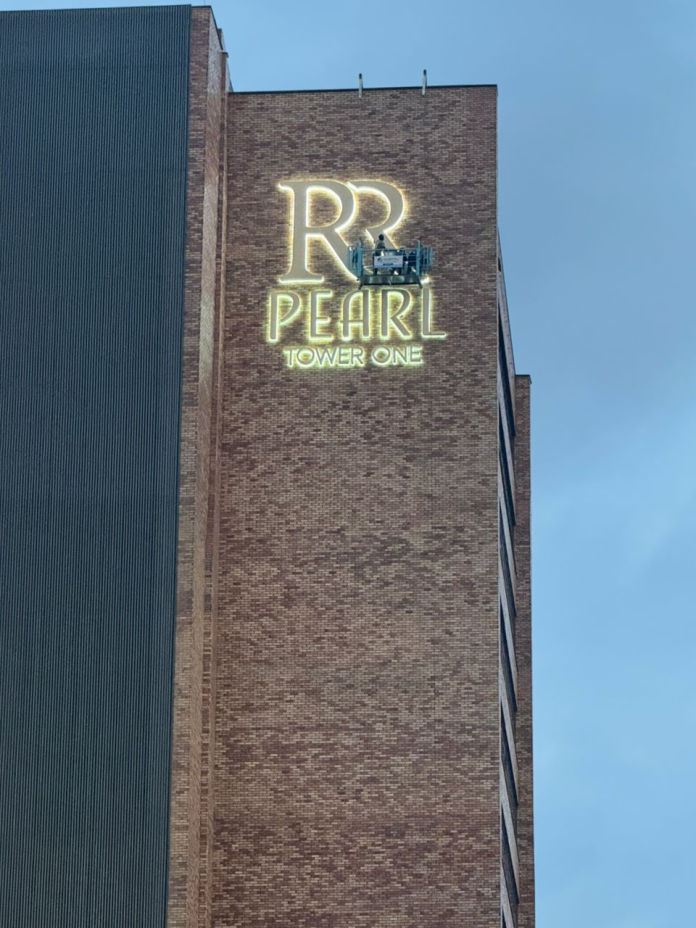
Kampala’s skyline has taken on new meaning after the “RR” sign was placed on top of the 19-floor RR Pearl Tower One along Yusuf Lule Road. The large metallic letters, clearly visible across the city, are a lasting tribute from businessman Sudhir Ruparelia to his late son, Rajiv Ruparelia.

For Sudhir, the founder of the Ruparelia Group, this is more than a company rebranding. It is a personal way to keep his son’s memory alive. Rajiv, who died in a car accident on May 3, 2025, at only 35 years old, was widely seen as the next leader of the family’s businesses in real estate, hospitality, and finance. His death shocked the country and left many Ugandans mourning the loss of a young, promising businessman.

During the cremation ceremony at the Hindu Crematorium in Lugogo, held on May 6, Sudhir broke down in tears as family, friends and dignitaries paid tribute to Rajiv’s life. Since then, the family has continued to find ways to remember him, turning grief into meaningful action.

The “RR” letters now placed on the tower stand for Rajiv Ruparelia and also for the Ruparelia brand. The tower, originally known as Park Tower One, was renamed RR Pearl Tower One to reflect Rajiv’s influence and contribution to the Ruparelia Group’s projects. Rajiv had a deep interest in property development and was closely involved in the early plans for the Pearl Business Park.

This tower represents Rajiv’s dreams and hard work. It’s a reminder that his spirit continues to guide the family.

Developed by Meera Investments, a company under the Ruparelia Group, RR Pearl Tower One is designed to host top companies looking for modern office space. It is also part of the larger Pearl Business Park project, which will have ten towers that are expected to change Kampala’s city landscape.

As night falls and the “RR” lights up across the skyline, it stands as a sign of love, memory, and hope, a father’s way of saying that even though his son is gone, his legacy still shines over Kampala.

Stories Continues after ad

Game Zone for Safe and Responsible Online Play

The Philippine digital gaming scene has grown at a pace that few could have predicted a decade ago. At the heart of this shift sits Game Zone, a platform that has become more than just another stop for entertainment. It is not only recognized as a trusted PH gaming hub but also as a standard-bearer for safety and responsible play. At a time when online activities are increasingly woven into daily routines, the platform reminds us that enjoyment should never come at the expense of player well-being.

GameZone’s presence in the industry highlights how a platform can thrive while keeping responsibility at its core. Filipino players have embraced it not only for its wide selection of GameZone online games but also for its clear commitment to secure access, balanced play, and meaningful connection. It is a reminder that in digital entertainment, the experience is richer when trust and enjoyment go hand in hand.

The Need for Safer Gaming Spaces

Digital gaming platforms are more accessible than ever, with smartphones and stable internet placing countless titles at people’s fingertips. But this accessibility also raises important questions: how do we make sure players remain safe? How do we ensure that gaming enhances life instead of creating harm?

Game Zone has positioned itself as an answer to these questions. By prioritizing safeguards such as protected GameZone PH login systems and secure account management, it addresses one of the biggest concerns in online gaming—trust. Players who log in want assurance that their personal information is kept safe. The fact that GameZone has invested heavily in this area shows that it understands trust as the foundation of digital leisure.

Many platforms stop at offering games, but Game Zone extends further. It recognizes that protecting users requires more than technical security; it also involves creating an environment that encourages balance and responsibility. This emphasis separates it from competitors that focus solely on game variety without considering long-term player well-being.

A Library Designed for Enjoyment and Balance

GameZone’s selection of titles reflects an understanding that Filipino players look for variety while valuing familiar cultural touchpoints. Its catalog of GameZone online games ranges from card classics, which mirror traditional pastimes, to GameZone slot titles that bring fast-paced and visually engaging experiences.

Each title is built with accessibility in mind. Whether someone is a newcomer exploring GameZone online play for the first time or a long-time enthusiast revisiting familiar strategies, the platform ensures smooth integration. The goal is not to overwhelm players with complexity but to provide entertainment that feels welcoming while still rewarding skill and strategy.

The addition of features such as GameZone download further enhances this accessibility. By making its titles available on mobile devices, the platform enables players to enjoy quick sessions on the move or longer sessions at home. This adaptability makes Game Zone a consistent companion, fitting into different lifestyles without demanding complicated setups.

Why Filipino Players Gravitate Toward Game Zone

One reason Game Zone resonates so strongly in the Philippines is its cultural sensitivity. Filipinos have long associated games with social bonding, whether it’s family gatherings around a card table or neighborhood matches that bring communities together. GameZone’s digital version of these traditions respects that heritage while presenting it in a modern format.

Through GameZone online play, users connect across distances, keeping the social aspect alive. Players can strategize with friends, exchange moves, and share moments, echoing the communal nature of traditional games. In this way, Game Zone bridges the gap between past and present, reminding us that digital entertainment does not have to be isolating—it can, in fact, strengthen connections.

Security as a Cornerstone

Trust in any platform begins with secure access, and GameZone’s approach to GameZone PH login shows exactly how vital this aspect is. Its login system is not an afterthought but a carefully crafted gatekeeping process that ensures accounts remain private and data remains safe.

This emphasis on security creates peace of mind. Players know that when they log in, they are stepping into an environment that values their privacy. It is an essential factor in an era where concerns about data misuse and account breaches often overshadow the fun of online entertainment. Game Zone’s credibility, therefore, lies not only in what it offers but in how it safeguards its community.

Responsible Play as a Guiding Principle

Game Zone has also become a platform that promotes healthy routines. By introducing tools that encourage moderation—such as time reminders and optional session limits—it takes a proactive stance in shaping how players interact with games.

This philosophy is simple yet significant: gaming should complement life, not dominate it. When entertainment becomes overwhelming, it stops being enjoyable. GameZone has recognized this balance and designed its platform accordingly, earning respect from players who value responsibility alongside leisure.

The Role of GameZone Slot in Modern Play

Among its most popular features, GameZone slot titles stand out for their quick pace and engaging mechanics. Designed for bursts of entertainment, they add variety to the catalog without compromising the platform’s values.

These slots also come integrated with the same responsible play features found across Game Zone. Players enjoy them for what they are—lighthearted experiences that bring excitement in moderation. This approach is key: the thrill is there, but so is the reminder to play with balance.

Convenience Through GameZone Download

Another factor driving Game Zone’s relevance is convenience. The GameZone download feature allows users to carry their library in their pocket, making online play seamless across devices. Whether through a mobile app or browser-based access, the platform ensures consistency.

This flexibility matters in a country where daily routines vary widely. Some players may prefer quick sessions during commutes, while others may settle into longer games at home. GameZone’s adaptability makes it a reliable partner in these different lifestyles, further reinforcing its appeal.

Social Interaction in Digital Spaces

While many view digital gaming as a solitary pursuit, GameZone online play demonstrates the opposite. The platform has built features that highlight collaboration and connection. Friends can meet virtually, share strategies, and experience camaraderie, despite physical distances. For Filipino players in particular, this matters. Gaming is often associated with bonding, and Game Zone ensures that tradition continues in its online version. The platform is not just about entertainment but about maintaining the social threads that games have historically nurtured

Stories Continues after ad

UCAA, EU-CORSIA kick off three-day national workshop at Speke Resort Munyonyo

Uganda Civil Aviation Authority, in partnership with the European Union - Carbon Offsetting and Reduction Scheme for International Aviation (EU-CORSIA) Africa and Caribbean Project, October 6, 2025, workshop at Speke Resort Munyonyo.

Uganda Civil Aviation Authority, in partnership with the European Union  – Carbon Offsetting and Reduction Scheme for International Aviation (EU-CORSIA) Africa and Caribbean Project, has today (October 6, 2025), opened a three-day national workshop at Speke Resort Munyonyo.

The discussions are centred on the Carbon Offsetting and Reduction Scheme for International Aviation (CORSIA), Sustainable Aviation Fuels (SAF), and CORSIA Eligible Fuels (CEF).

The workshop has brought together representatives from government ministries, airlines, academia, and the aviation industry with the shared goal of building Uganda’s capacity to reduce carbon emissions from aviation while exploring the opportunities presented by sustainable fuels.

Speaking during the opening ceremony, the Deputy Director General of UCAA, Ms. Olive Birungi Lumonya reaffirmed Uganda’s commitment to ICAO’s global climate goals. She emphasized that the country is investing in emissions tracking systems and exploring the potential of Sustainable Aviation Fuels to deliver both environmental and economic benefits.

She described the workshop as an important step in ensuring Uganda’s active contribution to creating greener skies for future generations.

Over the three days, participants will take part in sessions that begin with understanding the fundamentals of SAF, including its value chain from feedstock to flight, sustainability certification, and life-cycle emissions. Discussions will then progress to SAF feedstocks, global production and supply trends, and CORSIA’s monitoring, reporting, and offsetting requirements, alongside the framework for CORSIA Eligible Fuels and the relevant ICAO documentation.

The final day will focus on policies for SAF development, Uganda’s plans to incorporate SAF into its national aviation strategy, and other market-based measures aimed at reducing emissions.

While officially opening the workshop, the Deputy Director General expressed gratitude to the European Aviation Safety Agency (EASA) for its support through the EU-CORSIA Africa and Caribbean Project in helping African States mitigate greenhouse gas emissions from the civil aviation sector.

She further extended appreciation to the European Union for funding the project, noting that such partnerships are critical in advancing Uganda’s transition to greener skies.

Stories Continues after ad

Electoral Commission deletes three women seeking to unseat Speaker Among

Speaker Anita Among.

The Electoral Commission has defended its decision to delete three women from the national voters’ register. The trio had expressed interest in challenging Speaker of Parliament Anita Among in the upcoming 2026 general elections.

In an affidavit filed in the High Court of Uganda, Civil Division, Acting Secretary of the Commission, Richard Kamugisha Baabo, stated that the deletion was based on recommendations from parish tribunals and was carried out in accordance with the law.

“The 4th Respondent rolled out its election roadmap to the country detailing all segments of the 2025/26 general elections processes through electronic and print media to all stakeholders and political actors in the country,” Kamugisha stated.

The affidavit names the affected individuals as Akol Hellen Odeke, Norma Susan Otai, and Alupo Mercy Marion. According to the Commission, all three were given the chance to contest the tribunal’s decision but failed to present evidence within the stipulated period.

Alupo Mercy is the National Unity Platform (NUP) candidate, Norma Otai is the FDC candidate while Akol Hellen attempted to run with Among in the NRM primaries and she was disqualified for apparently not having a house in Bukedea

“The 1st Respondent formally withdrew from review proceedings and informed the 4th Respondent that she was not interested in challenging the decision of the parish tribunal,” the affidavit reads in part.

Kamugisha further emphasized that the principles of fairness and natural justice were respected.

“The Commission under MIN Comp/012/2025 noted that the 1st, 2nd, and 3rd Respondents were given 10 days of Natural Justice under the law to challenge the recommendations to the tribunal and therefore a right to a fair hearing was available and not utilized,” he affirmed.

He added that the Commission found no contrary evidence to overturn the tribunal’s recommendations.

“The Commission during review upheld the decision of the Parish tribunals of Kopeta Parish, Kolir Sub county, Kotolut Parish, Kidongole Sub county, recommending deletion of the 1st, 2nd, and 3rd Respondents based on the evidence adduced by the parties,” Kamugisha stated.

Stories Continues after ad