Stanbic Bank
Stanbic Bank
19.9 C
Kampala
Stanbic Bank
Stanbic Bank
Home Blog Page 67

PAC slams stalled Mubende road after Shs2.5b spent on supervision alone

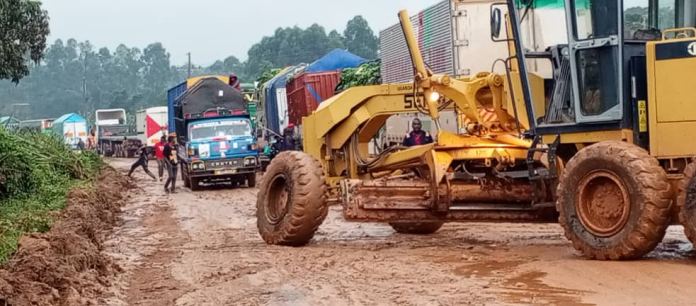
Road equipment on the stalled road site.

The Parliamentary Public Accounts Committee (PAC) on Central Government has raised alarm over the stalled Mubende road project, describing it as a glaring example of how billions of taxpayersโ€™ money are lost to inflated contracts, weak supervision, and poor loan absorption.

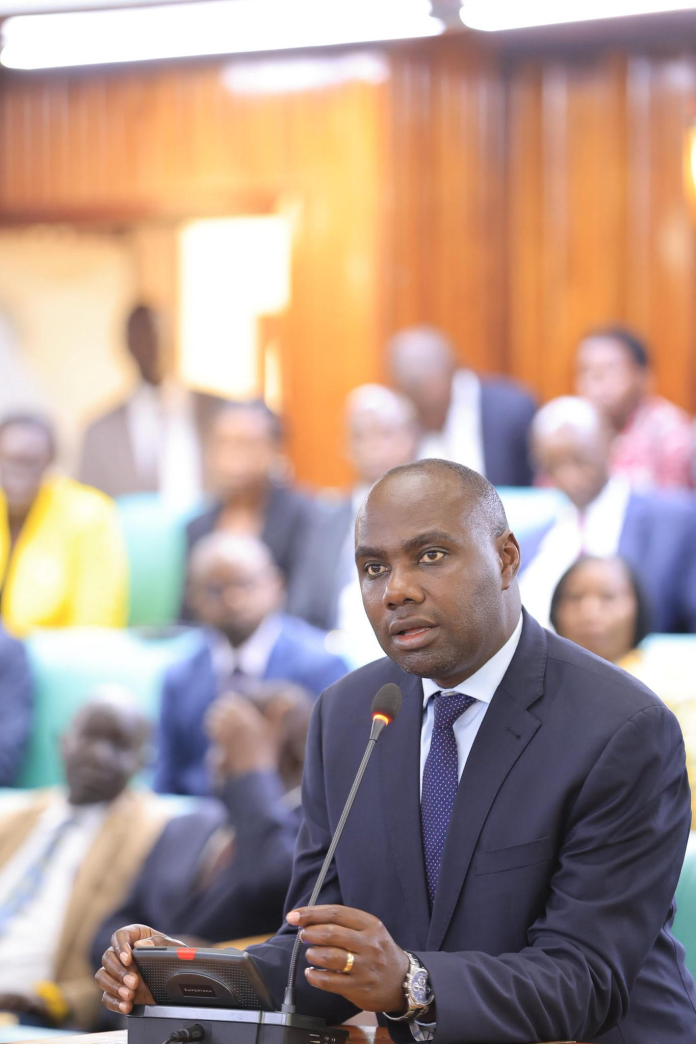
Presenting the committeeโ€™s findings from the Auditor Generalโ€™s report for the 2023/2024 financial year, PAC Chairperson Muhammad Muwanga Kivumbi (Butambala County) said the Mubende road has remained incomplete despite billions being allocated, with supervision alone consuming Shs2.5 billion for a stretch of just 2.86 kilometres. On-site inspections revealed that construction equipment has been abandoned for months, leaving residents stranded and businesses struggling as the road remains impassable.

โ€œThis project is a glaring example of how borrowed money is wasted. The road is incomplete, yet contractors and supervisors have already been paid billions,โ€ Muwanga Kivumbi told Parliament during a plenary sitting chaired by Speaker Anita Among.

The Mubende road saga was presented alongside shocking cost discrepancies in other projects. The report highlighted that the rehabilitation of 1.37 kilometres in Arua City cost Shs13.4 billion, while 2.68 kilometres in Fort Portal City consumed Shs21.4 billion. By contrast, Mbarara City upgraded a kilometre of road for only Shs4.9 billion. According to the Ministry of Works and Transport, the average cost of upgrading a kilometre of paved road is Shs3.1 billion, meaning that both Arua and Fort Portal projects were billed at over three times the reasonable estimate.

โ€œThe Fort Portal project alone could have financed nearly seven kilometres of road at average cost, but only 2.6km was delivered,โ€ Muwanga Kivumbi observed, warning that the pattern pointed to deliberate inflation of contracts.

The committee further condemned skyrocketing supervision costs, such as Shs3 billion spent to oversee the 1.37km project in Arua, arguing that such expenses reflect collusion between contractors and government officials.

Beyond inflated road contracts, the Auditor Generalโ€™s report revealed widespread failure in loan absorption. Out of Shs7.958 trillion in loans and Shs3.97 trillion in grants accessed in the year under review, less than half of the loans and just a quarter of the grants were put to use. In 17 major government loans examined, the average disbursement rate was 36.7 percent, with the Mbararaโ€“Masaka Transmission Line disbursing only 0.3 percent despite its completion deadline passing in June 2023.

Speaker Anita Among expressed outrage at the findings, particularly the revelation that Uganda continues to service interest on idle loans while projects like Mubende road stall.

โ€œWe need to look at this seriously because we are paying for loans that we are not using. We will dedicate a full day for this item to be debated,โ€ she said, directing the Ministry of Finance to update Parliament on the status of borrowed but unused funds.

Minister for Defence and Veteran Affairs, Jacob Oboth, added his voice to the call for reforms, urging Parliament to develop strong policies that ensure better loan absorption and value-for-money in infrastructure spending.

PAC warned that unless corruption, poor planning, and weak oversight are urgently addressed, Uganda risks plunging deeper into debt with little to show for it. 

โ€œThese inflated costs have deprived Ugandans of better roads, schools, and hospitals. Borrowed money is wasted on enriching a few individuals,โ€ the committeeโ€™s report noted.

The stalled Mubende road, with its idle machinery and wasted billions, now stands as the clearest symbol of how poor oversight and inflated contracts are undermining Ugandaโ€™s development efforts.

Stories Continues after ad

Parliament approves Shs374b IFAD loan for livestock project in 55 districts

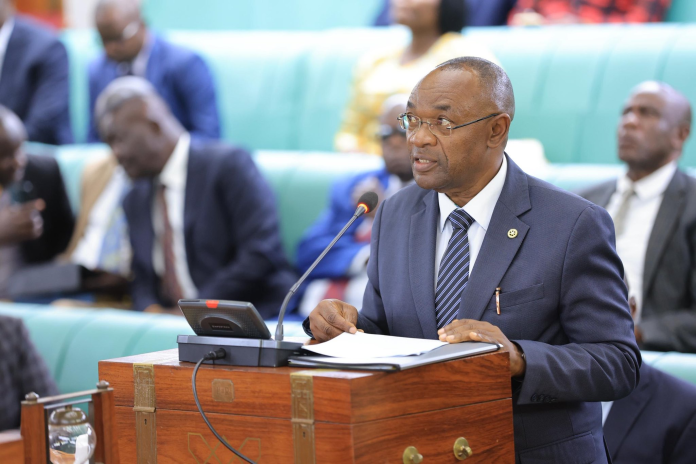
Minister Henry Musasizi

Parliament has approved the governmentโ€™s request to borrow up to $99.6 million (about Shs374 billion) from the International Fund for Agricultural Development (IFAD) to finance the Resilient Livestock Value Chain Project (ReLiV) in 55 districts, despite sharp disagreements among MPs over its design, cost components, and beneficiaries.

The loan request was presented by the Minister of State for Finance, Planning and Economic Development (General Duties), Henry Musasizi, during a plenary sitting on Tuesday, September 9, 2025, chaired by Speaker Anita Among.

โ€œThe goal of the project is to contribute to improved livelihoods of smallholder livestock farmers in Uganda. The project development objective is to enhance income, nutrition and resilience of smallholder dairy and beef producers,โ€ Musasizi explained, adding that the project targets districts along the cattle corridor with high levels of poverty, food insecurity, and malnutrition.

According to the minister, the ReLiV project will directly benefit 400,000 households and an estimated 20 million people indirectly, with at least 40 percent of the beneficiaries being women and 25 percent youth.

However, while presenting the report of the Committee on National Economy, Chairperson Hon. John Bosco Ikojo (Bukedea County) recommended approval of the loan but called for its re-negotiation.

โ€œThe loan should be re-negotiated to move resources from consumptive items to acquisition of goods, services, and inputs, as well as equipment and materials,โ€ Ikojo said. He pointed out that Shs600 million had been earmarked for the purchase of vehicles, an expenditure he argued was unnecessary.

The committee further noted that while the IFAD loan terms were highly concessionalโ€”with zero interest, a long maturity period, and a 50-year repayment windowโ€”members were not given adequate time to scrutinise the loan before approval.

โ€œThe committee notes that the proposed financing terms of IFAD are highly concessional with long-term maturing and grace periods. Of recent, government has not been having access to such concessional loans,โ€ Ikojo stated.

But some MPs voiced strong objections. Ibrahim Ssemujju Nganda (FDC, Kira Municipality) warned that Parliament should not rubber-stamp the loan without addressing the committeeโ€™s concerns.

โ€œWith the proposals that the committee has made, they have left us with no options but to say no to this loan request. I think they are only polite not to make government look bad,โ€ Ssemujju argued.

In defence, Minister Musasizi insisted the loan was urgently needed and had favourable conditions. โ€œTo allay Ssemujjuโ€™s fears, I would like to clarify that this loan has the best terms. The interest rate is zero and the repayment period is 50 years,โ€ he said, stressing that the government must sign the agreement before 12 September 2025.

But other legislators, including Hon. Muhammad Muwanga Kivumbi (NUP, Butambala County), questioned whether the funds would truly reach farmers. He noted that US$59 million out of the US$99.6 million was allocated to government institutions such as the National Agricultural Research Organisation (NARO) and Kawanda Agricultural Research Institute.

โ€œYou do not see a farmer, you only see government ranches being financed. So, who is benefiting from this loan?โ€ Muwanga Kivumbi asked. He also criticised the plan to spend US$8 million on project management, describing it as wasteful. โ€œThis looks like a classical failed project that is intended to benefit only the elite, and I am not convinced that this committee has had time to look at the benefits of this project.โ€

Despite these concerns, the House voted to approve the Shs374 billion loan, though pressure remains on government to re-negotiate the financing plan to reduce administrative costs and ensure the funds directly support farmers in the cattle corridor.

Stories Continues after ad

Germany backs โ‚ฌ16.8m Aga Khan University expansion in Kampala

Aga Khan University-Kampala.

The Aga Khan University (AKU) will tomorrow inaugurate two new state-of-the-art buildings for its Graduate School of Media and Communications (GSMC) and School of Nursing and Midwifery (SONAM), in an investment aimed at expanding educational and employment opportunities in Uganda and the wider East African Community.

The facilities, located at the universityโ€™s Kampala campus, were made possible through a โ‚ฌ16.8 million grant from the German Federal Ministry for Economic Cooperation and Development (BMZ), channeled through KfW Development Bank.

According to a statement from the German Embassy in Kampala, the development reflects Germanyโ€™s continued commitment to strengthening higher education, professional training, and skills development in Africa.

โ€œThis investment represents a significant step towards improving access to quality education and creating meaningful employment opportunities across the East African Community,โ€ the Embassy noted.

The new buildings are expected to enhance training capacity in two critical sectors โ€“ media and healthcare. The GSMC will offer cutting-edge facilities for journalists, communicators, and digital media specialists, while SONAM will provide expanded space for nursing and midwifery education to address regional health workforce gaps.

The German Embassy emphasized that the collaboration aligns with both Ugandaโ€™s national development goals and regional integration efforts under the EAC.

โ€œBy investing in education, we are investing in the future. These facilities will equip young professionals with the skills they need to contribute to sustainable development in their countries,โ€ the statement added.

The inauguration ceremony will bring together Ugandan government officials, representatives from the German Embassy, Aga Khan Development Network, and education sector stakeholders.

This expansion marks the long-standing partnership between Uganda, Germany, and the Aga Khan Development Network, reinforcing Kampalaโ€™s position as a hub for regional academic excellence.

Stories Continues after ad

How Masunga Doctors Changed a Businessmanโ€™s Life in Uganda Through Spell Casting

In the busy trading heart of Kampalaโ€™s Kikuubo Lane, a man named Joseph Kato once lived in despair. Joseph was a hardworking businessman who ran a small electronics shop. Day after day, he opened early and closed late, yet his sales remained painfully low.

His competitors thrived, while he struggled with unexplained losses. Sometimes goods would disappear mysteriously, other times customers would walk past his shop as if it didnโ€™t exist. His debts grew heavier, his children were sent home from school for lack of fees, and his wife, Sarah, became increasingly worried.

Joseph was on the verge of giving up when he heard of Masunga Doctors, famous traditional healers known across Uganda, Kenya, and Tanzania for their powerful spell casting and spiritual cleansing.

The Turning Point

One evening, while passing through Ham Arcade Market, Joseph overheard traders whispering about how Masunga Doctors had helped them attract more customers and protect their businesses from envious competitors. Curious and desperate, Joseph took down their contact and decided to give them a try.

The following weekend, Joseph travelled to Masaka, where Masunga Doctors were holding private consultations. The shrine was surrounded by lush banana plantations, a calm environment that immediately gave him peace of mind.

When Joseph explained his struggles, Masunga Doctors listened carefully. After a deep spiritual reading, they revealed that his shop had been overshadowed by jealousy and negative energy forces that were silently working against his progress.

โ€œYour enemies have tied your blessings,โ€ the lead healer told him.
โ€œBut we shall unlock your path, cleanse your business, and cast a spell of prosperity.โ€

The Spell Casting Ritual

That night, under the watchful eyes of the ancestors, the ritual began. Cowrie shells were cast to summon guidance, traditional herbs were burnt to chase away negativity, and special chants were recited. A prosperity spell was performed to attract customers, protect Josephโ€™s income, and break every curse of envy cast upon his life.

Joseph was given blessed charms for protection and instructed to sprinkle sacred water at the entrance of his shop before opening it.

The Miracle in Kikuubo

The next morning, Joseph followed the instructions. To his amazement, customers began flowing into his shop like never before. By the end of the day, he had sold more than what he normally sold in an entire week.

In the weeks that followed, his fortunes completely turned around. His debts cleared, his children returned to school, and Sarah no longer worried about meals or rent. His shop became one of the busiest in Kikuubo, and he even managed to open another branch in Mukono.

Today, Joseph proudly says:
โ€œMasunga Doctors saved me. I was on the edge of losing everything, but their spell casting restored my business, my family, and my hope.โ€

Other Success Stories Across Uganda

Josephโ€™s story is just one among many. Across Uganda, people continue to seek help from Masunga Doctors:

  • In Jinja, fishermen by Lake Victoria perform cleansing rituals with Masunga Doctors before fishing seasons, and they return with bigger catches.
  • In Mbale, small shop owners have testified how blessing spells protected them from rivals and brought more customers.
  • In Gulu, families struggling with endless misfortunes have found peace after Masunga Doctors performed protection rituals.

Why People Choose Masunga Doctors

Life is not only about hard work sometimes unseen forces like envy, curses, and bad energy can block success. Masunga Doctors specialize in:

โœ… Prosperity and business spells
โœ… Love and marriage restoration
โœ… Protection from enemies and jealousy
โœ… Job-seeking and promotion spells
โœ… Cleansing of bad luck and curses

Conclusion

Josephโ€™s story is proof that with the right spiritual intervention, your life can change. His journey from despair to success shows the power of Masunga Doctorsโ€™ spell casting.

If you are struggling with similar challenges whether in business, relationships, or personal life Masunga Doctors can help restore your destiny.


๐Ÿ“ AFRICA OFFICES
Uganda | Kenya | Tanzania
๐Ÿ’ฐ Consultation Fee: UGX 42,000
๐Ÿ“ž Phone Number: +256 769 678 458
๐Ÿ“ง Email: info@masungadoctors.com
๐ŸŒ Website: www.masungadoctors.com

Stories Continues after ad

Unlocking Lifeโ€™s Hidden Opportunities with Masunga Doctors

Life in Uganda, like anywhere else in the world, is filled with ups and downs. Many people wake up every day with big dreams to grow their businesses, succeed in relationships, secure stable jobs, or enjoy peace of mind in their families. Yet, some find themselves stuck in a cycle of frustration: businesses collapsing, marriages breaking down, jobs slipping away, and health constantly failing despite every effort.

This is where Masunga Doctors have continued to bring hope to thousands of people. Through traditional wisdom and spiritual guidance, they help individuals remove hidden blockages that often stand between them and success.

A Story from Kampala

Just recently, a young man named Ronald from Kampala shared his life-changing experience. Ronald had always been a hardworking man. He opened a hardware shop in Kisenyi, believing that with discipline and effort, success would follow. But life took a different turn.

For three straight years, Ronald struggled. Every time he made profits, unexpected problems arose:

  • His stock would get damaged in mysterious ways.
  • Thieves would break in, yet nothing was recovered.
  • He even fell sick at critical moments, forcing him to spend money meant for the shop.

โ€œI reached a point where I asked myself if someone had cursed me,โ€ Ronald confessed. โ€œI was doing everything right, but nothing seemed to work. I thought maybe God had abandoned me.โ€

One evening, as he sat in his small rented house in Rubaga, a close friend visited and told him about Masunga Doctors. At first, he doubted. Like many people, he had heard stories but never believed them. But desperation pushed him to give it a try.

The Turning Point

When Ronald visited Masunga Doctors, he was welcomed with kindness. The team listened carefully as he narrated his struggles. After a cleansing session and traditional guidance, he was told that jealousy and spiritual blockages were standing in his way.

Within the first month after the cleansing, things began to shift. Customers started flooding his shop. Debtors who had refused to pay suddenly called and cleared their balances. Even suppliers began offering him discounts.

โ€œI could not believe it,โ€ Ronald said, smiling. โ€œIt was as if a heavy stone had been lifted off my shoulders. For the first time in years, I was seeing progress.โ€

Today, Ronald runs two hardware branches one in Kampala and another in Mukono. He employs more than 15 people and is even planning to buy a plot of land for his family.

Why Many People Trust Masunga Doctors

  1. Spiritual Cleansing โ€“ To remove bad luck, curses, and negative energy.
  2. Love and Family Solutions โ€“ Helping couples rebuild broken trust and strengthen their bond.
  3. Business Growth Guidance โ€“ Unlocking opportunities for wealth, expansion, and financial freedom.
  4. Protection โ€“ Safeguarding individuals from envy, jealousy, and spiritual attacks.
  5. Health Support โ€“ Using powerful traditional herbal remedies to restore balance and well-being.

The Power of Belief and Tradition

For generations, Ugandans have believed in the power of traditional healing. While modern life has changed many things, the wisdom of our ancestors still carries solutions for everyday struggles.

Masunga Doctors have combined this ancient knowledge with an understanding of modern challenges from business competition and marital conflicts to health issues and financial setbacks. Whether it is constant failure, sleepless nights from stress, or sudden misfortunes that cannot be explained, their remedies restore peace, harmony, and success.

Final Word

Life does not have to remain stuck in cycles of struggle. With the right guidance and cleansing, success, happiness, and peace of mind are possible. Many people across Uganda, Kenya, and Tanzania have already witnessed this transformation.

If you have been asking yourself โ€œWhy me?โ€ every time things go wrong, maybe it is time to take a step of faith, just like Ronald did, and open the doors to a new chapter of your life.

๐Ÿ“ Masunga Doctors Contact Information

Stories Continues after ad

Govโ€™t unveils emergency measures as Lake Bunyonyi suffers brown water crisis

Lake Bunyonyi.

The government has unveiled urgent interventions to restore Lake Bunyonyi following sudden pollution which has left the waters brownish, foul-smelling and covered with oily films and white cream.

Presenting a statement to Parliament, the Minister of State for Environment, Beatrice Atim Anywar said investigations by the Ministry of Water and Environment confirmed that the lakeโ€™s ecosystem is under serious threat from runoff, siltation, poor waste management and unregulated human activity.

โ€œOver the last few weeks, Lake Bunyonyi has suddenly turned brownish and begun emitting a strong foul odour, with an oily film and white cream floating on the water. This poses a serious risk to aquatic life and the lakeโ€™s potential as a source of safe water,โ€ Anywar told MPs.

According to the ministryโ€™s rapid assessment, the current state of the lake is a result of multiple factors. These include lake turnover triggered by extreme weather, runoff from farms and settlements on the surrounding steep slopes, stone quarrying, and iron ore mining in the catchment.

โ€œThe degraded shorelines of the lake have worsened the situation, allowing direct surface runoff into the water body and accelerating siltation,โ€ she explained.

The Minister further highlighted poor waste management from markets, car washing bays, and businesses around the lake as key contributors to declining water quality.

โ€œOxygen concentrations in the lake are low and this poses a serious threat to the lakeโ€™s ecosystem,โ€ she said.

She noted the government has announced a package of measures to curb pollution and restore the ecological balance of the lake.

โ€œWe are scaling up protection of the catchment around Lake Bunyonyi to prevent soil erosion and agricultural runoff. This will involve promoting sustainable farming practices, constructing soil and water harvesting structures, bench terraces, and massive tree planting,โ€ Anywar said.

The National Water and Sewerage Corporation (NWSC) has already enhanced water treatment by improving filtration and chlorination processes to ensure safe supply despite the high turbidity.

Government also pledged to collaborate with local governments and communities to improve sanitation and waste management facilities, especially at Harutindo Landing Site market, and to provide alternative income sources for upstream communities as an incentive for environmental protection.

โ€œBy implementing these measures, the ecological balance of Lake Bunyonyi shall be restored, ensuring its sustainability for both aquatic life and the local communities,โ€ Anywar assured Parliament.

The Minister said her ministry will continue monitoring the lake and carrying out further scientific research to guide long-term interventions.

โ€œWe are committed to working with stakeholders and local leaders to ensure Lake Bunyonyi is preserved for generations to come,โ€ she added.

Lake Bunyonyi, located in south-western Uganda, is one of the countryโ€™s most scenic tourist attractions and a vital resource for surrounding communities. However, its rapid degradation now threatens both livelihoods and biodiversity.

Stories Continues after ad

Govโ€™t commits more funding to strengthen Local Governmentsโ€™ service delivery

Local Government Minister, Raphael Magyezi.

The Minister of Local Government, Raphael Magyezi, has pledged that the government will substantially increase funding to local governments to improve service delivery across the country.

Presenting a statement to Parliament today, Magyezi was responding to a petition from the Uganda Local Government Association (ULGA) and the Urban Authority Association of Uganda (UAAU), which had raised ten issues undermining local governance and decentralization.

โ€œWe acknowledge the challenges affecting service delivery in local governments, especially underfunding, inadequate staffing, and poor facilitation of leaders. Government is committed to strengthening decentralisation by increasing funding and addressing these gaps starting with the 2026/27 financial year,โ€ Magyezi told MPs.

The Minister revealed that the government plans to allocate Shs30 billion for the induction of all councillors at the beginning of their next term of office in 2026. He explained that previous trainings were not conducted due to budgetary constraints.

โ€œInduction of councillors is critical for effective leadership. This training will provide them with essential tools such as the Local Government Act, Council Model Rules of Procedure, the Constitution, and the Physical Planning Act,โ€ he noted.

On remuneration, Magyezi said President Museveni had already directed salary enhancements for all political leaders, from LC1 chairpersons to district and city leaders. The changes will take effect in the 2026/27 financial year.

โ€œAppropriate facilitation and pay of duty bearers is a statutory obligation. We commend our local leaders for their patience and sacrifice, but now government is taking steps to improve their pay,โ€ he said.

To facilitate mobility, the Minister said government had procured brand new double cabin pickups for district chairpersons, city mayors, and municipal mayors. The first batch of 90 vehicles will arrive in September 2025 and the last batch in November.

He thanked Parliament for approving a Shs35.2 billion supplementary budget in April for this purpose.

Magyezi reported that staffing levels had improved from 52% in 2019 to 70% currently. He said the Ministry of Public Service is now working with accounting officers to align wage bills with critical staffing needs.

โ€œAdequate staffing is indispensable for efficient service delivery. We are ensuring vacant posts are filled, recruitment is expedited, and District Service Commissions operate without delay,โ€ Magyezi said.

Government will procure full sets of road equipment for all cities and some critical machinery for municipalities starting in the 2026/27 financial year. He also confirmed that funds will, for the first time, be allocated to town councils and sub-counties to maintain roads under their jurisdiction.

โ€œWe have listened to the cries of the lower councils regarding road maintenance. I am glad to report that funds will be provided to all town councils and sub-counties in the next budget,โ€ the Minister revealed.

With Ugandaโ€™s urbanisation rate at 5.3% annually, the Minister stressed the need to strengthen physical planning. He revealed that President Museveni had directed allocations of Shs2 billion for each city, Shs300 million for each municipal council, and Shs50 million for each town council to improve planning and avoid slum growth.

โ€œThis provision will ensure that our towns grow into better planned, liveable and attractive urban centres,โ€ Magyezi said, adding that the Ministry of Lands and Finance were working together to actualise the Presidentโ€™s directive.

On the centralization of local government revenue, Magyezi noted that government supports Parliamentโ€™s resolution that councils should retain and account for their locally generated revenues.

โ€œWe continue to engage the Ministry of Finance to ensure that councils retain their revenue while guaranteeing accountability and transparency,โ€ he assured.

He also announced that government had harmonized LC1 and LC2 elections with the 2026 general elections, citing financial constraints.

โ€œThis harmonisation will ensure regular elections at reduced costs, as the Electoral Commission will handle them alongside the general polls,โ€ he said.

Magyezi said government appreciates the role of Support to Local Government Associations (ULGA) and UAAU in strengthening decentralisation. He revealed that their annual subvention would be doubled from Shs300 million to Shs600 million starting in the 2026/27 financial year.

The Minister also noted that although local governments had raised concerns about declining service delivery, assessments by the Office of the Prime Minister showed improvements driven by programmes such as PDM, Emyooga, USMID, and UGIFT.

โ€œThe situation is promising. The task ahead is to deepen decentralisation, increase funding, and strengthen councils to deliver better services and promote wealth creation for all Ugandans,โ€ he emphasised.

Magyezi also confirmed that President Museveni, who is patron of ULGA, would soon meet district chairpersons and mayors to further discuss the way forward for local governments.

Stories Continues after ad

Kasi Insight, Capital One Group launch survey on ESG practices in Uganda

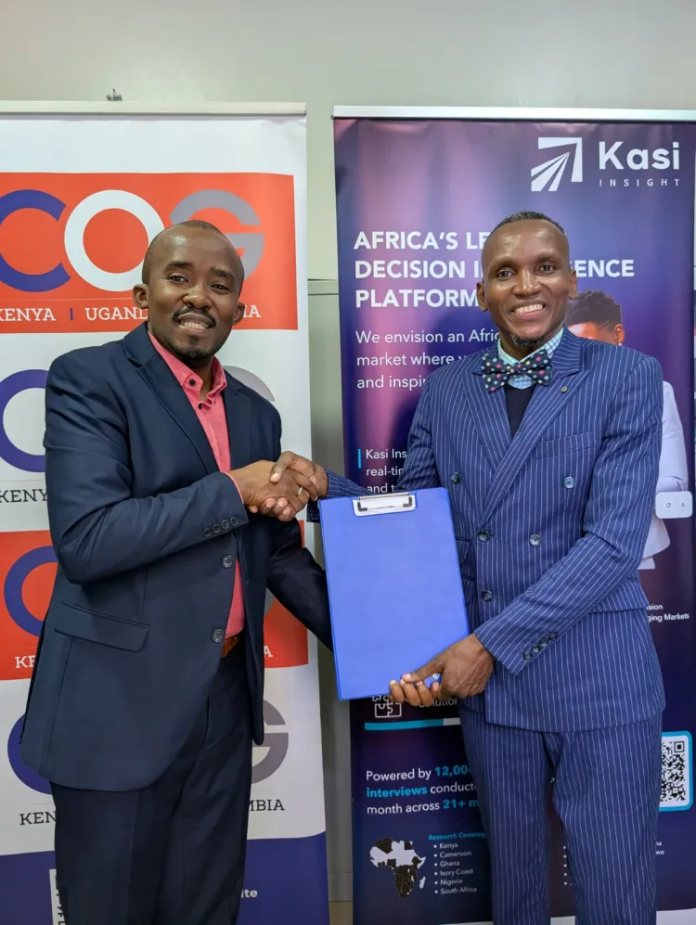
Paul Mwirigi (L), MD and Head of Strategy at Capital One Group, with Ernest Ssekisonge, MD, Kasi Insight.

Kasi Insight, Africaโ€™s leading decision intelligence platform in partnership with Capital One Group (COG EA Ltd), a strategic marketing communications agency has launched a comprehensive survey to assess how organizations in Uganda are integrating Environmental, Social and Governance (ESG) practices.

The survey will examine the challenges businesses face, their future priorities, and how ESG can be embedded into frameworks that guide both companies and policymakers toward sustainable growth.

This initiative follows COG EA Ltdโ€™s recent efforts to advance ESG in Uganda, including hosting the inaugural 2025 ESG Summit in June. The summit brought together corporate leaders and professionals for expert-led masterclasses, the launch of Ugandaโ€™s 2025 ESG Research Report, and strategies for sustainable business transformation.

With ESG regulations rapidly evolving both regionally and internationally, organizations that fail to integrate these practices into their strategies risk falling behind.

The survey, accessible here: https://tinyurl.com/ESGSURVEYUG, comes at a critical time as Ugandaโ€™s business community adapts to shifting regulatory landscapes. It aims to capture insights across sectors, highlighting commitments to shared value creation and long-term sustainability.

In a joint statement, Ernest Ssekisonge, Managing Director of Kasi Insight, and Paul Mwirigi Muriungi, Managing Director and Head of Strategy at Capital One Group, underscored the importance of the research.

โ€œBy understanding the ESG landscape in Uganda, companies will gain knowledge and insights to address sustainability challenges and seize emerging opportunities. We have not had a comprehensive review of ESG initiatives in Uganda, and through this survey, we want to showcase commitment toward driving shared value and contributing to sustainable growth for society and the economy.โ€

The findings, to be unveiled at an awards ceremony on October 22, 2025, are expected to provide actionable guidance for businesses, foster wider adoption of ESG, and contribute to Ugandaโ€™s sustainable development goals.

Kasi Insight, the technical lead of the survey, specializes in providing real-time, aggregated, and trended primary data across Africa, empowering decision-makers with foresight unmatched by traditional market research.

โ€œTo drive value creation and achieve long-term sustainability, ESG must be well-integrated into business operations. Compliance with regulatory requirements is also essential for building trust and strengthening corporate reputation,โ€ Ssekisonge and Muriungi emphasized.

Stories Continues after ad

2026 Elections: EC Chairperson Byabakama urges aspirants to comply with nomination rules, uphold peace

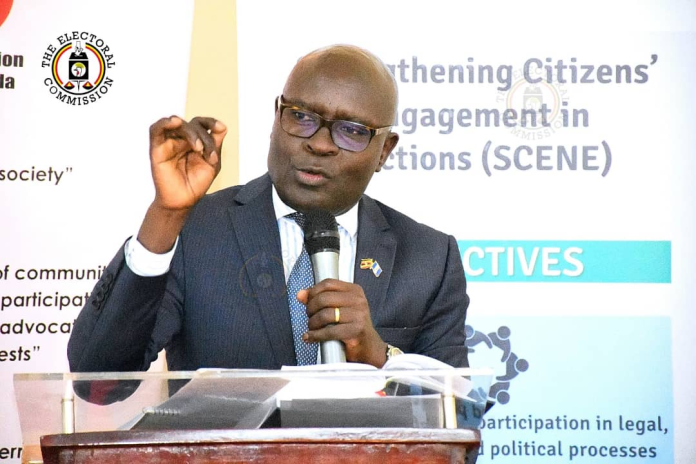
Electoral Commission Chairman, Justice Simon Byabakama.

The Electoral Commission (EC) Chairperson, Justice Simon Byabakama has provided an update on the progress of the ongoing nomination of candidates for the 2025/26 general elections, urging all stakeholders to comply with the legal requirements and maintain peace throughout the electoral process.

Speaking at the EC conference today, Byabakama recalled that the Commission designated September 3โ€“24, 2025 as the nomination period for various positions in local government councils.

โ€œThe exercise commenced on Wednesday, September 3, with the nomination of candidates for district and city chairpersons, Lord Mayor, and councillors, including representatives of special interest groups. That phase was concluded on Friday, September 5,โ€ he said.

The second segment of the nominations, which began on September 8th covers candidates for municipality and city division chairpersons and councillors. This process is expected to close on September 10. Nominations for municipal division, sub-county, and town council chairpersons and councillors, including special interest groups, will then run from September 11 to 24.

Byabakama stressed the significance of presidential nominations, scheduled for September 23โ€“24, 2025, at the Commissionโ€™s proposed headquarters site in Uweza, Loboa.

โ€œAlthough in terms of infrastructure there isnโ€™t much at the site yet, we felt it prudent to conduct this very key milestone of presidential nominations there, as part of the official opening,โ€ he noted, adding that preparations were underway to ensure the venue is ready.

The EC chairperson congratulated candidates who have so far been successfully nominated and urged all aspirants to comply with the guidelines as the process transitions into campaigns.

He also reminded stakeholders that the Commission is empowered under Article 61 of the Constitution and the Electoral Commission Act to hear and resolve complaints before and during elections.

โ€œAny individual or entity with a complaint is advised to submit it officially in writing to the Commission to enable us to examine and determine the matter appropriately,โ€ Byabakama emphasized.

He cautioned aspirants against late or improper payment of nomination fees, explaining that fees must be paid in advance at local government offices, not at nomination venues. He also clarified that symbols will be allocated strictly on a first-come, first-served basis for independent candidates, while party candidates will automatically use their party symbols.

On the withdrawal of candidates, Byabakama guided that an independent candidate may withdraw by submitting a signed notification with two witnesses, while party-sponsored candidates must have withdrawal notifications signed by their party Secretary General or authorized representative.

The EC further issued guidance on nomination convoys, stating that aspirants may use no more than two vehicles, each carrying a maximum of ten persons and bearing police stickers, as stipulated by law.

A toll-free line (0800 300121) has been set up at the Commission headquarters to provide information, verify voter details, and handle legal inquiries during the nomination period.

Turning to presidential candidates, Byabakama reiterated the eligibility requirements, including being a Ugandan citizen by birth, at least 18 years old, and possessing a minimum of an Advanced Level certificate or its equivalent. Candidates with foreign qualifications are required to present verification certificates from the National Council for Higher Education (NCHE).

He also reminded aspirants of the need to present at least 100 registered voters as supporters from at least eight districts across Uganda, with lists of supporters submitted in advance for verification.

โ€œThe advance submission enables the Commission to verify the names and allows aspirants to proceed with other requirements such as paying nomination fees and booking appointments early for a smooth process,โ€ Byabakama said.

Looking ahead, the EC chairperson emphasized that the roadmap had reached a critical stage, with campaigns to follow nominations before the polling period between January 12 and February 9, 2026.

โ€œWe urge all aspirants, their supporters, and the public at large to maintain peace and avoid any disruptions during the nomination and campaign process. Elections should not disturb the prevailing peace and stability in our country, which are critical for socio-economic transformation,โ€ Byabakama guided.

Stories Continues after ad

Opinion: DHOs, MPs, and RDCs Must Team Up to Keep Medicines Flowing

By Timothy Okello
Ugandaโ€™s health system works best when technical leadership, political representation, and government oversight pull in the same direction.

At the district level, that triangle is made up of District Health Officers (DHOs), Members of Parliament (MPs), and Resident District Commissioners (RDCs).

This is not just a bureaucratic arrangement.

When medicines go missing, patients are sent home without treatment, and public trust in government crumbles.

The fight against drug theft and stockouts depends on these three leaders working together โ€” not in silos.

DHOs: The Data and the Diagnostics

As chief health advisors, DHOs know the numbers. They track medicine orders, deliveries, and usage. They are often the first to spot trends like chronic shortages, high patient inflows, or facilities that report losses. But data without action achieves little.

MPs: The Voice of the People

MPs sit closest to citizens. They are the first to hear complaints about paying for Mama Kits or being turned away because โ€œdrugs are finished.โ€

By engaging with DHOs, MPs can turn community frustration into practical oversight โ€” tabling questions in Parliament, lobbying for resources, and joining public sensitisation campaigns.

When MPs add their political weight to DHO findings, medicine management becomes a public priority.

RDCs: The Watchdogs

RDCs are the Presidentโ€™s representatives in the district. They have the authority to convene meetings, summon explanations, and demand accountability from facility managers. When RDCs back up DHOsโ€™ technical reports and MPsโ€™ political concerns, they close the loop between data, representation, and enforcement.

Collaboration is the Missing Link

Imagine the impact if DHOs regularly briefed MPs on medicine usage, if MPs held joint barazas with RDCs to inform citizens about their medicine rights, and if all three leaders publicly named and shamed health workers who sell government drugs.

 This united front would send a powerful message: medicines are a public good, not a private business.

Uganda can win the fight against drug theft โ€” but only if these three leaders lock arms and make medicine accountability a shared mission.

The author is a health mobiliser in Gulu.

Stories Continues after ad