Stanbic Bank
Stanbic Bank
18.6 C
Kampala
Stanbic Bank
Stanbic Bank
Home Blog Page 83

Grief as body of stateswoman Rhoda Kalema arrives in Uganda

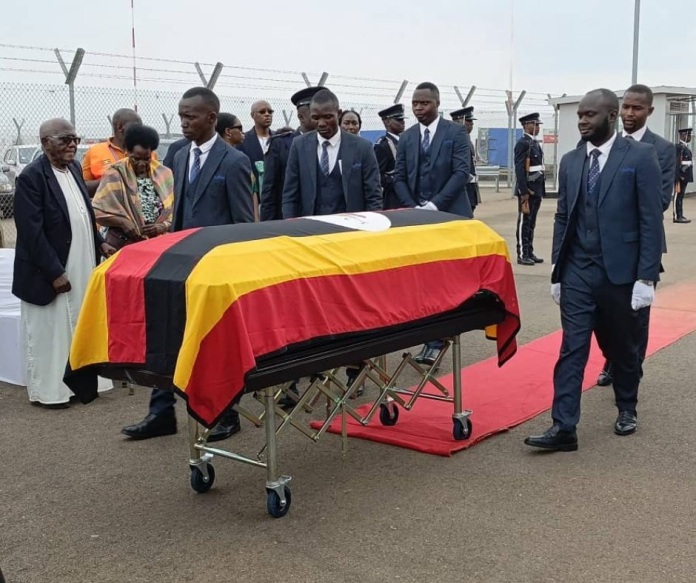
Remains of Rhoda Kalema at Entebbe International Airport.

The body of Lay Canon Rhoda Nakibuuka Nsibirwa Kalema, a pioneering Ugandan politician and former Minister for Public Service, arrived this morning at Entebbe International Airport from Nairobi, where she passed away over the weekend following an illness. She was 96.

The body was received by A-Plus Funeral Services, officials from the Uganda Police Force and members of the Kalema family in a solemn early-morning ceremony. A distinguished public servant and a champion of women’s rights, Kalema’s return marks the beginning of official burial proceedings led by the Government of Uganda.

In recognition of her immense contribution to public service and the nation’s democratic development, President Yoweri Kaguta Museveni has directed that she be accorded an Official Burial. A hybrid National Organizing Committee, chaired by Minister for the Presidency, Hon. Milly Babirye Babalanda, has been constituted in consultation with the Kalema family to oversee the arrangements.

According to the funeral program, a church service will be held at Namirembe Cathedral on Thursday, followed by her burial on Saturday in Kiboga District, her ancestral home. The Uganda Police Force will provide full honors, including a gun salute, during the burial ceremony.

In an emotional plenary sitting on Tuesday, August 5, the Parliament of Uganda joined the nation in mourning the death of Rhoda Kalema, who was hailed as a trailblazer in Uganda’s political history and a relentless advocate for women’s rights.

Speaker Anita Among opened the session with a heartfelt tribute, describing Kalema as “a remarkable leader whose legacy will live long after her demise.”

“She served in several cabinet positions, notably as Minister of Culture and Community Development and Deputy Minister for Public Service. On behalf of Parliament and myself, we extend our deepest condolences to the bereaved family, the people of Kiboga, and all the women of Uganda,” Among stated before leading Members of Parliament in a moment of silence.

Kalema was one of the first two women to serve in the National Consultative Council (NCC) Uganda’s third Parliament between 1979 and 1980. She also represented Kiboga District in the Constituent Assembly that crafted the 1995 Constitution.

Christine Kaaya (NUP, Kiboga District) paid an emotional tribute, saying: “She was a mother, mentor, and strategist. When I was elected, she promised to support me for three more years and I thank God she lived to see them.”

Gorreth Namugga (NUP, Mawogola South), speaking on behalf of the Uganda Women Parliamentary Association (UWOPA), urged Parliament to honor Kalema’s legacy by advancing legislation on human rights protections.

“Her work in human rights should inspire us to pass legislation that protects migrant workers and vulnerable citizens. As women, we have lost a hero,” Namugga said. State Minister for Trade, David Bahati, confirmed that the government would release the detailed official burial programme on Wednesday. Speaker Among also directed that local leaders from Kiboga be fully involved in all funeral activities.

Born in 1929 to the former Buganda Katikkiro Martin Luther Nsibirwa, Kalema studied social work in the United Kingdom before returning home to serve during some of Uganda’s most turbulent political times. Her rise to prominence began in 1979, and over decades, she became a respected voice for democracy, women’s empowerment, and good governance.

Her burial on Saturday is expected to draw dignitaries, civil society leaders, and citizens from across the country a testament to the indelible mark she left on Uganda’s political and social fabric 

Stories Continues after ad

FDC founding member James Musinguzi Garuga dies at 72

Late James Garuga Musinguzi.

Prominent entrepreneur and veteran politician James Musinguzi Garuga, a founding member of the Forum for Democratic Change (FDC), has passed away at the age of 72.

Garuga, who played a pivotal role in Uganda’s opposition politics during the early 2000s, passed on Wednesday, July 6, morning at Nakasero Hospital in Kampala, according to a statement from the FDC party headquarters in Najjanankumbi.

A respected voice in both business and politics, Garuga was among the bold figures who championed the Reform Agenda, the precursor to the FDC. He later served as Secretary for Economic Affairs in the Reform Agenda task force, offering critical guidance and support at a time when opposing the regime was a dangerous undertaking.

“Garuga was not only a distinguished entrepreneur and community leader, but also a committed political actor whose contribution to Uganda’s democratic struggle, particularly in the formative years of the Reform Agenda and the birth of the FDC, remains invaluable,” the FDC said in a statement.

The party described Garuga as “a man of rare courage, wisdom, and generosity,” adding that his death is a major blow to the country’s democratic movement.

“As a party and as a country, we have lost a man whose moral and financial support gave life to a cause that many feared to associate with at the time. He stood with us when standing up was not popular,” the statement continued.

Garuga was also a successful businessman, with investments in tourism, agriculture, and real estate. He was widely regarded as a bridge between Uganda’s business and political elite and was known for using his resources to uplift communities in the Kigezi sub-region, particularly in Kanungu District, where he hailed from.

Tributes from across the political divide continued to pour in throughout the day, hailing Garuga as a patriotic Ugandan who served his country with distinction.

The FDC has extended its “heartfelt condolences” to his family, friends, and all those whose lives he touched. Funeral arrangements are expected to be communicated in due course.

“May his soul rest in eternal peace,” the party mourned.

Stories Continues after ad

Museveni’s new budget plan prioritizes road development

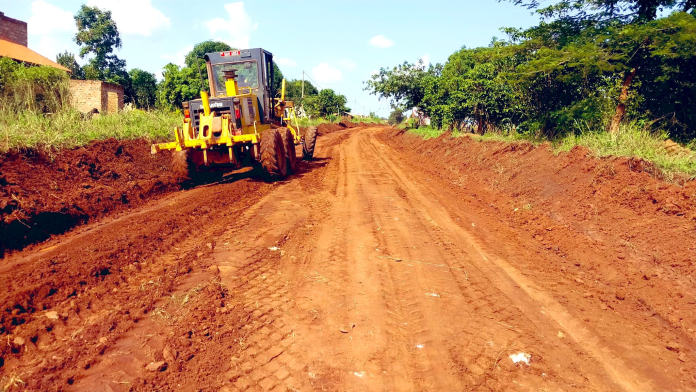
Road construction is one of the few pillars of President Museveni's focus for development.

President Yoweri Kaguta Museveni has criticized the government’s scattered budgeting practices, blaming the neglect of critical infrastructure especially roads on what he termed “okumemerera”, or the spreading of resources too thinly.

In a statement on Tuesday, the President expressed concern over the deterioration of major roads, attributing it to poor prioritization and under-budgeting. He announced an urgent rehabilitation program for key highways and reaffirmed his commitment to strategic planning, particularly in roads and electricity.

“I would like to, again, remind you of the mistake of kumemerera… trying to be everywhere at the same time and ending up being nowhere; trying to do everything at the same time and ending up doing nothing properly,” Museveni said.

Recalling a similar crisis two decades ago, Museveni said Uganda’s reliance on donor-funded development in 2005 nearly paralyzed essential services. He cited examples of failed donor commitments on the Kampala-Masaka road and electricity lines in northern Uganda, which prompted him to chart a new path of self-reliant development.

“I told our people to forget about the donors and we build our country ourselves relying on our scarce resources and the NRA strategy of ‘Kamwe Kamwe Nigwo Mugaanda’ (One by one makes a bundle),” Museveni noted.

He said this shift in policy led to massive investments in roads and electricity, with the roads budget increasing from Shs 374 billion to Shs 6.4 trillion by 2019, and the electricity budget rising from Shs 133 billion to Shs 3 trillion.

“Henceforth, it will be electricity and roads first and the rest later,” Museveni declared in his 2005 directive.

The president emphasized that this focused approach helped Uganda overcome its electricity blackouts and facilitated major road works — including the Soroti-Moroto, Lyantonde-Kazo-Ibanda, and Mpigi-Ssembabule-Masaka highways.

However, Museveni expressed disappointment that the same budgeting errors were creeping back, resulting in the decline of previously strong roads such as Mityana-Mubende-Kyenjojo, Ibanda-Mbarara, and Mukono-Jinja.

“Recently, I have noticed that our road sectors are now in three categories,” he explained.

He added, “The very good brand-new roads, the deteriorated roads due to under-budgeting, and poorly maintained murram roads by local governments.”

He revealed that while the Ministry of Works currently commands a budget of Shs 5.9 trillion, only Shs 3.21 trillion is required annually to maintain Uganda’s roads in excellent condition. The remaining allocation includes funds for other transport-related projects like Uganda Airlines and the Standard Gauge Railway.

“I have instructed the Ministry of Works and the whole Government to rectify that situation,” Museveni stated.

The President listed several roads slated for immediate rehabilitation, including:Mityana–Mubende-Kyenjojo, Ibaanda–Mbarara, Ishaka–Mbarara, Mukono–Lugazi–Jinja, Kikoroongo–Mpondwe, Nebbi–Arua, Ntungamo–Rukungiri.

Additionally, new road projects will commence, such as Jinja–Budondo–Mbulamuti–Kamuli and Bwizibwera–Nsiika–Nyakashaka–Nyakabirizi.

“Targeting the creation of cities, new districts, higher pay for civil servants, etc., before you put aside adequate money for roads, electricity, security, wealth creation, etc., is bad planning,” he warned.

Museveni also cautioned against budget corruption, suggesting that reports of inflated road construction costs could soon be investigated.

Stories Continues after ad

GENERAL: Mbadi, Okiding & Kavuma among 429 to retire from UPDF in 2027

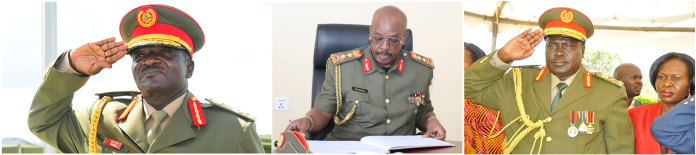
Generals, Okidingi, Mbadi, and Kavuma.

Former Chief of Defence Forces and Minister of State for Trade, Gen. Wilson Mbasu Mbadi has been lined up for retirement in July 2027.

In a document seen by Eagle Online, the Uganda People’s Defence Forces (UPDF) has announced the retirement of 429 officers, including high-profile leaders such as General Wilson Mbasu Mbadi, Lieutenant General Sam Okiding, and Lieutenant General Sam Kavuma.

Among the retirees, Mbadi is the only four-star general. Five (5) Lieutenant Generals, three (3) Major Generals, sixteen (16) Brigadier Generals, 33 Colonels, 55 Lieutenant Colonels, 81 Majors, 132 Lieutenants, and 102 Captains.

The retirement is scheduled to take place in July 20127.  

Who is Gen. Wilson Mbasu Mbadi?

General Wilson Mbadi, born in Kasese District on June 6, 1962, rose through the ranks to become Chief of Defence Forces (CDF) from June 2021 until March 2024. Educated at Sandhurst where he graduated top of his class, Mbadi also holds a Master’s in Strategic Studies from the Air War College in Alabama and a Diploma from the University of Nairobi

Before his tenure as CDF, he served as Joint Chief of Staff and then Deputy Chief of Defence Forces. A calm and detail-oriented leader, he commanded key UPDF reforms, including the rollout of the UPDF Establishment 2021 structure, which modernised Uganda’s military administration.

Lieutenant General Sam Okiding, currently Deputy CDF, will also retire in the 2027 cohort. He previously commanded forces in Somalia under the African Union and has been instrumental in personnel oversight and organisational transformation at home. At recent retirement events, Okiding urged his colleagues to view the next phase as an extension of their service, encouraging wise investment and continued involvement in national life.

Lieutenant General Sam Kavuma, known for his leadership in Operation Wealth Creation and as head of UPDF missions in Somalia, will also join the retirees. Kavuma has been a career military officer since the late 1980s and has held multiple command roles, including leadership of the African Union Transition Mission in Somalia (ATMIS) since March 2024.

The retirement follows UPDF protocol, offering exit packages and ceremonial send-offs. At previous handovers, President Museveni personally addressed retiring officers, urging them to invest their packages wisely and reassuring them that their dismissal marks a transition, not a termination of service.  

UPDF and the Ministry of Defence and Veteran Affairs Spokesperson, Maj. Gen. Felix Kulaigye told Eagle Online, “Retirement is part of the norm within UPDF. So, we wish our comrades the best as they retire,” he said.

Retiring Generals include

General Wilson Mabasu Mbadi

Lt. Gen Jack Bagonza Bakasumba

Lt. Gen Joseph Masanyufu

Lt. Gen Sam Okiding

Lt. Gen Sam Kavuma
Lt. Gen Charles Lutaaya
Maj. Gen Ambrose K Musinguzi
Maj. Gen Samuel Kawagga
Maj. Gen Lucky Kidega
Brig. Gen Sam Kiwanuka  
Brig. Gen Alex Opolot Olupot
Brig. Gen Caesar Innocent Bahwezi
Brig. Gen Michael Kibuye
Brig Gen James Kaija
Brig. Gen Mwanje Ssekiranda
Brig. Gen Robert Freeman Mugabe
Brig. Gen Chris Ogwal
Brig. Gen Kefa Nangeesa
Brig Gen Henry Isoke
Brig. Gen David Tweheyo
Brig. Gen Richard Kiremire
Brig Gen Emmanuel Kazahura
Brig. Gen Geoffrey Karugaba
Brig Gen Emmanuel Tibayungwa Shillingi
Brig. Gen Moses Wandera
Brig Gen James Muhwezi

Stories Continues after ad

UPDF GENERALS: Katumba, Kyanda, Otema among 531 to retire from army

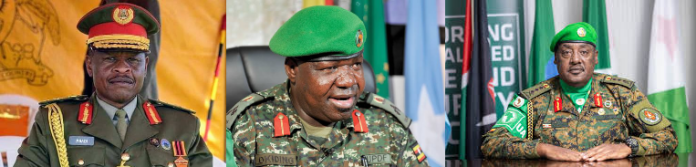
Retiring army generals, Katumba, Kyanda, and Otema.

Uganda Peoples’ Defence Forces has confirmed the impending retirement of 531 officers and militants, including some of its most prominent generals.

Among the notable retirees are the only serving four-star General, Katumba Wamala, a former Chief of Defence Forces and current Minister of Works and Transport. He joined forces in 1980.

The retirement ceremony will be held in July 2026.

According to the official retirement list, which Eagle Online has seen, the cohort includes five (5) Majors, sixteen (16) brigadiers, twenty-eight (28) Colonels, forty-two (42) Lieutenant Generals, 183 Majors, and 254 Captains are set to retire.

According to the UPDF retirement age ceiling, a serving General or Lieutenant General is supposed to retire at the age of 65 years, while those at the rank of Major General are at the age of 62.

From the rank of Brigadier General are supposed to retire at 60 years, Colonels are set at 55 years, whereas Lieutenant Colonels are at 51, and those at the rank of Major are retired at 47 years.

UPDF and the Ministry of Defence and Veteran Affairs Spokesperson, Maj. Gen. Felix Kulaigye told Eagle Online, “Retirement is part of the norm within UPDF. So, we wish our comrades the best as they retire,” he said.

Retiring Army Generals

Gen. Edward Katumba Wamala

Lt. Gen. Charles Awany Otema

Lt. Gen. Charles Angina

Maj. Gen.  Godfrey Katsigazi Tumusiime

Maj. Gen. Henry Ndarubweine Masiko

Maj. Gen. Apolo Kasiita Gowa

Maj. Gen. Leopold Kyanda

Maj. Gen. Abel Kandiho

Brig. Gen. Edson Muhanguzi

Brig. Gen. Bekunda Besigye Cyrus

Brig. Gen. Winston Byaruhanga

Brig. Gen. Stephen Tumwesigye Kashure

Brig. Gen. Tom Kikoyo Kabuye

Brig. Gen. Sam Omara

Brig. Gen. Fred Rugadya Akiiki

Brig. Gen. Mike Samuel Kisame

Brig. Gen. Patrick Mwesigye

Brig. Gen. Fred Mwesigye

Brig. Gen. Herbert Rwego Mbonye

Brig. Gen. Simon Nicholas Ocan

Brig. Gen. Metland K Bitumbika

Brig. Gen. Cyil Mawa Muhindo

Brig. Gen. Charles Bakahumura

Brig. Gen. Charles Asiimwe Kahangire

The retirement process follows standard UPDF protocol, which includes phased retirement for officers who have served their time or reached the age limit.

Who is Gen. Katumba Wamala?

He joined forces in 1980

He has held the current post of Minister of Works and Transport since January 17, 2017, until December 14, 2019, when he served as Minister of State for Works.

He served as the Chief of Defence Forces of the Uganda People’s Defense Force (UPDF) from 2013 until 2017. Before, he was the Commander of Land Forces from 2005 to 2013. He also served as the Inspector General of Police (IGP) of the Uganda Police Force from 2001 until 2005.

Katumba Wamala was born on November 19, 1956, in Bweeza, Kalangala District.

He holds a certificate in agriculture. A Bachelor of Arts degree from Nkumba University in International Relations and Diplomacy  

He also holds a Master of Science degree in strategic leadership from the United States Army War College.

He has military qualifications from the following military schools: Uganda Military AcademyTanzania Military Academy, a military academy in the Soviet UnionNigerian Command and Staff CollegeUnited States Army Command and General Staff College, and United States Army War College. In October 2023, he was awarded an honorary Doctor of Letters by Nkumba University in recognition of his contributions to his community, country, and humanity.

Wamala was an officer in the Uganda National Liberation Army (UNLA) when the National Resistance Army (NRA) defeated the UNLA in 1986. He transitioned into the NRA.

Maj. Gen. Leopold Kyanda

Major General Leopold Eric Kyanda was born on  January 1, 1970, and is a Major General in the Uganda People’s Defence Force.

From June 2021, he has served as the Joint Chief of Staff of the UPDF.  Before, Gen. Kyanda was the Chief of Staff of the Land Forces.

He joined the army in the early 1990s

He later joined the then Presidential Guard Brigade (PGB), which later became the Special Forces Command (SFC). He rose in its ranks and eventually became the Commander of the Presidential Guard Brigade (PGB). At the rank of Colonel, Kyanda would later become the Commandant of the Chieftaincy of Military Intelligence (CMI). From there, he was assigned to the Ugandan Embassy in Washington, D.C., as the Military Attaché, serving in that capacity for two years. On his return to Uganda, he was appointed Chief of Personnel and Administration in the UPDF. From there, he was promoted to the rank of brigadier and assigned as Chief of Staff.  

In December 2017, he completed a military course from the National Defence College in India.

In February 2019, he was promoted from the rank of Brigadier to that of Major General, as part of a promotions exercise involving over 2,000 men and women of the UPDF.

Lt. Gen. Charles Angina

Charles Angina was born on March 29, 1962, and holds the rank of lieutenant general in the UPDF. He is Uganda’s Deputy Ambassador to Cairo. From January 2017 until July 2021, he served as the Deputy Chief Coordinator of Operation Wealth Creation (OWC), a development program operated by the Ugandan government. He previously served as the Deputy Chief of Defense Forces of Uganda, the second-highest military position within the UPDF. He was appointed to that position in May 2013, replacing General Ivan Koreta, who was appointed an ambassador.

He went on to serve as an intelligence officer, platoon commander, operational intelligence officer, Combined Mobile Forces, and as 4th Division intelligence officer. From there, he served as operations coordinator 2nd Division, then as the 305th Brigade commander, and as commander of the 2nd Division.

During the Ituri conflict, Angina served as the sector commander of the Ituri region in the Democratic Republic of the Congo (DRC). He then became sector commander Basankusu during Operation Safe Haven in the DRC.

Thereafter, he served as a military adviser in Tanzania. He then transferred to the Embassy of Uganda in Washington, D. C. as the military attaché. He was then appointed chairman of the General Court Martial of the UPDF. He also has served as the Chief of Staff of Land Forces in the UPDF.

Lt. Gen. Angina joined the UPDF in 1983 following a one-year officer cadet course; he was commissioned in 1985. Angina is said to have joined the UPDF from the Uganda People’s Army.

He attended several military courses and these include;

National Defense Course, China in 1998, Command and General Staff Course (CGSC), in the United States in 2000, Course on Military and Media in a Democracy, at the University of Kansas in 2000, Joint Tactical Command Course in China, and a Combined Platoon Commander Course in North Korea.

Stories Continues after ad

Ministry of Internal Affairs re-tables bill proposing a 5-year jail term for unauthorized DNA sample leakage

Prof. Badru Kateregga and his wife, Mrs. Jolly Shubaiha Kateregga are in a bitter fight over property and DNA results that indicated that one of the children didn't match the father's results.

The Ministry of Internal Affairs has re-tabled the Forensic & Scientific Analytical Services Bill, 2025, proposing a five-year jail term for persons who leak and obtain DNA samples and other biological specimens without approval from the government’s Analytical Laboratory.

The Bill, signed by the Minister of Internal Affairs, Gen. Kahinda Otafiire, aims to formalize the country’s forensic science ecosystem by establishing the Government Analytical Laboratory (GAL) as the national referral centre and the Department of Inspection and Legal Services as the sector regulator.

“The object of the Forensic and Scientific Analytical Services Bill, 2025 is to provide for the regulation of forensic and scientific analytical services; to establish the Government Analytical Laboratory… and designate it as the national referral for forensic and analytical services,” reads the Bill’s memorandum.

According to the draft, Uganda currently lacks a clear legal framework to govern forensic science or manage poisoning incidents. The country has no national poison information centre, and although the Government Analytical Laboratory has long provided forensic services, it is not officially designated as the national referral facility.

“Currently, there is no legal framework governing these services, nor does Uganda have a national poison information centre to analyze and disseminate information on poisons and poisoning incidents,” the Bill states.

The proposed law seeks to fill these gaps by giving legal status to the Government Analytical Laboratory, formalizing its functions, and recognizing it as Uganda’s referral hub for forensic and analytical services. It also designates the Department of Inspection and Legal Services at the Ministry of Internal Affairs as the lead regulatory agency.

Under the proposed framework, all analytical laboratories will be required to register and obtain licenses from the department. The Government Analytical Laboratory, led by a Chief Government Chemist, will coordinate with regional labs across the country. These laboratories will be empowered to conduct analyses in fields such as toxicology, DNA, cybercrime, environmental samples, food safety, and questioned documents.

The Bill also introduces new safeguards for the collection and use of bodily samples. It mandates that samples must be taken voluntarily, or by court order, and must follow strict consent procedures, especially in the case of children. Any sample collected is to be stored temporarily and destroyed after investigation, preventing permanent retention or misuse.

“An analytical laboratory shall collect samples for the analysis of forensic biology and DNA… [from persons] with informed consent or court order,” the Bill mandates.

The establishment of a central forensic and scientific database is another key highlight. This database will store DNA data and other forensic records, which will only be accessible to authorized agencies for criminal investigations or comparison purposes. The Bill sets stringent conditions on who may access or alter such information.

Violations of these provisions will be met with harsh penalties. A person who unlawfully obtains, leaks, or publishes DNA profiles or forensic data without written authorization from the Government Analytical Laboratory faces a fine of up to 1,500 currency points (Shs30 million) or five years in prison or both.

“A person who operates an analytical laboratory without a license… is liable on conviction to a fine not exceeding five hundred currency points or imprisonment for up to three years, or both,” the Bill warns.

Additional offenses include tampering with analysis reports, using results for commercial advertisements without permission, obstructing inspectors, and giving false information to the regulator. Offenders found guilty may face imprisonment, fines, and forfeiture of lab equipment to the state.

The Bill also designates the Government Analytical Laboratory as the National Poison Information Centre, responsible for coordinating and managing poisoning incidents, conducting toxicological tests, training professionals, and maintaining national poison case records.

“These improvements will support fair and effective legal proceedings, strengthen environmental health and safety measures, and contribute to the overall administration of justice in Uganda,” the Bill concludes.

If passed, the Forensic and Scientific Analytical Services Bill, 2025, will not only institutionalize Uganda’s forensic sector but also provide the much-needed legal and ethical guardrails to protect sensitive biological data and uphold justice.

Stories Continues after ad

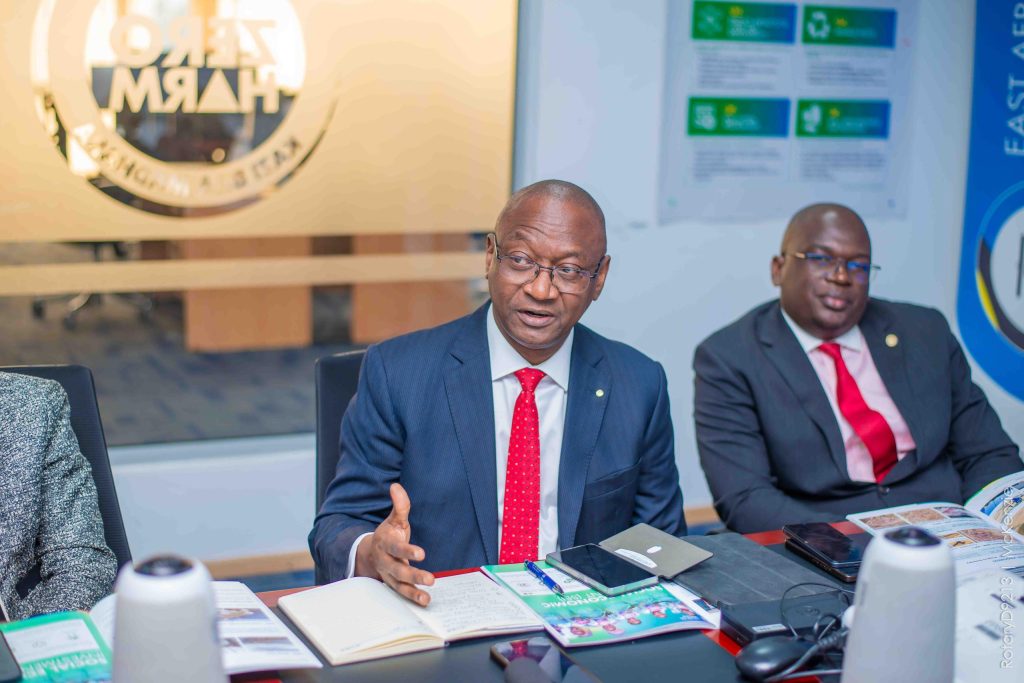
EACOP, Rotary partner to launch Green Schools Initiative for environmental sustainability

Mr. JB Habumugisha, EACOP Ltd. Deputy Managing Director, Rotary District 9213, District Governor Mr. Geoffrey Kitakule, Fabian Kasi, MD Centenary Bank and Ms. Christine Kyeyune Kawooya, District Governor of Rotary District 9214, at the signing ceremony.

The East African Crude Oil Pipeline (EACOP) Ltd., the company spearheading the development of Uganda’s crude oil export pipeline, has signed a landmark Memorandum of Understanding (MoU) with Rotary to advance environmental sustainability in schools along the pipeline corridor.

The agreement establishes a framework for implementing the EACOP Green Schools Initiative, an ambitious program designed to transform learning environments in the districts of Hoima, Kikuube, Kakumiro, Mubende, Kyankwanzi, Lwengo, Kyotera, Rakai, Sembabule, and Gomba. The initiative is part of EACOP’s broader social and economic investment strategy to promote environmental stewardship and climate-smart practices in local communities.

The EACOP Green Schools Initiative will equip schools with the tools and knowledge to become hubs of sustainability —fostering eco-friendly practices, clean energy adoption, improved waste management, and climate education.

Speaking at the MoU signing ceremony in Kampala, Mr. JB Habumugisha, Deputy Managing Director of EACOP Ltd., said that the EACOP Green Schools Initiative is a proactive response to the pressing need for sustainable solutions within our communities.

He added, “By embedding environmental interventions in schools, we will address immediate challenges while nurturing a generation that values and protects our natural resources. This partnership with Rotary is an important step towards that vision.”

Representing Rotary District 9213, District Governor Mr. Geoffrey Kitakule reaffirmed Rotary’s dedication to protecting the environment.

He noted, “This partnership is timely. Rotary’s commitment to supporting the environment aligns perfectly with the Green Schools Initiative. There is no better way to secure a sustainable future than working with young people — the champions of tomorrow. Together, we see a world where communities unite and take action to create lasting change.”

Ms. Christine Kyeyune Kawooya, District Governor of Rotary District 9214, also commended the collaboration, noting, “Our communities depend on how well we prepare the next generation to care for the environment. Through this initiative, Rotary will work closely with schools to promote tree planting, sustainable waste management, and climate education. By empowering students to become custodians of the environment, we are investing in a greener, healthier, and more resilient future for all.”

Key Highlights of the Green Schools Initiative:

– Sustainability Focus: Addresses real environmental challenges in schools

– Environmental Education: Equips young people with knowledge, skills, and values for climate resilience

– Joint Collaboration: Rotary Districts 9213, 9214, and EACOP working together for a greener future

The MoU sets the stage for joint planning, resource mobilization, and project implementation, thus ensuring that schools along the EACOP corridor become practical models of sustainability and community transformation.

Stories Continues after ad

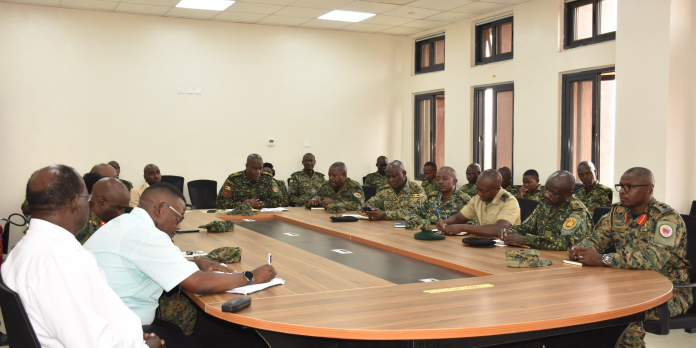
UPDF opens Mbuya Referral Hospital for operations

Inauguration of the new Mbuya Referral Hospital leadership.

The Uganda Peoples’ Defence Forces (UPDF) has officially inaugurated the new leadership for the UPDF National Referral Hospital in Mbuya, appointing Col Ronald Nangamba as Chief Executive Officer and Col Dr John Lusiba as Deputy CEO.

Presiding over the inaugural meeting, Maj Gen Ambrose Musinguzi, the Joint Staff – Health Services, urged the new leadership to prioritise international accreditation and uphold high standards as the hospital prepares for its official opening in October.

He described the hospital as the apex of UPDF’s referral system and a key welfare project that has continued to receive strong support from the Defence leadership.

“We must work towards international accreditation if we are to attract global patients and organisations like the United Nations. It is not easy, but it is attainable,” he said.

“This hospital is the apex of our referral system in the UPDF.”

Maj Gen Musinguzi commended the UPDF leadership for consistently backing the project, saying issues affecting the hospital have always been addressed promptly and decisively.

“You have treated this as a welfare project and given it full support. Whenever issues come up, they are addressed swiftly and decisively,” he said.

He urged the incoming leadership to focus on timely procurement processes to improve service delivery while maintaining affordability and effectiveness.

Maj Gen Musinguzi congratulated Col Dr Nangamba, praising his track record and familiarity with the hospital’s development from its early stages.

“You know this hospital from its foundation. There is nothing that will stop you from making it the best hospital in Uganda and the region,” he said.

Col Dr Nangamba thanked the Commander-in-Chief and the Defence leadership for the trust placed in him, describing his new role as a task of “high magnitude.” He vowed to uphold the hospital’s objectives and meet the expectations of the UPDF and the nation.

“I am aware of the hope placed in this hospital, both within and beyond the UPDF,” he said.

Deputy CEO Col Dr John Lusiba also expressed gratitude for the appointment and pledged to work closely with Col Dr Nangamba to achieve the hospital’s goals.

Stories Continues after ad

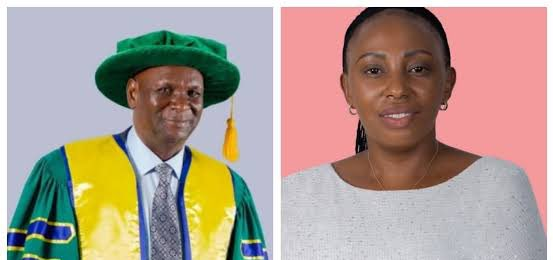
Victoria University VC challenges parents to rethink education, warns against “outdated traditions”

Doctor Lawrence Muganga, the Vice Chancellor of Victoria University, has called on Ugandan parents to fundamentally reassess how they are preparing their children for the future. He questioned the continued reliance on traditional boarding schools and urged families to adopt more forward-thinking education and investment strategies.

“It is time we ask ourselves some honest questions,” Muganga stated. “Are we preparing our children for the future, or for a world that no longer exists?”

Muganga expressed concern that the current education model, especially the rigid, one-size-fits-all system  no longer aligns with the demands of today’s rapidly evolving world.

“The traditional school system is outdated,” he warned.

He added, “It was built for a different time and a different kind of economy. Today’s world demands something better, more flexible, more focused on real skills.”

He particularly took aim at the widespread preference for boarding schools, suggesting that many offer “little to no clear academic or developmental advantage,” despite the high costs involved.

“Parents continue to spend large amounts of money on boarding schools, not because it’s the best choice, but simply because it’s what they’ve always known,” he observed.

Instead, Muganga proposed a bold alternative. He encouraged parents to consider modern, technology-enabled day schools that are rooted in the realities of local communities. He described these as more personal, practical, and impactful for children’s futures.

More controversially, the university leader urged families to redirect boarding school fees into long-term financial instruments such as Treasury Bills, Bonds, or Unit Trusts. According to Muganga, this could secure a stronger financial future for children, one based on independence and opportunity.

“What if you took the money you would have spent on termly boarding fees and quietly invested it every year for 16 years?” he asked. “By the time your child graduates, they could have a financial foundation stronger than any inheritance.”

“They might never need to look for a job,” he added. “They could be the ones creating jobs.”

Dr. Muganga framed the call not as a criticism of parents, but as an invitation to reimagine what legacy they are leaving for their children.

“This is not just about education policy. This is about your child’s life. And your family’s legacy.”

He concluded his remarks with a stirring appeal for change, noting, “Clinging to outdated traditions does not protect their future. It only delays it. The future belongs not to those who follow blindly, but to those who think ahead, choose wisely, and invest with purpose.

Stories Continues after ad

Bugweri RDC accused of extortion, election rigging & abuse of office

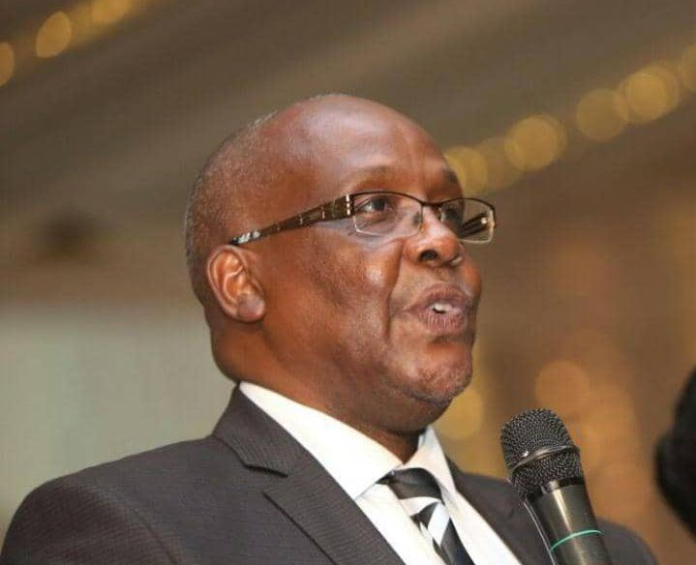
Mr. Magala Banuli.

Tensions are mounting in Bugweri District following the Chairperson’s, Hajji Muziransa Faraji Shafi, call for the urgent transfer of Resident District Commissioner (RDC) Mr. Magala Banuli over what he described as a pattern of corruption, abuse of office, and political sabotage.

In a letter addressed to the Minister for the Presidency, Hajji Muziransa accuses RDC Banuli of rendering himself “useless in the district” and claims the official is unfit to continue representing the central government in Bugweri.

“He is autocratic, arrogant, corrupt, disrespectful, intolerant, intrigued, unskilled, inexperienced and unqualified to manage the office of RDC,” the letter reads.

“As a district political head, I do not think he can add any value to NRM as a party and the district local government. His acts have remained in the political opposition. NRM for him is just a marriage of convenience,” Muziransa wrote.

The chairperson lists a long catalogue of alleged misconduct by Mr. Banuli, including mismanagement of the Parish Development Model (PDM) funds, interference in the recruitment process by the District Service Commission, and soliciting bribes from project managers and head teachers across the district.

Specifically, he alleges that Mr. Banuli demands money before authorizing disbursements to PDM beneficiaries and pressures district service commissions to recruit unqualified candidates who serve his personal interests.

“If project managers and tenderers do not give him money first, he will not attend their launches even when there is formal communication. He complicated and caused delays of the following projects: Iduudi Seed School, Mpiita Seed School, Busembatia HC.III and roads,” the letter details.

He also accuses the RDC of openly demanding money from civil servants in exchange for silence over professional errors. Among those allegedly targeted are the acting District Engineer, Deputy Chief Administrative Officer, and the acting District Planner. According to the letter, a bribe of Shs4 million was demanded and rejected, which prompted the RDC to abandon the launch of key infrastructure projects.

“When they offered Shs2 million, he got so annoyed and threw back the money to them and to date he has abandoned the launching of roads,” the document alleges.

Hajji Muziransa also claims Mr. Banuli interfered in the NRM party structure elections and forced election officials to announce falsified results actions that triggered chaos and security intervention at Nkuutu Memorial School.

“He held a meeting early morning with election officials, gave instructions on who to declare winner and when the DPC intervened, people became rowdy. Bullets and tear gas had to be fired. The election officers were badly injured.”

Further concerns were raised over a controversial public statement made by the RDC during the funeral of the late Assistant RDC of Lira, where he claimed politicians in Bugweri were responsible for the assassination and were plotting to eliminate him too. Muziransa insists that if Banuli has evidence, he should cooperate with police investigations rather than incite public fear.

The letter goes on to accuse the RDC of inciting local leaders, painting elected officials as corrupt on radio, and fueling land disputes for personal gain. Notably, it is claimed that he has manipulated the transfer of security personnel who resist his influence, including the DPC and Deputy RDC.

The final straw, according to the district chairperson, was an alleged physical altercation during the NRM primaries in which Banuli reportedly assaulted the district chairperson while attempting to smuggle declaration forms.

“Given the above issues raised, I am requesting for the immediate transfer of the above RDC MAGALA BANULI to avoid negative service delivery and more scandals in the district,” the letter concludes.

The communication has been copied to high-ranking government offices, including the Office of the Prime Minister, Permanent Secretaries of the Presidency and Local Government, the Internal Security Organisation (ISO) Director General, the Inspector General of Police, and Members of Parliament for Bugweri District.

The Office of the Minister for the Presidency has not yet issued an official response to the letter. Mr. Magala Banuli has also not commented on the allegations.

This story is developing.

Stories Continues after ad