Stanbic Bank
Stanbic Bank
17.8 C
Kampala
Stanbic Bank
Stanbic Bank
Home Blog Page 98

Bewitched our health system? The deadly cost of paperwork in maternal care

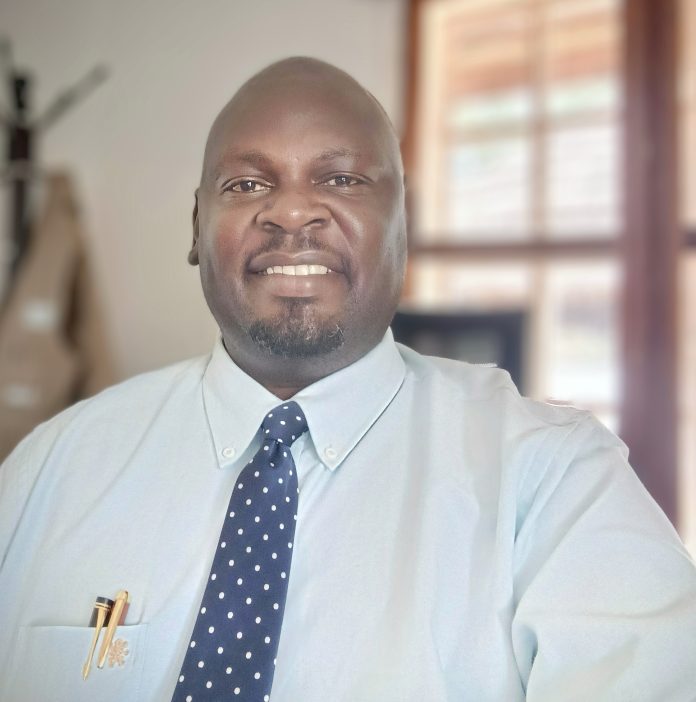
Dr. Bob Marley Achura.


By Dr. Bob Marley Achura (PhD)

In 2014, while conducting operational research on maternal and child health in Oyam District, Northern Uganda, I encountered a disturbing pattern, one so ordinary it risked being invisible. Health facilities required every expectant mother to carry an exercise book to record her antenatal and delivery information. A 48-page booklet, sold for less than 1,000 shillings, stood between life-saving care and denial.

It seemed like a harmless, even practical, requirement. But what I found was far more troubling: the “exercise book dilemma,” as it came to be known locally, was quietly sabotaging efforts to improve skilled deliveries and maternal outcomes. This simple paper booklet had become a gatekeeper, one that too often shut out the most vulnerable women.

A Walk of Pain and Shame.

Take Acen, a 28-year-old mother from Abela parish in Otwal sub-county. She walked three hours, under the punishing sun, to reach the nearest health centre, carrying her toddler on her back and her hopes in her heart. But when she arrived, the midwife frowned. “Where is your exercise book?” Acen had forgotten it. She was turned away. “Come back with your book,” they told her. The walk home was longer. Her body ached. Her spirit, too. That was her last antenatal visit during that pregnancy.

This is not an isolated story. From Alebtong to Amuru, women are carrying more than pregnancies; they’re carrying the burden of poverty, distance, stigma, and now, bureaucracy. Many mothers in Otwal confess they cannot afford even a single exercise book. Some tear out pages from their children’s schoolbooks. Others scribble health information on scraps of paper. A few have used old funeral programs, just to show something when they reach the clinic. In one heartbreaking case, a mother said her school-going child had taken her ANC book after being sent away for not having one. Another woman said her husband had used the pages to roll cigarettes.

What may sound absurd is, in reality, a quiet emergency. A paper book barely worth a coin has become the gatekeeper of life.

A Paper Barrier to Safe Motherhood

We often talk about Uganda’s maternal mortality challenge, about long distances to health centres, the lack of ambulances, and understaffed facilities. But rarely do we stop to examine these invisible, small barriers that tip the scales toward tragedy.

Let’s name them:

  • Accessibility and Storage: Most rural families lack safe, dry spaces to store documents. Exercise books are destroyed by rain, eaten by rats, or misplaced entirely.
  • Data Loss and Isolation: The information trapped inside these books is siloed. Health officers can’t analyze trends, track high-risk pregnancies, or make timely interventions.
  • Out-of-Pocket Burden: Each year, thousands of shillings are spent by households on these books, money that could buy soap, food, or school fees.
  • Stigma and Discrimination: Illiterate mothers are often humiliated or turned away when they present a “messy” book. Some stop returning out of shame.

These paper barriers are costing lives. They are reinforcing inequality. And yet, they persist, unchallenged and unfixed.

A Digital Ray of Hope: Then Bureaucracy Killed It!

In 2016, with support from Duke University postgraduate students and in partnership with the Oyam District Health Office, we piloted a simple but powerful solution: the Mothers Health Information Management System (MHIMS). It was a user-friendly mobile app tailored for frontline health workers. It worked offline, synced with the cloud when internet was available, and provided secure digital storage of maternal health records.

We deployed it at Agulurude Health Centre III. The impact was immediate and transformative:

  • Midwives could retrieve a mother’s ANC history in seconds.
  • Mothers no longer needed to carry paper books.
  • Communication between providers and patients improved.
  • Antenatal attendance increased.
  • Skilled deliveries rose by 29.3% within just one year.

Financially, the case was even stronger. We found that maintaining MHIMS was 47% cheaper than the paper-based exercise book system. The difference? Digital costs are absorbed institutionally. The paper cost is carried by the mother.

But despite the glowing data, the pilot was never scaled. No further funding. No rollout. Just silence. Bureaucracy. Budget inertia. Leadership turnover.

I call it a betrayal.

Lessons from Across Africa.

Uganda is not alone in facing these barriers, but other countries are responding more boldly. In Rwanda, the RapidSMS system has transformed maternal care across rural districts. By using simple mobile phones, community health workers send real-time updates about pregnant women to district hospitals, allowing timely referrals and interventions. Maternal deaths have dropped significantly in pilot districts, and the model is now expanding nationwide.

In Kenya, the Linda Mama program (meaning “Protect the Mother”) enables digital registration of pregnant women and links them with free maternity services across public and some private facilities. Through NHIF’s digital platform, women no longer need to carry paper records, just their ID numbers.

These are not expensive, high-tech dreams. They are African realities, our continent proving that bold ideas can work.

A Call to Action: Now, Not Later

The exercise book dilemma is not about stationery. It is about values. It is about the invisible wall we place between mothers and the care they deserve. It is about the indignity of asking a woman in labour to produce a receipt before being helped.

This is not a call for tablets in every village. It is a call for:

  • Immediate policy revisions to end the punitive rejection of mothers without exercise books.
  • Investment in scalable, digital maternal health record systems.
  • Training health workers to uphold compassion over compliance.
  • Empowering community health workers to serve as record-keepers for vulnerable households.

A mother’s womb should never be treated with less dignity than a book.

Who Bewitched This Country?

Who decides that a child should be born or die because their mother didn’t bring a 1,000-shilling book? Who lets proven digital innovations rot on shelves while our maternal mortality rates remain unacceptably high?

We have solutions. We have champions. We have evidence. What we lack is the courage to act.

Let us unshackle our health system from outdated paper chains. Let us centre dignity in maternal care. Let us dare to build a system where no woman is turned away for lack of a booklet. Let the exercise book dilemma not be Uganda’s legacy. Let it be the turning point.

Stories Continues after ad

Iran-Israel War: Museveni condemns Iranian Islamists, Israeli government and western imperialists

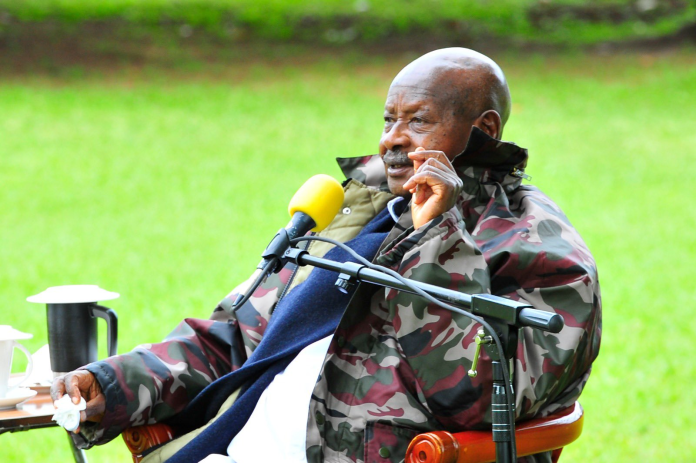
Gen. Museveni.

Uganda’s President Yoweri Kaguta Museveni who doubles as the Chair of the Non-Aligned Movement (NAM) has condemned Iranian Islamists, the Israeli government and Western imperialists for perpetuating cycles of violence and injustice in the region.

Museveni’s statement comes in response to a complaint from the Iranian Ambassador to Uganda about Uganda’s delayed comment on the crisis.

“Citizens of the World, my names are: General (Rtd) Yoweri Museveni of the Resistance Movement of Uganda and President of Uganda. I am also Chairman of the NAM until 2027,” he began.

He said, “The other day, I saw a Complaint by the Iranian Ambassador to Uganda as to why we have not commented on the tragic situation in the Middle East. It is true that we have not yet externalized our long-held views on that situation.”

Museveni said Uganda maintains “good relations with both Israel and Iran,” as well as with the United States and others and that his country’s resistance legacy shapes its principled stance.

“In our long history of resistance, we abhor chauvinism of identity (race, tribe, religion, etc.) or gender (looking down upon women). We always stand for the politics of interests—legitimate interests of the stakeholders.”

He then laid out a four-pronged critique of those he called the “mistake makers” in the Middle East crisis.

  1. Iranian Islamists Denying Israel’s Legitimacy
  2.  

Museveni recounted frank conversations with past Iranian leaders, criticizing their refusal to accept Israel’s right to exist.

“Whenever I visit Iran, like when His Excellency Mahmoud Ahmadinejad was President, I told them that their stand that Israel is a ‘transplant’ in the Middle East and does not belong there legitimately, is a mistake.”

He referred to biblical history to defend Israel’s place in the region: “According to the Bible, Israel is part of that area. The Romans dispersed the Jews after Masada, who continued to suffer wherever they went… until they tried to go back to their homeland with the Zionist Movement.”

He noted, “The habitual mistake makers, the British imperialists… offered the Jews Uganda as a homeland! Imagine the absurdity. The Jews wisely refused the ridiculous offer and insisted on Palestine where they had a historical, legitimate claim.”

He added that it was wrong for “some of the Arabs and Iranian Islamists” to reject the UN partition of Palestine between two peoples.

  • Israeli Rejection of a Two-State Solution

Turning to Israel, Museveni criticized its refusal to implement a two-state solution:

“Why have they refused the implementation of the two States solution? It is not correct for them to say that the Palestinians do not belong there.”

He challenged the erasure of Palestinian presence with a biblical reference:

“Whenever I would meet Mzee Benzion Netanyahu… I would ask him about the 7 tribes of Canaan… the Jebusites, etc. What happened to them? How about the Philistines of Gaza?”

Museveni drew a global comparison: “If you say [Palestinians] do not belong there, then what would you say about the Europeans who migrated to the Americas, Australia, South Africa, etc., in just the last 400 years?”

He likened this mindset to Idi Amin’s expulsion of Asians from Uganda in the 1970s—a policy Museveni’s movement opposed.

3. Western Imperialism and the Rise of Iranian Extremism

Museveni blamed Western interventionism particularly the CIA for destabilizing Iran and provoking radicalism:

“The third mistake-makers… are the Western imperialists, led by the CIA, who, in 1953, overthrew the democratically elected leader of Iran, Mohammad Mosaddegh, because they wanted to steal the oil of Iran.”

“It is them that created that huge resentment that produced these clerics who have their own mistaken positions.”

He expressed surprise at the Iranian leadership’s ignorance of their own ancient history:

“Imagine, me Yoweri Museveni of the Great Lakes of Africa… I had heard repeated references to the ‘Persians and Medians.’ When I visited Iran, I asked Ahmadinejad: ‘What happened and who were the Medians?’ Neither Ahmadinejad nor anybody around knew.”

4. Force as a Failed Solution

Museveni denounced military interventions in internal conflicts:

“Mistake number four is to believe that the use of especially force from outside the concerned country is a solution. It not and always invites reactions that may even affect the interventionists.”

He listed failed historical examples of foreign intervention:

“The Papacy trying to maintain Catholic hegemony in Europe… the 14 intervention powers that intervened in the Soviet Union… Where is the Austro-Hungarian Empire?”

“Force should be for legitimate defence and not for aggression.”

Museveni concluded with a spiritual plea, calling on all faiths to pray for wisdom and peace: “As I conclude, I would like to use this opportunity to remind all of us that we are all praying People. Perhaps it’s time that we all agree to pray together and consult that Creator that cares for all of us without preference.”

He prayed, “May we have the willingness to humble ourselves and pray and ask for God’s wisdom, that we may do what is right in His eyes… Maybe that time has come and only He has the power, the right and the Justice to decide what is the way forward for all of us.”

Stories Continues after ad

IG orders suspension of top NTC-Kaliro officials over Shs120m corruption scandal

Kaliro NTC

The Inspectorate of Government (IG) has ordered for the interdiction of two senior officials from the National Teachers’ College in Kaliro following serious corruption charges, including abuse of office and causing financial loss amounting to more than Shs120 million.

The IG has instructed the Permanent Secretary at the Ministry of Education and Sports, Dr. Kedrace Turyagyenda, to suspend the implicated officials—Principal Evelyn Grace Lanyero and Accountant Clement Epalat—until their prosecution is concluded.

“The directive was signed by the Deputy Inspector General of Government, Dr. Patricia Achan Okiria,” reads part of the IG’s statement. “Ms. Lanyero Evelyn Grace and Mr. Okiria Clement Epalat were charged by the IG with abuse of office and causing financial loss of more than Shs120M on May 23, 2025.”

According to the IG, Ms. Lanyero has already been arrested and arraigned before the Anti-Corruption Court, where Her Worship Esther Asiimwe granted her bail. She is expected to return to court on June 27, 2025 for mention of her case. Her co-accused, Mr. Epalat, remains at large, and a criminal summons has been issued for him to appear on the same date.

Citing the Constitution and the IG Act, the statement emphasized that: “The Inspector General may, during the course of his or her duties or as a consequence of his or her findings, make such orders and give such directions as are necessary and appropriate in the circumstances.”

“In the instant case, public interest demands that while the case against the above public officials is still ongoing in court, they should be suspended from exercising the powers and functions of their office.”

The officials face three counts, including two of causing financial loss and one of abuse of office.

In Count I, the duo is accused of irregularly authorizing payment of Shs120,904,000 to Nissi Restaurant and Take Away for meals during a technology retooling workshop, despite knowing the action would cause financial loss to the government.

In Count II, Mr. Epalat allegedly processed an improper payment of Shs12,412,698 as Withholding Tax to Uganda Revenue Authority, which also led to a confirmed financial loss to the government.

In Count III, both Lanyero and Epalat are accused of arbitrarily authorizing a loan of Shs45,000,000 from Stanbic Bank on behalf of the college, in contravention of government procedures.

The IG has urged the public to treat the matter seriously and affirmed its commitment to rooting out corruption in all public institutions.

Stories Continues after ad

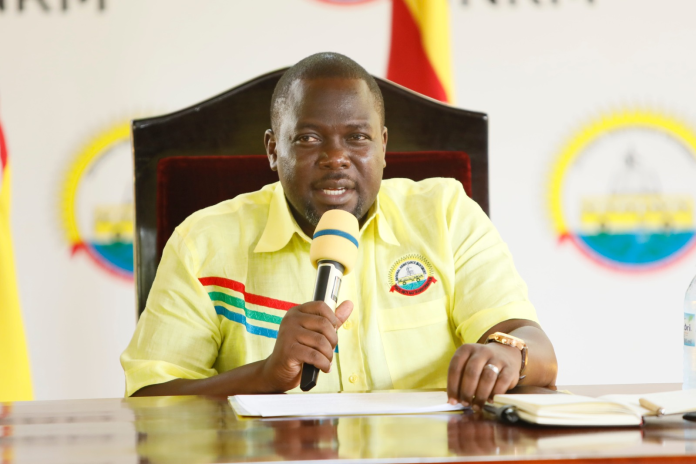
NRM Secretary General warns against favoritism in party primaries

NRM party SG, Richard Todwong.

The Secretary General of the National Resistance Movement (NRM), Todwong Richard Awany has issued a directive to all nominated candidates participating in the upcoming party primaries, warning against any form of favoritism or endorsement of “state candidates.”

In a letter dated June 17, 2025, addressed to all NRM candidates, Todwong emphasized that all aspirants have equal rights and opportunities in the party’s internal elections and no individual should claim preference or unfair support.

“This is therefore to clarify that there are no preferred candidates or ‘state candidates’ as I have heard that some supporters refer to certain candidates. Every nominated candidate has the same equal rights to campaign,” the letter read in part.

He congratulated all the nominees on their successful nomination to contest for various positions in the party’s internal elections and encouraged them to uphold democratic principles throughout the campaign period.

“I congratulate you all on your successful nomination as candidates for the various positions in the Party’s internal elections. I appreciate your support for the NRM and your decision to contest in the NRM primaries,” Todwong stated.

Referring to Article 6 of the NRM Party Constitution, Todwong reminded candidates and party supporters that all campaigns for Members of Parliament (MPs) and Local Council (LCV) Chairpersons must be conducted jointly in accordance with party guidelines. And the polling will take place on July 16, 2025.

“It is recognized that the villages will always act as our polling stations, where members will vote by lining up behind the candidates or portraits of candidates of their choice,” he explained.

The Secretary General also warned against interference from NRM officials or staff members during the campaign process, noting that any such actions would attract disciplinary consequences.

“Any Party official or staff member found interfering in the internal democratic processes of the Party will be subjected to the appropriate disciplinary committee and shall also be handed over to law enforcement for necessary further action,” Todwong warned. “Please take this matter seriously, as there will be no compromise on this issue.”

He further called for peaceful and respectful campaigns across the country as the NRM prepares for its primary elections. “I wish you all peaceful campaigns,” Todwong noted.

Stories Continues after ad

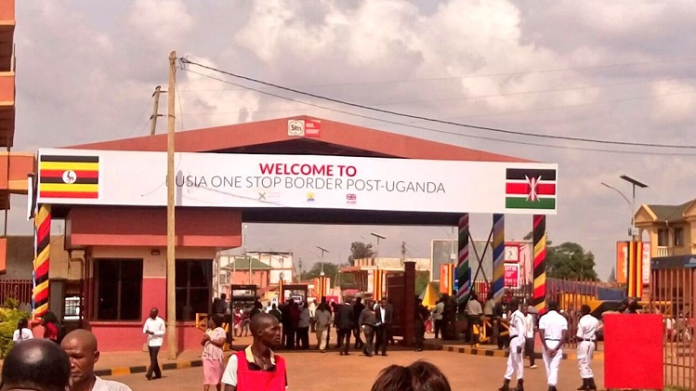
Uganda’s EAC trade deficit drops in April but widens year-on-year

Uganda’s trade deficit with East African Community (EAC) partner states eased in April 2025, according to the latest Performance of the Economy report from the Ministry of Finance.

The country recorded a trade deficit of $127.05 million with the region, down from $152.97 million in March. The improvement was mainly driven by a nearly 50 percent surge in exports to the EAC, which rose to $270.40 million from $180.78 million. This growth outpaced a 19.1 percent rise in imports, which climbed to $397.46 million from $333.75 million.

Uganda maintained trade surpluses with several EAC partners: USD 76.80 million with the Democratic Republic of Congo (DRC), $55.71 million with South Sudan, $35.45 million with Rwanda, and $5.44 million with Burundi. However, deficits persisted with the region’s largest economies—Tanzania ( $231.91 million) and Kenya ($68.54 million).

Despite the monthly improvement, Uganda’s annual trade deficit with the EAC widened compared to April 2024. The gap grew from $53.43 million to $127.05 million due to a 52 percent rise in imports, outpacing a 30 percent increase in exports.

The Ministry noted that while Uganda’s integration within the EAC is progressing, greater focus on export diversification and competitiveness is needed to reduce reliance on imports and strengthen trade balance.

Stories Continues after ad

Uganda condemns unproved attack on Iran, calls for dialogue and respect for international law

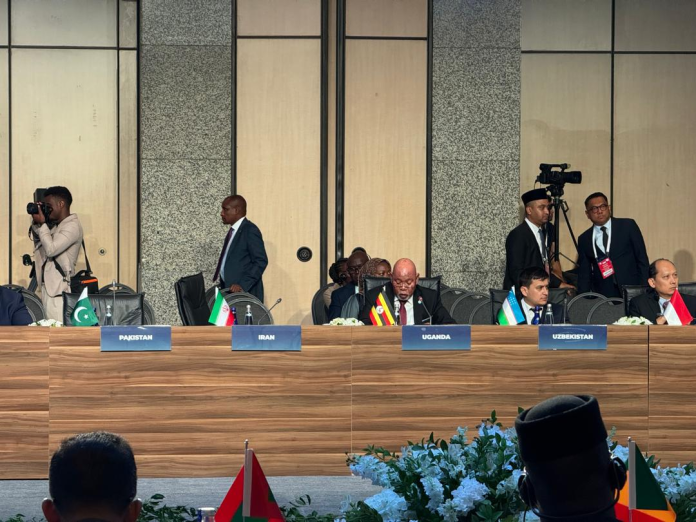
Uganda's Foreign Affairs Minister, Gen. Jejej Odong addressing the 51st Session of the Organization of Islamic Cooperation (OIC) Council of Foreign Ministers held in Istanbul, Turkey.

Uganda’s Minister of Foreign Affairs, Gen. Jeje Odongo has urged Muslim nations to strengthen unity in the face of rising global hostility, armed conflicts, and attacks on Muslim communities.

He made the call while addressing the 51st Session of the Organization of Islamic Cooperation (OIC) Council of Foreign Ministers held in Istanbul, Turkey.

Speaking to representatives of OIC member states, Gen. Odongo strongly condemned the recent unprovoked aggression against the Islamic Republic of Iran by Israel.

“This attack is not only unjustified but represents a broader pattern of hostility towards the Muslim world and a clear violation of international law,” Odongo said.

“Uganda stands with the people of Iran and supports their right to defend themselves.”

He also reaffirmed Uganda’s unwavering support for the Palestinian cause, stressing the need for justice, self-determination, and an end to occupation.

“The plight of the Palestinian people continues to reflect a failure of the international system to protect the vulnerable and uphold basic human rights,” he said.

The strikes came amidst escalating hostilities between Iran and Israel, following years of proxy conflicts, cyberattacks and direct military engagements. In April 2025, Israeli warplanes reportedly targeted Iranian military infrastructure in retaliation for Tehran’s increasing support to militant groups in the region, particularly in Syria and Lebanon.

On regional issues, the minister called for diplomatic and peaceful solutions to the crises in Sudan and Somalia. He emphasized that only unity, dialogue, and adherence to international norms can bring about lasting peace in the Muslim world and beyond.

Gen. Odongo further expressed Uganda’s ongoing commitment to the global fight against terrorism and highlighted the important role of education in driving change. He thanked the OIC for its continued support to the Islamic University in Uganda.

“The Islamic University in Uganda has become a centre of excellence in science, innovation, and women’s education. We are grateful for the OIC’s partnership in this effort,” he noted.

The minister assured the gathering that Uganda remains a steadfast partner for peace, dialogue, and development, both within the Islamic world and on the global stage.

Stories Continues after ad

Sharitsi Kutesa quits as Soda Kaguta enters Mawogola North race

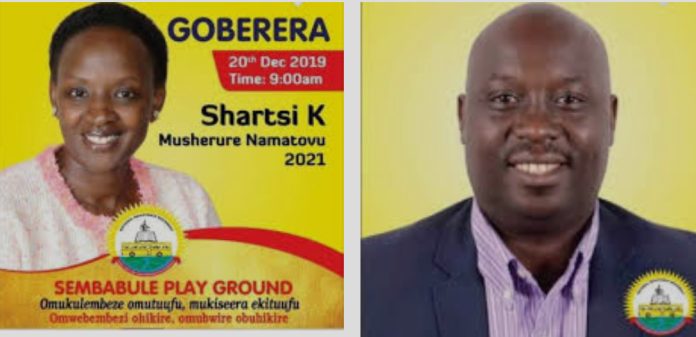
Campaign posters of Ms Sharitsi Kutesa and Mr Godfrey Aine Kaguta aka Sodo.

Mawogola North Member of Parliament Sharitsi Kutesa Musherure has quit the 2026 race.

Ms Kutesa cited the unfortunate of incidents in the 2021 race as to why she is vacating the same race. She says incidents like brutality and insecurity have made her step down.

“After a meeting with H. E The President and chairman of the NRM party, my elder and leader and my high regard for his guidance, and not subject our supporters to the theatres, brutality and insecurity that they endured in the previous Ssembabule NRM  primary elections and safe guard the unity of our people, to maintain the unity of the NRM party, I  take this opportunity to thank H.E the President, the people of Mawogola North, especially my supporters for the opportunity to serve them as their leader, servant and Member of Parliament from 2021 to date. I have tendered selfless service to the people because it is my duty and calling to do so” Ms Kutesa wrote.

Ms Kutesa’s exit leaves Mr Godfrey Aine Kaguta Sodo as the favorite replacement given his previous upper hand in the same race. Supporters of the two contestants have clashed before leaving many brutalised.

Below is Ms Kutesa’s letter in full

As we prepare for the upcoming part primaries that will be held on July 16, we are down back to the unfortunate events that took place during the same exercise of 2021. The people of Mawogola North were not able to exercise their constitutional right to choose their leader freely. Which is the very essence of elections. It is therefore, against this background that interventions to avert a similar situation have been considered.

After a meeting with H. E The President and chairman of the NRM party, my elder and leader and my high regard for his guidance, and not subject our supporters to the theatres, brutality and insecurity that they endured in the previous Ssembabule NRM  primary elections and safe guard the unity of our people, to maintain the unity of the NRM party, I  take this opportunity to thank H.E the President, the people of Mawogola North, especially my supporters for the opportunity to serve them as their leader, servant and Member of Parliament from 2021 to date. I have tendered selfless service to the people because it is my duty and calling to do so.

My supporters, I owe you a debt of gratitude for your love, sacrifice and dedication. Together, we have made tremendous progress in uplifting the living conditions of our people, repaired and built roads, education and health infrastructure. But above all, we have ensured unity and tranquillity in our area.

Special thanks to my Goberera Initiative team and its leadership. Your sterling performance in following up on government programmes has set an example of how we can achieve with dedication. It remains both a challenge and an inspiration to us all and future leaders.

I have taken this decision with a heavy heart, knowing fully well how much disappointment you will all endure, but I take comfort in the knowledge and belief that it is in the ashes of such setbacks that the seed of future germinates.

I remain ready to serve you.

God bless you.

Sharitsi Kutesa Musherure, MP

Stories Continues after ad

Intra-party democracy: How the NRM beats others

Amb. Mayega


Uganda’s democratic bar has, during the Yoweri Museveni administration’s epochal supretendence, been raised to unprecedented levels rendering several old and new parties on the country’s political canvass failures and unable to cope with the dictates of the political parties and organizations act.
The resumption of political party activities on the canvass after the referendum of 2005 as a consequence of the  enactment of political parties and organizations law, the renaissance of the rule law in 1986 devoid of extrajudicial killings that had dogged the country before plus the bounteous dividends of peace, security and tranquility for the last four decades have all combined to throw off-balance not only Uganda’s independence parties like the UPC and DP but also the fledgling political was nymphs like FDC and NUP.

First, with the current rising political temperatures due to the upcoming election season, several of those nymphs have either sold candidatures for various electoral positions to highest bidders by cobbling together small cabals of oligarchs in party headquarter droughty rooms or appointed family and gullible flag bearers for various electoral offices. By doing so, they have fragrantly flouted the length and breadth of the PPOA provisions.
The NUP for instance is said to have recently convened a secret delegates conference of 120 people to ostensibly rubber stamp Bobi Wine and a couple of others for the top jobs in their nestling party. In an ideal situation, the PPOA provisions would have caught up with that Bwaise-based party.

Secondly, on the other hand the NRM has methodically and in accordance with the PPOA religiously undertaken the pre-primary election processes of democratically registering candidates in preparation for the internal elections for all the echelons of the party as well as the national elections. All these things have been made possible within the NRM thanks to Uganda’s best President since independence, Yoweri Museveni, who has cultivated and buttressed the revered political pedigree and culture that were once practiced during the five year bush war.

The political calculus here is that you can’t give to others what you don’t have; as others merchandise in candidatures, the NRM is the only party that has, conversely, nurtured and grown intra-party democracy in accordance with the law.

Thirdly, all Uganda’s independence parties including the UPC, CP/Kabaka Yeka and DP having initially responded to a stimuli; namely the fight to obtain our independence; their leaderships were largely clueless about planning for the political exigencies of post-independent Uganda; they neither sufficiently grew nor deepened internal democracy amongst their rank and file because they lacked the calculus that the NRM has enjoyed. They have tried to punch above their weight during all past electoral and non-electoral seasons by introducing small doses of democracy and lip servicing the processes thereof to no avail.

They also, for example, didn’t have the dexterity and temerity of juggling global influences vis a vis the always recalcitrant national constituents. The newer parties are not any better; NUP and FDC for example  have had their behavior thoroughly controlled by  the invisible hands of foreign interests; the reason why their leaderships cluelessly gravitate towards western capitals to accuse the NRM whenever the going gets tough here. And because of that the bombastic Ugandan voter has made them pay the hefty political price at every round of polls.

Fourthly, when a juxtaposition is made between the NRM and the other players, one detects a marked difference; whereas the governing party will in due course have its national conference (that will among others stamp its presidential candidate) preceded by its other organs like the national executive committee and the central executive committee, such a sequence of meetings is largely unheard of in Uganda’s opposition parties.

Fifthly, the level of tribalism in Uganda’s opposition parties is unprecedented and it can’t permit the growth of democracy; those parties are tribally based. Whereas the UPC is largely a Lango affair, the NUP and DP have remained Buganda phenomena. Excruciatingly, during the last electoral cycle, many in those parties were heard carelessly throwing around tribal tantrums.

Lastly, when all parties are scale-weighted, the NRM has performed best by respecting the provisions of the PPOA which amongst others stipulate: the 30% women and youth representation  throughout party governance committees, accountability for government funding and parties’ participation in IPOD etc. Some opposition oligarchs have even disavowed the IPOD umbrella by bleating that it’s a “Museveni controlled body.”

Ambassador Henry Mayega

Stories Continues after ad

Gen Sejusa condemns online mockery of Moses Ali

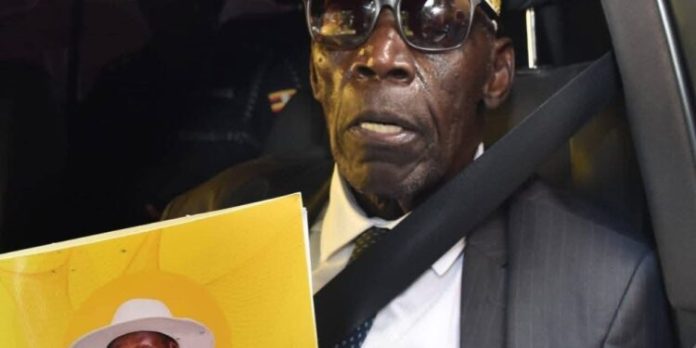
Gen. Moses Ali after being nominated for 2026 parliamentary contest.

Retired General David Sejusa has condemned what he described as “public flogging” and online humiliation targeting Gen. Moses Ali urging Ugandans to uphold African values of respect for elders and due process in political discourse.

Sejusa, a seasoned military and political figure via X (formerly Twitter) appealed to the public to reconsider how they treat leaders, especially those who have served the country in moments of great historical significance.

“Is it right to flog Gen. Moses Ali on social media and laugh at his condition?” Sejusa questioned.

He added, “First, I find it un-African that someone who is a grandfather, not a criminal someone otacumwiire (who hasn’t committed an abominable act) should be treated so disgracefully, casually insulted and his photos shared with abandon on social media.”

He acknowledged that while Gen. Ali may have made mistakes in the past, his role in Uganda’s liberation history cannot be ignored.

“Moses Ali led an armed struggle to fight for democracy in this country, earlier mistakes notwithstanding. His force, UNRF, was one of those that resisted Obote. So he is not just a kwala-kwala man, he is a freedom fighter worthy of our respect,” Sejusa noted.

Sejusa encouraged those concerned about Gen. Ali’s health or continued participation in politics to follow legal and institutional channels rather than resorting to ridicule.

“There is a process through which those aggrieved by Moses Ali’s persistence in elective politics can be addressed. A formal petition can be signed and taken to the Chairman of the Electoral Commission. Or a petition to the Speaker of the House through your MP. That is how civilized people do things,” he guided.

He drew comparisons with global figures to show that age or health challenges do not automatically disqualify leaders from public service.

“How many times did we see Biden fall, on planes, parades, etc.? How many times did we see Mugabe fall? We’ve had presidents ruling countries in wheelchairs, like in America and Algeria, even from hospital beds. Others died in office,” Sejusa recounted.

Sejusa warned that such ridicule reflects deeper colonial mindsets that still shape how Africans relate to one another.

“Insulting our elders is one of the traits of coloniality. We treat each other badly because we were taught we are trash and not worthy of respect. It is ingrained in us, though perhaps unconsciously. We need to stop!”

He recalled defending former President Tito Okello Lutwa when he was mocked for his poor command of English, saying dignity should never be compromised for amusement or political gain.

He said, “I strongly castigated those who laughed at and insulted Tito Lutwa when he spoke bad English. I didn’t find it important for him to speak great English!”

Sejusa has called for national introspection, respect for legacy and commitment to civility.

Moses Ali, the 86-year-old veteran lawmaker and military figure was early this week nominated seeking re-election as Member of Parliament for Adjumani West though failing to move out of his car due to his deteriorating health.  

Born April 5, 1939, Ali’s public service spans for 54 years having held key positions including Deputy Prime Minister and Lieutenant General in the Uganda People’s Defense Forces.

Stories Continues after ad

Uganda secures bid to host 2025 UNESCO Africa Engineering week and conference at Speke Resort

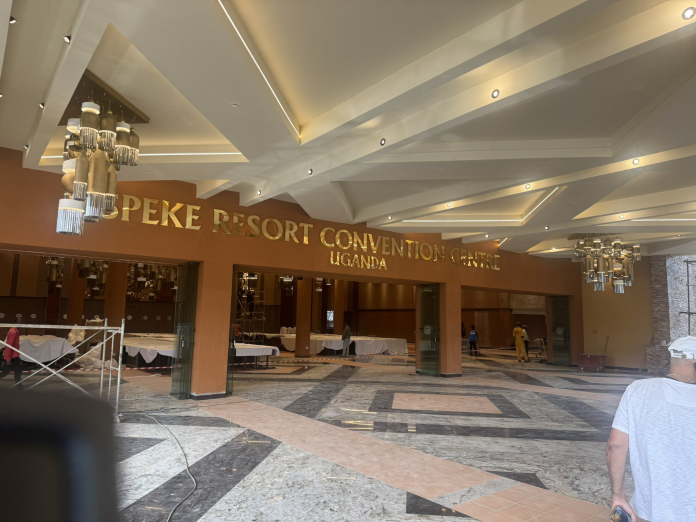
Uganda has secured the bid to host the 2025 UNESCO Africa Engineering Week and Conference at the state-of-the-art Speke Resort Convention Centre (SRCC) a venue that has rapidly positioned the country as a competitive player in Africa’s MICE (Meetings, Incentives, Conferences, and Exhibitions) industry.

The event not only affirms Uganda’s growing capacity to host high-level international gatherings but also reflects the strategic role of SRCC in anchoring the country’s ambition to become a regional hub for knowledge exchange, innovation, and professional development.

Uganda will host the 11th UNESCO Africa Engineering Week and the 9th African Engineering Conference from 14th to 20th September 2025 at the Speke Resort Convention Centre in Munyonyo, Kampala. Organized by the Uganda Institution of Professional Engineers (UIPE) with support from the Uganda Tourism Board (UTB) and other partners, the event will run under the theme “Leveraging Engineering Innovations and Technology to Accelerate Africa’s Socio-Economic Transformation.”

The conference is expected to attract engineers, policymakers, educators, researchers, students, and industry actors from across the continent. It will feature keynote addresses, technical sessions, exhibitions, and STEM-focused educational and public engagement activities aimed at elevating the profile of engineering across Africa.

Commenting on the development, Uganda Tourism Board CEO Juliana Kagwa noted that the successful bid reinforces the country’s growing stature in the international conference tourism arena.

“Hosting this prestigious event aligns with our efforts to position Uganda as a leading destination for conferences and events,” she said.

Kagwa added, “We are confident that attendees will experience the beauty and hospitality of Uganda while contributing to important discussions and advancements in the field of engineering.”

Uganda’s successful bid comes on the back of an improving performance in its Meetings, Incentives, Conferences, and Exhibitions (MICE) sector. According to the 2025 Tourism Statistical Abstract, the country hosted 491 MICE events in 2024, attracting 32,693 international delegates and 69,721 domestic participants. These events generated an estimated USD 27.6 million in tourism receipts, accounting for approximately 6.1 percent of total tourism earnings.

UTB’s MICE strategy aims to build on this momentum. By 2026, Uganda targets to host more than 980 MICE events annually, increase foreign delegate numbers to over 60,000, and grow MICE earnings to between USD 45 and 50 million. The strategy also seeks to raise the proportion of MICE tourists to at least 10 percent of total international arrivals, secure no fewer than 15 high-level events annually, and train and certify at least 100 professionals in MICE-related services.

The UNESCO engineering conference is aligned with these targets and is viewed as a strategic opportunity to attract additional events in related sectors such as infrastructure, education, innovation, and sustainability.

The venue for the 2025 conference, Speke Resort Convention Centre (SRCC), is Uganda’s largest and most advanced events facility. Commissioned in January 2024, SRCC has rapidly become a preferred site for large-scale regional and international engagements. Within its first year, it hosted the 19th Non-Aligned Movement (NAM) Summit, the 3rd G77+China South Summit, the Uganda-EU Business Forum, the 2024 ITU Global Symposium for Regulators, the Commonwealth Speakers and Presiding Officers Conference, and the Pearl of Africa Tourism Expo (POATE 2024).

Stories Continues after ad