Parliament was shocked after revelations that a Ugandan man, Charles Mwesigwa is at the centre of a human trafficking ring that lured young women with fake job promises in Dubai only for them to end up in brothels (illegal sex rings). Some of the girls have reportedly died under mysterious circumstances while others were buried in unmarked cemeteries after their families failed to repatriate their bodies.
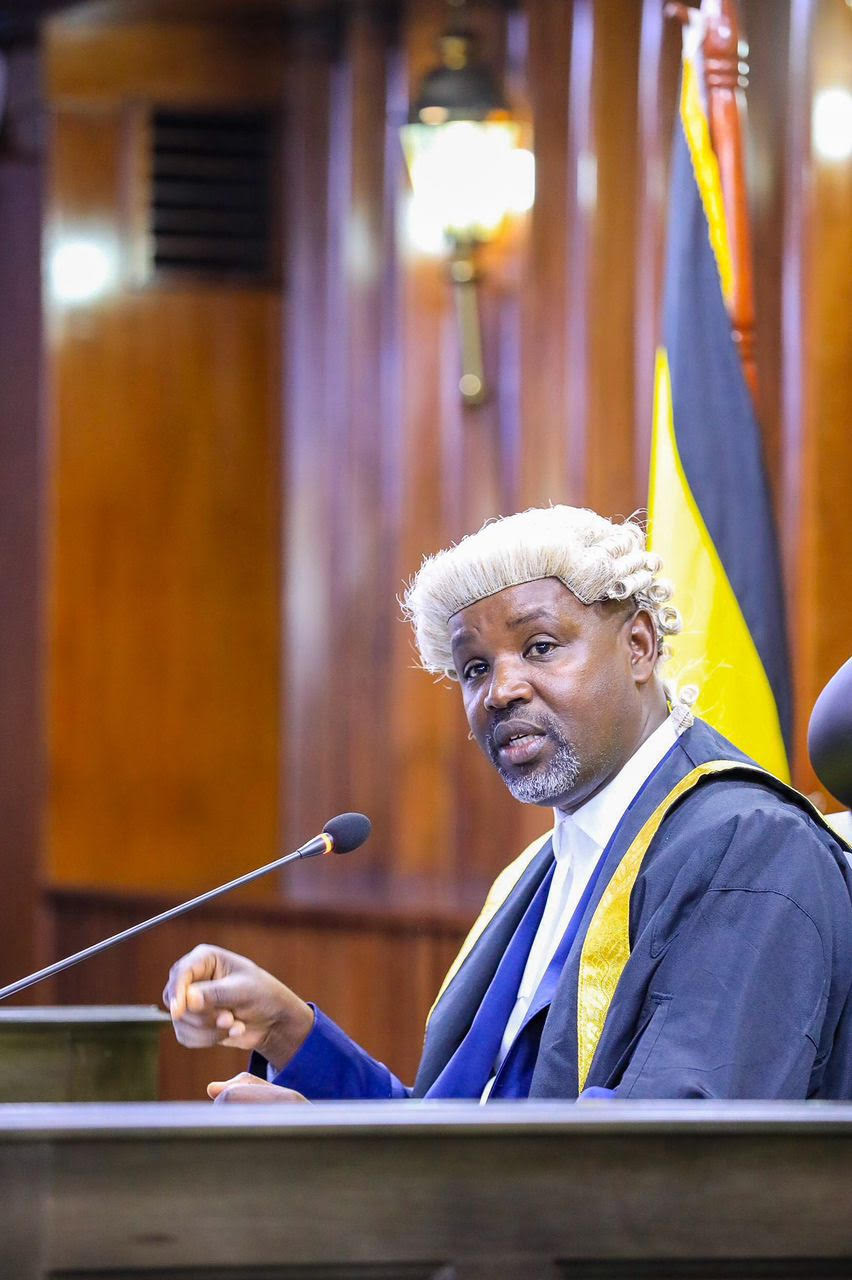
Deputy Speaker Thomas Tayebwa described the matter as one of the most disturbing human rights abuses facing Ugandan migrant workers abroad and demanded urgent government action.

“Though we know he’s Ugandan born, he has been trading in human beings, trading our girls, some of them, I’m told they died under mysterious circumstances,” Tayebwa said.
Tayebwa warned that Uganda was failing to protect its citizens abroad compared to other countries that negotiate directly with host governments.
“Some countries negotiate on their workers’ behalf. You find people working in the same environment, same job, but like the starting amount for country ‘A’ is two thousand dollars. For Ugandans, they leave you to negotiate on your own. We need to reopen that debate, we look into the plight of our Ugandan workers, especially the girls who need much more protection,” he added.

He also expressed deep concern about the lack of accountability for victims who have died abroad.
“It was very, very disturbing, very, very disturbing. You see someone really, the way they were talking, what girls can do, it was so disturbing. I urge the government to take keen interest in this matter to comfort Ugandans. Especially those young girls who died, some of whose parents could not afford repatriating the bodies, and they were buried in what is marked as unknown persons’ cemeteries. A family would never settle, a family would never settle,” Tayebwa said.
Tororo Woman MP Sarah Opendi narrated the ordeal of one young woman who narrowly escaped after being trafficked to Dubai.
“She was taken to Dubai, and then when she reached there, she thought she was going to work in the supermarket or something, only to find herself in a sex brothel. And finally, she escaped and found her way back, came and reported the case to the police,” Opendi revealed.
But her account exposed deeper failures in Uganda’s justice system.
“The police mishandled this lady’s case to a point of actually calling her mentally unstable. They even confiscated her phone which had evidence. Finally, the police returned the phone, only for the DPP to close the case. Where should somebody seek justice?” Opendi asked.
Leader of Opposition Joel Ssenyonyi described the revelations as heartbreaking and accused the government of ignoring a crisis that has destroyed young lives.
“For our young people who leave this place to go and seek employment, eventually they are hoodwinked because many of them are taken. You’re going to work as a security guard, you’re going to work in a restaurant, and they end up in an illegal, coercive prostitution ring where they are sexually abused. It is the responsibility of the government to care for Ugandans here and Ugandans abroad,” Ssenyonyi said.
He castigated the government for failing to communicate with the public and provide assistance to victims and families.
“I’m surprised that the government has not come out to communicate to the country about this situation and what they are doing. Many of our young people who go for these jobs come back in body bags. Families beg for help to bring the bodies back, but the government doesn’t act. We want a lot more action, not just a statement,” he added.
Ssenyonyi also linked the crisis to Uganda’s youth unemployment problem.
“The 2024 National Population and Housing Census showed that between the age of 18 and 30, 16.1 percent of those young people are unemployed. What’s even more bothersome is that those who are employed are either underemployed, doing very odd work that only enables them transport. It doesn’t include feeding, they can’t get where to stay. So any young person is desperate to go and work wherever. When they hear of an opportunity, they’ll run quickly to go and board the plane, and for them to come back in body bags. That’s something we need to resolve and remedy as a country,” he said.
Under Uganda’s Anti-Trafficking in Persons Act, those who recruit or traffic citizens abroad face life imprisonment. UAE law equally imposes long-term prison sentences and deportation. Since recruitment occurred in Uganda and exploitation took place in Dubai, both countries hold jurisdiction, making a joint investigation critical.
MPs are now demanding government moves quickly to investigate Mwesigwa, dismantle his alleged network, and provide immediate protection for Ugandans abroad, including repatriation of stranded victims and bodies.
Tayebwa stressed the need for urgency, “I urge the government to take a keen interest in this matter and follow up to its conclusion. A family would never settle knowing their daughter was buried as an unknown person in a foreign land.”
Charles Mwesigwa, a Ugandan man who claims to be a former London bus driver, has been identified as the operator of a high-end sex trafficking network based in Dubai. He lures young women from Uganda with promises of legitimate employment in supermarkets, hotels, or other sectors, only for them to end up working in brothels catering to wealthy clients. Some of his victims are reportedly coerced into extreme sexual acts, with a few having died under mysterious circumstances, including falls from high-rise apartments. Families of deceased victims, such as Monic Karungi, were unable to repatriate their bodies, leaving them buried in unmarked graves in Dubai.
Mwesigwa’s operation is highly organized and lucrative. He reportedly offers women for parties at a starting price of $1,000 per night, with higher payments for clients’ more extreme requests. Women often accrue large debts to him shortly after arrival, covering air tickets, visas, food, and accommodation that must be repaid through coerced sexual labor. Former members of his network claim he manipulates others to act as proxies for renting apartments and hiring cars, keeping his own name off records and shielding him from legal accountability.
Estimates from witnesses and activists indicate that dozens of young Ugandan women have been exploited through Mwesigwa’s network, with at least two confirmed deaths, Monic Karungi and Kayla Birungi, and hundreds more potentially at risk. Survivors recount the abuse, extortion, and manipulation they faced, highlighting systemic failures to protect Ugandan migrant workers abroad. Mwesigwa, despite these allegations, denies running a sex trafficking operation and insists the women voluntarily attend parties for social networking purposes.