Uganda is set to receive over $2 billion (approximately Shs6.948 trillion) in concessional financing from the World Bank over the next three financial years to support the country’s development agenda, according to the Permanent Secretary and Secretary to the Treasury, Ramathan Ggoobi.
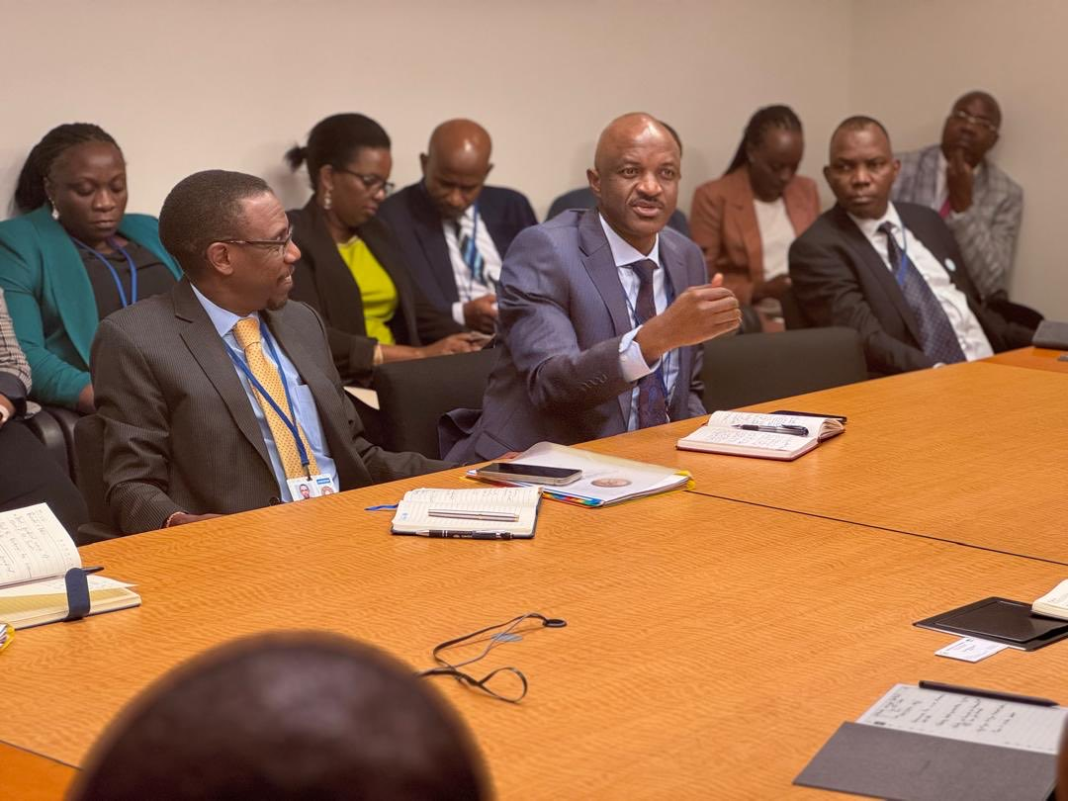
Ggoobi made the announcement following the 2025 IMF–World Bank Annual Meetings held in Washington, D.C., where Uganda reaffirmed its partnership with international financial institutions in driving sustainable economic growth.

“For Uganda, I’m glad to announce that concessional financing is back. In the next three financial years, the World Bank will disburse over $2 billion to Uganda to finance our development. The current total investment is $4.9 billion,” Ggoobi said in his statement.
He revealed that the funds will be channeled into key priority sectors including roads and bridges, electricity transmission, last-mile connections, regional city infrastructure, IT roads, agriculture, tourism, trade export guarantee schemes, and skills development.
The International Finance Corporation (IFC), the private-sector arm of the World Bank Group, will also inject what Ggoobi termed as patient capital into Uganda’s private sector.

“The IFC will provide patient capital to private sector investors in minerals, renewable energy, and special industrial parks,” he noted, highlighting the growing focus on productive investments that generate jobs and industrial value.
Ggoobi further revealed that Uganda is in discussions with the International Monetary Fund (IMF) for a new Extended Credit Facility (ECF) program that will commence after the 2026 elections. The program is expected to support fiscal and structural reforms aimed at strengthening the economy.
“Key reforms we are targeting include increasing domestic revenue and import substitution, reducing the budget deficit, and balancing payments,” he explained.
On a broader global note, Ggoobi praised the World Bank’s new leadership under Ajay Banga, saying it has made the Bank start appreciating that development is not just about doing projects but about unlocking the power of the private sector to create jobs.
He also commended the IMF’s recognition of the private sector’s role in global economic resilience, noting that AI-driven productivity and innovation in countries like the U.S., Singapore, and Denmark continue to set the pace for growth.
The Treasury boss reaffirmed that Uganda’s economy remains stable and resilient, a view shared by the Bretton Woods institutions.
“The Fund and the Bank are impressed with our reforms and the resilience of the economy in Africa and by extension, the world. Our macroeconomy is stable,” he said.
Ggoobi noted that both the IMF and World Bank had pledged to continue supporting Uganda’s oil and gas sector, especially in infrastructure and technology development, to ensure macroeconomic stability and prosperity.