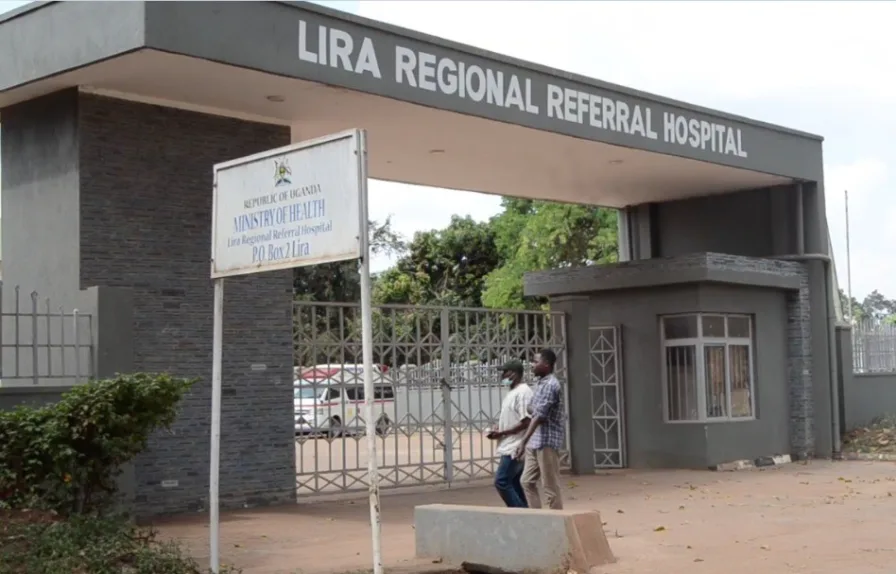
Lira Regional Referral Hospital has strongly dismissed targeted, inaccurate and malicious media reports alleging unethical conduct by its staff and poor service delivery that are intended to discredit the institution.
In a press statement dated December 19, 2025, the hospital’s Acting Director, Dr. Odur Andrew, said management was aware of media stories portraying the hospital as acting against the interests of patients, including allegations that health workers direct clients to buy drugs from private facilities.

“The Hospital Management is aware of targeted, inaccurate and malicious media stories portraying Lira Regional Referral Hospital as not acting in the best interest of its clients,” Dr. Odur said, adding that the reports falsely insinuate unethical behavior by staff.
He urged the public to ignore what he termed a misleading narrative, stressing that there is no policy or practice at the hospital that allows staff to refer patients to private facilities for personal gain.
“The management would like to unequivocally ask the public to disregard this frivolous and inaccurate narrative intended to discredit the Hospital and the services it provides to her esteemed clients,” the statement reads.

Dr. Odur challenged anyone with credible evidence of misconduct by hospital staff to formally report it for investigation and action.
“Should anybody have evidence to the above allegations as reported by the media on our staff acting unethically, referring patients to private facilities or acting in total disregard of established laws, we request that this be reported to management so that it is investigated and a corrective action taken,” he said.
Addressing concerns over drug availability, the hospital acknowledged that occasional stock-outs do occur but attributed this to overwhelming patient numbers rather than mismanagement or corruption. According to management, the hospital receives medicines and essential supplies from the National Medical Stores every two months as scheduled.
“Whereas the hospital consistently receives drugs and essential medical supplies from the government in a timely manner, the hospital is also overwhelmed by a high number of clients who seek medical care,” Dr. Odur explained.
He revealed that between 900 and 1,000 patients are attended to daily, far exceeding the hospital’s planned capacity, a situation that sometimes forces health workers to ask patients to procure certain medicines on their own.
“In a few incidences, the health care givers are left with no option but to request the client to provide it, but without asking them to go to a particular private facility,” he clarified.
Dr. Odur further noted that when patients are required to buy medicines, many obtain them from the government-established private inpatient pharmacy within the hospital, which he said is meant to offer convenience and generate revenue.
“To set the record straight, most of the drugs when required are purchased from the private inpatient pharmacy established by the Government to generate revenue and offer convenience to already fatigued patients unable to move long distance,” he said.
The hospital also highlighted recent efforts to improve accountability and patient engagement, including the introduction of open feedback mechanisms and the hosting of hospital-community barazas for the first time in 2025.
“To set the record straight, the hospital Management welcomes all constructive criticism aimed at improving high quality services to our clients,” Dr. Odur said, describing the community engagements as a success that will be sustained.
Members of the public were encouraged to use suggestion boxes, QR codes, the social works office, or directly contact hospital administrators to report complaints or share feedback.
“In pursuit of excellence, the hospital commits to continue rendering high quality medical services including dialysis, ICU care, specialized operations, emergency services and NICU,” Dr. Odur said, reaffirming the hospital’s role as a referral and leadership center for health services in the region.